James Goff – författare
Visar alla böcker från författaren James Goff. Handla med fri frakt och snabb leverans.
9 produkter
9 produkter
Inbunden, Engelska, 2021
393 kr
Skickas inom 5-8 vardagar
Every year that passes without a tsunami means that we're just that much closer to our next one. What can we do to ensure we're prepared when the next catastrophic tsunami strikes?The ferocious waves of a tsunami can travel across oceans at the speed of a jet airplane. They can kill families, destroy entire cultures, and even gut nations. To understand these beasts in our waters well enough to survive them, we must understand how they're created and learn from the past.In this book, tsunami specialists James Goff and Walter Dudley arm readers with everything they need to survive a tsunami — and maybe even avoid the next one. The book takes readers on a historical journey through some of the most devastating tsunamis in human history, some of the quirky ones, and even some that may not even be what most of us think of as tsunamis. Diving into personal and scientific stories of disasters,Tsunami pulls readers into the many ways these waves can be generated, ranging from earthquakes and volcanic eruptions to explosions, landslides, and beyond. The book provides overviews of some of the great historical events - the 1755 Lisbon, 1946 Aleutian, 1960 Chile, and 2004 Indian Ocean tsunamis, but also some of the less well-known as well such as the 1958 Lituya Bay, 563 CE Lake Geneva, a 6,000 year old Papua New Guinean mystery, and even a 2.5 Million year old asteroid. This is not straight science, though. Each event is brought to life in a variety of ways through stories of survival, human folly, and echoes of past disasters etched in oral traditions and the environment. The book combines research from oceanography, biogeography, geology, history, archaeology and more, with data collected from over 400 survivor interviews. Alongside carefully selected images and the scientific measurements of these tsunamis, the book offers tales of survival, heroism, and tragic loss.Through a balanced combination of personal experience, the Earth's changing environment, tales of tragedy, and a recount of oral traditions, Tsunami allows readers to engage with a new scientific approach to these overwhelming waves. The resulting book unveils the science of disaster like never before.
E-bok
PDF, Engelska, 2021285 kr
Läs direkt efter köp
Every year that passes without a tsunami means that we''re just that much closer to our next one. What can we do to ensure we''re prepared when the next catastrophic tsunami strikes? The ferocious waves of a tsunami can travel across oceans at the speed of a jet airplane. They can kill families, destroy entire cultures, and even gut nations. To understand these beasts in our waters well enough to survive them, we must understand how they''re created and learn from the past. In this book, tsunami specialists James Goff and Walter Dudley arm readers with everything they need to survive a tsunami ? and maybe even avoid the next one. The book takes readers on a historical journey through some of the most devastating tsunamis in human history, some of the quirky ones, and even some that may not even be what most of us think of as tsunamis. Diving into personal and scientific stories of disasters, Tsunami pulls readers into the many ways these waves can be generated, ranging from earthquakes and volcanic eruptions to explosions, landslides, and beyond. The book provides overviews of some of the great historical events - the 1755 Lisbon, 1946 Aleutian, 1960 Chile, and 2004 Indian Ocean tsunamis, but also some of the less well-known as well such as the 1958 Lituya Bay, 563 CE Lake Geneva, a 6,000 year old Papua New Guinean mystery, and even a 2.5 Million year old asteroid. This is not straight science, though. Each event is brought to life in a variety of ways through stories of survival, human folly, and echoes of past disasters etched in oral traditions and the environment. The book combines research from oceanography, biogeography, geology, history, archaeology and more, with data collected from over 400 survivor interviews. Alongside carefully selected images and the scientific measurements of these tsunamis, the book offers tales of survival, heroism, and tragic loss. Through a balanced combination of personal experience, the Earth''s changing environment, tales of tragedy, and a recount of oral traditions, Tsunami allows readers to engage with a new scientific approach to these overwhelming waves. The resulting book unveils the science of disaster like never before.
E-bok
Engelska, 2021275 kr
Läs direkt efter köp
Every year that passes without a tsunami means that we''re just that much closer to our next one. What can we do to ensure we''re prepared when the next catastrophic tsunami strikes? The ferocious waves of a tsunami can travel across oceans at the speed of a jet airplane. They can kill families, destroy entire cultures, and even gut nations. To understand these beasts in our waters well enough to survive them, we must understand how they''re created and learn from the past. In this book, tsunami specialists James Goff and Walter Dudley arm readers with everything they need to survive a tsunami ? and maybe even avoid the next one. The book takes readers on a historical journey through some of the most devastating tsunamis in human history, some of the quirky ones, and even some that may not even be what most of us think of as tsunamis. Diving into personal and scientific stories of disasters, Tsunami pulls readers into the many ways these waves can be generated, ranging from earthquakes and volcanic eruptions to explosions, landslides, and beyond. The book provides overviews of some of the great historical events - the 1755 Lisbon, 1946 Aleutian, 1960 Chile, and 2004 Indian Ocean tsunamis, but also some of the less well-known as well such as the 1958 Lituya Bay, 563 CE Lake Geneva, a 6,000 year old Papua New Guinean mystery, and even a 2.5 Million year old asteroid. This is not straight science, though. Each event is brought to life in a variety of ways through stories of survival, human folly, and echoes of past disasters etched in oral traditions and the environment. The book combines research from oceanography, biogeography, geology, history, archaeology and more, with data collected from over 400 survivor interviews. Alongside carefully selected images and the scientific measurements of these tsunamis, the book offers tales of survival, heroism, and tragic loss. Through a balanced combination of personal experience, the Earth''s changing environment, tales of tragedy, and a recount of oral traditions, Tsunami allows readers to engage with a new scientific approach to these overwhelming waves. The resulting book unveils the science of disaster like never before.
Inbunden, Engelska, 2023
405 kr
Skickas inom 5-8 vardagar
In Search of Ancient Tsunamis takes readers on a journey through the science of tsunamis and acts as a "how to" guide in the geology, geomorphology, anthropology, and archaeology of these devastating phenomena. The book draws on examples from around the world and includes numerous personal accounts of field and laboratory experiences. This journey through tsunami science is framed within the search for ancient tsunamis in the northern part of Chile, a desert environment that requires all the skillsets available to the tsunami researcher. This is a region where numerous attempts to find evidence have failed largely due to the hostile environment that refuses to play by the rules. The story is told through the very personal lens of the author with first-hand accounts of the trials and tribulations of fieldwork and local eccentricities, of serendipitous events, and a growing awareness and understanding of a wide variety of techniques that can be applied to the science. The journey is populated with side stories engaging the reader with deeper insights into the countries, study areas, joys and disappointments of carrying out scientific research across the globe. It is both a very personal story as well as an in-depth look at the science involved in an increasingly sophisticated and interdisciplinary search to better understand the true nature of tsunamis. It contains the wisdom of elders, "Eureka" moments of discovery, and a look at the very latest developments of understanding the effects of ancient tsunamis on prehistoric human populations.
E-bok
Engelska, 2023310 kr
Läs direkt efter köp
In Search of Ancient Tsunamis takes readers on a journey through the science of tsunamis and acts as a "how to" guide in the geology, geomorphology, anthropology, and archaeology of these devastating phenomena. The book draws on examples from around the world and includes numerous personal accounts of field and laboratory experiences. This journey through tsunami science is framed within the search for ancient tsunamis in the northern part of Chile, a desert environment that requires all the skillsets available to the tsunami researcher. This is a region where numerous attempts to find evidence have failed largely due to the hostile environment that refuses to play by the rules. The story is told through the very personal lens of the author with first-hand accounts of the trials and tribulations of fieldwork and local eccentricities, of serendipitous events, and a growing awareness and understanding of a wide variety of techniques that can be applied to the science. The journey is populated with side stories engaging the reader with deeper insights into the countries, study areas, joys and disappointments of carrying out scientific research across the globe. It is both a very personal story as well as an in-depth look at the science involved in an increasingly sophisticated and interdisciplinary search to better understand the true nature of tsunamis. It contains the wisdom of elders, "Eureka" moments of discovery, and a look at the very latest developments of understanding the effects of ancient tsunamis on prehistoric human populations.
E-bok
PDF, Engelska, 2023299 kr
Läs direkt efter köp
In Search of Ancient Tsunamis takes readers on a journey through the science of tsunamis and acts as a "how to" guide in the geology, geomorphology, anthropology, and archaeology of these devastating phenomena. The book draws on examples from around the world and includes numerous personal accounts of field and laboratory experiences. This journey through tsunami science is framed within the search for ancient tsunamis in the northern part of Chile, a desert environment that requires all the skillsets available to the tsunami researcher. This is a region where numerous attempts to find evidence have failed largely due to the hostile environment that refuses to play by the rules. The story is told through the very personal lens of the author with first-hand accounts of the trials and tribulations of fieldwork and local eccentricities, of serendipitous events, and a growing awareness and understanding of a wide variety of techniques that can be applied to the science. The journey is populated with side stories engaging the reader with deeper insights into the countries, study areas, joys and disappointments of carrying out scientific research across the globe. It is both a very personal story as well as an in-depth look at the science involved in an increasingly sophisticated and interdisciplinary search to better understand the true nature of tsunamis. It contains the wisdom of elders, "Eureka" moments of discovery, and a look at the very latest developments of understanding the effects of ancient tsunamis on prehistoric human populations.
E-bok
Engelska, 2016993 kr
Läs direkt efter köp
Many ideas and concepts about natural hazards have been developed in Australasia, but these are often overlooked in books written from a Northern Hemisphere perspective. Natural Hazards in Australasia is the first textbook that considers Australasian natural hazards, their triggering mechanisms and the physical and social environments in which they occur. James Goff and Chris de Freitas lead an expert author team from around Australia and New Zealand to introduce readers to the natural hazards of the Australasian region, including floods, drought, tropical cyclones, volcanic and seismic hazards, tsunamis, landslides and bushfires. This book explores the interactions not only between one hazard and another, but also between humans and natural hazards. Key pedagogical features for students include learning objectives, regional case studies, summaries, chapter glossaries, end-of-chapter review and discussion questions, and further reading and resources. The full colour text is enhanced by a rich array of illustrations, photographs and maps.
E-bok
PDF, Engelska, 20161 029 kr
Läs direkt efter köp
Many ideas and concepts about natural hazards have been developed in Australasia, but these are often overlooked in books written from a Northern Hemisphere perspective. Natural Hazards in Australasia is the first textbook that considers Australasian natural hazards, their triggering mechanisms and the physical and social environments in which they occur. James Goff and Chris de Freitas lead an expert author team from around Australia and New Zealand to introduce readers to the natural hazards of the Australasian region, including floods, drought, tropical cyclones, volcanic and seismic hazards, tsunamis, landslides and bushfires. This book explores the interactions not only between one hazard and another, but also between humans and natural hazards. Key pedagogical features for students include learning objectives, regional case studies, summaries, chapter glossaries, end-of-chapter review and discussion questions, and further reading and resources. The full colour text is enhanced by a rich array of illustrations, photographs and maps.
Häftad, Engelska, 2002
406 kr
Skickas inom 11-20 vardagar
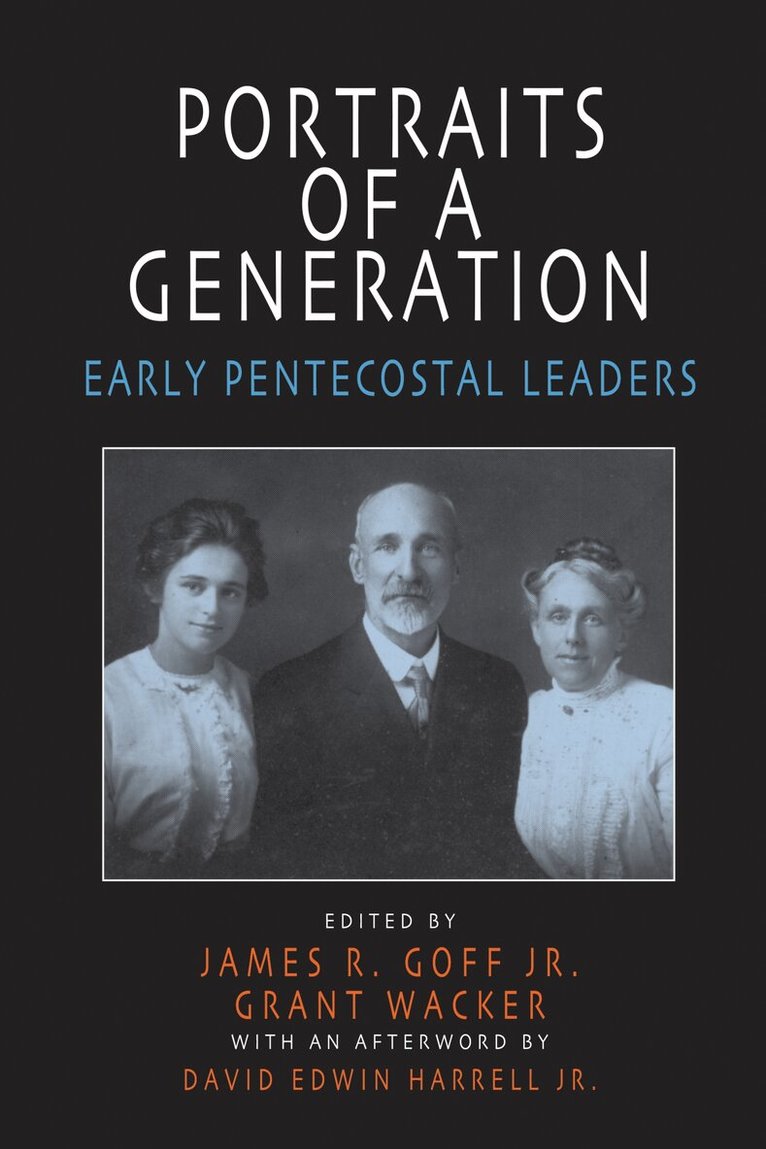
A spirit of religious revival blazed across the United States just after 1900. With a focus on Holy Spirit power, early adherents stirred an enthusiastic response, first at a Bible school in Topeka and then in a small mission on Asuza Street in Los Angeles. Almost immediately, the movement spread to Houston, Chicago, and then northeastern urban centers. By the early 1910s the fervor had reached most parts of the United States, Canada, and northern Mexico, and eventually the converts called themselves pentecostals. Today there are pentecostals all over the world. From the beginning the movement was unusually diverse: women and African Americans were active in many of the early fellowships, and although some groups were segregated, some were interracial. Everytwhere, ordinary people passionately devoted themselves to salvation, Holy Ghost baptism evidenced by speaking in tongues, divine healing, and anticipation of the Lord's imminent return. This movement saw itself as leaderless, depending on individual conversion and a radical equality of souls — or, as early devotees would say, on the Holy Spirit. But a closer look reveals a host of forceful, clear-eyed leaders. This volume offers twenty biographical portraits of the first-generation pioneers who wove the different strands of Holy Spirit revivalism into a coherent and dramatically successful movement.