Grant Wacker - Böcker
Visar alla böcker från författaren Grant Wacker. Handla med fri frakt och snabb leverans.
11 produkter
11 produkter
479 kr
Skickas inom 5-8 vardagar
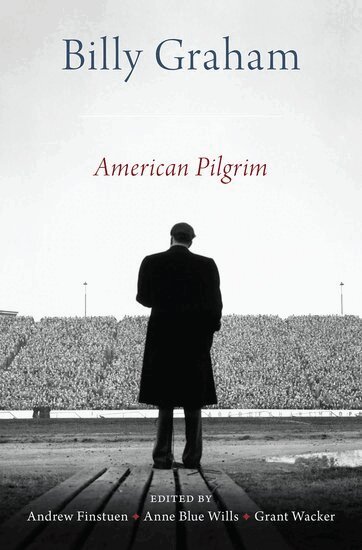
Billy Graham stands among the most influential Christian leaders of the twentieth century. Perhaps no single doctrine, practice, political position, or preacher has united the sprawling and diverse world of evangelicalism like Billy Graham. Throughout his six-decade career, Graham mainstreamed evangelicalism and through that tradition brought about major changes to American Christianity, global Christianity, church and state, the Cold War, race relations, American manhood, intellectual life, and religious media and music. His life and career provide a many-paned window through which to view the history and character of our present and recent past. Billy Graham: American Pilgrim offers groundbreaking accounts of Graham's role in shaping these phenomena. Graham stayed true to evangelical precepts yet journeyed to positions in religion, politics, and culture that stretched his tradition to its limits. This books distinguished contributors capture Grahams evolution and complexity. Like most people, he grew in fits and starts. But Graham's growth occurred on an international stage, influencing the world around him in ways large and small. This book delves into this influence, going beyond conventional subjects and taking a fresh and nuanced look at the complex life and legacy of one of the most important figures of the last century.
325 kr
Skickas inom 5-8 vardagar
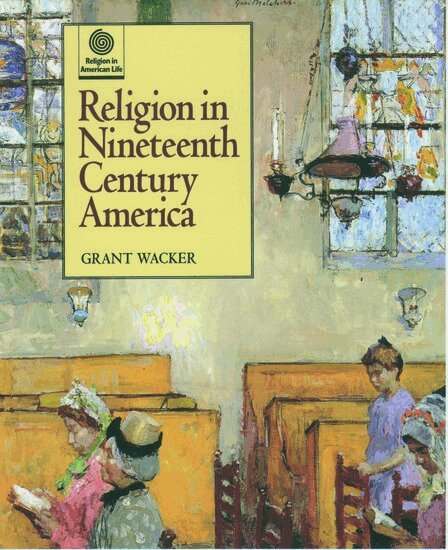
Written from the perspective of the various denominations that thrived in the 19th century, this comprehensive survey of the middle period in America's religious past actually starts a little earlier, in the 1780s. In the aftermath of the American Revolution, the citizens of the newly-minted republic had to cope with more than the havoc wreaked on churches and denominations by the war. They also tasted for the first time the effects of two novel ideas incorporated in the Constitution and the First Amendment: the separation of church and state and the freedom to practice any religion.Grant Wacker takes readers on a lively tour of the numerous religions and the major historical challenges--from the Civil War and westward expansion to immigration and the Industrial Revolution--that defined the century. The narrative focuses on the rapid growth of evangelical Protestants, in denominations such as Methodists, Presbyterians, and Baptists, and their competition for dominance with new immigrants' religions such as Catholicism and Judaism. The author discusses issues ranging from temperance to Sunday schools and introduces the personalities--sometimes colorful, sometimes saintly, and often both--of the men and women who shaped American religion in the 19th century, including Methodist bishop Francis Asbury, ex-slave Sojourner Truth, Christian Science founder Mary Baker Eddy, and evangelist Dwight L. Moody.Religion in American Life explores the evolution, character, and dynamics of organized religion in America from 1500 to the present day. Written by distinguished religious historians, these books weave together the varying stories that compose the religious fabric of the United States, from Puritanism to alternative religious practices. Primary source material coupled with handsome illustrations and lucid text make these books essential in any exploration of America's diverse nature. Each book includes a chronology, suggestions for further reading, and index.
769 kr
Skickas inom 3-6 vardagar
407 kr
Skickas inom 5-8 vardagar
"Quite ambitious, tracing religion in the United States from European colonization up to the 21st century.... The writing is strong throughout."--Publishers Weekly (starred review)"One can hardly do better than Religion in American Life.... A good read, especially for the uninitiated. The initiated might also read it for its felicity of narrative and the moments of illumination that fine scholars can inject even into stories we have all heard before. Read it."--Church HistoryThis new edition of Religion in American Life, written by three of the country's most eminent historians of religion, offers a superb overview that spans four centuries, illuminating the rich spiritual heritage central to nearly every event in our nation's history. Beginning with the state of religious affairs in both the Old and New Worlds on the eve of colonization and continuing through to the present, the book covers all the major American religious groups, from Protestants, Jews, and Catholics to Muslims, Hindus, Mormons, Buddhists, and New Age believers. Revised and updated, the book includes expanded treatment of religion during the Great Depression, of the religious influences on the civil rights movement, and of utopian groups in the 19th century, and it now covers the role of religion during the 2008 presidential election, observing how completely religion has entered American politics.
308 kr
Skickas inom 10-15 vardagar
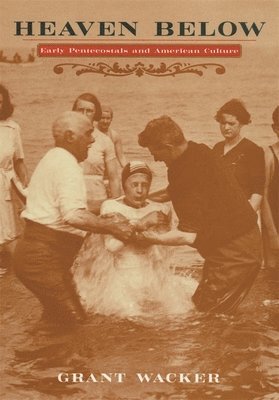
In this lively history of the rise of pentecostalism in the United States, Grant Wacker gives an in-depth account of the religious practices of pentecostal churches as well as an engaging picture of the way these beliefs played out in daily life.The core tenets of pentecostal belief—personal salvation, Holy Ghost baptism, divine healing, and anticipation of the Lord’s imminent return—took root in the first quarter of the twentieth century. Wacker examines the various aspects of pentecostal culture, including rituals, speaking in tongues, the authority of the Bible, the central role of Jesus in everyday life, the gifts of prophecy and healing, ideas about personal appearance, women’s roles, race relations, attitudes toward politics and the government. Tracking the daily lives of pentecostals, and paying close attention to the voices of individual men and women, Wacker is able to identify the reason for the movement’s spectacular success: a demonstrated ability to balance idealistic and pragmatic impulses, to adapt distinct religious convictions in order to meet the expectations of modern life.More than twenty million American adults today consider themselves pentecostal. Given the movement’s major place in American religious life, the history of its early years—so artfully told here—is of central importance.
419 kr
Skickas inom 10-15 vardagar
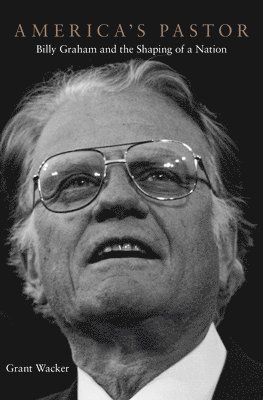
During a career spanning sixty years, the Reverend Billy Graham’s resonant voice and chiseled profile entered the living rooms of millions of Americans with a message that called for personal transformation through God’s grace. How did a lanky farm kid from North Carolina become an evangelist hailed by the media as “America’s pastor”? Why did listeners young and old pour out their grief and loneliness in letters to a man they knew only through televised “Crusades” in faraway places like Madison Square Garden? More than a conventional biography, Grant Wacker’s interpretive study deepens our understanding of why Billy Graham has mattered so much to so many.Beginning with tent revivals in the 1940s, Graham transformed his born-again theology into a moral vocabulary capturing the fears and aspirations of average Americans. He possessed an uncanny ability to appropriate trends in the wider culture and engaged boldly with the most significant developments of his time, from communism and nuclear threat to poverty and civil rights. The enduring meaning of his career, in Wacker’s analysis, lies at the intersection of Graham’s own creative agency and the forces shaping modern America.Wacker paints a richly textured portrait: a self-deprecating servant of God and self-promoting media mogul, a simple family man and confidant of presidents, a plainspoken preacher and the “Protestant pope.” America’s Pastor reveals how this Southern fundamentalist grew, fitfully, into a capacious figure at the center of spiritual life for millions of Christians around the world.
242 kr
Skickas
246 kr
Skickas inom 5-8 vardagar
414 kr
Skickas
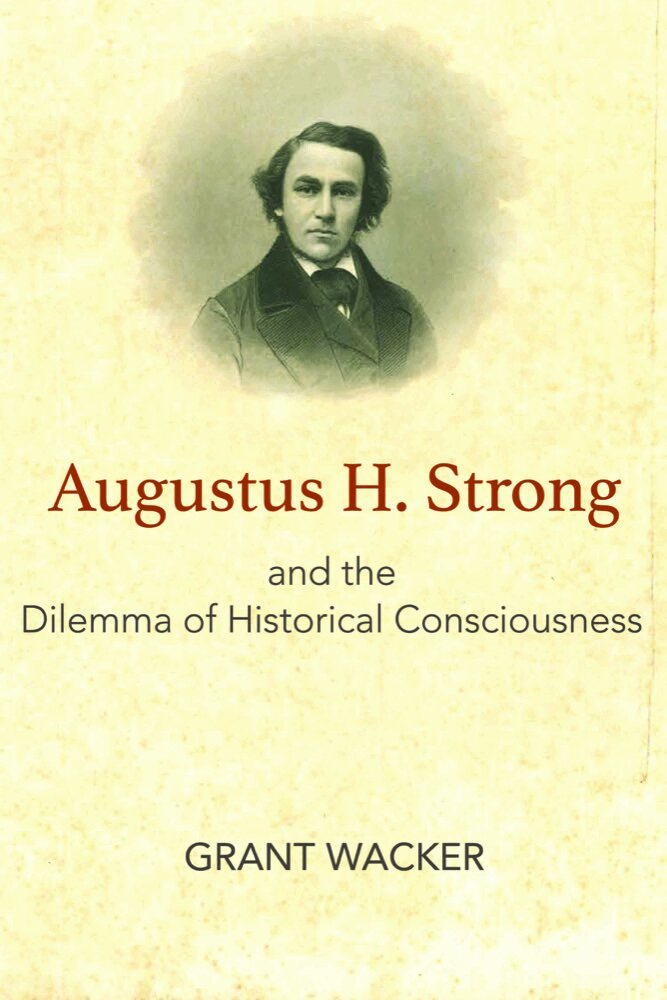
At the end of the nineteenth century, Augustus Strong emerged as one of the most influential church leaders and theologians in America. But, as Grant Wacker reveals in this masterful study, Strong also proved to be as tragic a figure as he was influential. Strong was forced to choose between conceptual worlds that were, to him, equally incompatible and compelling. Strong wrestled with how the critical study of history, exemplified in the method commonly called ""historicism"" (or ""historical consciousness""), can be reconciled with the many ahistorical assumptions embedded in the claims of traditional Christianity. Is the notion of human sinfulness, for example, simply an artifact of time and place? Or does it carry an underlying truth that endures, independent of the biblical context and interpretation of classic Christian thinkers? Strong acquired a historical awareness considered rare among conservative scholars. Despite cultivating this historical sensibility, he struggled with its implications. In the end, Wacker writes, Strong ""clung to the conviction that the faith once delivered unto the fathers somehow stands above the vicissitudes of history, even as he became increasingly conscious that all things human are fragile creations of time and place."" This edition, complete with a new preface, reveals why Strong remains relevant today. Strong, though a man of his time, illustrates the perennial conflict created by competing interests of theology and history, a conflict that still torments those who seek to be faithful to the obligations of both the church and academy.
257 kr
Skickas
At the end of the nineteenth century, Augustus Strong emerged as one of the most influential church leaders and theologians in America. But, as Grant Wacker reveals in this masterful study, Strong also proved to be as tragic a figure as he was influential. Strong was forced to choose between conceptual worlds that were, to him, equally incompatible and compelling. Strong wrestled with how the critical study of history, exemplified in the method commonly called ""historicism"" (or ""historical consciousness""), can be reconciled with the many ahistorical assumptions embedded in the claims of traditional Christianity. Is the notion of human sinfulness, for example, simply an artifact of time and place? Or does it carry an underlying truth that endures, independent of the biblical context and interpretation of classic Christian thinkers? Strong acquired a historical awareness considered rare among conservative scholars. Despite cultivating this historical sensibility, he struggled with its implications. In the end, Wacker writes, Strong ""clung to the conviction that the faith once delivered unto the fathers somehow stands above the vicissitudes of history, even as he became increasingly conscious that all things human are fragile creations of time and place."" This edition, complete with a new preface, reveals why Strong remains relevant today. Strong, though a man of his time, illustrates the perennial conflict created by competing interests of theology and history, a conflict that still torments those who seek to be faithful to the obligations of both the church and academy.
415 kr
Skickas inom 7-10 vardagar
A spirit of religious revival blazed across the United States just after 1900. With a focus on Holy Spirit power, early adherents stirred an enthusiastic response, first at a Bible school in Topeka and then in a small mission on Asuza Street in Los Angeles. Almost immediately, the movement spread to Houston, Chicago, and then northeastern urban centers. By the early 1910s the fervor had reached most parts of the United States, Canada, and northern Mexico, and eventually the converts called themselves pentecostals. Today there are pentecostals all over the world. From the beginning the movement was unusually diverse: women and African Americans were active in many of the early fellowships, and although some groups were segregated, some were interracial. Everytwhere, ordinary people passionately devoted themselves to salvation, Holy Ghost baptism evidenced by speaking in tongues, divine healing, and anticipation of the Lord's imminent return. This movement saw itself as leaderless, depending on individual conversion and a radical equality of souls — or, as early devotees would say, on the Holy Spirit. But a closer look reveals a host of forceful, clear-eyed leaders. This volume offers twenty biographical portraits of the first-generation pioneers who wove the different strands of Holy Spirit revivalism into a coherent and dramatically successful movement.