James Grier - Böcker
Visar alla böcker från författaren James Grier. Handla med fri frakt och snabb leverans.
6 produkter
6 produkter
148 kr
Skickas
No one doubts that we are all flawed people, but in our social-media driven, polarized society, we often fall into the trap of categorising people as wholly good or wholly bad. In reality, everyone is a mix of the two. What's more, we realise that God loves and calls people in spite of their faults and failings, and that we're still not 'good' enough to qualify.Drawing on years of careful study and pastoral ministry, Bishop of Plymouth James Grier reveals the ways in which the heroes of scripture are more like us than we realise, with both their God-given strengths and profound weaknesses. The book is in four parts: exploring the beginning of leadership in Genesis, through Moses, the first two Kings and finally Jesus' apostles. Bishop James, along with his wife Liz, adds to this teaching with insights and anecdotes from their own experiences.This is a book for anyone who is trying, with varying degrees of success, to follow Jesus, whether as a leader or simply as a follower. It will offer reassurance to those who have been shaken by the failure of a leader, aspire to step into leadership themselves or are just trying to lead where they are. It asks questions of our hearts and attitudes, and it provides practical encouragement as we seek to follow God and become more like him, despite our shortcomings.
The Musical World of a Medieval Monk
Adémar de Chabannes in Eleventh-century Aquitaine
Häftad, Engelska, 2009
626 kr
Skickas inom 7-10 vardagar
James Grier documents the musical activities of Adémar de Chabannes, eleventh-century monk, historian, homilist and tireless polemicist for the apostolic status of Saint Martial, patron saint of the abbey that bore his name in Limoges. Adémar left behind some 451 folios of music with notation in his autograph hand, a musical resource without equal before the seventeenth century. He introduced, at strategic moments, pieces familiar from the standard liturgy for an apostle and items of his own composition. These reveal Adémar to be a supremely able designer of liturgies and a highly original composer. This study analyses his accomplishments as a musical scribe, compiler of liturgies, editor of existing musical works and composer; it also offers a speculative consideration of his abilities as a singer; and finally, it places Adémar's musical activities in the context of liturgical, musical and political developments at the abbey of Saint Martial in Limoges.
550 kr
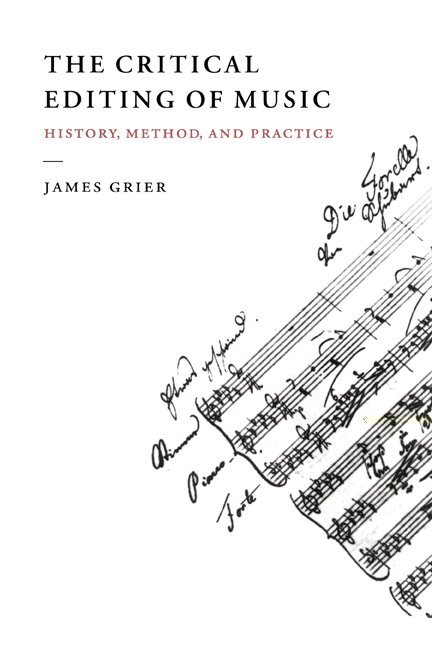
This is the first book to provide an introduction to music editing, including the history of the field, and the issues and problems encountered. The preparation of editions for performance and study is one of the most important activities and contributions of the music scholar to cultural life. Through accessible editions, previously unknown music enters the repertory, while well-known works receive fresh interpretations. James Grier examines music editing from the early music repertory to contemporary works, including a number of genres from opera to the symphony. Grier also examines the future of music editing and its application on CD-ROM and related electronic media.
331 kr
Skickas inom 7-10 vardagar
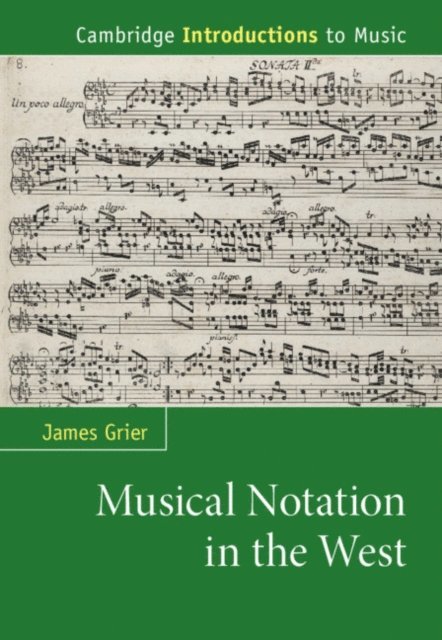
Musical notation is a powerful system of communication between musicians, using sophisticated symbolic, primarily non-verbal means to express musical events in visual symbols. Many musicians take the system for granted, having internalized it and their strategies for reading it and translating it into sound over long years of study and practice. This book traces the development of that system by combining chronological and thematic approaches to show the historical and musical context in which these developments took place. Simultaneously, the book considers the way in which this symbolic language communicates to those literate in it, discussing how its features facilitate or hinder fluent comprehension in the real-time environment of performance. Moreover, the topic of musical as opposed to notational innovation forms another thread of the treatment, as the author investigates instances where musical developments stimulated notational attributes, or notational innovations made practicable advances in musical style.
The Musical World of a Medieval Monk
Adémar de Chabannes in Eleventh-century Aquitaine
Inbunden, Engelska, 2006
916 kr
Skickas inom 7-10 vardagar
James Grier documents the musical activities of Adémar de Chabannes, eleventh-century monk, historian, homilist and tireless polemicist for the apostolic status of Saint Martial, patron saint of the abbey that bore his name in Limoges. Adémar left behind some 451 folios of music with notation in his autograph hand, a musical resource without equal before the seventeenth century. He introduced, at strategic moments, pieces familiar from the standard liturgy for an apostle and items of his own composition. These reveal Adémar to be a supremely able designer of liturgies and a highly original composer. This study analyses his accomplishments as a musical scribe, compiler of liturgies, editor of existing musical works and composer; it also offers a speculative consideration of his abilities as a singer; and finally, it places Adémar's musical activities in the context of liturgical, musical and political developments at the abbey of Saint Martial in Limoges.
1 173 kr
Skickas inom 7-10 vardagar
Musical notation is a powerful system of communication between musicians, using sophisticated symbolic, primarily non-verbal means to express musical events in visual symbols. Many musicians take the system for granted, having internalized it and their strategies for reading it and translating it into sound over long years of study and practice. This book traces the development of that system by combining chronological and thematic approaches to show the historical and musical context in which these developments took place. Simultaneously, the book considers the way in which this symbolic language communicates to those literate in it, discussing how its features facilitate or hinder fluent comprehension in the real-time environment of performance. Moreover, the topic of musical as opposed to notational innovation forms another thread of the treatment, as the author investigates instances where musical developments stimulated notational attributes, or notational innovations made practicable advances in musical style.