• Fri frakt över 249 kr
  • •
  • Snabba leveranser
  • •
  • Billiga böcker
Kundservice

Du är på sajten för privatpersoner.

Företag, bibliotek eller offentlig verksamhet?

Du handlar på classic.bokus.com, där alla dina funktioner finns intakta.
Till classic.bokus.com
Bokus logotyp. Gå till startsidan.
  • Erbjudanden
  • Nyheter
  • Student
  • Topplistor
  • Barn & ungdom
  • Bokus Play
  • E-böcker
  • Pocketböcker
  • Spel & pussel

10% rabatt på allt med kod NYSTART10 →

Sidfot

Mina sidor

    Hjälp

    • Kundservice
    • Vanliga frågor och svar
    • Frakt och leverans
    • Retur vid ångerrätt
    • Reklamera vara
    • Betalning
    • Köpvillkor
    • Allmänna villkor
    • Information om webbplatsens tillgänglighet

    Om Bokus

    • Om oss
    • Pressrum
    • För studenter
    • För företag
    • För bibliotek och offentlig verksamhet
    • För leverantörer
    • Hållbarhet

    Populärt

    • Aktuella erbjudanden
    • Presentkort
    • Studentlitteratur
    • Nya böcker
    • Topplistor
    • Signerade böcker
    • Engelska böcker

    Inspiration

    • Boktips
    • BookTok
    • Populära bokserier
    • Barnbokskaraktärer
    • Populära författare
    Logotyp för Bokus
    Följ oss på Facebook (extern länk)Följ oss på Instagram (extern länk)Följ oss på YouTube (extern länk)Följ oss på TikTok (extern länk)
    bokus @ CookiesAnpassa cookiesIntegritetspolicyKöpvillkor
    Till Citymail hemsida (extern länk)Till Budbee hemsida (extern länk)Till Postnord hemsida (extern länk)Till Schenker hemsida (extern länk)Till Early Bird hemsida (extern länk)Till Walleys hemsida (extern länk)
    1. Kultur
    2. Musikböcker
    3. Musik: stilar och genrer
    4. Klassisk musik, konstmusik och orkestermusik

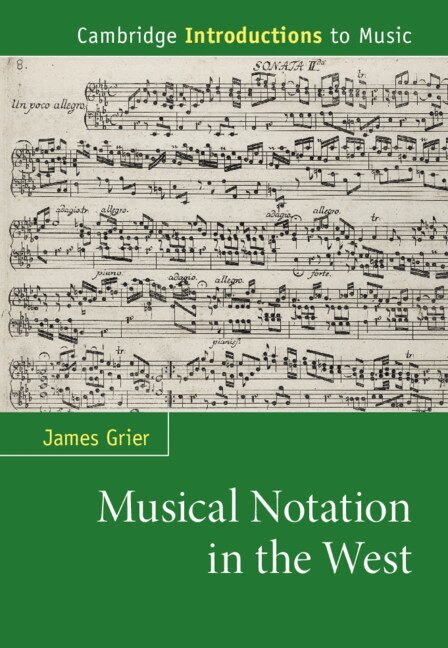
    Musical Notation in the West

    AvJames Grier

    Häftad, Engelska, 2021

    Del i serien Cambridge Introductions to Music

    351 kr

    Beställningsvara. Skickas inom 10-15 vardagar. Fri frakt över 249 kr.

    Fler format och utgåvor

    Inbunden

    1 250 kr

    E-bok

    423 kr

    E-bok

    424 kr

    Beskrivning

    Musical notation is a powerful system of communication between musicians, using sophisticated symbolic, primarily non-verbal means to express musical events in visual symbols. Many musicians take the system for granted, having internalized it and their strategies for reading it and translating it into sound over long years of study and practice. This book traces the development of that system by combining chronological and thematic approaches to show the historical and musical context in which these developments took place. Simultaneously, the book considers the way in which this symbolic language communicates to those literate in it, discussing how its features facilitate or hinder fluent comprehension in the real-time environment of performance. Moreover, the topic of musical as opposed to notational innovation forms another thread of the treatment, as the author investigates instances where musical developments stimulated notational attributes, or notational innovations made practicable advances in musical style.

    Produktinformation

    • Utgivningsdatum:2021-02-18
    • Mått:167 x 244 x 15 mm
    • Vikt:560 g
    • Format:Häftad
    • Språk:Engelska
    • Serie:Cambridge Introductions to Music
    • Antal sidor:284
    • Förlag:Cambridge University Press
    • ISBN:9780521726429

    Utforska kategorier

    • Klassisk musik, konstmusik och orkestermusik inom Kultur

    Mer om författaren

    James Grier is Professor of Music History at the University of Western Ontario and Fellow of the Royal Society of Canada. He has written The Critical Editing of Music (Cambridge, 1996; Spanish translation 2008), and three books on the music of Adémar de Chabannes, eleventh-century Aquitanian monk.

    Recensioner i media

    'Recommended.' S. C. Pelkey, Choice Magazine

    Innehållsförteckning

    • List of figures; List of tables; List of musical examples; Preface; 1. Introduction: musical notation as a symbolic language; 2. Plainsong and the origins of musical notation in the west; 3. Polyphony and rhythmic notation; 4. The transition to the modern era: instrumental music and performing indications; 5. Notational nuance in the twentieth century, and the motives for notational innovation; Bibliography.