James R. Zimbelman – författare
1 477 kr
Skickas inom 10-15 vardagar
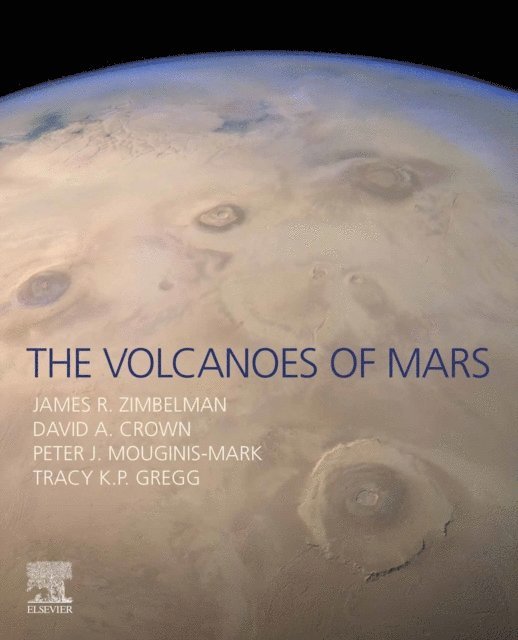
The Volcanoes of Mars offers a clear, cohesive summary of Mars volcanology. It begins with an introduction to the geology and geography of the red planet and an overview of its volcanic history, and continues to discuss each distinct volcanic province, identifying the common and unique aspects of each region. Incorporating basic volcanological information and constraints on the regional geologic history derived from geologic mapping, the book also examines current constraints on the composition of the volcanic rocks as investigated by both orbiting spacecraft and rovers. In addition, it compares the features of Martian volcanoes to those seen on other volcanic bodies.
Concluding with prospects for new knowledge to be gained from future Mars missions, this book brings researchers in volcanology and the study of Mars up to date on the latest findings in the study of volcanoes on Mars, allowing the reader to compare and contrast Martian volcanoes to volcanoes studied on Earth and throughout the Solar System.
Presents clearly organized text and figures that will quickly allow the reader to find specific aspects of Martian volcanismIncludes definitions of geological and volcanological terms throughout to aid interdisciplinary understandingSummarizes key results for each volcanic region of Mars and provides copious citations to the research literature to facilitate further discoverySynthesizes the most current data from multiple spacecraft missions, including the Mars Reconnaissance Orbiter, as well as geochemical data from Martian meteoritesUtilizes published geologic mapping results to highlight the detailed knowledge that exists for each region1 975 kr
Läs direkt efter köp
1 086 kr
Skickas inom 10-15 vardagar
1 086 kr
Skickas inom 10-15 vardagar
1 416 kr
Läs direkt efter köp
1 092 kr
Skickas inom 10-15 vardagar
1 416 kr
Läs direkt efter köp
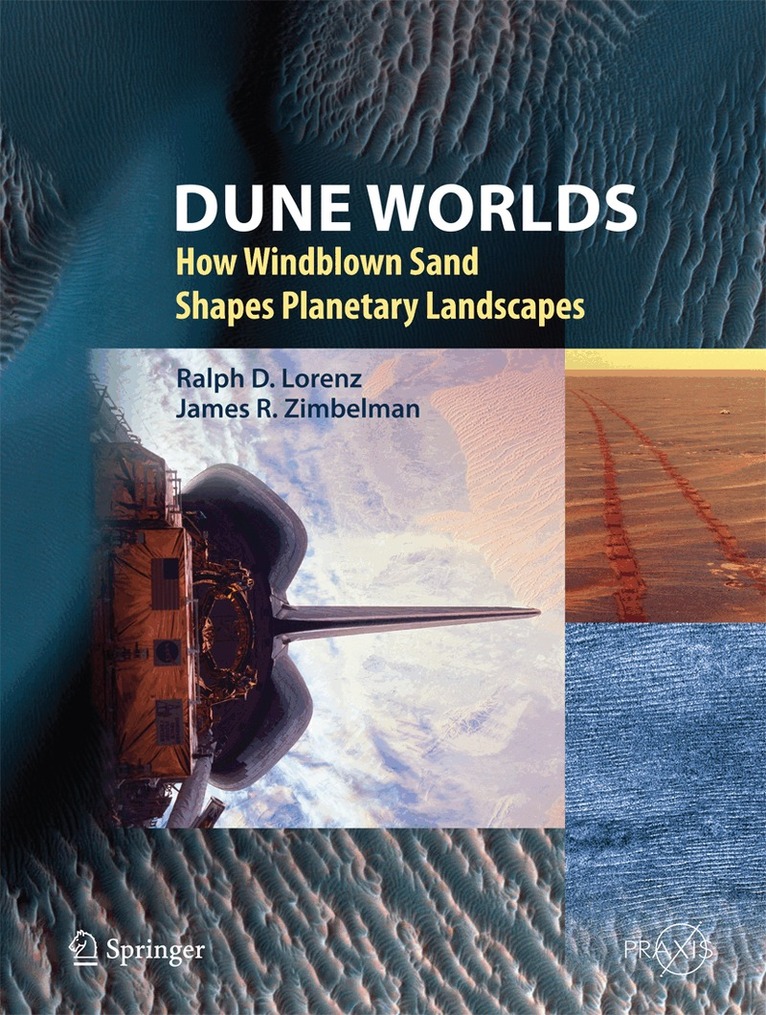
This book describes how sand dunes work, why they are the way they are in different settings, and how they are being studied. Particular attention is paid to their formation and appearance elsewhere in the solar system. New developments in knowledge about dunes make for an interesting story – like the dunes themselves, dune science is dynamic – and the visual appeal of Aeolian geomorphology ensures that this is an attractive volume.
The book is divided into 4 parts, the first of which introduces dunes as a planetary phenomenon, showing a landscape reflecting the balance of geological processes – volcanism, impact, tectonics, erosion, deposition of sediments. Dunes are then considered as emergent dynamical systems: the interaction of sand and wind conspires to generate very characteristic and reproducible shapes. Analogies are given with other emergent structures such as patterned ground before the influence of dunes on desert peoples and infrastructure is studied, together with their use as forensic climatological indicators.
Dune Physics is looked at with regard to the mechanics of sand, the physics of wind, saltation – interaction of sand and air – dunes versus ripples and transverse Aeolian ridges, the classification of dune morphology and the sources and sinks of sand. Dune Trafficability considers soil mechanics, effects on mobility on Earth, Mars and elsewhere.
In the second part, Earth, Mars, Titan and other moons and planets are examined, beginning with a survey of the major deserts and dunefields on Earth. The authors then turn to Mars and its environment, sediment type, dune stratigraphy, sediment source and sinks and the association of dunes with topographic features. Titan follows - its thick, cold atmosphere, methane dampness, low gravity, morphology – interaction with topography and the implications of dunes for climate and winds. Dunes elsewhere conclude this part. There are few dunefields on Venus, but there is a .possibility ofAeolian transport on Triton and volcanic-related windstreaks on Io.
1 091 kr
Skickas inom 10-15 vardagar