James S. Baumlin - Böcker
Visar alla böcker från författaren James S. Baumlin. Handla med fri frakt och snabb leverans.
5 produkter
5 produkter
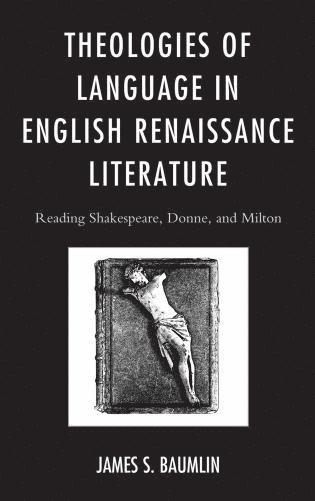
Theologies of Language in English Renaissance Literature
Reading Shakespeare, Donne, and Milton
Häftad, Engelska, 2014
776 kr
Skickas inom 10-15 vardagar
James S. Baumlin’s Theologies of Language in English Renaissance Literature offers a revisionist history of discourse, taking Shakespeare, Donne, and Milton as its touchstones. Their works mark stages in dieEntzauberung or “disenchantment,” as Max Weber has termed it: that is, in the “elimination of magic from the world.” Shakespeare’s Hamlet questions the word-magic associated with medieval Catholicism; Donne’s love lyrics ironize the sacramental gestures of their poetic-priestly speakers; more radical still, Milton’s major poems and polemical prose empty language of sacral power, repudiating human persuasion entirely over matters of “saving faith.” Baumlin describes four archetypes of historical rhetoric: sophism, skepticism, incarnationism, and transcendence. Undergirding the age’s competing theologies, each makes unique assumptions regarding the powers of language (both communicative and performative); the nature of being (including transcendent being or deity); the structure of the psyche (whether sin-weakened or self-sufficient); and the capacities of human knowing (whether certain knowledge is communicable—or even possible). Working within divergent theologies of language, the poets here studied take theological controversies as explicit themes. The crisis of Hamlet begins not in a king’s murder simply, but in his dying without benefit of the sacraments. As if compensating for their loss, young Hamlet “minister[s]” to Gertrude while acting as “scourge” to Claudius. Alternating between soul-cursing and soul-curing, Hamlet plays sorcerer and priest indiscriminately.Appropriating the speech-acts of Catholic sacramentalism, Donne’s lyrics describe a private “religion of Love,” over which the poet-lover presides as officiant. Or rather, some lyrics present him as Love’s Priest, there being as many personae as there are theologies of language. Beyond Love’s Priest, Baumlin describes three such personae: Love’s Apostate, Love’s Atheist, and Love’s Reformer. Focusing on “Lycidas” and De Doctrina Christiana, Baumlin outlines Milton’s plerophoristic “rhetoric of certitude.” Such texts as these explore the problematic status of preaching. (Can human eloquencecontribute to salvation?) They explore competing definitions (Aristotelian vs. Pauline) of pistis—meaningalternatively (religious) “faith” and (rhetorical) “persuasion.” And they invoke conflicting typologies (classical vs. Hebraic) of authorial ethos. Baumlin’s study ends with a glance at the Restoration and Royal Society’s final “disenchantment” or secularization of discourse.
1 215 kr
Tillfälligt slut
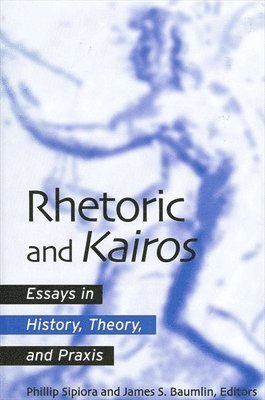
The first comprehensive discussion of the history, theory, and practice of kairos: that is of the role "timeliness" or "right-timing" plays in human deliberation, speech, and action.This collection offers the first comprehensive discussion of the history, theory, and pedagogical applications of kairos, a seminal and recently revised concept of classical rhetoric. Augusto Rostagni, James L. Kinneavy, Richard Leo Enos, John Poulakos, and John E. Smith are among the international list of scholars who explore the Homeric and literary origins of kairos, the technologies of time-keeping in antiquity, the role of "right-timing" in Hippocratic medicine, the improvisations of Gorgias, as well as the uses of kairos in Isocrates, Plato, Aristotle, Cicero, and the New Testament. Broad in its scope, the book also examines the distinctive philosophies of time reflected in Renaissance Humanism, Nineteenth-Century American Transcendentalism, Oriental art and ritual, and the application of kairos to contemporary philosophy, ethics, literary criticism, rhetorical theory, and composition pedagogy.
440 kr
Tillfälligt slut
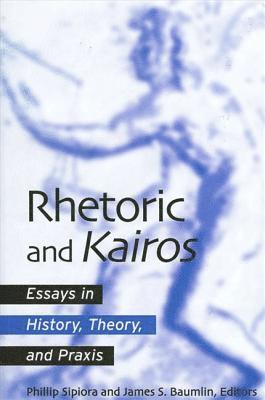
The first comprehensive discussion of the history, theory, and practice of kairos: that is of the role "timeliness" or "right-timing" plays in human deliberation, speech, and action.This collection offers the first comprehensive discussion of the history, theory, and pedagogical applications of kairos, a seminal and recently revised concept of classical rhetoric. Augusto Rostagni, James L. Kinneavy, Richard Leo Enos, John Poulakos, and John E. Smith are among the international list of scholars who explore the Homeric and literary origins of kairos, the technologies of time-keeping in antiquity, the role of "right-timing" in Hippocratic medicine, the improvisations of Gorgias, as well as the uses of kairos in Isocrates, Plato, Aristotle, Cicero, and the New Testament. Broad in its scope, the book also examines the distinctive philosophies of time reflected in Renaissance Humanism, Nineteenth-Century American Transcendentalism, Oriental art and ritual, and the application of kairos to contemporary philosophy, ethics, literary criticism, rhetorical theory, and composition pedagogy.
1 215 kr
Tillfälligt slut
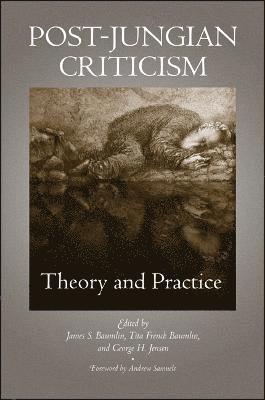
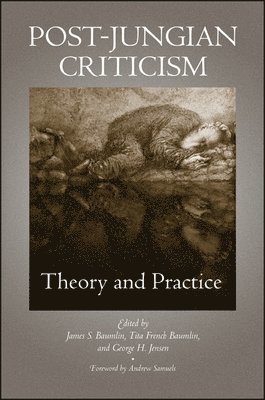
Rereads Jung in light of contemporary theoretical concerns, and offers a variety of examples of post-Jungian literary and cultural criticism.This groundbreaking collection brings the range and diversity of post-Jungian thought into the realm of contemporary literary and cultural criticism. These essays explore, expand, critique, and apply post-Jungian critical theory as they revisit and reread Jung's own writings from numerous perspectives. No longer treated as a source of clear, unequivocal, authoritative pronouncement, Jung's writings are themselves subjected to critical, deconstructive readings, and several of the essays confront head-on Jung's evident racism, antifeminism, anti-Semitism, and political conservatism. While not downplaying such charges, the contributors outline an alternative, post-Jungian theory responsive to contemporary feminist, postcolonial, and poststructural concerns. The result is not just a critical reinterpretation but, more important, a regeneration of Jungian thought.
391 kr
Tillfälligt slut
Rereads Jung in light of contemporary theoretical concerns, and offers a variety of examples of post-Jungian literary and cultural criticism.This groundbreaking collection brings the range and diversity of post-Jungian thought into the realm of contemporary literary and cultural criticism. These essays explore, expand, critique, and apply post-Jungian critical theory as they revisit and reread Jung's own writings from numerous perspectives. No longer treated as a source of clear, unequivocal, authoritative pronouncement, Jung's writings are themselves subjected to critical, deconstructive readings, and several of the essays confront head-on Jung's evident racism, antifeminism, anti-Semitism, and political conservatism. While not downplaying such charges, the contributors outline an alternative, post-Jungian theory responsive to contemporary feminist, postcolonial, and poststructural concerns. The result is not just a critical reinterpretation but, more important, a regeneration of Jungian thought.