James S. Damico - Böcker
Visar alla böcker från författaren James S. Damico. Handla med fri frakt och snabb leverans.
6 produkter
6 produkter
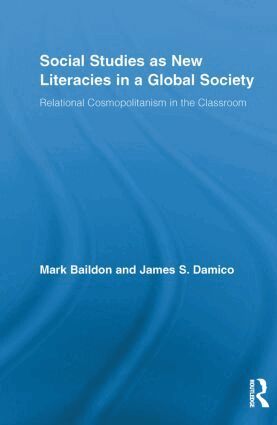
Social Studies as New Literacies in a Global Society
Relational Cosmopolitanism in the Classroom
Häftad, Engelska, 2012
665 kr
Skickas inom 10-15 vardagar
This book reconceptualizes social studies teaching and learning in ways that will help prepare students to live in "new times" – prepared for new forms of labor in the post-industrial economy, equipped to handle new and emerging technologies and function in the new media age, and prepared to understand different perspectives to participate in an increasingly diverse, multicultural global society. Mark Baildon and James Damico offer an integrated theoretical framework and corresponding set of web-based technology tools to guide a reconceptualized social studies education and provide concrete examples of teachers and students wrestling with core challenges involved in doing inquiry-based investigations with web-based texts. The authors also lay out a range of suggestions for social studies and literacy teachers, curriculum developers, teacher educators, and researchers interested in enacting and researching social studies as new literacies for living in the global society in the 21st century.
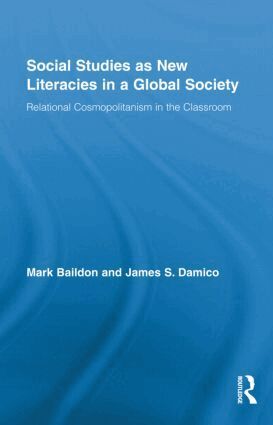
Social Studies as New Literacies in a Global Society
Relational Cosmopolitanism in the Classroom
Inbunden, Engelska, 2010
2 224 kr
Skickas inom 10-15 vardagar
This book reconceptualizes social studies teaching and learning in ways that will help prepare students to live in "new times" – prepared for new forms of labor in the post-industrial economy, equipped to handle new and emerging technologies and function in the new media age, and prepared to understand different perspectives to participate in an increasingly diverse, multicultural global society. Mark Baildon and James Damico offer an integrated theoretical framework and corresponding set of web-based technology tools to guide a reconceptualized social studies education and provide concrete examples of teachers and students wrestling with core challenges involved in doing inquiry-based investigations with web-based texts. The authors also lay out a range of suggestions for social studies and literacy teachers, curriculum developers, teacher educators, and researchers interested in enacting and researching social studies as new literacies for living in the global society in the 21st century.
428 kr
Skickas inom 11-20 vardagar
Climate change and climate denial have remained largely off the radar in literacy and social studies education. This book addresses that gap with the design of the Climate Denial Inquiry Model (CDIM) and clear examples of how educators and students can confront two forms of climate denial: science denial and action denial. The CDIM highlights how critical literacies specifically designed for climate denial texts can be used alongside eco-civic practices of deliberation, reflexivity, and counter-narration to help students discern corporate, financial, and politically motivated roots of climate denial and to better understand efforts to misinform the American public, sow doubt and distrust of basic scientific knowledge, and erode support for evidence-based policymaking and collective civic action. With an emphasis on inquiry-based teaching and learning, the book also charts a path from destructive stories-we-live-by that are steeped in climate denial (humans are separate from nature, the primary goal of society is economic growth without limits, nature is a resource to be used and exploited) to ecojustice stories-To-live by that invite teachers and students to consider more just and sustainable futures.Book Features:An innovative model to help educators address climate science denial and climate action denial.Clear examples of how to integrate critical literacies designed specifically for climate denial.Concrete climate- and inquiry-based teaching and learning pathways in literacy and social studies with much potential for connections across other content areas. A path from destructive stories steeped in climate denial to more just and sustainable futures.
1 300 kr
Skickas inom 11-20 vardagar
Climate change and climate denial have remained largely off the radar in literacy and social studies education. This book addresses that gap with the design of the Climate Denial Inquiry Model (CDIM) and clear examples of how educators and students can confront two forms of climate denial: science denial and action denial. The CDIM highlights how critical literacies specifically designed for climate denial texts can be used alongside eco-civic practices of deliberation, reflexivity, and counter-narration to help students discern corporate, financial, and politically motivated roots of climate denial and to better understand efforts to misinform the American public, sow doubt and distrust of basic scientific knowledge, and erode support for evidence-based policymaking and collective civic action. With an emphasis on inquiry-based teaching and learning, the book also charts a path from destructive stories-we-live-by that are steeped in climate denial (humans are separate from nature, the primary goal of society is economic growth without limits, nature is a resource to be used and exploited) to ecojustice stories-To-live by that invite teachers and students to consider more just and sustainable futures.Book Features:An innovative model to help educators address climate science denial and climate action denial.Clear examples of how to integrate critical literacies designed specifically for climate denial.Concrete climate- and inquiry-based teaching and learning pathways in literacy and social studies with much potential for connections across other content areas. A path from destructive stories steeped in climate denial to more just and sustainable futures.
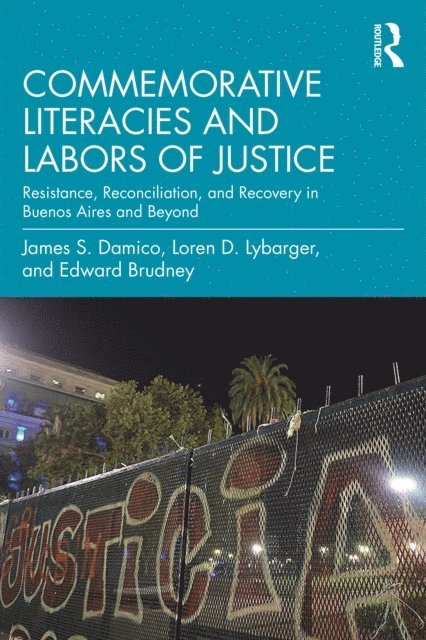
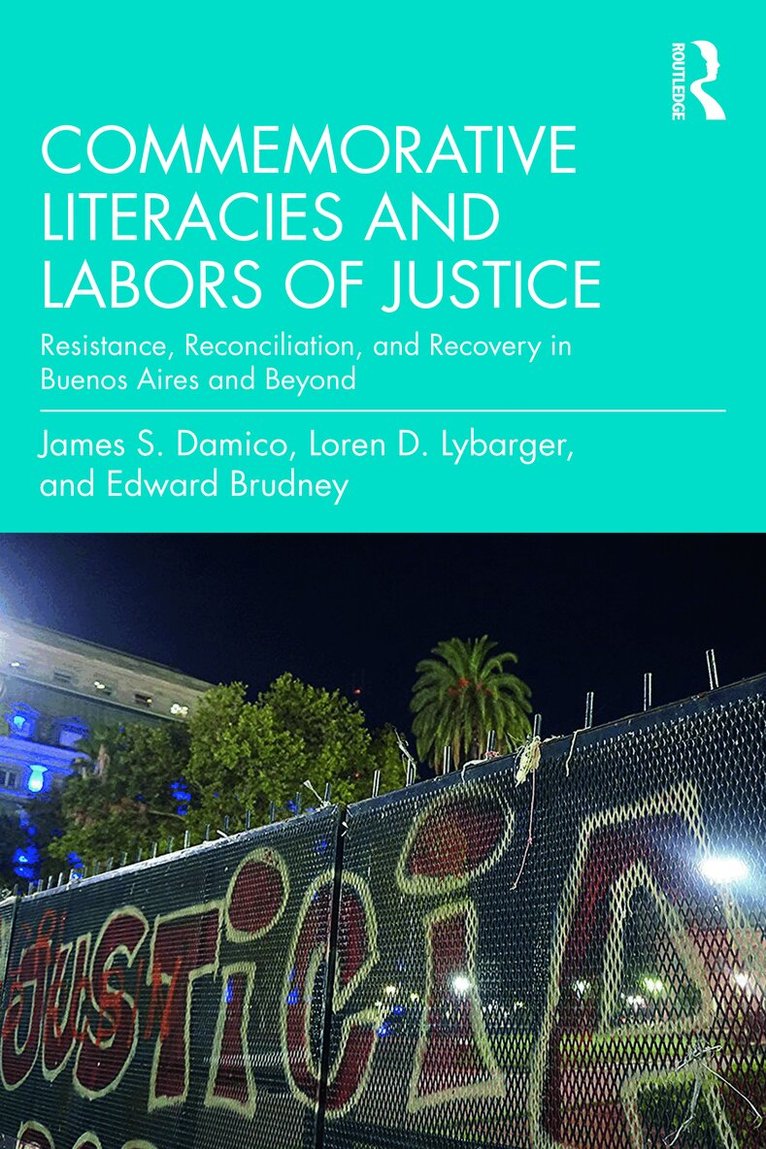
Commemorative Literacies and Labors of Justice
Resistance, Reconciliation, and Recovery in Buenos Aires and Beyond
Häftad, Engelska, 2021
560 kr
Skickas inom 10-15 vardagar
This book examines literacy practices of commemoration marking the 40th anniversary of the March 24, 1976 coup in Argentina. Drawing on research conducted across three distinct sites in Buenos Aires in March 2016—a public university, a Catholic church, and a former naval base and clandestine detention center transformed into a museum space for memory and justice—this book sheds light on the ways commemorative literacies at these locations work spatially to mobilize memory of the past to address and advance justice concerns in the present. These labors of justice manifest in three ways: as resistance, reconciliation, and recovery. Damico, Lybarger, and Brudney also demonstrate how these particular kinds of commemorative literacies resonate transnationally in ways that necessitate a commitment to commemorative ethics. This book is ideal not only for researchers, graduate students, and scholars in literacy studies but also for all those working in related fields, including memory studies, religious studies, area studies, and Latin American studies, to address issues pertaining to memory, testimony, transitional justice, state repression, and human rights in Argentina, Latin America, or the Global South, more generally.
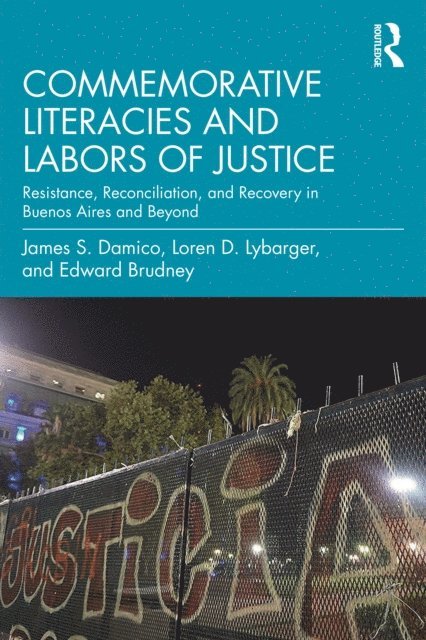
Commemorative Literacies and Labors of Justice
Resistance, Reconciliation, and Recovery in Buenos Aires and Beyond
Inbunden, Engelska, 2021
2 029 kr
Skickas inom 10-15 vardagar
This book examines literacy practices of commemoration marking the 40th anniversary of the March 24, 1976 coup in Argentina. Drawing on research conducted across three distinct sites in Buenos Aires in March 2016—a public university, a Catholic church, and a former naval base and clandestine detention center transformed into a museum space for memory and justice—this book sheds light on the ways commemorative literacies at these locations work spatially to mobilize memory of the past to address and advance justice concerns in the present. These labors of justice manifest in three ways: as resistance, reconciliation, and recovery. Damico, Lybarger, and Brudney also demonstrate how these particular kinds of commemorative literacies resonate transnationally in ways that necessitate a commitment to commemorative ethics. This book is ideal not only for researchers, graduate students, and scholars in literacy studies but also for all those working in related fields, including memory studies, religious studies, area studies, and Latin American studies, to address issues pertaining to memory, testimony, transitional justice, state repression, and human rights in Argentina, Latin America, or the Global South, more generally.