James S. Humphreys – författare
330 kr
Skickas inom 5-8 vardagar
302 kr
Läs direkt efter köp
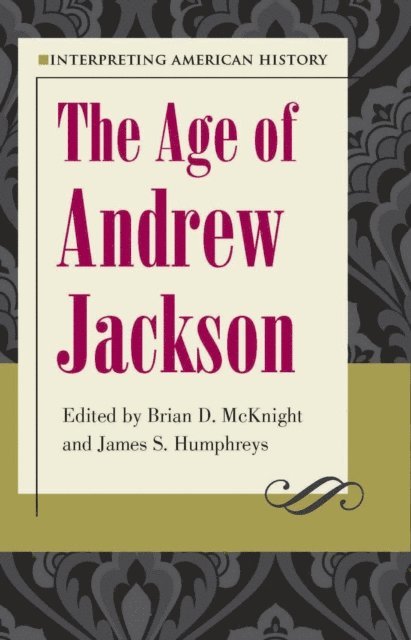
Historians possess the power to shape the view of history for those who come after them. Their efforts to illuminate significant events of the past often result in new interpretations, which frequently conflict with ideas proposed by earlier historians. Invariably, this divergence of thoughts creates a dissonance between historians about the causes and meanings of prior events. The Kent State University Press’s new Interpreting American History Series aims to help readers learn how truth emerges from the clash of interpretations present in the study of history.
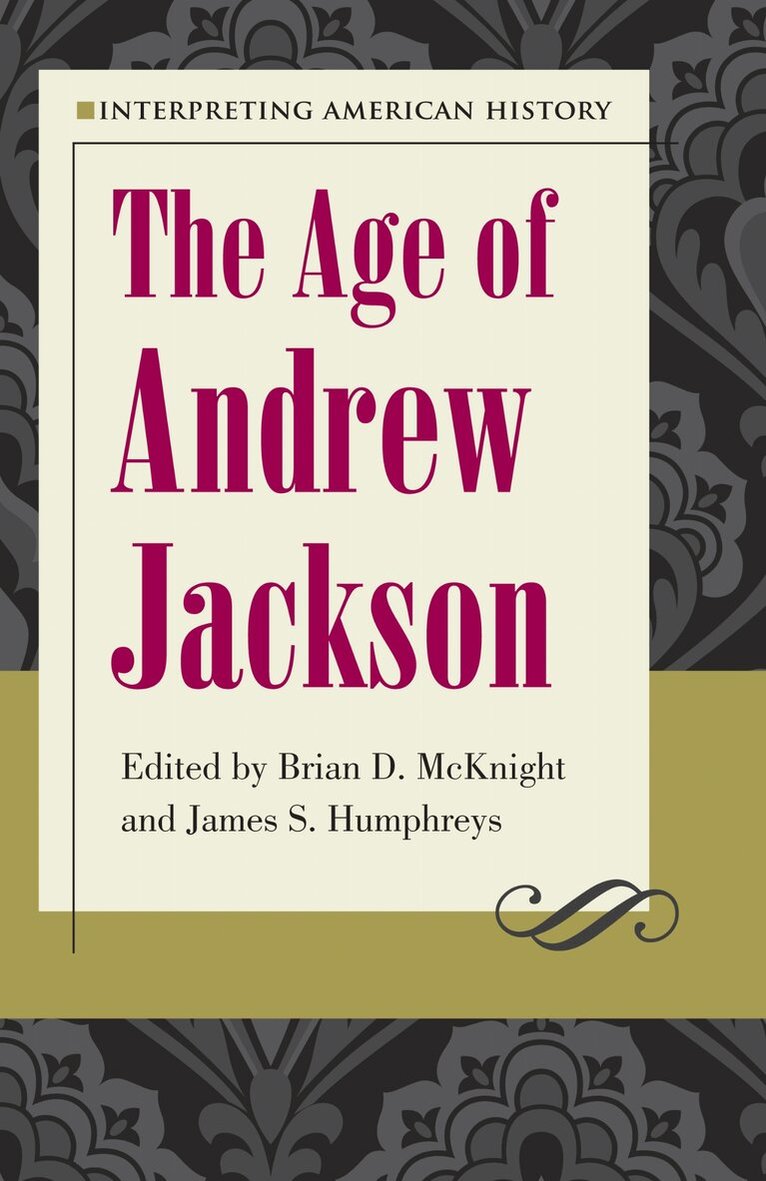
In the series’s first volume, Interpreting American History: The Age of Andrew Jackson, experts on Jacksonian America address the changing views of historians over the past century on a watershed era in U.S. history. A two-term president of the United States, Jackson was a powerful leader who widened constitutional boundaries on the presidency, shaping policy himself instead of deferring to the wishes of Congress.
The essayists in this volume review the most important issues of the period—including the Corrupt Bargain, Nullification Crisis, Indian Removal Act, and Jacksonian democracy, economics, and reform—and discuss their interpretation over the last hundred years by such historians as Frederick Jackson Turner, Richard Hofstadter, Arthur M. Schlesinger Jr., Sean Wilentz, Robert V. Remini, Daniel Feller, and David Walker Howe.
An insightful compilation of essays, Interpreting American History: The Age of Andrew Jackson will acquaint readers with the nineteenth-century world of Andrew Jackson and the ways in which historians have interpreted his life and times.
302 kr
Läs direkt efter köp
Historians possess the power to shape the view of history for those who come after them. Their efforts to illuminate significant events of the past often result in new interpretations, which frequently conflict with ideas proposed by earlier historians. Invariably, this divergence of thoughts creates a dissonance between historians about the causes and meanings of prior events. The Kent State University Press’s new Interpreting American History Series aims to help readers learn how truth emerges from the clash of interpretations present in the study of history.
In the series’s first volume, Interpreting American History: The Age of Andrew Jackson, experts on Jacksonian America address the changing views of historians over the past century on a watershed era in U.S. history. A two-term president of the United States, Jackson was a powerful leader who widened constitutional boundaries on the presidency, shaping policy himself instead of deferring to the wishes of Congress.
The essayists in this volume review the most important issues of the period—including the Corrupt Bargain, Nullification Crisis, Indian Removal Act, and Jacksonian democracy, economics, and reform—and discuss their interpretation over the last hundred years by such historians as Frederick Jackson Turner, Richard Hofstadter, Arthur M. Schlesinger Jr., Sean Wilentz, Robert V. Remini, Daniel Feller, and David Walker Howe.
An insightful compilation of essays, Interpreting American History: The Age of Andrew Jackson will acquaint readers with the nineteenth-century world of Andrew Jackson and the ways in which historians have interpreted his life and times.
394 kr
Läs direkt efter köp
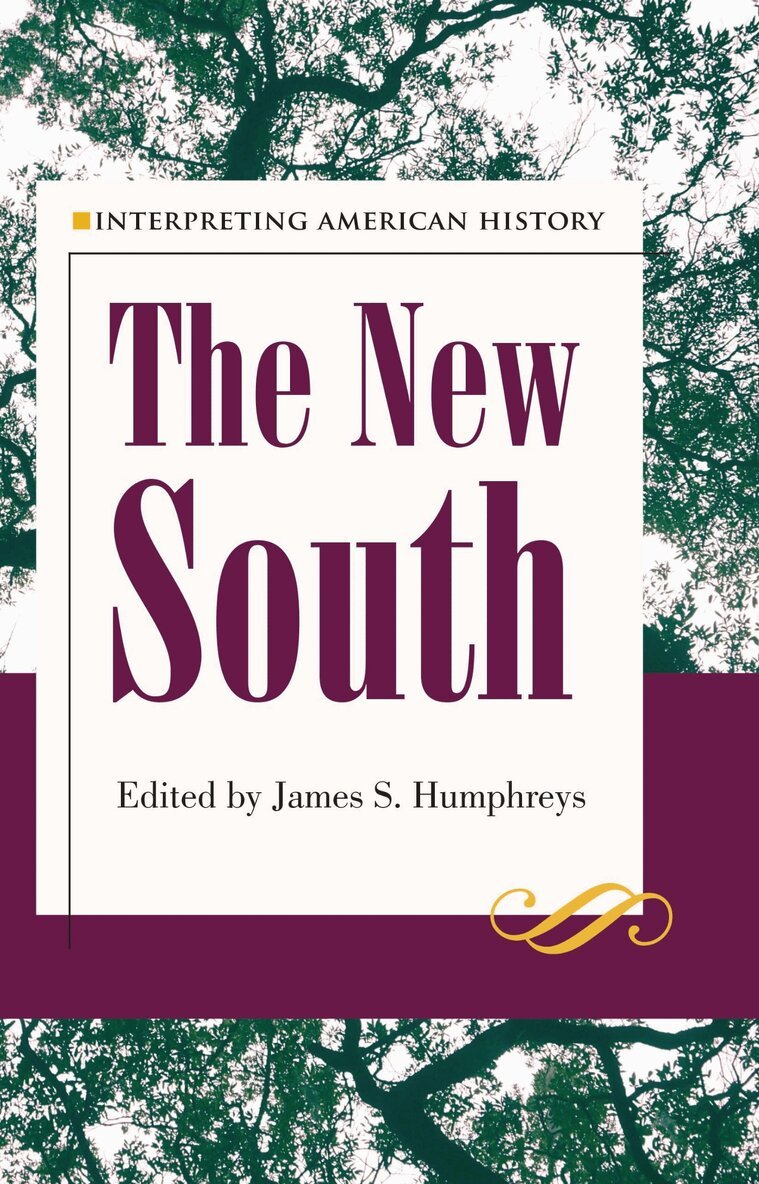
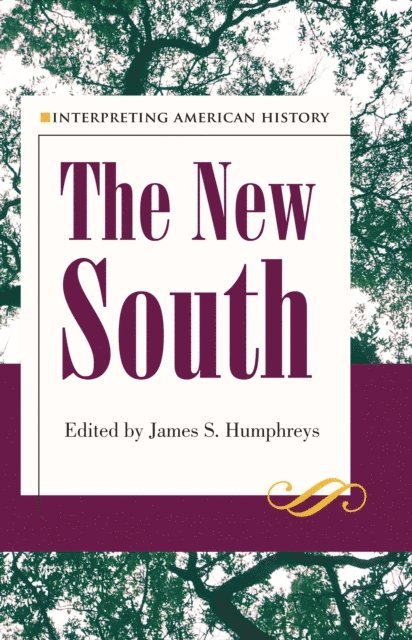
The concept of the "New South" has elicited fierce debate among historians since the mid-twentieth century. At the heart of the argument is the question of whether the post-Civil War South transformed itself into something genuinely new or simply held firm to patterns of life established before 1861. The South did change in significant ways after the Civil War ended, but many of its enduring trademarks, the most prominent being white supremacy, remained constant well into the twentieth century. Scholars have yet to meet the vexing challenge of proving or disproving the existence of a New South. Even in the twenty-first century, amid the South''s sprawling cities, expanding suburbia, and high-tech environment, vestiges of the Old South remain.
Bringing order out of the voluminous canon of writing on the New South poses a challenge. The essays here trace the lineaments of historical debate on the most important questions related to the South''s history since 1865 and how that argument has changed over time as modernity descended on Dixie. Interpreting American History: The New South consists of essays written by noted scholars that address topics relating to the New South, such as the Populist era, the Great Depression, and the Civil Rights Movement, and emerging fields such as Reconstruction in a global context, New South environmental history, and southern women. Each contributor explains clearly and succinctly the winding path historical writing has taken on each of the topics.
Interpreting American History: The New South will appeal to a wide range of U.S. history students. Established scholars and nonacademics will also find it to be a valuable source.
394 kr
Läs direkt efter köp
The concept of the "New South" has elicited fierce debate among historians since the mid-twentieth century. At the heart of the argument is the question of whether the post-Civil War South transformed itself into something genuinely new or simply held firm to patterns of life established before 1861. The South did change in significant ways after the Civil War ended, but many of its enduring trademarks, the most prominent being white supremacy, remained constant well into the twentieth century. Scholars have yet to meet the vexing challenge of proving or disproving the existence of a New South. Even in the twenty-first century, amid the South''s sprawling cities, expanding suburbia, and high-tech environment, vestiges of the Old South remain.
Bringing order out of the voluminous canon of writing on the New South poses a challenge. The essays here trace the lineaments of historical debate on the most important questions related to the South''s history since 1865 and how that argument has changed over time as modernity descended on Dixie. Interpreting American History: The New South consists of essays written by noted scholars that address topics relating to the New South, such as the Populist era, the Great Depression, and the Civil Rights Movement, and emerging fields such as Reconstruction in a global context, New South environmental history, and southern women. Each contributor explains clearly and succinctly the winding path historical writing has taken on each of the topics.
Interpreting American History: The New South will appeal to a wide range of U.S. history students. Established scholars and nonacademics will also find it to be a valuable source.