James Shea – författare
2 067 kr
Skickas inom 10-15 vardagar
433 kr
Skickas inom 10-15 vardagar
754 kr
Läs direkt efter köp
The Routledge Global Haiku Reader provides a historical overview and comprehensive examination of haiku across the world in numerous languages, poetic movements, and cultural contexts. Offering an extensive critical perspective, this volume provides leading essays by poets and scholars who explore haiku’s various global developments, demonstrating the form’s complex and sometimes contradictory manifestations from the twentieth century to the present.
The sixteen chapters are carefully organized into categories that reflect the salient areas of practice and study: Haiku in Transit, Haiku and Social Consciousness, Haiku and Experimentation, and The Future of Global Haiku. An insightful introduction surveys haiku’s influence beyond Japan and frames the collection historically and culturally, questioning commonly held assumptions about haiku and laying the groundwork for new ways of seeing the form. Haiku’s elusiveness, its resistance to definition, is partly what keeps it so relevant today, and this book traces the many ways in which this global verse form has evolved.
The Routledge Global Haiku Reader ushers haiku into the twenty-first century in a critically minded and historically informed manner for a new generation of readers and writers and will appeal to students and researchers in Asian studies, literary studies, comparative literature, creative writing, and cultural studies
754 kr
Läs direkt efter köp
The Routledge Global Haiku Reader provides a historical overview and comprehensive examination of haiku across the world in numerous languages, poetic movements, and cultural contexts. Offering an extensive critical perspective, this volume provides leading essays by poets and scholars who explore haiku’s various global developments, demonstrating the form’s complex and sometimes contradictory manifestations from the twentieth century to the present.
The sixteen chapters are carefully organized into categories that reflect the salient areas of practice and study: Haiku in Transit, Haiku and Social Consciousness, Haiku and Experimentation, and The Future of Global Haiku. An insightful introduction surveys haiku’s influence beyond Japan and frames the collection historically and culturally, questioning commonly held assumptions about haiku and laying the groundwork for new ways of seeing the form. Haiku’s elusiveness, its resistance to definition, is partly what keeps it so relevant today, and this book traces the many ways in which this global verse form has evolved.
The Routledge Global Haiku Reader ushers haiku into the twenty-first century in a critically minded and historically informed manner for a new generation of readers and writers and will appeal to students and researchers in Asian studies, literary studies, comparative literature, creative writing, and cultural studies
674 kr
Skickas inom 10-15 vardagar
2 804 kr
Skickas inom 10-15 vardagar
584 kr
Skickas inom 10-15 vardagar
2 369 kr
Skickas inom 10-15 vardagar
350 kr
Skickas inom 10-15 vardagar
2 369 kr
Skickas inom 10-15 vardagar
654 kr
Läs direkt efter köp
Exploring Social Justice in Practice in Education focuses on the tensions and challenges to issues of fairness and social and cognitive justice in the sphere of education.
The terms ‘fairness’ and ‘social and cognitive justice’ are often used to justify particular policies and practices in the sphere of education. In providing a clear definition of what they should mean in practice, this book includes a discussion of, and, in some cases, potential resolutions to, tensions and challenges in relation to notions of fairness, and social and cognitive justice that are implicit within individuals’ lived experiences across all phases of education. Through their personal narratives, the authors illustrate how such tensions and challenges have played out in their own lives. They go on to explore differences in interpretations and consequent challenges in putting concepts of social justice into practice. Chapters consider important implications across different sectors and phases of education, including special educational needs, leadership and higher education.
This insightful volume will enable educators, at all levels, to hear from students, family members, significant adults/carers and professionals, their experiences of fairness and social justice in education, and about what could be done in the future to redress injustices. It will appeal to readers at all levels in education including those studying for or teaching Education-related degrees at bachelors’, masters’ and doctoral levels.
654 kr
Läs direkt efter köp
Exploring Social Justice in Practice in Education focuses on the tensions and challenges to issues of fairness and social and cognitive justice in the sphere of education.
The terms ‘fairness’ and ‘social and cognitive justice’ are often used to justify particular policies and practices in the sphere of education. In providing a clear definition of what they should mean in practice, this book includes a discussion of, and, in some cases, potential resolutions to, tensions and challenges in relation to notions of fairness, and social and cognitive justice that are implicit within individuals’ lived experiences across all phases of education. Through their personal narratives, the authors illustrate how such tensions and challenges have played out in their own lives. They go on to explore differences in interpretations and consequent challenges in putting concepts of social justice into practice. Chapters consider important implications across different sectors and phases of education, including special educational needs, leadership and higher education.
This insightful volume will enable educators, at all levels, to hear from students, family members, significant adults/carers and professionals, their experiences of fairness and social justice in education, and about what could be done in the future to redress injustices. It will appeal to readers at all levels in education including those studying for or teaching Education-related degrees at bachelors’, masters’ and doctoral levels.
382 kr
Läs direkt efter köp
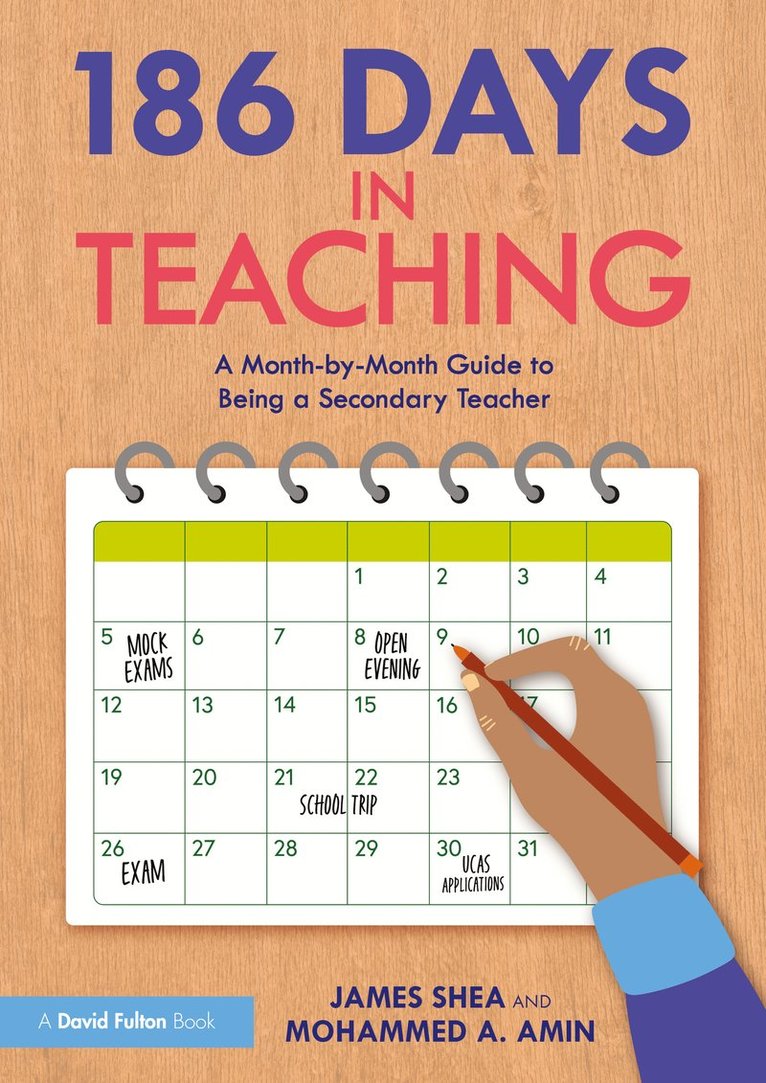
186 Days in Teaching provides a month-by-month roadmap for the school year, helping secondary teachers quickly adapt to new environments, accomplish the many tasks expected of them and excel in roles that might be unfamiliar or outside their initial training.
The book covers all aspects of teaching and learning as well non-teaching responsibilities, ensuring you know exactly what is coming up and how to prepare for it successfully. By offering practical advice, research-based strategies, and evidence-informed approaches, this guide helps teachers navigate the annual cycle of school life while building the necessary skills and knowledge to remain adaptable and accelerate their careers. Key topics include retaining autonomy, curriculum design, pastoral care, and effective communication. Drawing on well-known theories of community practice, it empowers teachers to become active agents in shaping their school’s ethos and teaching practices.
With a focus throughout on your wellbeing and job satisfaction, this is essential reading for all secondary teachers, especially those new to the profession, aiming to build a fulfilling, sustainable career in a diverse education landscape.
392 kr
Läs direkt efter köp
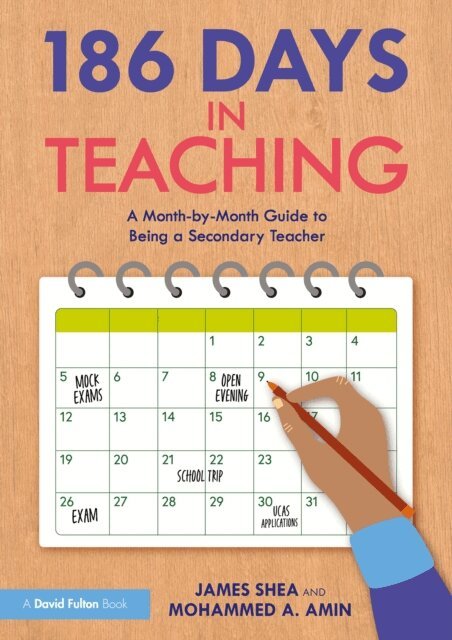
186 Days in Teaching provides a month-by-month roadmap for the school year, helping secondary teachers quickly adapt to new environments, accomplish the many tasks expected of them and excel in roles that might be unfamiliar or outside their initial training.
The book covers all aspects of teaching and learning as well non-teaching responsibilities, ensuring you know exactly what is coming up and how to prepare for it successfully. By offering practical advice, research-based strategies, and evidence-informed approaches, this guide helps teachers navigate the annual cycle of school life while building the necessary skills and knowledge to remain adaptable and accelerate their careers. Key topics include retaining autonomy, curriculum design, pastoral care, and effective communication. Drawing on well-known theories of community practice, it empowers teachers to become active agents in shaping their school’s ethos and teaching practices.
With a focus throughout on your wellbeing and job satisfaction, this is essential reading for all secondary teachers, especially those new to the profession, aiming to build a fulfilling, sustainable career in a diverse education landscape.
507 kr
Läs direkt efter köp
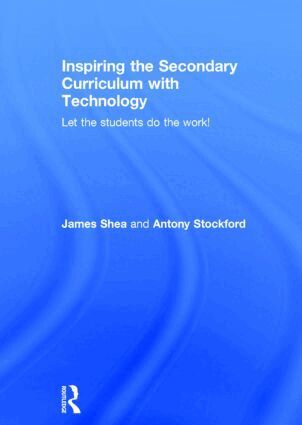
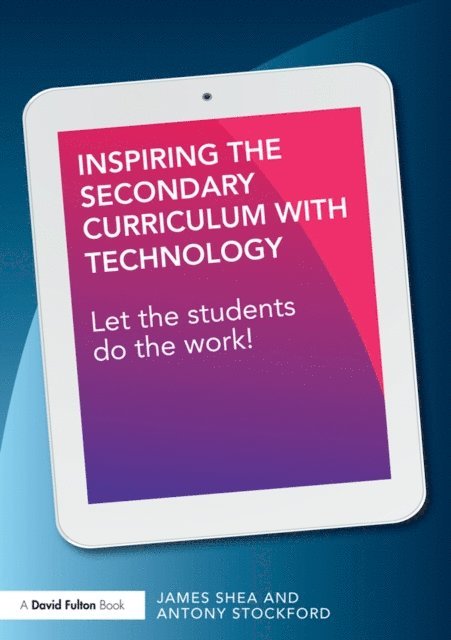
Are other teachers using technology in their lessons? Are you letting your own students down by not harnessing the power of your students’ technology knowledge in your lessons? Is your school asking you to show where you are developing ICT in your subject teaching?
Technology in your subject does not mean teaching databases, spreadsheets or word processing. Having technical knowledge is no longer sufficient or indeed necessary in today’s world – more important is the knowledge of how to advise and teach students to use technology efficiently and responsibly through their subject. Students faced with a ‘problem’ will need to hunt the internet for open source software, download apps and respond to the problem using technology as a problem solving tool. The scenarios are endless, but can be generated by the teacher - this could mean students publishing work through Amazon’s Kindle or keeping a blog within a class wiki. Teachers do not need to have technical knowledge; rather they need knowledge of trends and opportunities. They then need to blend their basic subject pedagogy within these new trends to contextualise ICT skills.
This book looks at pedagogical approaches to using technology in the classroom that will help you to harness future trends, technology and software and embed them into your subject teaching. Full of practical advice, it illustrates how secondary teachers – of any discipline – can accelerate their students’ learning, progress and ability within their subject whilst developing the ICT skills needed in the workplace and society. Including case studies and examples throughout, chapters cover:
Blended Learning (mixing traditional teaching methods with e-learning)
Developing interactive students
Mobile technologies
Student safety online
E-Portfolios and Virtual Learning Environments
This timely new book will help you structure your teaching to harness the latest developments in technology in tandem with the students you teach.
507 kr
Läs direkt efter köp
Are other teachers using technology in their lessons? Are you letting your own students down by not harnessing the power of your students’ technology knowledge in your lessons? Is your school asking you to show where you are developing ICT in your subject teaching?
Technology in your subject does not mean teaching databases, spreadsheets or word processing. Having technical knowledge is no longer sufficient or indeed necessary in today’s world – more important is the knowledge of how to advise and teach students to use technology efficiently and responsibly through their subject. Students faced with a ‘problem’ will need to hunt the internet for open source software, download apps and respond to the problem using technology as a problem solving tool. The scenarios are endless, but can be generated by the teacher - this could mean students publishing work through Amazon’s Kindle or keeping a blog within a class wiki. Teachers do not need to have technical knowledge; rather they need knowledge of trends and opportunities. They then need to blend their basic subject pedagogy within these new trends to contextualise ICT skills.
This book looks at pedagogical approaches to using technology in the classroom that will help you to harness future trends, technology and software and embed them into your subject teaching. Full of practical advice, it illustrates how secondary teachers – of any discipline – can accelerate their students’ learning, progress and ability within their subject whilst developing the ICT skills needed in the workplace and society. Including case studies and examples throughout, chapters cover:
Blended Learning (mixing traditional teaching methods with e-learning)
Developing interactive students
Mobile technologies
Student safety online
E-Portfolios and Virtual Learning Environments
This timely new book will help you structure your teaching to harness the latest developments in technology in tandem with the students you teach.
319 kr
Skickas inom 5-8 vardagar
969 kr
Skickas inom 5-8 vardagar
208 kr
Skickas inom 5-8 vardagar