381 kr
James Smithies – författare
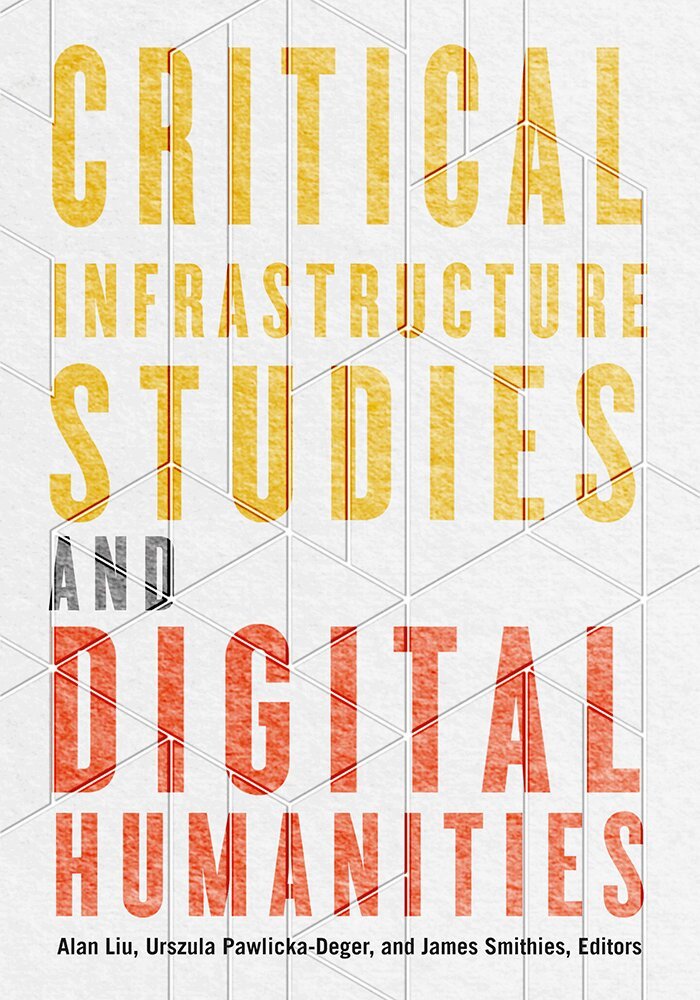
- Häftad, Engelska, 2026How digital humanities can shape and be shaped by the infrastructures that sustain our worldCritical Infrastructure Studies and Digital Humanities reimagines the digital humanities (DH) through the expanding field of critical infrastructure studies. Featuring voices from around the globe, this volume explores how DH builds on and extends theories and technologies of infrastructure that affect society, culture, and knowledge in different national and regional contexts. Examining DH's own infrastructural genealogy, the contributors offer readers critical reflections and bold visions for the future as they address issues of environmentalism, decolonization, Indigenous sovereignty, multilingualism, labor justice, feminism, national development, and beyond from a variety of disciplinary perspectives embedded in concrete digital systems. Including innovative "infrastructure manifests," the essays in this book illuminate how DH can both study and shape the systems that sustain culture, scholarship, and connection.Contributors: Anne Beaulieu, U of Groningen; Kyle Booten, U of Connecticut; Ann Borda, U of Melbourne; Susan Brown, U of Guelph; Toby Burrows, U of Western Australia; Ashley Caranto Morford, Weber State U; Javier Cha, U of Hong Kong; Jing Chen, Nanjing U; Arianna Ciula, King's College London; Maya Dodd, FLAME U, Pune, India; Martin Paul Eve, Birkbeck, U of London; Allan Gomez, Philly Community Wireless; Matthew N. Hannah, Purdue U; Matthew Hockenberry, Fordham U; Arun Jacob, U of Toronto; Mike Jones, U of Tasmania; Lucie Kolb, Basel Academy of Art and Design FHNW; Ian M. Miller, St. John's U, New York; Sylvia K. Miller, Duke U; Sarah Montoya, Mellon Humanities Postdoctoral Fellow; Saumyaa Naidu, independent researcher; Sharika Parmar, FLAME U, Pune, India; Kush Patel, Srishti Manipal Academy of Higher Education, Bengaluru; Miriam Posner, UCLA; Puthiya Purayil Sneha, International Institute of Information Technology, Hyderabad; Paul Spence, King's College London; Lik Hang Tsui, City U of Hong Kong; Deb Verhoeven, U of Alberta; Miguel Vieira, King's College London; Devren Washington, Philly Community Wireless; Alex Wermer-Colan, Temple U and Philly Community Wireless; Darren Wershler, Concordia U; Grant Wythoff, Princeton U and Philly Community Wireless.Retail e-book files for this title are screen-reader friendly with images accompanied by short alt text and/or extended descriptions.
- Häftad, Engelska, 2026
655 kr
Skickas inom 10-15 vardagar
This is the first systematic theorization of digital modernity, arguing that the digital age cannot be understood apart from the long historical arc of modernity.Bridging digital humanities, critical theory, sociology, philosophy, and global history, Digital Modernity demonstrates that contemporary digital systems are continuations rather than ruptures of the modern project. It offers a robust conceptual framework for examining how technological infrastructures intersect with democracy, governance, colonial legacies, and the public sphere. Across nine chapters, the book moves from conceptual foundations to future-facing proposals. Topics include the cultural logic of Silicon Valley, digital colonialism, digital infrastructure, and the epistemic crisis of the digital public sphere. It also engages philosophical questions about emergence, historicism, and artificial intelligence. Drawing on applied digital humanities, the book rejects technological determinism while offering accessible accounts of computing’s technical and political histories. Readers benefit from a coherent theoretical lens that integrates history with socio-technical critique, enabling a clearer understanding of digital modernity’s present and future stakes.This book is intended for scholars and students across digital humanities, media and communication studies, science and technology studies, sociology, the philosophy of technology, and modern history. Its interdisciplinary scope also supports research and teaching in software studies, critical AI, infrastructure studies, and global modernities. Suitable for advanced undergraduate and postgraduate courses, it will be especially valuable for researchers seeking to historicize digital systems while advancing critiques grounded in cultural theory, political economy, and postcolonial perspectives. By placing the digital within a longer history of modernity, the book offers both a foundational text and a springboard for further research in critical digital studies.The Open Access version of this book, available at www.taylorfrancis.com, has been made available under a Creative Commons Attribution-Non Commercial-No Derivatives (CC BY-NC-ND) 4.0 International license. - Inbunden, Engelska, 2026
2 538 kr
Skickas inom 10-15 vardagar
This is the first systematic theorization of digital modernity, arguing that the digital age cannot be understood apart from the long historical arc of modernity.Bridging digital humanities, critical theory, sociology, philosophy, and global history, Digital Modernity demonstrates that contemporary digital systems are continuations rather than ruptures of the modern project. It offers a robust conceptual framework for examining how technological infrastructures intersect with democracy, governance, colonial legacies, and the public sphere. Across nine chapters, the book moves from conceptual foundations to future-facing proposals. Topics include the cultural logic of Silicon Valley, digital colonialism, digital infrastructure, and the epistemic crisis of the digital public sphere. It also engages philosophical questions about emergence, historicism, and artificial intelligence. Drawing on applied digital humanities, the book rejects technological determinism while offering accessible accounts of computing’s technical and political histories. Readers benefit from a coherent theoretical lens that integrates history with socio-technical critique, enabling a clearer understanding of digital modernity’s present and future stakes.This book is intended for scholars and students across digital humanities, media and communication studies, science and technology studies, sociology, the philosophy of technology, and modern history. Its interdisciplinary scope also supports research and teaching in software studies, critical AI, infrastructure studies, and global modernities. Suitable for advanced undergraduate and postgraduate courses, it will be especially valuable for researchers seeking to historicize digital systems while advancing critiques grounded in cultural theory, political economy, and postcolonial perspectives. By placing the digital within a longer history of modernity, the book offers both a foundational text and a springboard for further research in critical digital studies.The Open Access version of this book, available at www.taylorfrancis.com, has been made available under a Creative Commons Attribution-Non Commercial-No Derivatives (CC BY-NC-ND) 4.0 International license. - Inbunden, Engelska, 2017
1 430 kr
Skickas inom 10-15 vardagar
This book provides new critical and methodological approaches to digital humanities, intended to guide technical development as well as critical analysis. Informed by the history of technology and culture and new perspectives on modernity, Smithies grounds his claims in the engineered nature of computing devices and their complex entanglement with our communities, our scholarly traditions, and our sense of self. The distorting mentalité of the digital modern informs our attitudes to computers and computationally intensive research, leading scholars to reject articulations of meaning that admit the interdependence of humans and the complex socio-technological systems we are embedded in. By framing digital humanities with the digital modern, researchers can rebuild our relationship to technical development, and seek perspectives that unite practical and critical activity. This requires close attention to the cyber-infrastructures that inform our research, the software-intensive methods that are producing new knowledge, and the ethical issues implicit in the production of digital humanities tools and methods. The book will be of interest to anyone interested in the intersection of technology with humanities research, and the future of digital humanities. - E-bokEngelska, 2017
1 836 kr
Läs direkt efter köp
This book provides new critical and methodological approaches to digital humanities, intended to guide technical development as well as critical analysis. Informed by the history of technology and culture and new perspectives on modernity, Smithies grounds his claims in the engineered nature of computing devices and their complex entanglement with our communities, our scholarly traditions, and our sense of self. The distorting mentalité of the digital modern informs our attitudes to computers and computationally intensive research, leading scholars to reject articulations of meaning that admit the interdependence of humans and the complex socio-technological systems we are embedded in. By framing digital humanities with the digital modern, researchers can rebuild our relationship to technical development, and seek perspectives that unite practical and critical activity. This requires close attention to the cyber-infrastructures that inform our research, the software-intensive methods that are producing new knowledge, and the ethical issues implicit in the production of digital humanities tools and methods. The book will be of interest to anyone interested in the intersection of technology with humanities research, and the future of digital humanities. - Inbunden, Engelska, 2026
1 560 kr
Skickas inom 5-8 vardagar
How digital humanities can shape and be shaped by the infrastructures that sustain our worldCritical Infrastructure Studies and Digital Humanities reimagines the digital humanities (DH) through the expanding field of critical infrastructure studies. Featuring voices from around the globe, this volume explores how DH builds on and extends theories and technologies of infrastructure that affect society, culture, and knowledge in different national and regional contexts. Examining DH's own infrastructural genealogy, the contributors offer readers critical reflections and bold visions for the future as they address issues of environmentalism, decolonization, Indigenous sovereignty, multilingualism, labor justice, feminism, national development, and beyond from a variety of disciplinary perspectives embedded in concrete digital systems. Including innovative "infrastructure manifests," the essays in this book illuminate how DH can both study and shape the systems that sustain culture, scholarship, and connection.Contributors: Anne Beaulieu, U of Groningen; Kyle Booten, U of Connecticut; Ann Borda, U of Melbourne; Susan Brown, U of Guelph; Toby Burrows, U of Western Australia; Ashley Caranto Morford, Weber State U; Javier Cha, U of Hong Kong; Jing Chen, Nanjing U; Arianna Ciula, King's College London; Maya Dodd, FLAME U, Pune, India; Martin Paul Eve, Birkbeck, U of London; Allan Gomez, Philly Community Wireless; Matthew N. Hannah, Purdue U; Matthew Hockenberry, Fordham U; Arun Jacob, U of Toronto; Mike Jones, U of Tasmania; Lucie Kolb, Basel Academy of Art and Design FHNW; Ian M. Miller, St. John's U, New York; Sylvia K. Miller, Duke U; Sarah Montoya, Mellon Humanities Postdoctoral Fellow; Saumyaa Naidu, independent researcher; Sharika Parmar, FLAME U, Pune, India; Kush Patel, Srishti Manipal Academy of Higher Education, Bengaluru; Miriam Posner, UCLA; Puthiya Purayil Sneha, International Institute of Information Technology, Hyderabad; Paul Spence, King's College London; Lik Hang Tsui, City U of Hong Kong; Deb Verhoeven, U of Alberta; Miguel Vieira, King's College London; Devren Washington, Philly Community Wireless; Alex Wermer-Colan, Temple U and Philly Community Wireless; Darren Wershler, Concordia U; Grant Wythoff, Princeton U and Philly Community Wireless.Retail e-book files for this title are screen-reader friendly with images accompanied by short alt text and/or extended descriptions.