James Wynn - Böcker
Visar alla böcker från författaren James Wynn. Handla med fri frakt och snabb leverans.
4 produkter
4 produkter
Del 16 - RSA Series in Transdisciplinary Rhetoric
Arguing with Numbers
The Intersections of Rhetoric and Mathematics
Inbunden, Engelska, 2021
951 kr
Skickas inom 7-10 vardagar
As discrete fields of inquiry, rhetoric and mathematics have long been considered antithetical to each other. That is, if mathematics explains or describes the phenomena it studies with certainty, persuasion is not needed. This volume calls into question the view that mathematics is free of rhetoric. Through nine studies of the intersections between these two disciplines, Arguing with Numbers shows that mathematics is in fact deeply rhetorical. Using rhetoric as a lens to analyze mathematically based arguments in public policy, political and economic theory, and even literature, the essays in this volume reveal how mathematics influences the values and beliefs with which we assess the world and make decisions and how our worldviews influence the kinds of mathematical instruments we construct and accept. In addition, contributors examine how concepts of rhetoric—such as analogy and visuality—have been employed in mathematical and scientific reasoning, including in the theorems of mathematical physicists and the geometrical diagramming of natural scientists. Challenging academic orthodoxy, these scholars reject a math-equals-truth reduction in favor of a more constructivist theory of mathematics as dynamic, evolving, and powerfully persuasive. By bringing these disparate lines of inquiry into conversation with one another, Arguing with Numbers provides inspiration to students, established scholars, and anyone inside or outside rhetorical studies who might be interested in exploring the intersections between the two disciplines.In addition to the editors, the contributors to this volume are Catherine Chaput, Crystal Broch Colombini, Nathan Crick, Michael Dreher, Jeanne Fahnestock, Andrew C. Jones, Joseph Little, and Edward Schiappa.
Del 16 - RSA Series in Transdisciplinary Rhetoric
Arguing with Numbers
The Intersections of Rhetoric and Mathematics
Häftad, Engelska, 2022
426 kr
Skickas inom 7-10 vardagar
As discrete fields of inquiry, rhetoric and mathematics have long been considered antithetical to each other. That is, if mathematics explains or describes the phenomena it studies with certainty, persuasion is not needed. This volume calls into question the view that mathematics is free of rhetoric. Through nine studies of the intersections between these two disciplines, Arguing with Numbers shows that mathematics is in fact deeply rhetorical. Using rhetoric as a lens to analyze mathematically based arguments in public policy, political and economic theory, and even literature, the essays in this volume reveal how mathematics influences the values and beliefs with which we assess the world and make decisions and how our worldviews influence the kinds of mathematical instruments we construct and accept. In addition, contributors examine how concepts of rhetoric—such as analogy and visuality—have been employed in mathematical and scientific reasoning, including in the theorems of mathematical physicists and the geometrical diagramming of natural scientists. Challenging academic orthodoxy, these scholars reject a math-equals-truth reduction in favor of a more constructivist theory of mathematics as dynamic, evolving, and powerfully persuasive. By bringing these disparate lines of inquiry into conversation with one another, Arguing with Numbers provides inspiration to students, established scholars, and anyone inside or outside rhetorical studies who might be interested in exploring the intersections between the two disciplines.In addition to the editors, the contributors to this volume are Catherine Chaput, Crystal Broch Colombini, Nathan Crick, Michael Dreher, Jeanne Fahnestock, Andrew C. Jones, Joseph Little, and Edward Schiappa.
257 kr
Skickas inom 7-10 vardagar
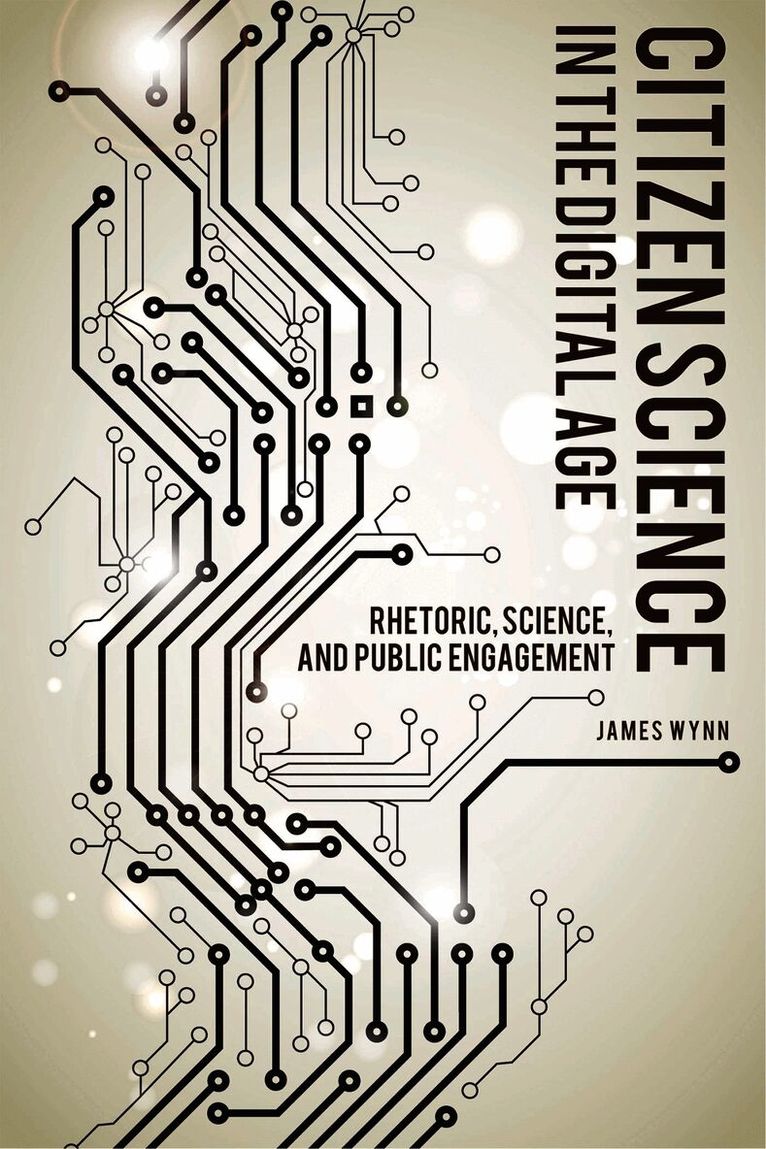
A discussion of the benefits and pitfalls of citizen science—scientific undertakings that make use of public participation and crowd-sourced data collection.James Wynn's timely investigation highlights scientific studies grounded in publicly gathered data and probes the rhetoric these studies employ. Many of these endeavors, such as the widely used SETI@home project, simply draw on the processing power of participants' home computers; others, like the protein-folding game FoldIt, ask users to take a more active role in solving scientific problems. In Citizen Science in the Digital Age: Rhetoric, Science, and Public Engagement, Wynn analyzes the discourse that enables these scientific ventures, as well as the difficulties that arise in communication between scientists and lay people and the potential for misuse of publicly gathered data. Wynn puzzles out the intricacies of these exciting new research developments by focusing on various case studies. He explores the Safecast project, which originated from crowd-sourced mapping for Fukushima radiation dispersal, arguing that evolving technologies enable public volunteers to make concrete, sound, science-based arguments. Additionally, he considers the potential use of citizen science as a method of increasing the public's identification with the scientific community, and contemplates how more collaborative rhetoric might deepen these opportunities for interaction and alignment. Furthermore, he examines ways in which the lived experience of volunteers may be integrated with expert scientific knowledge, and also how this same personal involvement can be used to further policy agendas.Precious few texts explore the intersection of rhetoric, science, and the Internet. Citizen Science in the Digital Age fills this gap, offering a clear, intelligent overview of the topic intended for rhetoric and communication scholars as well as practitioners and administrators in a number of science-based disciplines. With the expanded availability of once inaccessible technologies and computing power to laypeople, the practice of citizen science will only continue to grow. This study offers insight into how—given prudent application and the clear articulation of common goals—citizen science might strengthen the relationships between scientists and laypeople.
402 kr
Skickas inom 5-8 vardagar