Jan Aarts - Böcker
Visar alla böcker från författaren Jan Aarts. Handla med fri frakt och snabb leverans.
5 produkter
5 produkter
536 kr
Skickas inom 10-15 vardagar
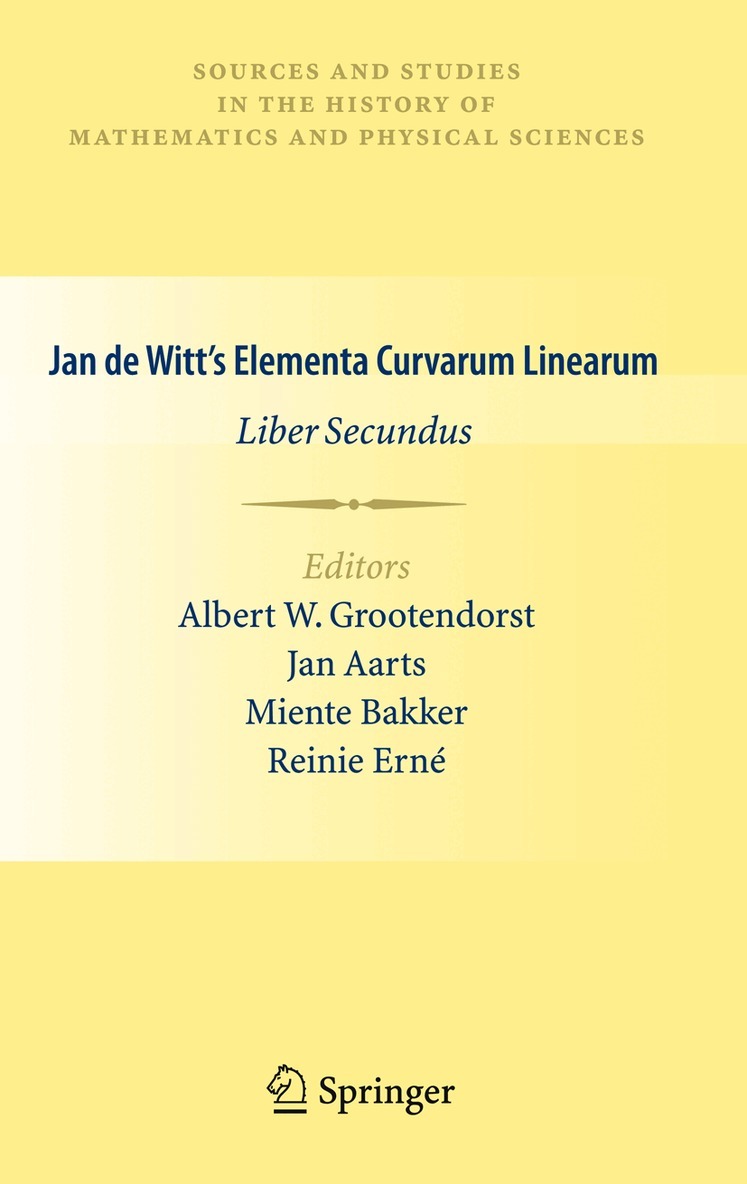
- Following on from the 2000 edition of Jan De Witt’s Elementa Curvarum Linearum, Liber Primus, this book provides the accompanying translation of the second volume of Elementa Curvarum Linearum (Foundations of Curved Lines). One of the first books to be published on Analytic Geometry, it was originally written in Latin by the Dutch statesman and mathematician Jan de Witt, soon after Descartes’ invention of the subject. - Born in 1625, Jan de Witt served with distinction as Grand Pensionary of Holland for much of his adult life. In mathematics, he is best known for his work in actuarial mathematics as well as extensive contributions to analytic geometry.- Elementa Curvarum Linearum, Liber Secondus moves forward from the construction of the familiar conic sections covered in the Liber Primus, with a discussion of problems connected with their classification; given an equation, it covers how one can recover the standard form, and additionally how one can find the equation's geometric properties. - This volume, begun by Albert Grootendorst (1924-2004) and completed after his death by Jan Aarts, Reinie Erné and Miente Bakker, is supplemented by:- annotation explaining finer points of the translation;- extensive commentary on the mathematicsThese features make the work of Jan de Witt broadly accessible to today’s mathematicians.
536 kr
Skickas inom 10-15 vardagar
- Following on from the 2000 edition of Jan De Witt’s Elementa Curvarum Linearum, Liber Primus, this book provides the accompanying translation of the second volume of Elementa Curvarum Linearum (Foundations of Curved Lines). One of the first books to be published on Analytic Geometry, it was originally written in Latin by the Dutch statesman and mathematician Jan de Witt, soon after Descartes’ invention of the subject. - Born in 1625, Jan de Witt served with distinction as Grand Pensionary of Holland for much of his adult life. In mathematics, he is best known for his work in actuarial mathematics as well as extensive contributions to analytic geometry.- Elementa Curvarum Linearum, Liber Secondus moves forward from the construction of the familiar conic sections covered in the Liber Primus, with a discussion of problems connected with their classification; given an equation, it covers how one can recover the standard form, and additionally how one can find the equation's geometric properties. - This volume, begun by Albert Grootendorst (1924-2004) and completed after his death by Jan Aarts, Reinie Erné and Miente Bakker, is supplemented by:- annotation explaining finer points of the translation;- extensive commentary on the mathematicsThese features make the work of Jan de Witt broadly accessible to today’s mathematicians.
845 kr
Skickas inom 5-8 vardagar
Del 45 - Costerus New Series
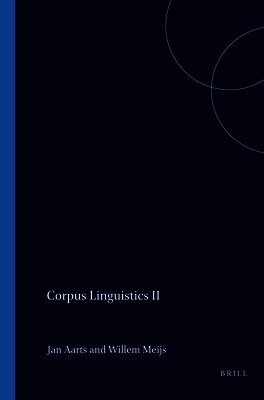
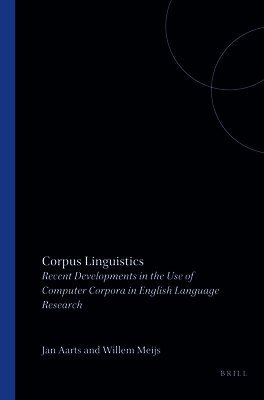
Corpus Linguistics
Recent Developments in the Use of Computer Corpora in English Language Research
Häftad, Engelska, 1984
692 kr
Skickas inom 5-8 vardagar
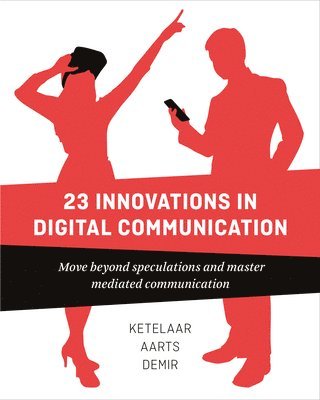
23 Innovations in Digital Communication
Move Beyond Speculations and Master Mediated Communication
Häftad, Engelska, 2019
314 kr
Skickas inom 7-10 vardagar
23 Innovations in Digital Communication describes, criticizes and evaluates 23 digital innovations that are used in media and communication. Innovations that are not hypes, but that were implemented to reach permanent changes in media and communication. The innovations are supported by testimonials of professionals in the field and the scientific foundation of their mechanism of action. The impact and professional, scientific and social challenges coming with these innovations are discussed.Reading this book will render deep insights into how innovative digital media can be used to influence buying behavior and decision-making. This book answers questions such as “How do I create a strong brand story?”, “What are the effects of serious gaming?”, “How can we use VR in our communication?”, “How do consumers process emotional stories?” and “Is persuasion profiling unethical?”. The answers to these questions are not only based on the authors knowledge and research, but each innovation is also discussed by top experts on that specific innovation.