Jan Busse – författare
Visar alla böcker från författaren Jan Busse. Handla med fri frakt och snabb leverans.
11 produkter
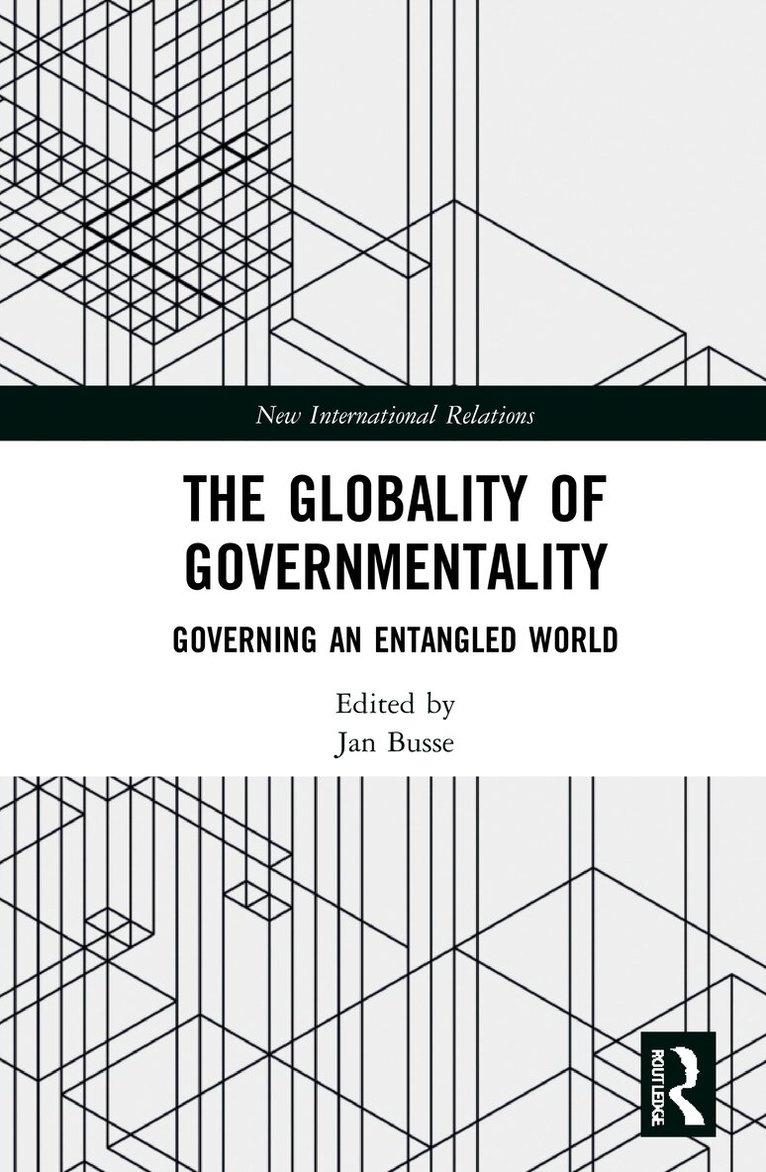
Globality of Governmentality
Governing an Entangled World
Av Jan Busse
Inbunden, 2021
2510 kr
Lägg i varukorg
This book reinvigorates the governmentality debate in International Relations (IR) by stressing the interconnectedness between governmentality and globality.It addresses a widening gap in the social sciences and humanities by reconciling Michel Foucault’s concept of "governmentality" with global …
Deconstructing the Dynamics of World-Societal Order
The Power of Governmentality in Palestine
Av Jan Busse
Häftad, 2020
691 kr
Lägg i varukorg
To get a better sense of power dynamics in global politics, this book presents an innovative theoretical framework, combining a critical engagement with, and further development of, Michel Foucault’s governmentality on the one hand, and the theory of world society of the Stanford School of …
Globality of Governmentality
Governing an Entangled World
Av Jan Busse
E-bok, 2021
746 kr
Lägg i varukorg
This book reinvigorates the governmentality debate in International Relations (IR) by stressing the interconnectedness between governmentality and globality. It addresses a widening gap in the social sciences and humanities by reconciling Michel Foucault’s concept of "governmentality" with global …
Globality of Governmentality
Governing an Entangled World
Av Jan Busse
E-bok, 2021
762 kr
Lägg i varukorg
This book reinvigorates the governmentality debate in International Relations (IR) by stressing the interconnectedness between governmentality and globality. It addresses a widening gap in the social sciences and humanities by reconciling Michel Foucault’s concept of "governmentality" with global …
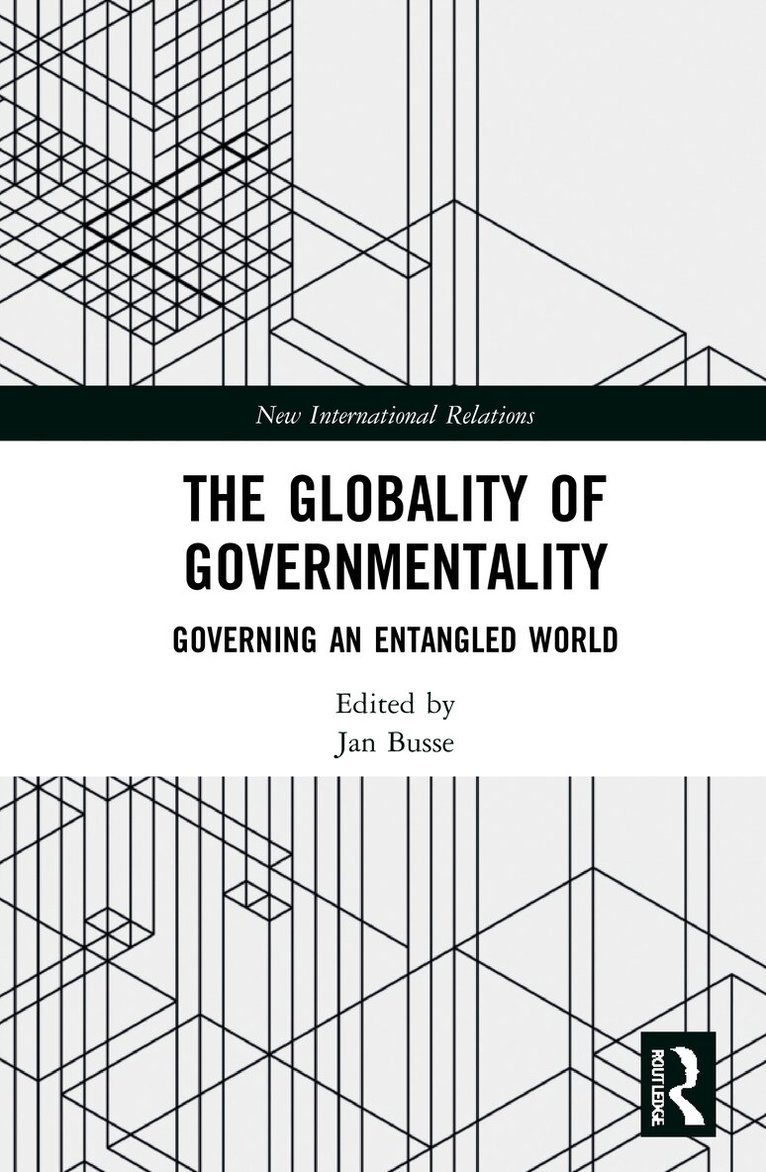
Globality of Governmentality
Governing an Entangled World
Av Jan Busse
Häftad, 2023
647 kr
Lägg i varukorg
This book reinvigorates the governmentality debate in International Relations (IR) by stressing the interconnectedness between governmentality and globality.It addresses a widening gap in the social sciences and humanities by reconciling Michel Foucault’s concept of "governmentality" with global …
Deconstructing the Dynamics of World-Societal Order
The Power of Governmentality in Palestine
Av Jan Busse
Inbunden, 2017
2510 kr
Lägg i varukorg
To get a better sense of power dynamics in global politics, this book presents an innovative theoretical framework, combining a critical engagement with, and further development of, Michel Foucault’s governmentality on the one hand, and the theory of world society of the Stanford School of …
Deconstructing the Dynamics of World-Societal Order
The Power of Governmentality in Palestine
Av Jan Busse
E-bok, 2017
814 kr
Lägg i varukorg
To get a better sense of power dynamics in global politics, this book presents an innovative theoretical framework, combining a critical engagement with, and further development of, Michel Foucault’s governmentality on the one hand, and the theory of world society of the Stanford School of …
Deconstructing the Dynamics of World-Societal Order
The Power of Governmentality in Palestine
Av Jan Busse
E-bok, 2017
796 kr
Lägg i varukorg
To get a better sense of power dynamics in global politics, this book presents an innovative theoretical framework, combining a critical engagement with, and further development of, Michel Foucault’s governmentality on the one hand, and the theory of world society of the Stanford School of …
Kolleg Geschichte Bayern 13 Ausgabe ab 2023
Av Jan Busse, Carla Schmidt m. fl.
Inbunden, 2025
628 kr
Lägg i varukorg
Das rebellische Spiel
Die Macht des Fußballs im Nahen Osten und die Katar-WM
E-bok, 2022
61 kr
Lägg i varukorg
Die WM in Katar rückt den arabischen Fußball ins europäische Rampenlicht. Das Buch stellt ihn als Machtfaktor der Regierenden, aber auch als subversive Gegenkultur vor. Experten und Expertinnen aus Doha, Algier, Tel Aviv und Deutschland bieten spannende Einblicke in einen wenig bekannten …