Jan Lazardzig – författare
Visar alla böcker från författaren Jan Lazardzig. Handla med fri frakt och snabb leverans.
23 produkter
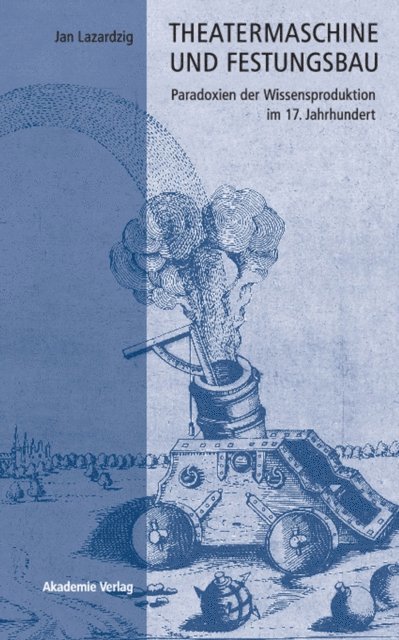
Theatermaschine und Festungsbau
Paradoxien der Wissensproduktion im 17. Jahrhundert
E-bok, 2014
1300 kr
Lägg i varukorg
Theatermaschine und Festungsbau – diese Artefakte des 17. Jahrhunderts dienen Jan Lazardzig als heuristische Schlüssel, um Paradoxien der Wissensproduktion aufzuspüren. Er macht deutlich, dass diese Paradoxien in der Konstituierungsphase neuzeitlicher Wissenschaft wichtige Dreh- und Angelpunkte der …
Collection - Laboratory - Theater
Scenes of Knowledge in the 17th Century
Av Helmar Schramm, Ludger Schwarte m. fl.
Inbunden, 2005
2934 kr
Lägg i varukorg
This volume launches a new, eight-volume series entitled Theatrum Scientiarum on the history of science and the media which has arisen from the work of the Berlin special research project on "Performative Cultures" under the aegis of the Theatre Studies Department of the Free University.The volume …
Kunstkammer - Laboratorium - Bühne
Schauplätze des Wissens im 17. Jahrhundert
Av Helmar Schramm, Ludger Schwarte m. fl.
Inbunden, 2003
3801 kr
Lägg i varukorg
Mit diesem Band startet eine neue, aus dem Berliner Sonderforschungsbereich "Kulturen des Performativen" hervorgehende und am Institut für Theaterwissenschaft der Freien Universität betreute Serie zur Wissenschafts- und Mediengeschichte, Theatrum Scientiarum, die 8 Bände umfassen wird.Der von …
Instrumente in Kunst und Wissenschaft
Zur Architektonik kultureller Grenzen im 17. Jahrhundert
Av Helmar Schramm, Ludger Schwarte m. fl.
Inbunden, 2006
3472 kr
Lägg i varukorg
This volume presents a collection of original papers at the intersection of philosophy, the history of science, cultural and theatrical studies. Based on a series of case studies on the 17th century, it contributes to an understanding of the role played by instruments at the interface of science …
Spektakuläre Experimente
Praktiken der Evidenzproduktion im 17. Jahrhundert
Av Helmar Schramm, Ludger Schwarte m. fl.
Inbunden, 2006
3693 kr
Lägg i varukorg
Dieser Band ist der dritte der auf insgesamt acht Bände angelegten Reihe Theatrum Scientiarum, die die Konstituierungsphase neuzeitlicher Kunst und Wissenschaft aus einem neuen Blickwinkel untersucht. Im Mittelpunkt steht die Frage, auf welche Weise Experimente und ihre Durchführung dazu …
Instrumente in Kunst und Wissenschaft
Zur Architektonik kultureller Grenzen im 17. Jahrhundert
Av Jan Lazardzig, Ludger Schwarte m. fl.
E-bok, 2008
3733 kr
Lägg i varukorg
Dieser Band versammelt originäre Beiträge am Schnittpunkt von Philosophie, Wissenschaftsgeschichte, Kultur- und Theaterwissenschaft. Auf der Grundlage von Falluntersuchungen zum 17. Jahrhundert trägt er zum Verständnis der Rolle bei, die Instrumente im Schnittfeld von Wissenschaft und Kunst …
Collection - Laboratory - Theater
Scenes of Knowledge in the 17th Century
Av Jan Lazardzig, Ludger Schwarte m. fl.
E-bok, 2008
2975 kr
Lägg i varukorg
This volume launches a new, eight-volume series entitled Theatrum Scientiarum on the history of science and the media which has arisen from the work of the Berlin special research project on "Performative Cultures" under the aegis of the Theatre Studies Department of the Free University. The volume …
Spektakuläre Experimente
Praktiken der Evidenzproduktion im 17. Jahrhundert
Av Jan Lazardzig, Ludger Schwarte m. fl.
E-bok, 2008
3733 kr
Lägg i varukorg
Dieser Band ist der dritte der auf insgesamt acht Bände angelegten Reihe Theatrum Scientiarum , die die Konstituierungsphase neuzeitlicher Kunst und Wissenschaft aus einem neuen Blickwinkel untersucht. Im Mittelpunkt steht die Frage, auf welche Weise Experimente und ihre Durchführung dazu …
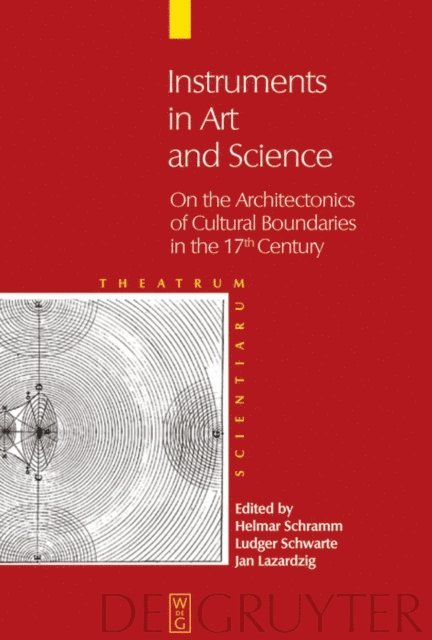
Instruments in Art and Science
On the Architectonics of Cultural Boundaries in the 17th Century
Av Helmar Schramm, Ludger Schwarte m. fl.
Inbunden, 2008
3693 kr
Lägg i varukorg
This volume presents a collection of original papers at the intersection of philosophy, the history of science, cultural and theatrical studies. Based on a series of case studies on the 17th century, it contributes to an understanding of the role played by instruments at the interface of science …
Spuren der Avantgarde
Theatrum machinarum
Av Helmar Schramm, Ludger Schwarte m. fl.
Inbunden, 2008
3496 kr
Lägg i varukorg
Die Buchreihe Theatrum Scientiarum versammelt originäre Beiträge am Schnittpunkt von Philosophie, Wissenschaftsgeschichte, Kultur- und Theaterwissenschaft. Als produktiv hat sich dabei die konzeptionelle Orientierung erwiesen, ästhetische, technische und politische Experimente der …
Spuren der Avantgarde: Theatrum machinarum
Frühe Neuzeit und Moderne im Kulturvergleich
Av Jan Lazardzig, Ludger Schwarte m. fl.
E-bok, 2008
3537 kr
Lägg i varukorg
Die Buchreihe Theatrum Scientiarum versammelt originäre Beiträge am Schnittpunkt von Philosophie, Wissenschaftsgeschichte, Kultur- und Theaterwissenschaft. Als produktiv hat sich dabei die konzeptionelle Orientierung erwiesen, ästhetische, technische und politische Experimente der …
Spuren der Avantgarde: Theatrum anatomicum
Frühe Neuzeit und Moderne im Kulturvergleich
Av Ludger Schwarte, Jan Lazardzig
Inbunden, 2011
2842 kr
Lägg i varukorg
Die Buchreihe Theatrum Scientiarum versammelt originäre Beiträge am Schnittpunkt von Philosophie, Wissenschaftsgeschichte, Kultur- und Theaterwissenschaft. Als produktiv hat sich dabei die konzeptionelle Orientierung erwiesen, ästhetische, technische und politische Experimente der …
Spuren der Avantgarde: Theatrum anatomicum
Frühe Neuzeit und Moderne im Kulturvergleich
Av Jan Lazardzig, Ludger Schwarte
E-bok, 2011
3155 kr
Lägg i varukorg
Die Buchreihe Theatrum Scientiarum versammelt originäre Beiträge am Schnittpunkt von Philosophie, Wissenschaftsgeschichte, Kultur- und Theaterwissenschaft. Als produktiv hat sich dabei die konzeptionelle Orientierung erwiesen, ästhetische, technische und politische Experimente der …
Spuren der Avantgarde: Theatrum alchemicum
Frühe Neuzeit und Moderne im Kulturvergleich
Av Helmar Schramm (†), Michael Lorber m. fl.
Inbunden, 2016
2934 kr
Lägg i varukorg
Die vielleicht größten Rätsel der europäischen Avantgarden und Neoavantgarden des 20. Jahrhunderts verbinden sich mit eigensinnigen Rückbezügen auf die Alchemie. Konzepte in Kunst, Politik und Wissenschaft des 20. Jahrhunderts verstanden sich dabei als radikale Suche nach einem grundlegend anderen …
Spuren der Avantgarde: Theatrum alchemicum
Frühe Neuzeit und Moderne im Kulturvergleich
Av Jan Lazardzig, Michael Lorber m. fl.
E-bok, 2016
2717 kr
Lägg i varukorg
Die vielleicht größten Rätsel der europäischen Avantgarden und Neoavantgarden des 20. Jahrhunderts verbinden sich mit eigensinnigen Rückbezügen auf die Alchemie. Konzepte in Kunst, Politik und Wissenschaft des 20. Jahrhunderts verstanden sich dabei als radikale Suche nach einem grundlegend anderen …
Spuren der Avantgarde: Theatrum alchemicum
Frühe Neuzeit und Moderne im Kulturvergleich
Av Jan Lazardzig, Michael Lorber m. fl.
E-bok, 2016
2717 kr
Lägg i varukorg
Die vielleicht größten Rätsel der europäischen Avantgarden und Neoavantgarden des 20. Jahrhunderts verbinden sich mit eigensinnigen Rückbezügen auf die Alchemie. Konzepte in Kunst, Politik und Wissenschaft des 20. Jahrhunderts verstanden sich dabei als radikale Suche nach einem grundlegend anderen …
Instruments in Art and Science
On the Architectonics of Cultural Boundaries in the 17th Century
Av Jan Lazardzig, Ludger Schwarte m. fl.
E-bok, 2014
3408 kr
Lägg i varukorg
This volume presents a collection of original papers at the intersection of philosophy, the history of science, cultural and theatrical studies. Based on a series of case studies on the 17th century, it contributes to an understanding of the role played by instruments at the interface of science …
Topografie, Institution, Erbe
Av Jan Lazardzig, Lisa-Frederike Seidler
Häftad, 2026
644 kr
Lägg i varukorg
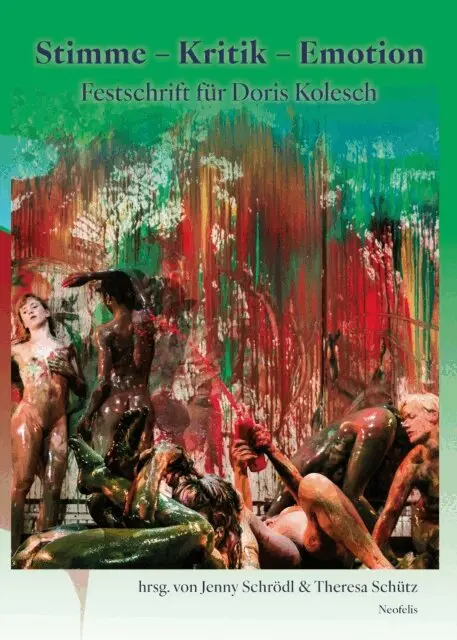
Stimme – Kritik – Emotion
Festschrift für Doris Kolesch
Av Layla Zami, Christel Weiler m. fl.
E-bok, 2025
328 kr
Lägg i varukorg
Stimme – Kritik – Emotion. Diese drei Begriffe markieren das komplexe, interdisziplinär verwobene Feld, mit dem sich die Literatur-, Kultur- und Theaterwissenschaftlerin Doris Kolesch in ihrer Forschung auseinandersetzt. Mit ihren Arbeiten zur Ästhetik, Medialität und Performanz der Stimme sowie …
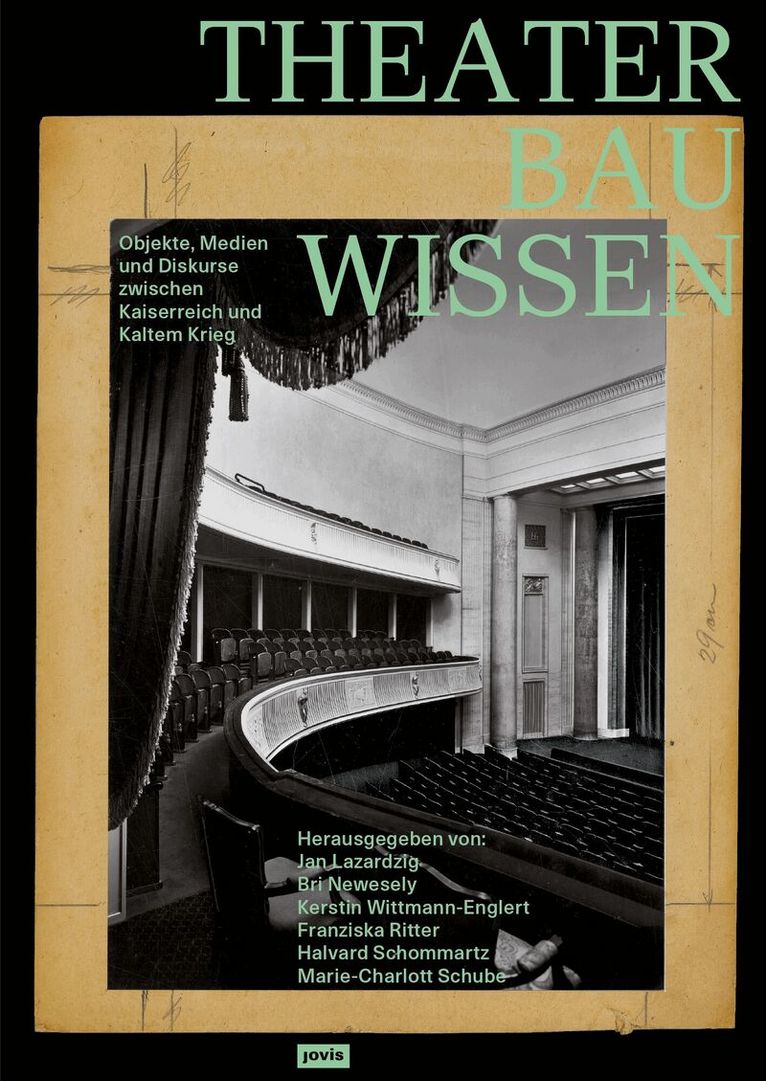
Theaterbauwissen
Objekte, Medien und Diskurse zwischen Kaiserreich und Kaltem Krieg
Av Jan Lazardzig, Bri Newesely m. fl.
Häftad, 2025
463 kr
Lägg i varukorg
As public building projects, theaters are venues that expose ideological conflicts, social issues, and the way society chooses to present itself. This volume is the first to examine twentieth-century theater design as a primary source, and asks how our knowledge about theater construction and stage …