Jan Musekamp - Böcker
Visar alla böcker från författaren Jan Musekamp. Handla med fri frakt och snabb leverans.
5 produkter
5 produkter
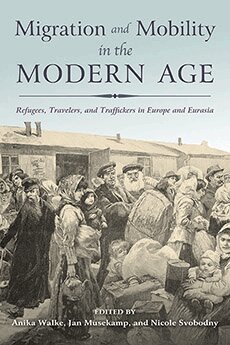
Migration and Mobility in the Modern Age
Refugees, Travelers, and Traffickers in Europe and Eurasia
Inbunden, Engelska, 2016
874 kr
Skickas inom 7-10 vardagar
Combining methodological and theoretical approaches to migration and mobility studies with detailed analyses of historical, cultural, or social phenomena, the works collected here provide an interdisciplinary perspective on how migrations and mobility altered identities and affected images of the "other." From walkways to railroads to airports, the history of travel provides a context for considering the people and events that have shaped Central and Eastern Europe and Russia.
Migration and Mobility in the Modern Age
Refugees, Travelers, and Traffickers in Europe and Eurasia
Häftad, Engelska, 2016
400 kr
Skickas inom 7-10 vardagar
Combining methodological and theoretical approaches to migration and mobility studies with detailed analyses of historical, cultural, or social phenomena, the works collected here provide an interdisciplinary perspective on how migrations and mobility altered identities and affected images of the "other." From walkways to railroads to airports, the history of travel provides a context for considering the people and events that have shaped Central and Eastern Europe and Russia.
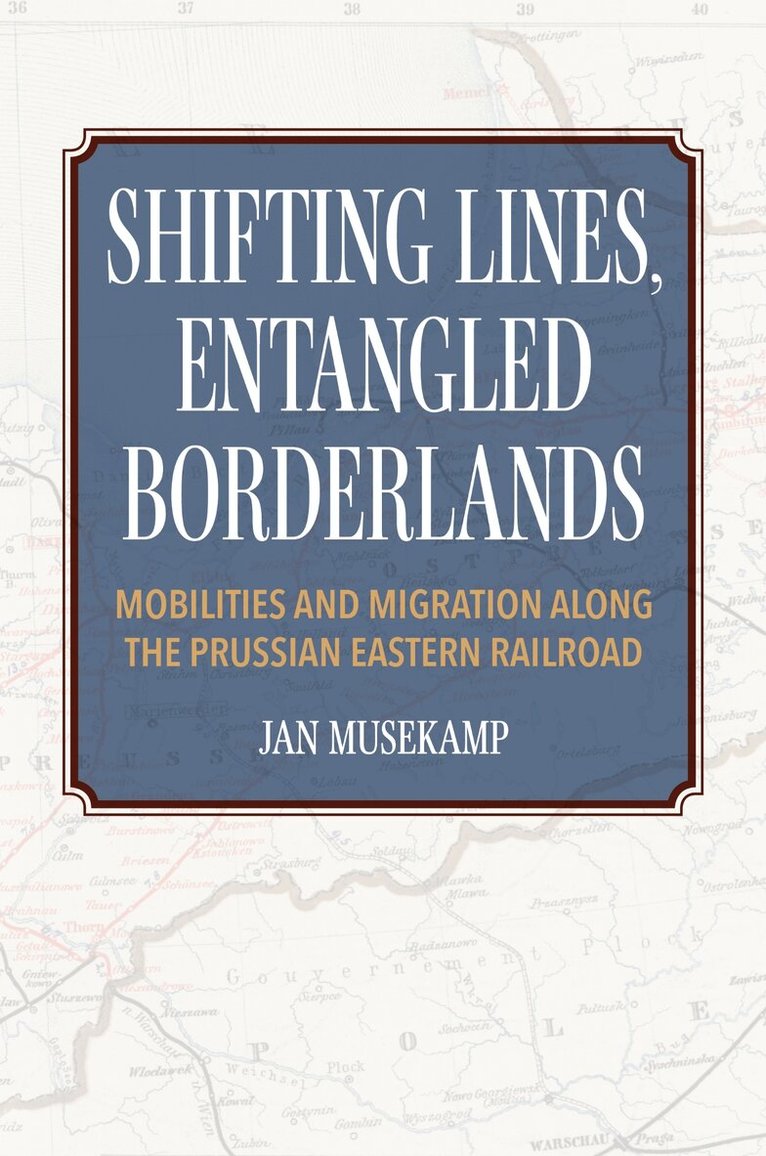
Shifting Lines, Entangled Borderlands
Mobilities and Migration Along the Prussian Eastern Railroad
Inbunden, Engelska, 2024
928 kr
Skickas inom 7-10 vardagar
Tracing multiple mobilities, entangled borderlands, microhistory and space, and human and nonhuman actors, Jan Musekamp demonstrates how an inner-Prussian railroad line turned into a transnational force, overcoming borders and connecting Europeans in a time of rising nationalism. Shifting Lines, Entangled Borderlands investigates the dichotomy between a globalizing world and tighter border control in nineteenth-century Central and Eastern Europe, focusing on the Royal Prussian Eastern Railroad (Ostbahn) between the 1830s and 1930s. The line was initially planned as a major internal modernizing project to connect Prussia's capital of Berlin to East Prussia's provincial capital of Königsberg (today's Kaliningrad). Soon, the Ostbahn connected to the growing Imperial Russian railroad network, thus becoming a backbone of European East–West transportation in trade, tourism, technological exchange, and migration. The First World War temporarily disrupted and reconfigured existing networks, adapting them to new political regimes and borders. However, World War II and its aftermath altered mobility patterns more permanently, dividing not only the Ostbahn tracks but the whole continent for decades to come. From border towns and major cities to unique structures, such as stations or bridges, this volume analyzes the obvious and not-so-obvious nodes of the Central and Eastern European rail network—and the spaces in between.
Shifting Lines, Entangled Borderlands
Mobilities and Migration Along the Prussian Eastern Railroad
Häftad, Engelska, 2024
427 kr
Skickas inom 7-10 vardagar
Tracing multiple mobilities, entangled borderlands, microhistory and space, and human and nonhuman actors, Jan Musekamp demonstrates how an inner-Prussian railroad line turned into a transnational force, overcoming borders and connecting Europeans in a time of rising nationalism. Shifting Lines, Entangled Borderlands investigates the dichotomy between a globalizing world and tighter border control in nineteenth-century Central and Eastern Europe, focusing on the Royal Prussian Eastern Railroad (Ostbahn) between the 1830s and 1930s. The line was initially planned as a major internal modernizing project to connect Prussia's capital of Berlin to East Prussia's provincial capital of Königsberg (today's Kaliningrad). Soon, the Ostbahn connected to the growing Imperial Russian railroad network, thus becoming a backbone of European East–West transportation in trade, tourism, technological exchange, and migration. The First World War temporarily disrupted and reconfigured existing networks, adapting them to new political regimes and borders. However, World War II and its aftermath altered mobility patterns more permanently, dividing not only the Ostbahn tracks but the whole continent for decades to come. From border towns and major cities to unique structures, such as stations or bridges, this volume analyzes the obvious and not-so-obvious nodes of the Central and Eastern European rail network—and the spaces in between.
1 314 kr
Skickas inom 10-15 vardagar
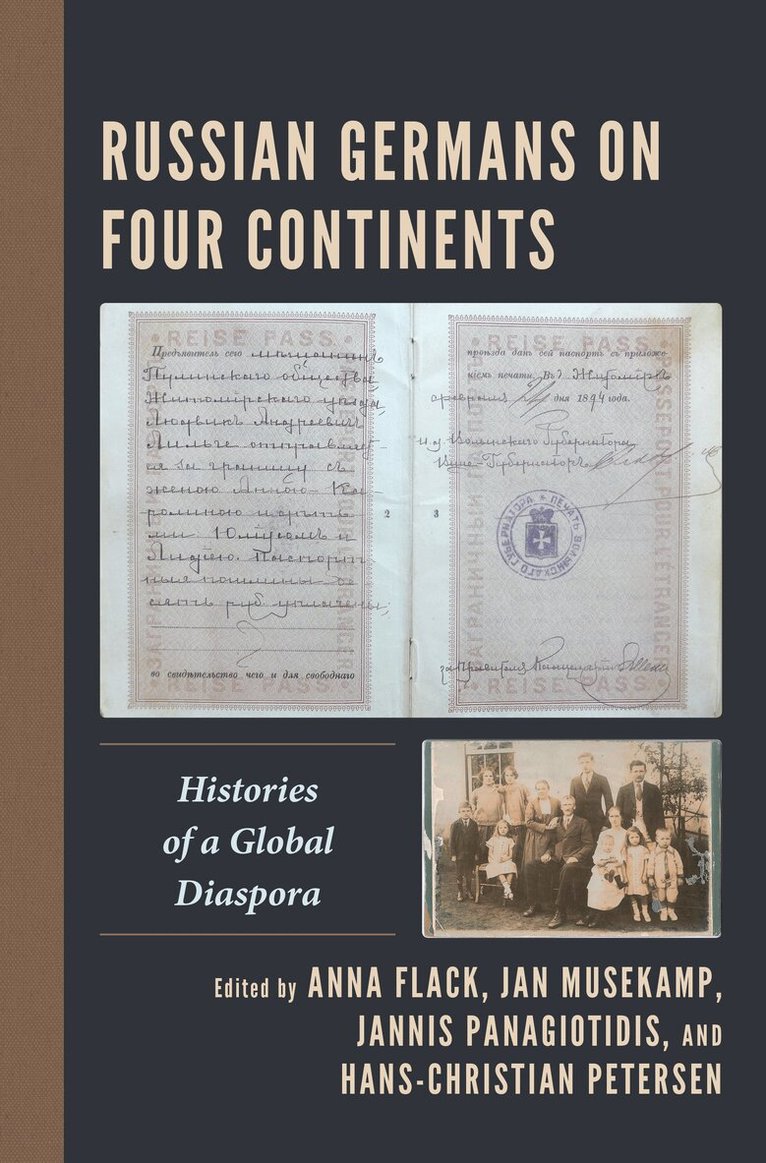
The history of Russian Germans (Russlanddeutsche) is one of intensive mobility across space and time. Today, the descendants of eighteenth-century German-speaking settlers in the Russian Empire live on four continents: Europe, Asia, and North and South America. In this volume, authors from the fields of history, sociology, cultural studies, and sociolinguistics analyze key issues of the history and present of this globally connected diaspora group from an interdisciplinary angle. Contributions address the institutional regimes and networks that shaped—and continue to shape—the mobility of Russian Germans on a global scale, the impact of war and violence on the history of this group during the “Age of Extremes,” and the language shifts that accompanied their multiple global moves. Its interdisciplinary and geographic diversity makes this volume a unique contribution to research on migration, global diaspora, transnationalism, and practices of belonging. By analyzing the multiple pathways of migration, entanglement, and belonging of people designated as “Russian Germans” in past and present, its chapters provide fresh insight into the making and unmaking of a global diaspora.