Jan Vanthienen – författare
730 kr
Skickas inom 10-15 vardagar
811 kr
Läs direkt efter köp
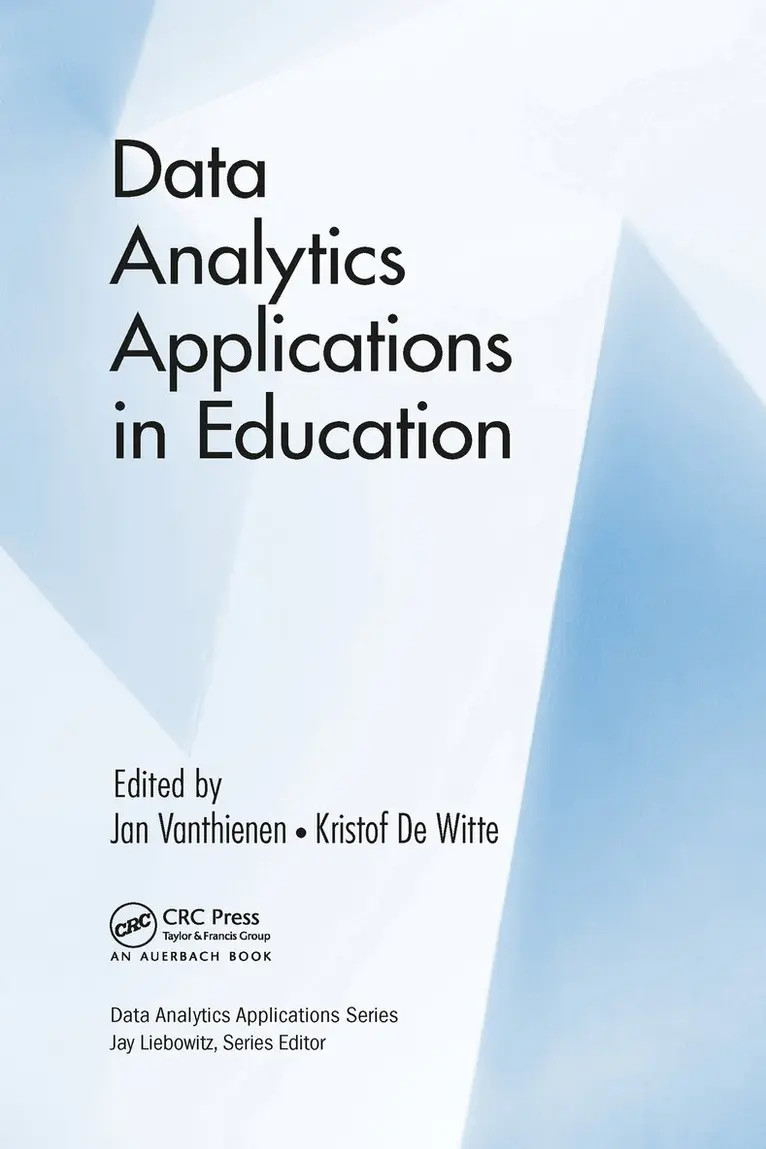
The abundance of data and the rise of new quantitative and statistical techniques have created a promising area: data analytics. This combination of a culture of data-driven decision making and techniques to include domain knowledge allows organizations to exploit big data analytics in their evaluation and decision processes. Also, in education and learning, big data analytics is being used to enhance the learning process, to evaluate efficiency, to improve feedback, and to enrich the learning experience.
As every step a student takes in the online world can be traced, analyzed, and used, there are plenty of opportunities to improve the learning process of students. First, data analytics techniques can be used to enhance the student’ s learning process by providing real-time feedback, or by enriching the learning experience. Second, data analytics can be used to support the instructor or teacher. Using data analytics, the instructor can better trace, and take targeted actions to improve, the learning process of the student. Third, there are possibilities in using data analytics to measure the performance of instructors. Finally, for policy makers, it is often unclear how schools use their available resources to "produce" outcomes. By combining structured and unstructured data from various sources, data analytics might provide a solution for governments that aim to monitor the performance of schools more closely.
Data analytics in education should not be the domain of a single discipline. Economists should discuss the possibilities, issues, and normative questions with a multidisciplinary team of pedagogists, philosophers, computer scientists, and sociologists. By bringing together various disciplines, a more comprehensive answer can be formulated to the challenges ahead. This book starts this discussion by highlighting some economic perspectives on the use of data analytics in education. The book begins a rich, multidisciplinary discussion that may make data analytics in education seem as natural as a teacher in front of a classroom.
1 712 kr
Skickas inom 10-15 vardagar
819 kr
Läs direkt efter köp
The abundance of data and the rise of new quantitative and statistical techniques have created a promising area: data analytics. This combination of a culture of data-driven decision making and techniques to include domain knowledge allows organizations to exploit big data analytics in their evaluation and decision processes. Also, in education and learning, big data analytics is being used to enhance the learning process, to evaluate efficiency, to improve feedback, and to enrich the learning experience.
As every step a student takes in the online world can be traced, analyzed, and used, there are plenty of opportunities to improve the learning process of students. First, data analytics techniques can be used to enhance the student’ s learning process by providing real-time feedback, or by enriching the learning experience. Second, data analytics can be used to support the instructor or teacher. Using data analytics, the instructor can better trace, and take targeted actions to improve, the learning process of the student. Third, there are possibilities in using data analytics to measure the performance of instructors. Finally, for policy makers, it is often unclear how schools use their available resources to "produce" outcomes. By combining structured and unstructured data from various sources, data analytics might provide a solution for governments that aim to monitor the performance of schools more closely.
Data analytics in education should not be the domain of a single discipline. Economists should discuss the possibilities, issues, and normative questions with a multidisciplinary team of pedagogists, philosophers, computer scientists, and sociologists. By bringing together various disciplines, a more comprehensive answer can be formulated to the challenges ahead. This book starts this discussion by highlighting some economic perspectives on the use of data analytics in education. The book begins a rich, multidisciplinary discussion that may make data analytics in education seem as natural as a teacher in front of a classroom.
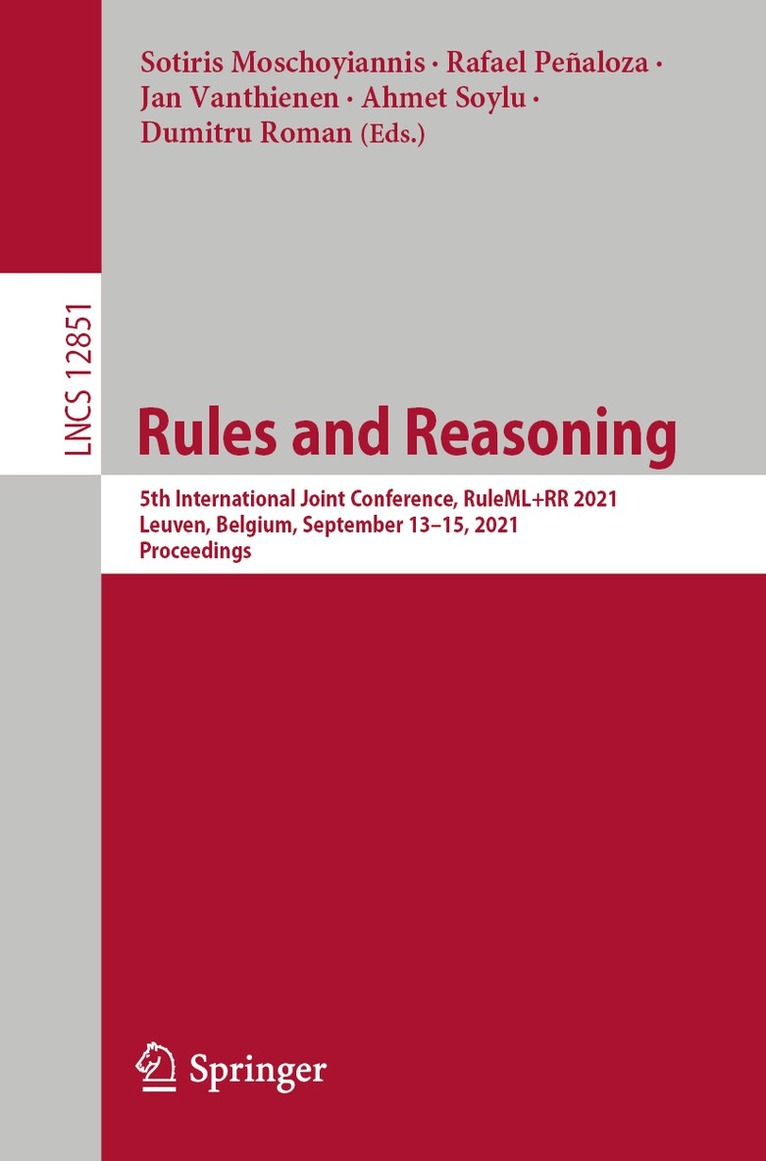
Rules and Reasoning
5th International Joint Conference, RuleML+RR 2021, Leuven, Belgium, September 13–15, 2021, Proceedings
712 kr
Skickas inom 10-15 vardagar
840 kr
Läs direkt efter köp
This book constitutes the proceedings of the International Joint Conference on Rules and Reasoning, RuleML+RR 2021, held in Leuven, Belgium, during September, 2021. This is the 5th conference of a new series, joining the efforts of two existing conference series, namely “RuleML” (International Web Rule Symposium) and “RR” (Web Reasoning and Rule Systems).
The 17 full research papers presented together with 2 short technical communications papers and 2 abstracts of invited papers were carefully reviewed and selected from 39 submissions.