Kristof De Witte - Böcker
Visar alla böcker från författaren Kristof De Witte. Handla med fri frakt och snabb leverans.
6 produkter
6 produkter
702 kr
Skickas inom 10-15 vardagar
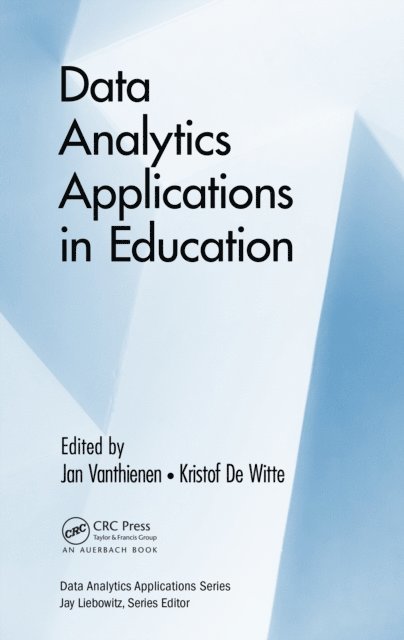
The abundance of data and the rise of new quantitative and statistical techniques have created a promising area: data analytics. This combination of a culture of data-driven decision making and techniques to include domain knowledge allows organizations to exploit big data analytics in their evaluation and decision processes. Also, in education and learning, big data analytics is being used to enhance the learning process, to evaluate efficiency, to improve feedback, and to enrich the learning experience.As every step a student takes in the online world can be traced, analyzed, and used, there are plenty of opportunities to improve the learning process of students. First, data analytics techniques can be used to enhance the student’ s learning process by providing real-time feedback, or by enriching the learning experience. Second, data analytics can be used to support the instructor or teacher. Using data analytics, the instructor can better trace, and take targeted actions to improve, the learning process of the student. Third, there are possibilities in using data analytics to measure the performance of instructors. Finally, for policy makers, it is often unclear how schools use their available resources to "produce" outcomes. By combining structured and unstructured data from various sources, data analytics might provide a solution for governments that aim to monitor the performance of schools more closely.Data analytics in education should not be the domain of a single discipline. Economists should discuss the possibilities, issues, and normative questions with a multidisciplinary team of pedagogists, philosophers, computer scientists, and sociologists. By bringing together various disciplines, a more comprehensive answer can be formulated to the challenges ahead. This book starts this discussion by highlighting some economic perspectives on the use of data analytics in education. The book begins a rich, multidisciplinary discussion that may make data analytics in education seem as natural as a teacher in front of a classroom.
Risk, Resilience, and Recovery Across Global Education Systems
The Long-Term Impact of Pandemic Reforms
Inbunden, Engelska, 2026
2 044 kr
Skickas inom 10-15 vardagar
This book provides a critical review of the long-term effectiveness of education and social protection policies enacted by G10 countries in response to the global pandemic.The COVID-19 pandemic caused the most significant disruption to education systems since the devastation of World War II. Successive waves and variants of the coronavirus resulted in school closures and spurred a range of policy interventions across national education systems to combat both the cognitive (i.e., achievement in reading, mathematics, and science) and non-cognitive (socioemotional development, mental and physical health) impacts on student achievement and wellbeing. This book aims to evaluate the long-term efficacy of such interventions, drawing on an analysis of a cross-section of nine industrialized countries: the United Kingdom, France, Germany, Italy, Sweden, Netherlands, Belgium, Canada, and Japan. It further offers cross-national insights for policymakers and discusses the critical importance of broader notions of academic resilience in a post-pandemic world. Ultimately, this volume aims to identify national policies that have helped to buffer students from the long-term challenges associated with the aftermath of the pandemic.A timely and important text, it will be of interest to researchers and policymakers in education policy, pandemic response, impact evaluation, and student mental health.
1 650 kr
Skickas inom 10-15 vardagar
The abundance of data and the rise of new quantitative and statistical techniques have created a promising area: data analytics. This combination of a culture of data-driven decision making and techniques to include domain knowledge allows organizations to exploit big data analytics in their evaluation and decision processes. Also, in education and learning, big data analytics is being used to enhance the learning process, to evaluate efficiency, to improve feedback, and to enrich the learning experience.As every step a student takes in the online world can be traced, analyzed, and used, there are plenty of opportunities to improve the learning process of students. First, data analytics techniques can be used to enhance the student’ s learning process by providing real-time feedback, or by enriching the learning experience. Second, data analytics can be used to support the instructor or teacher. Using data analytics, the instructor can better trace, and take targeted actions to improve, the learning process of the student. Third, there are possibilities in using data analytics to measure the performance of instructors. Finally, for policy makers, it is often unclear how schools use their available resources to "produce" outcomes. By combining structured and unstructured data from various sources, data analytics might provide a solution for governments that aim to monitor the performance of schools more closely.Data analytics in education should not be the domain of a single discipline. Economists should discuss the possibilities, issues, and normative questions with a multidisciplinary team of pedagogists, philosophers, computer scientists, and sociologists. By bringing together various disciplines, a more comprehensive answer can be formulated to the challenges ahead. This book starts this discussion by highlighting some economic perspectives on the use of data analytics in education. The book begins a rich, multidisciplinary discussion that may make data analytics in education seem as natural as a teacher in front of a classroom.
332 kr
Skickas inom 3-6 vardagar
374 kr
Skickas
Efficiency and effectiveness in ‘education economics’Economists are well placed to study education. They are intrinsically interested in (public) spending. They want to examine whether resources are spent in an effective (i.e., doing the right things) and efficient (i.e., doing things right) way. By focusing on educational efficiency, economists can provide intuitive insights that engender more value for money. Moreover, the effectiveness concerns are related to the ‘evidence-based education’ idea. Contemporary Economic Perspectives in Education contributes to this growing field of ‘education economics’. This book provides a detailed approach to how economists treat earlier evidence, how they avoid measurement problems, and how they measure efficiency. Applications covered include the underperformance of boys, efficiency and equity in education, and inter-industry wage differentials in the health sector. This publication is GPRC-labeled (Guaranteed Peer-Reviewed Content). Contributors: Tommaso Agasisti (Politecnico di Milano), Jos Blank (Delft University, Erasmus University Rotterdam), Sofie Cabus (Maastricht University), Nick Deschacht (KU Leuven), Kristof De Witte (KU Leuven, Maastricht University), Inge De Wolf (Inspectie Onderwijs, Maastricht University), Katie Goeman (KU Leuven), Olivier Holz (KU Leuven), Chris Van Klaveren (Maastricht University, University of Amsterdam).
Financing Quality Education for All
The Funding Methods of Compulsory and Special Needs Education
Häftad, Engelska, 2019
377 kr
Skickas inom 5-8 vardagar
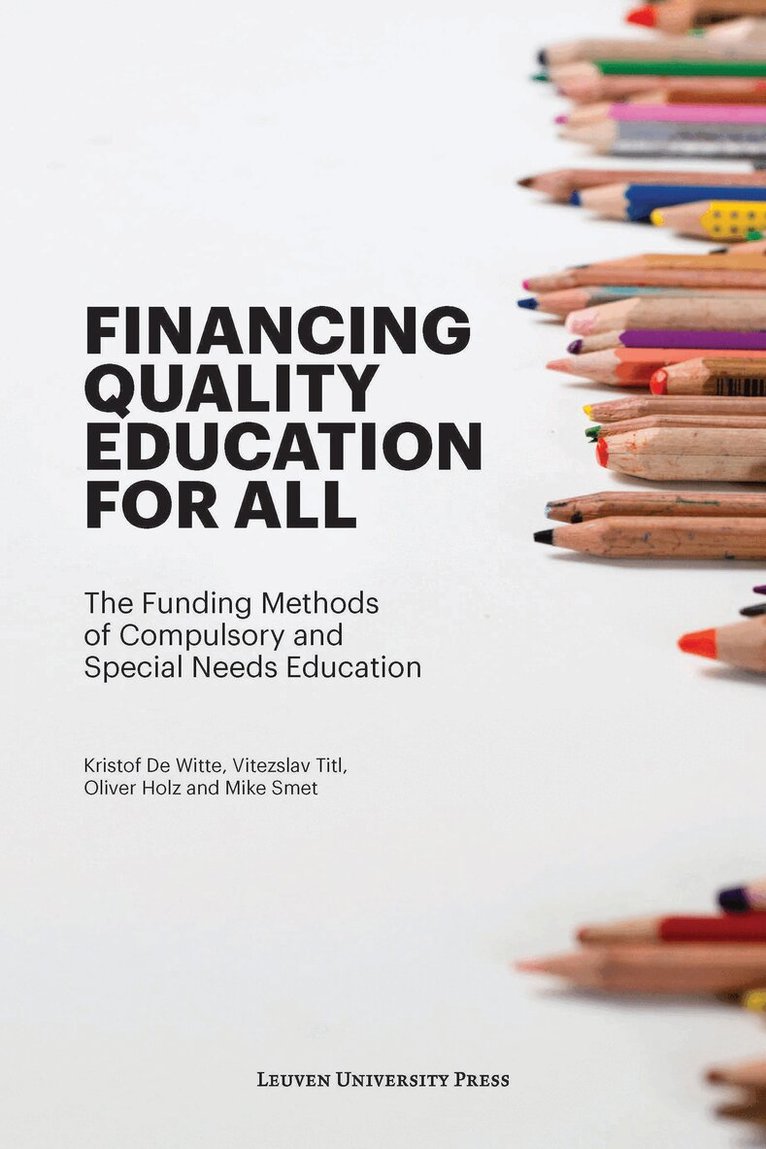
Funding, efficiency, and equity in education In OECD countries the average expenditure on primary and secondary education institutions is about 3.5% of GDP. The investment in education has large implications for economic development and the proper functioning of democratic institutions, as well as overall well-being. However, clear consensus and guidance on which system leads to the best educational outcomes is lacking. This volume describes the resource allocation for compulsory and special needs education for a selection of well-performing countries and regions on PISA tests. By studying the funding systems in well-performing countries and regions the authors identify the elements in the respective funding systems that are associated with best outcomes and have the ideal characteristics to pursue particular goals of education systems such as equity and efficiency. The funding methods of primary and secondary education as well as special needs education are covered.Ebook available in Open Access.This publication is GPRC-labeled (Guaranteed Peer-Reviewed Content).