Jane E. Mangan - Böcker
Visar alla böcker från författaren Jane E. Mangan. Handla med fri frakt och snabb leverans.
5 produkter
5 produkter
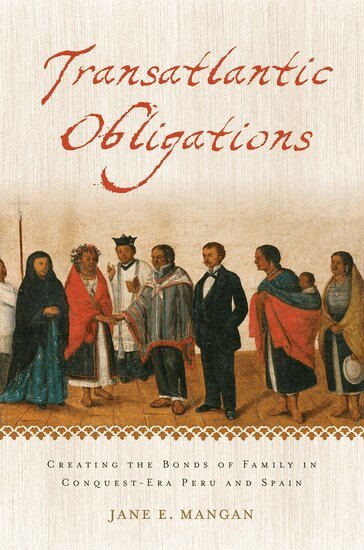
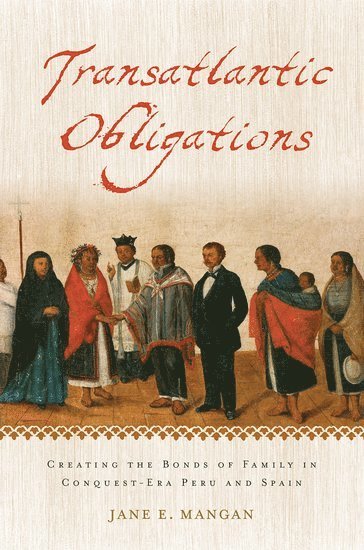
Transatlantic Obligations
Creating the Bonds of Family in Conquest-Era Peru and Spain
Inbunden, Engelska, 2016
2 031 kr
Skickas inom 7-10 vardagar
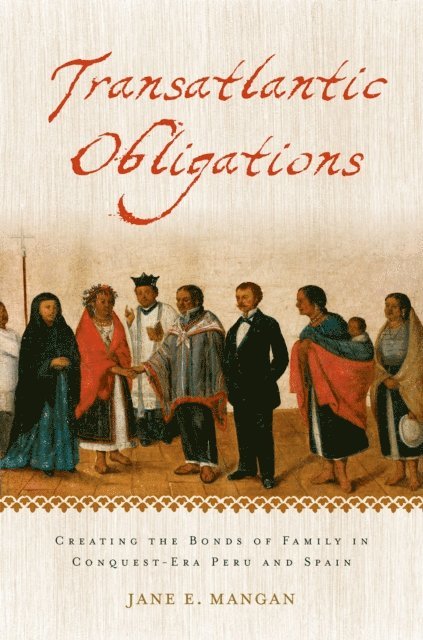
The sixteenth-century changes wrought by expansion of Spanish empire into Peru shaped the ways of being a family in colonial Peru. Even as migration, race mixture, and transculturation took place, family members fulfilled obligations to one another by adapting custom to a changing world. Family began to shift when, from the moment of their arrival in 1532, Spaniards were joined with elite indigenous women in political marriage-like alliances. Almost immediately, a generation of mestizos was born that challenged the hierarchies of colonial society. In response, the Spanish Crown began to promote the marriage of these men and the travel of Spanish women to Peru to promote good customs and even serve as surrogate parents. Other reactions came from wives in Spain who, abandoned by husbands, sought assistance to fulfill family duties. For indigenous families, the pressures of colonialism prompted migration to cities. By mid-century, the increase of Spanish migration to Peru changed the social landscape, but did not halt mixed-race marriages. The book posits that late sixteenth-century cities, specifically Lima and Arequipa, were host to indigenous and Spanish families but also to numerous 'blended' families borne of a process of mestizaje. In its final chapter, the legacies for the next generation reveal how Spanish fathers sometimes challenged law with custom and sentiment to establish inheritance plans for their children. By tracing family obligations connecting Peru and Spain through dowries, bequests, legal powers, and letters, Transatlantic Obligations presents a powerful call to rethink sixteenth-century definitions of family.
Transatlantic Obligations
Creating the Bonds of Family in Conquest-Era Peru and Spain
Häftad, Engelska, 2016
685 kr
Skickas inom 5-8 vardagar
The sixteenth-century changes wrought by expansion of Spanish empire into Peru shaped the ways of being a family in colonial Peru. Even as migration, race mixture, and transculturation took place, family members fulfilled obligations to one another by adapting custom to a changing world. Family began to shift when, from the moment of their arrival in 1532, Spaniards were joined with elite indigenous women in political marriage-like alliances. Almost immediately, a generation of mestizos was born that challenged the hierarchies of colonial society. In response, the Spanish Crown began to promote the marriage of these men and the travel of Spanish women to Peru to promote good customs and even serve as surrogate parents. Other reactions came from wives in Spain who, abandoned by husbands, sought assistance to fulfill family duties. For indigenous families, the pressures of colonialism prompted migration to cities. By mid-century, the increase of Spanish migration to Peru changed the social landscape, but did not halt mixed-race marriages. The book posits that late sixteenth-century cities, specifically Lima and Arequipa, were host to indigenous and Spanish families but also to numerous 'blended' families borne of a process of mestizaje. In its final chapter, the legacies for the next generation reveal how Spanish fathers sometimes challenged law with custom and sentiment to establish inheritance plans for their children. By tracing family obligations connecting Peru and Spain through dowries, bequests, legal powers, and letters, Transatlantic Obligations presents a powerful call to rethink sixteenth-century definitions of family.
378 kr
Skickas inom 10-15 vardagar
The ten essays in this interdisciplinary collection explore the lives, places, and stories of women in the Iberian Atlantic between 1500 and 1800. Distinguished contributors such as Ida Altman, Matt D. Childs, and Allyson M. Poska utilize the complexities of gender to understand issues of race, class, family, health, and religious practices in the Atlantic basin. Unlike previous scholarship, which has focused primarily on upper-class and noble women, this book examines the lives of those on the periphery, including free and enslaved Africans, colonized indigenous mothers, and poor Spanish women.Chapters range broadly across time periods and regions of the Atlantic world. The authors explore the lives of Caribbean women in the earliest era of Spanish colonization and gender norms in Spain and its far-flung colonies. They extend the boundaries of the traditional Atlantic by analyzing healing knowledge of indigenous women in Portuguese Goa and kinship bonds among women in Spanish East Texas. Together, these innovative essays rechart the Iberian Atlantic while revealing the widespread impact of women's activities on the emergence of the Iberian Atlantic world.
373 kr
Skickas inom 7-10 vardagar
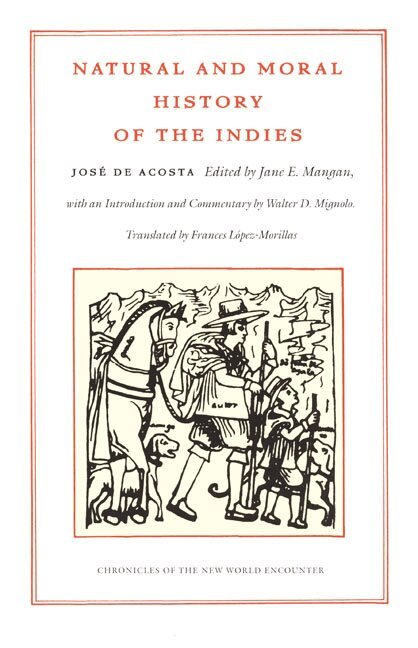
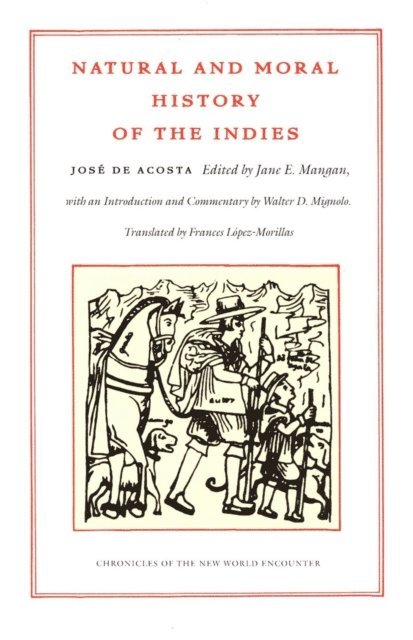
The Natural and Moral History of the Indies, the classic work of New World history originally published by JosÉ de Acosta in 1590, is now available in the first new English translation to appear in several hundred years. A Spanish Jesuit, Acosta produced this account by drawing on his own observations as a missionary in Peru and Mexico, as well as from the writings of other missionaries, naturalists, and soldiers who explored the region during the sixteenth century. One of the first comprehensive investigations of the New World, Acosta’s study is strikingly broad in scope. He describes the region’s natural resources, flora and fauna, and terrain. He also writes in detail about the Amerindians and their religious and political practices.A significant contribution to Renaissance Europe's thinking about the New World, Acosta's Natural and Moral History of the Indies reveals an effort to incorporate new information into a Christian, Renaissance worldview. He attempted to confirm for his European readers that a "new" continent did indeed exist and that human beings could and did live in equatorial climates. A keen observer and prescient thinker, Acosta hypothesized that Latin America's indigenous peoples migrated to the region from Asia, an idea put forth more than a century before Europeans learned of the Bering Strait. Acosta's work established a hierarchical classification of Amerindian peoples and thus contributed to what today is understood as the colonial difference in Renaissance European thinking.
557 kr
Skickas inom 3-6 vardagar
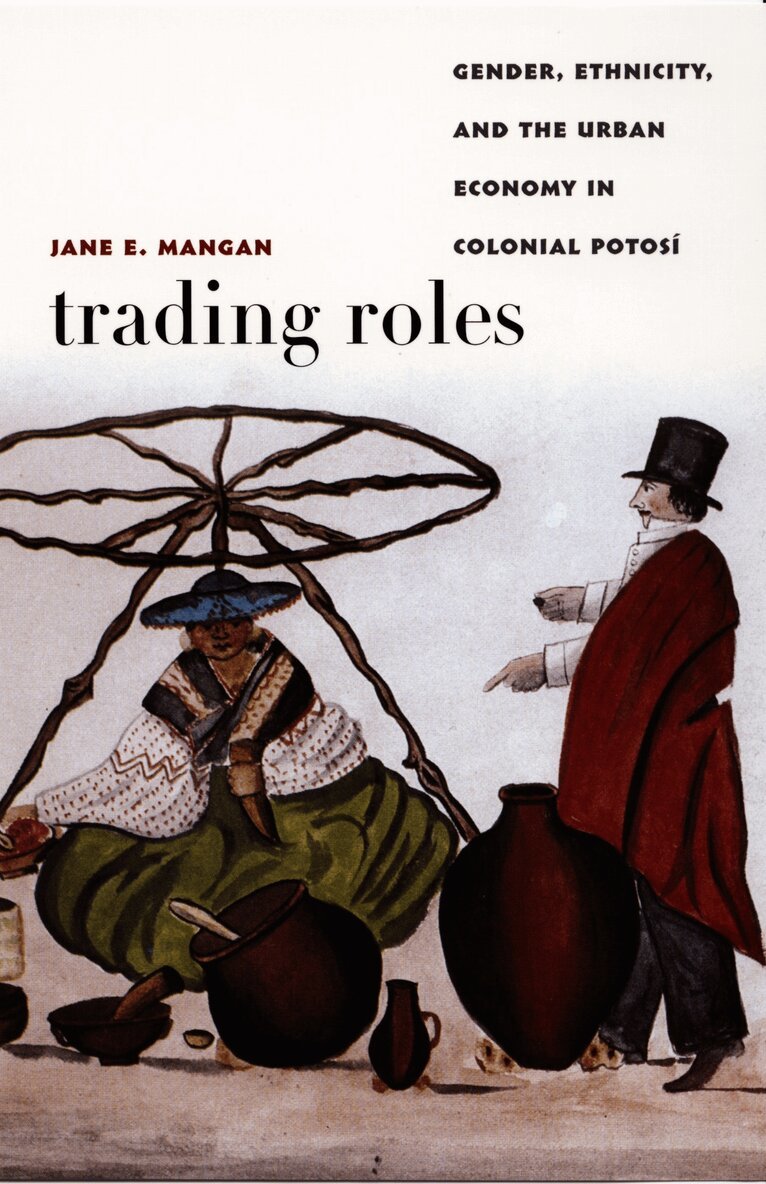
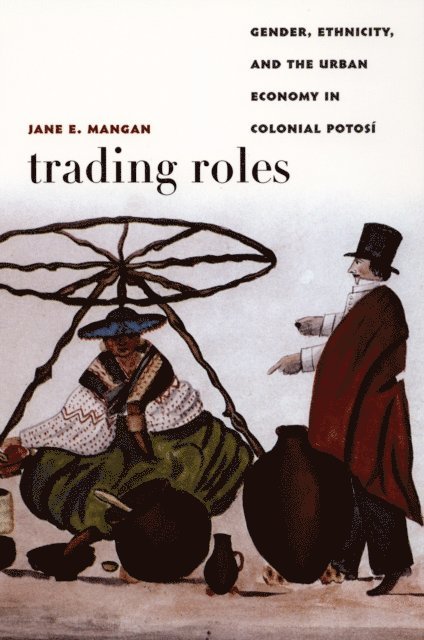
Located in the heart of the Andes, PotosÍ was arguably the most important urban center in the Western Hemisphere during the colonial era. It was internationally famous for its abundant silver mines and regionally infamous for its labor draft. Set in this context of opulence and oppression associated with the silver trade, Trading Roles emphasizes daily life in the city’s streets, markets, and taverns. As Jane E. Mangan shows, food and drink transactions emerged as the most common site of interaction for Potosinos of different ethnic and class backgrounds. Within two decades of PotosÍ’s founding in the 1540s, the majority of the city’s inhabitants no longer produced food or alcohol for themselves; they purchased these items. Mangan presents a vibrant social history of colonial PotosÍ through an investigation of everyday commerce during the city’s economic heyday, between the discovery of silver in 1545 and the waning of production in the late seventeenth century.Drawing on wills and dowries, judicial cases, town council records, and royal decrees, Mangan brings alive the bustle of trade in PotosÍ. She examines quotidian economic transactions in light of social custom, ethnicity, and gender, illuminating negotiations over vendor locations, kinship ties that sustained urban trade through the course of silver booms and busts, and credit practices that developed to mitigate the pressures of the market economy. Mangan argues that trade exchanges functioned as sites to negotiate identities within this colonial multiethnic society. Throughout the study, she demonstrates how women and indigenous peoples played essential roles in PotosÍ’s economy through the commercial transactions she describes so vividly.