Jane Hathaway - Böcker
Visar alla böcker från författaren Jane Hathaway. Handla med fri frakt och snabb leverans.
16 produkter
16 produkter
1 009 kr
Skickas inom 10-15 vardagar
This is the first book to address the topic of mutiny in and of itself, or to present mutiny in a comparative framework. The fourteen contributors, a mixture of military, social, and political historians, examine instances of mutiny that occurred from ancient to modern times and on nearly every continent. Their findings call into question standard definitions of mutiny, while shedding new light on the patterns that mutiny tends to take, as well as the interactions that can occur between mutinous soldiers and surrounding civilian societies. While standard definitions of mutiny emphasize mass defiance by rank-and-file soldiers of the orders of their military superiors, the essays here demonstrate that mutiny can often take other forms.Mutiny could consist of mass desertion, insurgency in the face of competing military and political authorities, or lengthy strings of strikes and assassinations against military and political superiors. The threat of mutiny, furthermore, could be as potent as an actual outbreak. Areas studied include early modern Europe, the Ottoman Empire, the antebellum United States, the British Empire, revolutionary Russia, the emerging nation-states of Latin America, imperial and Communist China, fascist Italy, war-torn Vietnam, and Nasser's Egypt. In the concluding section, contributors assess commemorations of mutiny and how they are modified or distorted in the process of their incorporation into official and popular memory.
322 kr
Skickas inom 10-15 vardagar
In the course of its more than six-hundred-year history, the Ottoman Empire weathered rebellions and threats of rebellion from every quarter, both within the imperial capital and in its far-flung provinces. Mutinies and threats of mutiny were likewise not infrequent occurrences. This collection of essays is the first collaborative volume devoted to the subject of rebellion, and more particularly, mutiny, in the Ottoman Empire. Regionalism and ethnic diversity were key contributing factors to mutiny and rebellion in the middle period, both within the Empire and without. A mutiny or rebellion provides a moment of social stress in which underlying societal tensions, and the state's ability to cope with them, stand out with unusual clarity. This exercise in comparing intra-Ottoman mutinies leads to broader comparisons between Ottoman and other societies, helping to break down the historiographical and cultural barriers that sometimes keep us from seeing that, beneath the outward trappings, one mutiny is often much like another.
1 282 kr
Skickas inom 7-10 vardagar
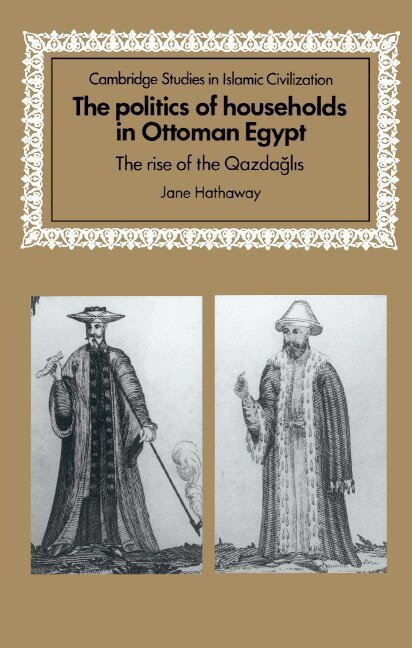
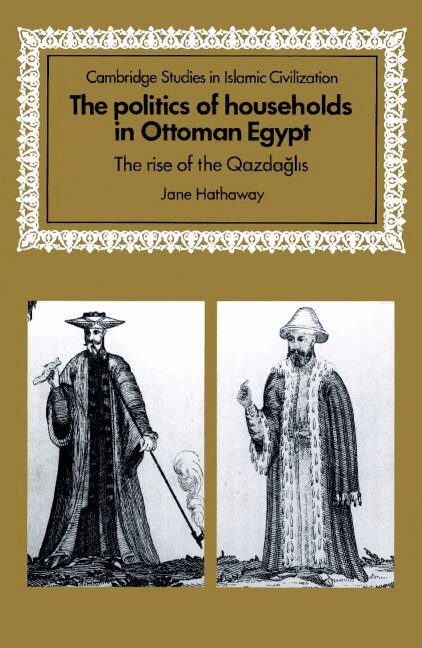
In a lucidly argued revisionist study of Ottoman Egypt, first published in 1996, Jane Hathaway challenges the traditional view that Egypt's military elite constituted a revival of the institutions of the Mamluk sultanate. The author contends that the framework within which this elite operated was the household, a conglomerate of patron-client ties that took various forms. In this respect, she argues, Egypt's elite represented a provincial variation on an empire-wide, household-based political culture. The study focuses on the Qazdagli household. Originally, a largely Anatolian contingent within Egypt's Janissary regiment, the Qazdaglis dominated Egypt by the late eighteenth century. Using Turkish and Arabic archival sources, Jane Hathaway sheds light on the manner in which the Qazdaglis exploited the Janissary rank hierarchy, while forming strategic alliances through marriage, commercial partnerships and the patronage of palace eunuchs.
441 kr
Skickas inom 7-10 vardagar
In a lucidly argued revisionist study of Ottoman Egypt, first published in 1996, Jane Hathaway challenges the traditional view that Egypt's military elite constituted a revival of the institutions of the Mamluk sultanate. The author contends that the framework within which this elite operated was the household, a conglomerate of patron-client ties that took various forms. In this respect, she argues, Egypt's elite represented a provincial variation on an empire-wide, household-based political culture. The study focuses on the Qazdagli household. Originally, a largely Anatolian contingent within Egypt's Janissary regiment, the Qazdaglis dominated Egypt by the late eighteenth century. Using Turkish and Arabic archival sources, Jane Hathaway sheds light on the manner in which the Qazdaglis exploited the Janissary rank hierarchy, while forming strategic alliances through marriage, commercial partnerships and the patronage of palace eunuchs.
1 088 kr
Skickas inom 5-8 vardagar
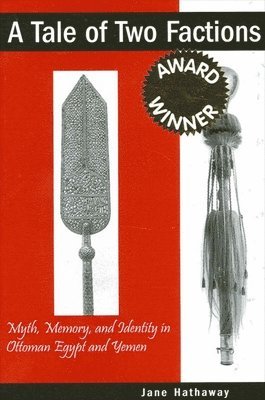
Reevaluates the foundation myths of two rival factions in Egypt during the Ottoman era.Winner of the 2003 Ohio Academy of History Outstanding Publication Award This revisionist study reevaluates the origins and foundation myths of the Faqaris and Qasimis, two rival factions that divided Egyptian society during the seventeenth and eighteenth centuries, when Egypt was the largest province in the Ottoman Empire. In answer to the enduring mystery surrounding the factions' origins, Jane Hathaway places their emergence within the generalized crisis that the Ottoman Empire-like much of the rest of the world-suffered during the early modern period, while uncovering a symbiosis between Ottoman Egypt and Yemen that was critical to their formation. In addition, she scrutinizes the factions' foundation myths, deconstructing their tropes and symbols to reveal their connections to much older popular narratives. Drawing on parallels from a wide array of cultures, she demonstrates with striking originality how rituals such as storytelling and public processions, as well as identifying colors and emblems, could serve to reinforce factional identity.
414 kr
Tillfälligt slut
Reevaluates the foundation myths of two rival factions in Egypt during the Ottoman era.Winner of the 2003 Ohio Academy of History Outstanding Publication Award This revisionist study reevaluates the origins and foundation myths of the Faqaris and Qasimis, two rival factions that divided Egyptian society during the seventeenth and eighteenth centuries, when Egypt was the largest province in the Ottoman Empire. In answer to the enduring mystery surrounding the factions' origins, Jane Hathaway places their emergence within the generalized crisis that the Ottoman Empire-like much of the rest of the world-suffered during the early modern period, while uncovering a symbiosis between Ottoman Egypt and Yemen that was critical to their formation. In addition, she scrutinizes the factions' foundation myths, deconstructing their tropes and symbols to reveal their connections to much older popular narratives. Drawing on parallels from a wide array of cultures, she demonstrates with striking originality how rituals such as storytelling and public processions, as well as identifying colors and emblems, could serve to reinforce factional identity.
1 282 kr
Skickas inom 7-10 vardagar
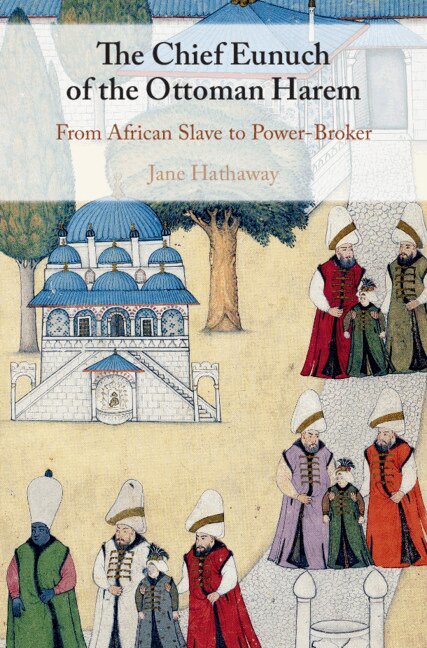
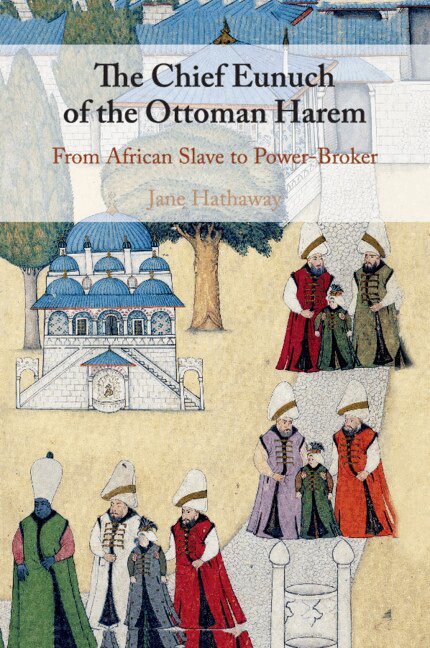
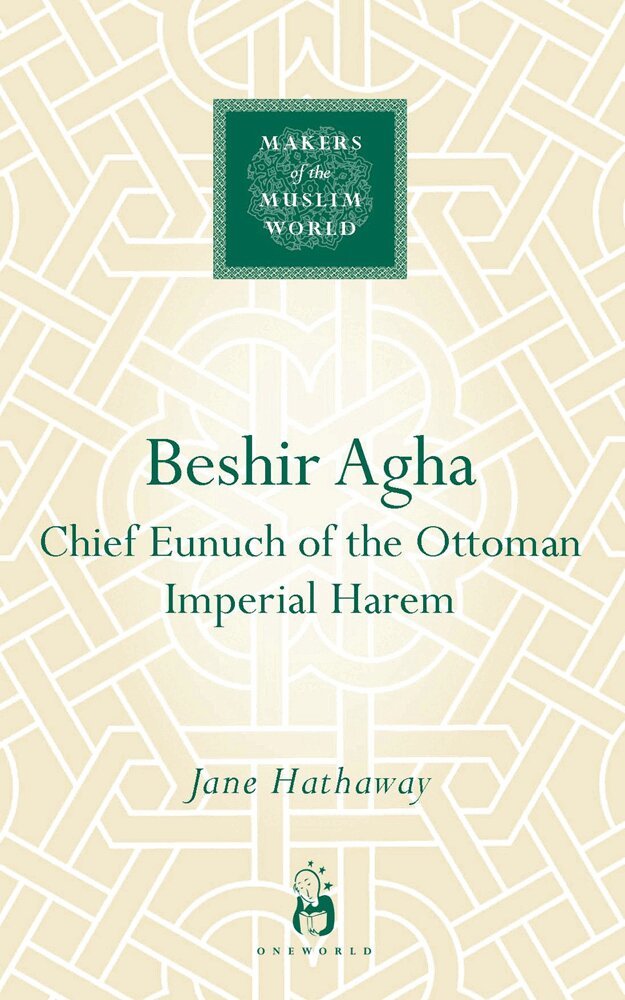
Eunuchs were a common feature of pre- and early modern societies that are now poorly understood. Here, Jane Hathaway offers an in-depth study of the chief of the African eunuchs who guarded the harem of the Ottoman Empire. A wide range of primary sources are used to analyze the Chief Eunuch's origins in East Africa and his political, economic, and religious role from the inception of his office in the late sixteenth century through the dismantling of the palace harem in the early twentieth century. Hathaway highlights the origins of the institution and how the role of eunuchs developed in East Africa, as well as exploring the Chief Eunuch's connections to Egypt and Medina. By tracing the evolution of the office, we see how the Chief Eunuch's functions changed in response to transformations in Ottoman society, from the generalized crisis of the seventeenth century to the westernizing reforms of the nineteenth century.
441 kr
Skickas inom 7-10 vardagar
Eunuchs were a common feature of pre- and early modern societies that are now poorly understood. Here, Jane Hathaway offers an in-depth study of the chief of the African eunuchs who guarded the harem of the Ottoman Empire. A wide range of primary sources are used to analyze the Chief Eunuch's origins in East Africa and his political, economic, and religious role from the inception of his office in the late sixteenth century through the dismantling of the palace harem in the early twentieth century. Hathaway highlights the origins of the institution and how the role of eunuchs developed in East Africa, as well as exploring the Chief Eunuch's connections to Egypt and Medina. By tracing the evolution of the office, we see how the Chief Eunuch's functions changed in response to transformations in Ottoman society, from the generalized crisis of the seventeenth century to the westernizing reforms of the nineteenth century.
2 096 kr
Skickas inom 10-15 vardagar
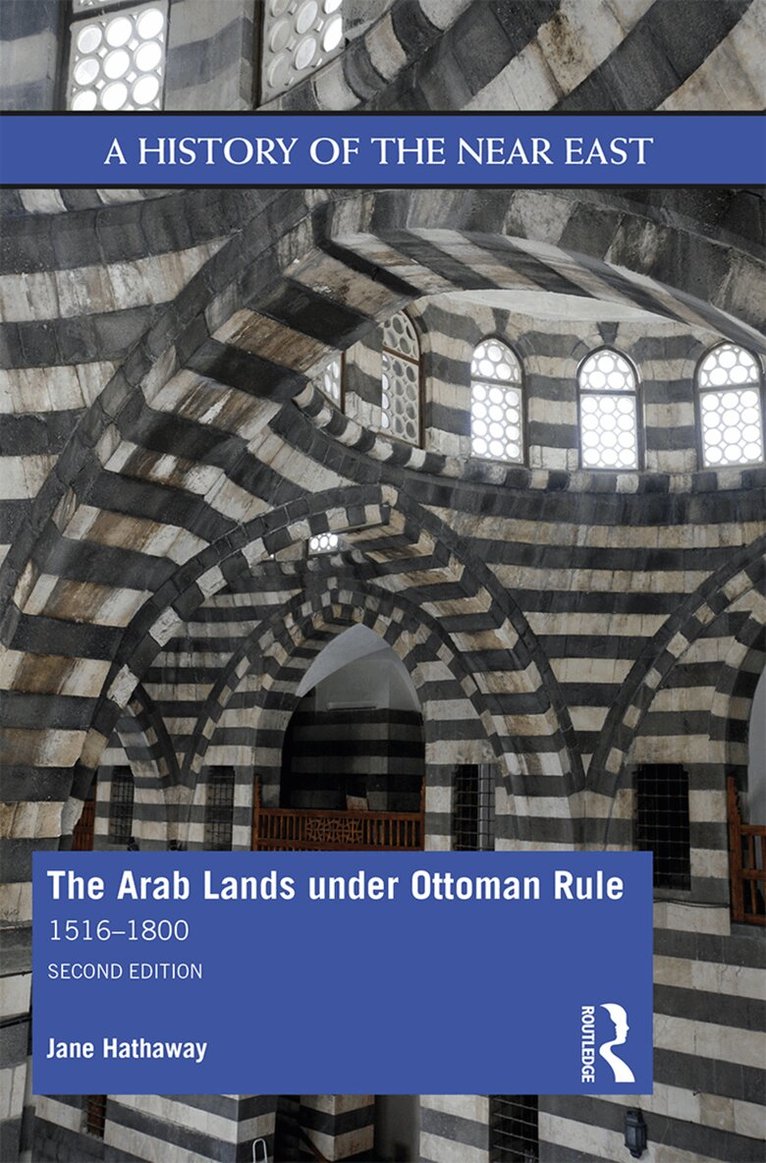
In this seminal study, Jane Hathaway presents a wide-ranging reassessment of the effects of Ottoman rule on the Arab Lands of Egypt, Greater Syria, Iraq and Yemen - the first of its kind in over forty years. Challenging outmoded perceptions of this period as a demoralizing prelude to the rise of Arab nationalism and Arab nation-states in the nineteenth and twentieth centuries, Hathaway depicts an era of immense social, cultural, economic and political change which helped to shape the foundations of today's modern Middle and Near East. Taking full advantage of a wide range of Arabic and Ottoman primary sources, she examines the changing fortunes of not only the political elite but also the broader population of merchants, shopkeepers, peasants, tribal populations, religious scholars, women, and ethnic and religious minorities who inhabited this diverse and volatile region.With masterly concision and clarity, Hathaway guides the reader through all the key current approaches to and debates surrounding Arab society during this period. This is far more than just another political history; it is a global study which offers an entirely new perspective on the era and region as a whole.
2 166 kr
Skickas inom 10-15 vardagar
The Arab Lands under Ottoman Rule assesses the effects of Ottoman rule on the Arab Lands of Egypt, Greater Syria, Iraq, and Yemen between 1516 and 1800.Drawing attention to the important history of these regions, the book challenges outmoded perceptions of this period as a demoralizing prelude to the rise of Arab nationalism and Arab nation-states in the nineteenth and twentieth centuries. As well as exploring political events and developments, it delves into the extensive social, cultural, and economic changes that helped to shape the foundations of today's modern Middle and Near East. In doing so, it provides a detailed view of society, incorporating all socio-economic classes, as well as women, religious minorities, and slaves. This second edition has been significantly revised and updated and reflects the developments in research and scholarship since the publication of the first edition. Engaging with a wide range of primary sources and enhanced by a variety of maps and images to illustrate the text, The Arab Lands under Ottoman Rule is a unique and essential resource for students of early modern Ottoman history and the early modern Middle East.
648 kr
Skickas inom 10-15 vardagar
The Arab Lands under Ottoman Rule assesses the effects of Ottoman rule on the Arab Lands of Egypt, Greater Syria, Iraq, and Yemen between 1516 and 1800.Drawing attention to the important history of these regions, the book challenges outmoded perceptions of this period as a demoralizing prelude to the rise of Arab nationalism and Arab nation-states in the nineteenth and twentieth centuries. As well as exploring political events and developments, it delves into the extensive social, cultural, and economic changes that helped to shape the foundations of today's modern Middle and Near East. In doing so, it provides a detailed view of society, incorporating all socio-economic classes, as well as women, religious minorities, and slaves. This second edition has been significantly revised and updated and reflects the developments in research and scholarship since the publication of the first edition. Engaging with a wide range of primary sources and enhanced by a variety of maps and images to illustrate the text, The Arab Lands under Ottoman Rule is a unique and essential resource for students of early modern Ottoman history and the early modern Middle East.
408 kr
Skickas inom 3-6 vardagar
554 kr
Skickas inom 3-6 vardagar
Del 43 - Cambridge Semitic Languages and Culture
Ottoman-Era Documents from the Cairo Genizah
Häftad, Engelska, 2026
545 kr
Skickas inom 5-8 vardagar
Del 43 - Cambridge Semitic Languages and Culture
Ottoman-Era Documents from the Cairo Genizah
Inbunden, Engelska, 2026
726 kr
Skickas inom 5-8 vardagar
394 kr
Skickas inom 7-10 vardagar
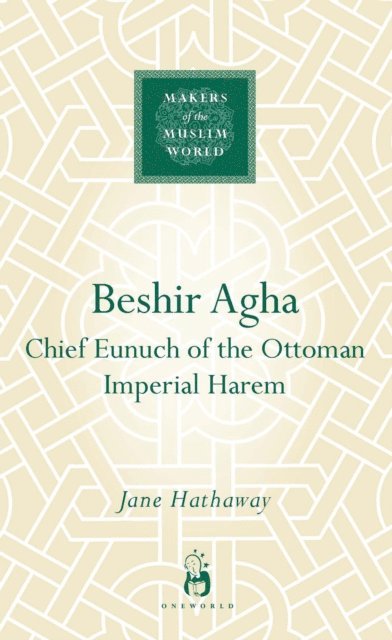
This book explores the life of el-Hajj Beshir Agha (ca. 1657-1746), the most powerful Chief Harem Eunuch in the history of the Ottoman Empire Enslaved in his native Ethiopia as a boy, then castrated in Egypt, el-Hajj Beshir became one of hundreds of East African eunuchs who inhabited the imperial palace’s enormous harem. Rising through the ranks to become harem treasurer by 1707, he eventually oversaw the educations of crown princes and harem women whilst choosing and deposing a long series of grand viziers. Wielding unparallelled power and influence over the empire, the libraries that he founded throughout the region helped to shape the religious and intellectual profile of the Ottoman state.