Jane Lennon – författare
2 511 kr
Skickas inom 10-15 vardagar
822 kr
Skickas inom 10-15 vardagar
623 kr
Läs direkt efter köp
623 kr
Läs direkt efter köp
Pastoral Australia tells the story of the expansion of Australia''s pastoral industry, how it drove European settlement and involved Aboriginal people in the new settler society.
The rural life that once saw Australia ''ride on the sheep''s back'' is no longer what defines us, yet it is largely our history as a pastoral nation that has endured in heritage places and which is embedded in our self-image as Australians.
The challenges of sustaining a pastoral industry in Australia make a compelling story of their own. Developing livestock breeds able to prosper in the Australian environment was an ongoing challenge, as was getting wool and meat to market. Many stock routes, wool stores, abattoirs, wharf facilities, railways, roads, and river and ocean transport systems that were developed to link the pastoral interior with the urban and market infrastructure still survive. Windmills, fences, homesteads, shearing sheds, bores, stock yards, travelling stock routes, bush roads and railheads all changed the look of the country. These features of our landscape form an important part of our heritage. They are symbols of a pastoral Australia, and of the foundations of our national identity, which will endure long into the future.
918 kr
Läs direkt efter köp
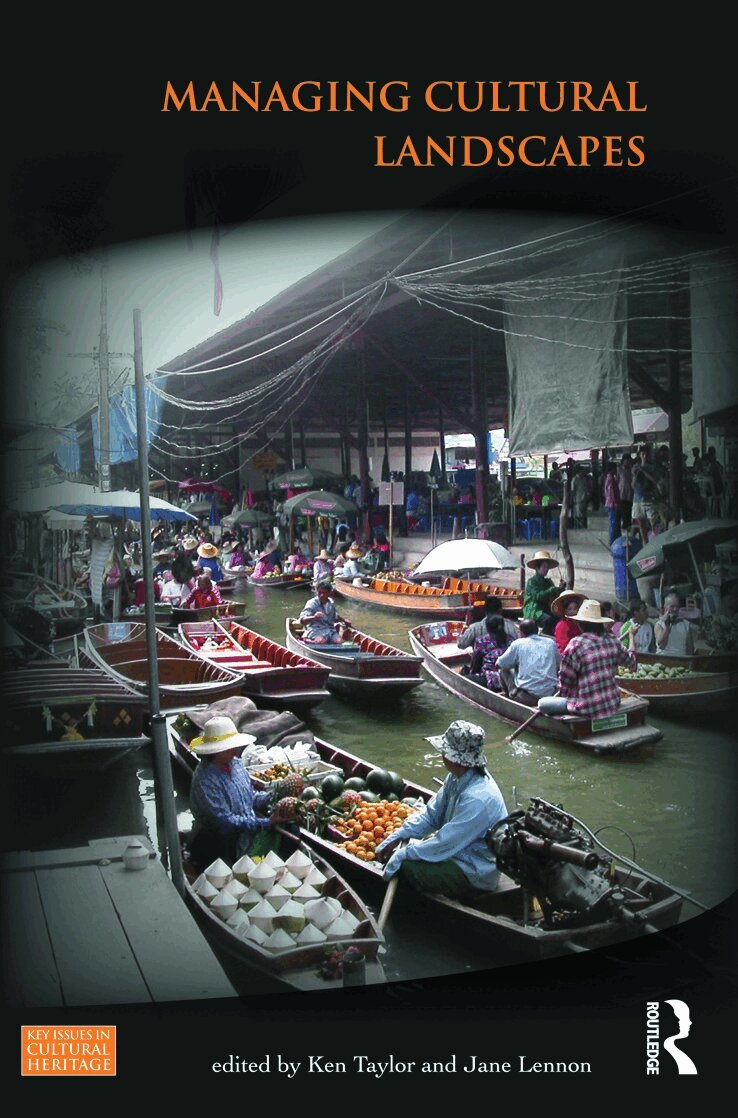
One of our deepest needs is for a sense of identity and belonging. A common feature in this is human attachment to landscape and how we find identity in landscape and place. The late 1980s and early 1990s saw a remarkable flowering of interest in, and understanding of, cultural landscapes. With these came a challenge to the 1960s and 1970s concept of heritage concentrating on great monuments and archaeological locations, famous architectural ensembles, or historic sites with connections to the rich and famous. Managing Cultural Landscapes explores the latest thought in landscape and place by:
airing critical discussion of key issues in cultural landscapes through accessible accounts of how the concept of cultural landscape applies in diverse contexts across the globe and is inextricably tied to notions of living history where landscape itself is a rich social history record
widening the notion that landscape only involves rural settings to embrace historic urban landscapes/townscapes examining critical issues of identity, maintenance of traditional skills and knowledge bases in the face of globalization, and new technologies fostering international debate with interdisciplinary appeal to provide a critical text for academics, students, practitioners, and informed community organizations discussing how the cultural landscape concept can be a useful management tool relative to current issues and challenges.With contributions from an international group of authors, Managing Cultural Landscapes provides an examination of the management of heritage values of cultural landscapes from Australia, Japan, China, USA, Canada, Thailand, Indonesia, Pacific Islands, India and the Philippines; it reviews critically the factors behind the removal of Dresden and its cultural landscape from World Heritage listing and gives an overview of Historic Urban Landscape thinking.
918 kr
Läs direkt efter köp
One of our deepest needs is for a sense of identity and belonging. A common feature in this is human attachment to landscape and how we find identity in landscape and place. The late 1980s and early 1990s saw a remarkable flowering of interest in, and understanding of, cultural landscapes. With these came a challenge to the 1960s and 1970s concept of heritage concentrating on great monuments and archaeological locations, famous architectural ensembles, or historic sites with connections to the rich and famous. Managing Cultural Landscapes explores the latest thought in landscape and place by:
airing critical discussion of key issues in cultural landscapes through accessible accounts of how the concept of cultural landscape applies in diverse contexts across the globe and is inextricably tied to notions of living history where landscape itself is a rich social history record
widening the notion that landscape only involves rural settings to embrace historic urban landscapes/townscapes examining critical issues of identity, maintenance of traditional skills and knowledge bases in the face of globalization, and new technologies fostering international debate with interdisciplinary appeal to provide a critical text for academics, students, practitioners, and informed community organizations discussing how the cultural landscape concept can be a useful management tool relative to current issues and challenges.With contributions from an international group of authors, Managing Cultural Landscapes provides an examination of the management of heritage values of cultural landscapes from Australia, Japan, China, USA, Canada, Thailand, Indonesia, Pacific Islands, India and the Philippines; it reviews critically the factors behind the removal of Dresden and its cultural landscape from World Heritage listing and gives an overview of Historic Urban Landscape thinking.