Janis Esots - Böcker
Visar alla böcker från författaren Janis Esots. Handla med fri frakt och snabb leverans.
4 produkter
4 produkter
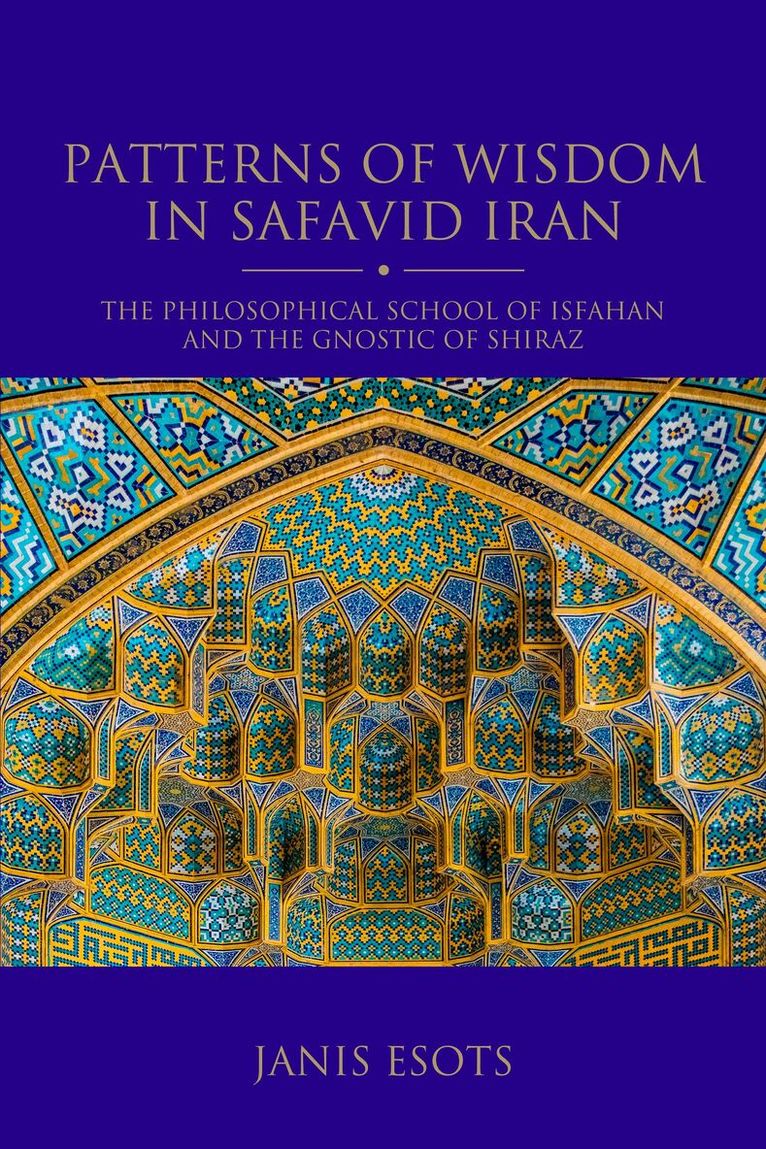
Patterns of Wisdom in Safavid Iran
The Philosophical School of Isfahan and the Gnostic of Shiraz
Inbunden, Engelska, 2021
1 142 kr
Skickas inom 10-15 vardagar
I.B. Tauris in association with the Institute of Ismaili StudiesThe exceptional intellectual richness of seventeenth-century Safavid Iran is epitomised by the philosophical school of Isfahan, and in particular by its ostensible founder, Mir Damad (d. 1631), and his great student Mulla Sadra (aka Sadr al-Din Shirazi, d. 1636). Equally important to the school is the apophatic wisdom of Rajab 'Ali Tabrizi that followed later (d. 1669/70).However, despite these philosophers’ renown, the identification of the 'philosophical school of Isfahan' was only proposed in 1956, by the celebrated French Iranologist Henry Corbin, who noted the unifying Islamic Neoplatonist character of some 20 thinkers and spiritual figures; this grouping has subsequently remained unchallenged for some fifty years.In this highly original work, Janis Esots investigates the legitimacy of the term 'school', delving into the complex philosophies of these three major Shi'i figures and drawing comparisons between them. The author makes the case that Mulla Sadra’s thought is independent and actually incompatible with the thoughts of Mir Damad and Rajab Ali Tabrizi. This not only presents a new way of thinking about how we understand the ‘school of Isfahan’, it also identifies Mir Damad and Rajab Ali Tabrizi as pioneers in their own right.
Patterns of Wisdom in Safavid Iran
The Philosophical School of Isfahan and the Gnostic of Shiraz
Häftad, Engelska, 2021
365 kr
Skickas inom 7-10 vardagar
I.B. Tauris in association with the Institute of Ismaili StudiesThe exceptional intellectual richness of seventeenth-century Safavid Iran is epitomised by the philosophical school of Isfahan, and in particular by its ostensible founder, Mir Damad (d. 1631), and his great student Mulla Sadra (aka Sadr al-Din Shirazi, d. 1636). Equally important to the school is the apophatic wisdom of Rajab 'Ali Tabrizi that followed later (d. 1669/70).However, despite these philosophers’ renown, the identification of the 'philosophical school of Isfahan' was only proposed in 1956, by the celebrated French Iranologist Henry Corbin, who noted the unifying Islamic Neoplatonist character of some 20 thinkers and spiritual figures; this grouping has subsequently remained unchallenged for some fifty years.In this highly original work, Janis Esots investigates the legitimacy of the term 'school', delving into the complex philosophies of these three major Shi'i figures and drawing comparisons between them. The author makes the case that Mulla Sadra’s thought is independent and actually incompatible with the thoughts of Mir Damad and Rajab Ali Tabrizi. This not only presents a new way of thinking about how we understand the ‘school of Isfahan’, it also identifies Mir Damad and Rajab Ali Tabrizi as pioneers in their own right.
1 142 kr
Skickas inom 10-15 vardagar
The ebook editions of this book are available open access under a [CC BY-NC-ND 4.0] licence on bloomsburycollections.com. Open access was funded by Institute of Ismaili Studies.I.B. Tauris in association with the Institute of Ismaili StudiesThe renaissance of Shi’i Islam began in the 9th/15th century when the Ismailis experienced the Anjudan revival and Twelver Shi’i traditions were also renewed. This renaissance gained further strength when the Safavids succeeded in establishing a state in the early decades of the 10th/16th century, making Ithna’ashari Shi’i Islam their official religion.The chapters in this open access book represent the most recent scholarship on the intellectual and spiritual life of the age and discuss what prepared the ground for its appearance as well as its achievements. Although the political and artistic developments of the Safavid era of the 10th-12th/16th-18th centuries have been extensively studied, the complexities of the different groups, movements and strands of thought in the renaissance of Shi’i Islam still remain largely unexplored. The major themes that characterised the Shi’i renaissance are explored, including: popular reactions to messianic movements; the development of legal theories and concepts; the investigation of theological and philosophical problems, above all by the ‘School of Isfahan’; Shi’i-Sufi interactions and intra-Shi'i relations; the collection of Shi’i hadith and its application in Shi’i exegesis; and the interplay between political considerations and religious beliefs.The eBook editions of this book are available open access under a CC BY-NC-ND 4.0 licence on bloomsburycollections.com. Open access was funded by The Institute of Ismaili Studies.
368 kr
Skickas inom 10-15 vardagar
The ebook editions of this book are available open access under a [CC BY-NC-ND 4.0] licence on bloomsburycollections.com. Open access was funded by Institute of Ismaili Studies.I.B. Tauris in association with the Institute of Ismaili StudiesThe renaissance of Shi’i Islam began in the 9th/15th century when the Ismailis experienced the Anjudan revival and Twelver Shi’i traditions were also renewed. This renaissance gained further strength when the Safavids succeeded in establishing a state in the early decades of the 10th/16th century, making Ithna’ashari Shi’i Islam their official religion.The chapters in this open access book represent the most recent scholarship on the intellectual and spiritual life of the age and discuss what prepared the ground for its appearance as well as its achievements. Although the political and artistic developments of the Safavid era of the 10th-12th/16th-18th centuries have been extensively studied, the complexities of the different groups, movements and strands of thought in the renaissance of Shi’i Islam still remain largely unexplored. The major themes that characterised the Shi’i renaissance are explored, including: popular reactions to messianic movements; the development of legal theories and concepts; the investigation of theological and philosophical problems, above all by the ‘School of Isfahan’; Shi’i-Sufi interactions and intra-Shi'i relations; the collection of Shi’i hadith and its application in Shi’i exegesis; and the interplay between political considerations and religious beliefs.The eBook editions of this book are available open access under a CC BY-NC-ND 4.0 licence on bloomsburycollections.com. Open access was funded by The Institute of Ismaili Studies.