Janusz Salamon - Böcker
Visar alla böcker från författaren Janusz Salamon. Handla med fri frakt och snabb leverans.
6 produkter
6 produkter
1 844 kr
Skickas inom 7-10 vardagar
Breaking out of the dominance of Anglo-American scholarship, this volume centralises East Asian philosophical traditions to explore cross-cultural perspectives in the field of global justice studies. By bringing together diverse traditions of thinking about justice that contrasts East Asian and Western thinkers’ traditions, it avoids the shortcomings of narrow and one-sided conceptualisations of global justice.A range of contributors from East Asia, Europe, and the US who are conversant with both Western and East Asian philosophical traditions provide a rich engagement with contemporary issues relating to global justice. The book opens with a section devoted to the methodological challenges specific to cross-cultural approaches to justice, including the universalism/particularism debate and the conditions of the possibility of cross-cultural comparisons. Part II explores how major East Asian philosophical traditions—including Confucianism, Legalism, Daoism and Buddhism—consider issues related to global justice. The essays in Part III adopt a cross-cultural and/or comparative perspective on justice, enabling the readers to appreciate similarities and differences between the East Asian and Western perspectives on justice, and to appreciate cultural variation. Key applied issues in global justice, such as epistemic injustice, human rights, women’s rights, nationalism, religious pluralism, coercion, corruption and post-colonial justice, receive full consideration in the final section of this indispensable reference work for understandings of global justice in East Asia specifically and cross-culturally.
665 kr
Kommande
Breaking out of the dominance of Anglo-American scholarship, this volume centralises East Asian philosophical traditions to explore cross-cultural perspectives in the field of global justice studies. By bringing together diverse traditions of thinking about justice that contrasts East Asian and Western thinkers’ traditions, it avoids the shortcomings of narrow and one-sided conceptualisations of global justice.A range of contributors from East Asia, Europe, and the US who are conversant with both Western and East Asian philosophical traditions provide a rich engagement with contemporary issues relating to global justice. The book opens with a section devoted to the methodological challenges specific to cross-cultural approaches to justice, including the universalism/particularism debate and the conditions of the possibility of cross-cultural comparisons. Part II explores how major East Asian philosophical traditions—including Confucianism, Legalism, Daoism and Buddhism—consider issues related to global justice. The essays in Part III adopt a cross-cultural and/or comparative perspective on justice, enabling the readers to appreciate similarities and differences between the East Asian and Western perspectives on justice, and to appreciate cultural variation. Key applied issues in global justice, such as epistemic injustice, human rights, women’s rights, nationalism, religious pluralism, coercion, corruption and post-colonial justice, receive full consideration in the final section of this indispensable reference work for understandings of global justice in East Asia specifically and cross-culturally.
1 572 kr
Skickas inom 10-15 vardagar
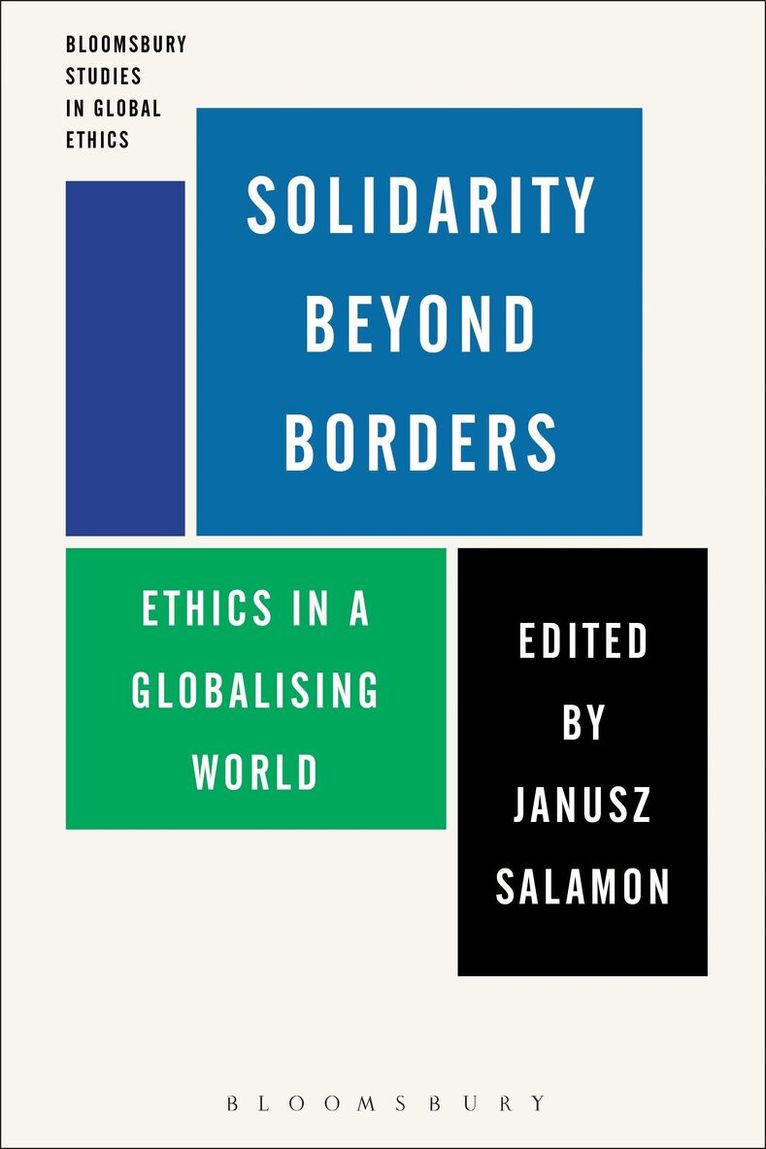
Solidarity Beyond Borders is a collection on international ethics by a multidisciplinary team of scholars from four continents. The volume explores ethical and political dimensions of transnational solidarity in the emerging multipolar world. Analyzing global challenges of the world plagued by poverty, diseases, injustice, inequality and environmental degradation, the contributors - rooted in diverse cultures and ethical traditions - voice their support for ‘solidarity beyond borders'. Bringing to light both universally shared ethical insights as well as the irreducible diversity of ethical perceptions of particular problems helps the reader to appreciate the chances and the challenges that the global community - more interconnected and yet more ideologically fragmented than ever before - faces in the coming decades.Solidarity Beyond Borders exemplifies an innovative approach to the key issues of global ethics which takes into account the processes of economic globalization, leading to an ever deeper interdependence of peoples and states, as well as the increasing cultural and ideological fragmentation which characterize the emerging multipolar world order.
1 833 kr
Skickas inom 10-15 vardagar
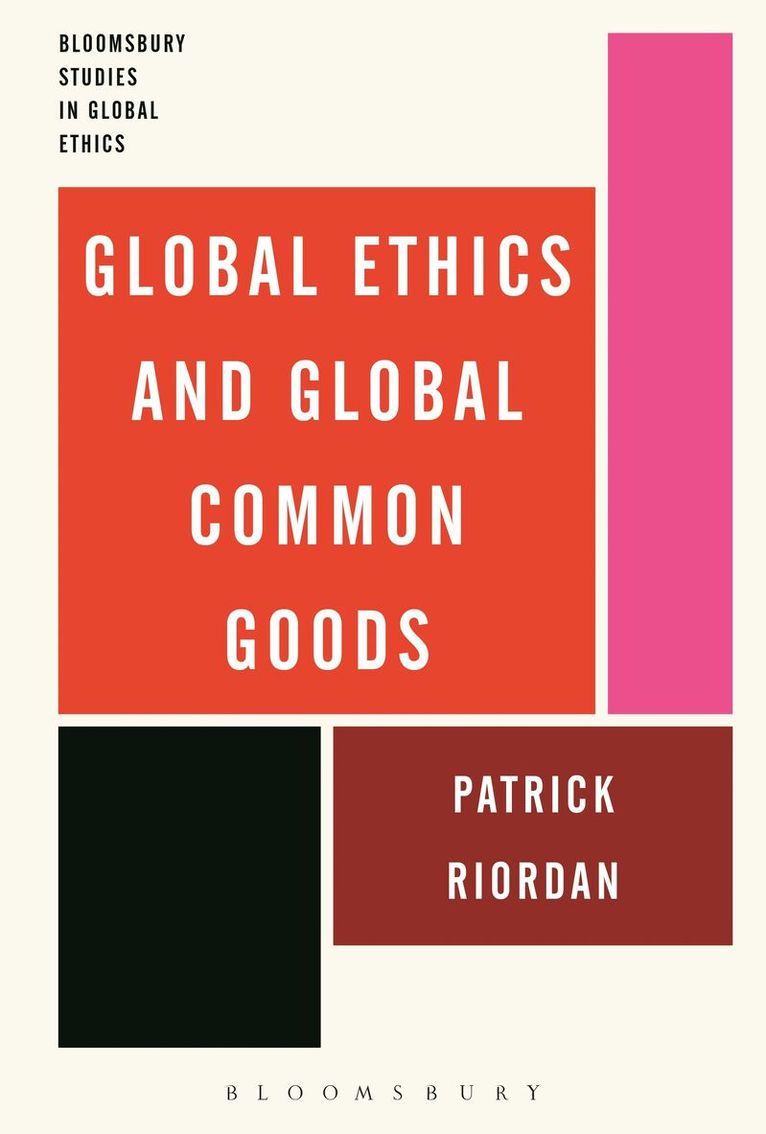
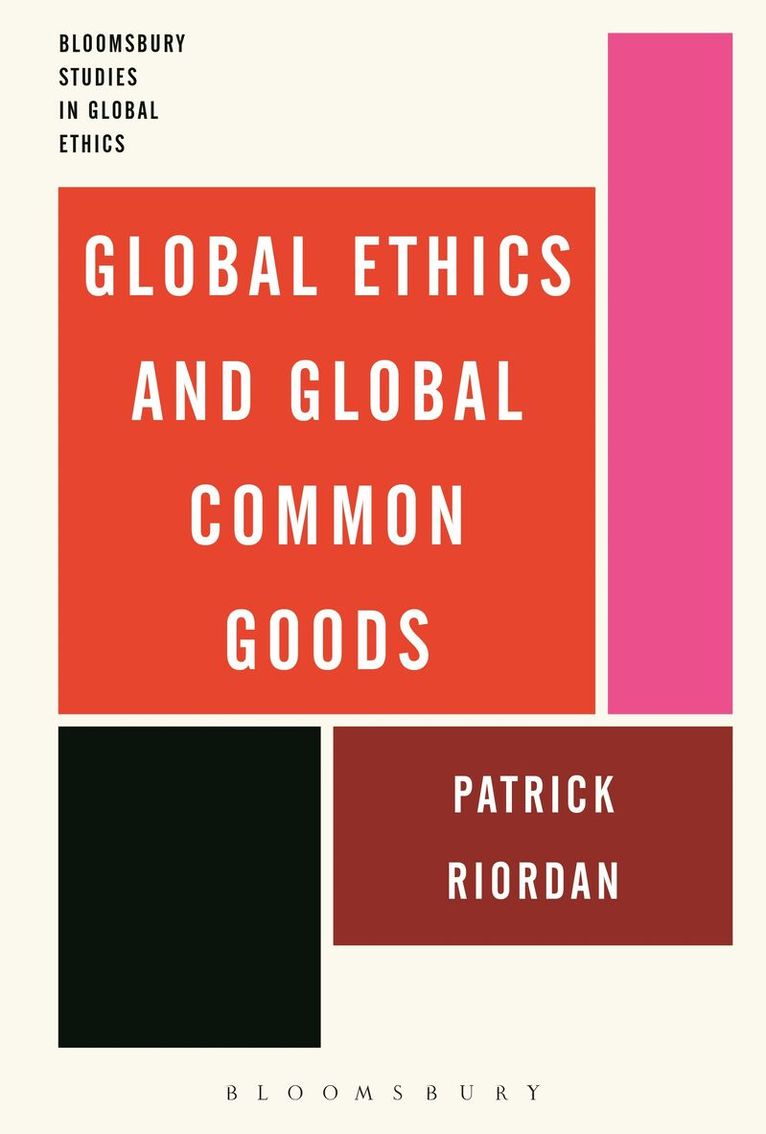
Patrick Riordan takes a different approach to the questions of global ethics by following the direction of questioning initially pioneered by Aristotle; for him the most basic question of ethics is ‘what is the good life’? So in the context of contemporary global ethics the Aristotelian questioner wonders about the good life on a global scale. Global Ethics and Global Common Goods fills the gap in existing literature caused by the neglect of the topic of the good in global ethics.Beginning by outlining answers to questions such as ‘what is good?’ and ‘is there a highest good?’ Riordan demonstrates the value of a common good perspective in matters of universal human rights and their institutions and practices, the study of international relations and the construction of global institutions, and debates about global justice between cosmopolitanism, nationalism and economic globalization. Philosophical questions provoked by these debates are identified and pursued, such as the question of a common human nature which seems presupposed by the language of universal rights. For experienced students of political philosophy and international relations this is a crucial text in the literature exploring the possibilities for politics on a world scale, while the perspective of the common good adds a new and distinctive dimension to current debates on global security and the challenges of managing conflict.
528 kr
Skickas inom 10-15 vardagar
Patrick Riordan takes a different approach to the questions of global ethics by following the direction of questioning initially pioneered by Aristotle; for him the most basic question of ethics is ‘what is the good life’? So in the context of contemporary global ethics the Aristotelian questioner wonders about the good life on a global scale. Global Ethics and Global Common Goods fills the gap in existing literature caused by the neglect of the topic of the good in global ethics.Beginning by outlining answers to questions such as ‘what is good?’ and ‘is there a highest good?’ Riordan demonstrates the value of a common good perspective in matters of universal human rights and their institutions and practices, the study of international relations and the construction of global institutions, and debates about global justice between cosmopolitanism, nationalism and economic globalization. Philosophical questions provoked by these debates are identified and pursued, such as the question of a common human nature which seems presupposed by the language of universal rights. For experienced students of political philosophy and international relations this is a crucial text in the literature exploring the possibilities for politics on a world scale, while the perspective of the common good adds a new and distinctive dimension to current debates on global security and the challenges of managing conflict.
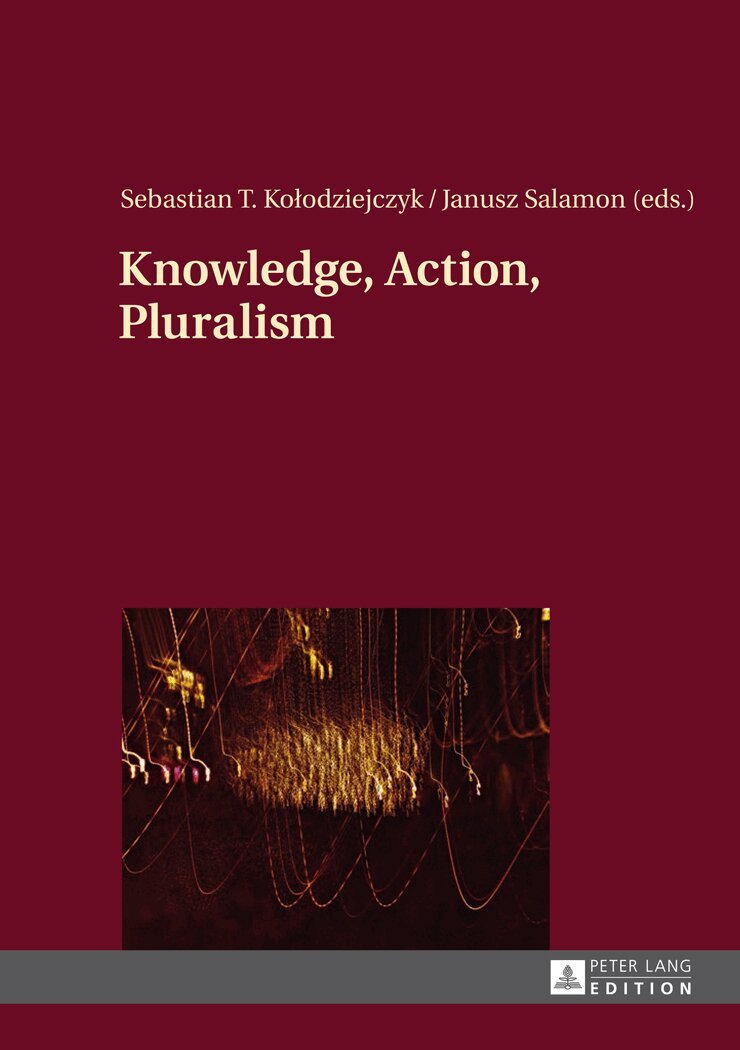
Knowledge, Action, Pluralism
Contemporary Perspectives in Philosophy of Religion
Inbunden, Engelska, 2014
698 kr
Skickas inom 5-8 vardagar
In this book, an international team of scholars from leading American, British and Continental European universities, led by Richard Swinburne, Eleonore Stump, William Wainwright and Linda Zagzebski, presents original ideas about three currently discussed topics in the philosophy of religion: religious epistemology, the philosophy of God’s action in the world, including the problem of evil and Divine Providence, and the philosophical challenge of religious diversity. The book contains echoes of all four main strands of the late 20th century philosophy of religion: Richard Swinburne’s philosophical theology, Alvin Plantinga’s reformed epistemology, John Hick’s theory of religious pluralism, and the philosophy of religion inspired by the work of the later Wittgenstein. One of the distinguishing features of this volume is that it mirrors a new trend towards philosophical cooperation across the so-called continental/analytic divide.