Jay P. Heubert - Böcker
Visar alla böcker från författaren Jay P. Heubert. Handla med fri frakt och snabb leverans.
3 produkter
3 produkter
575 kr
Skickas inom 5-8 vardagar
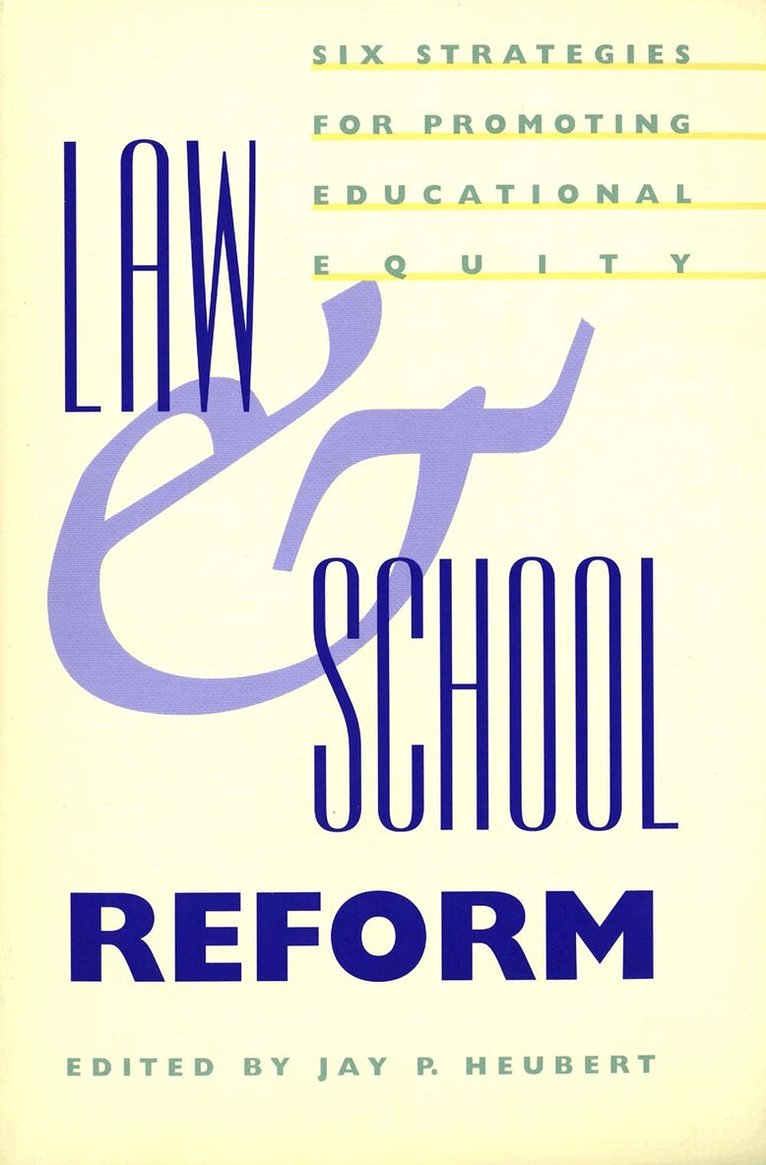
Nearly every effort to reform American public education during the past half-century has involved the law. Partnerships and tensions between lawyers, educators, parents, and scholars have never been more central to the future shape and direction of our schools. This powerful book examines six of the most important and controversial school reform initiatives: school desegregation, school finance reform, special education, education of immigrant children, integration of youth services, and enforceable performance mandates. The contributors—leading authorities in the fields of education and law—examine these reform efforts from the perspectives of law, education, research, and practice. The authors trace the evolution of these reform strategies over time. They also explore ways in which lawyers, educators, scholars, and parents, through improved collaboration, and promising new approaches, can promote school reform and educational equity more effectively in the future.Assuming no special background, this engaging and accessible book has been written for educators, lawyers, policymakers, parents, and all readers concerned with education in America.Contributors to this volume:Jay P. Heubert; Gary Orfield; Molly McUsic; Carola and Marcelo Suarez-Orozco; Peter Roos; Thomas Hehir; Sue Gamm; Martin Gerry; Paul Weckstein.
605 kr
Tillfälligt slut
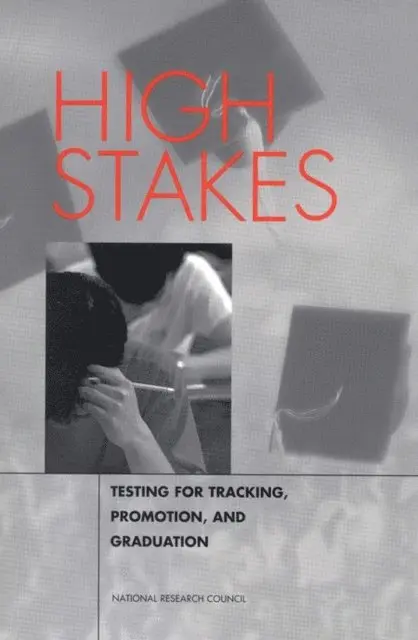
Everyone is in favor of "high education standards" and "fair testing" of student achievement, but there is little agreement as to what these terms actually mean. High Stakes looks at how testing affects critical decisions for American students. As more and more tests are introduced into the country's schools, it becomes increasingly important to know how those tests are used--and misused--in assessing children's performance and achievements. High Stakes focuses on how testing is used in schools to make decisions about tracking and placement, promotion and retention, and awarding or withholding high school diplomas. This book sorts out the controversies that emerge when a test score can open or close gates on a student's educational pathway. The expert panel: Proposes how to judge the appropriateness of a test. Explores how to make tests reliable, valid, and fair. Puts forward strategies and practices to promote proper test use. Recommends how decisionmakers in education should--and should not--use test results.The book discusses common misuses of testing, their political and social context, what happens when test issues are taken to court, special student populations, social promotion, and more. High Stakes will be of interest to anyone concerned about the long-term implications for individual students of picking up that Number 2 pencil: policymakers, education administrators, test designers, teachers, and parents.
334 kr
Tillfälligt slut
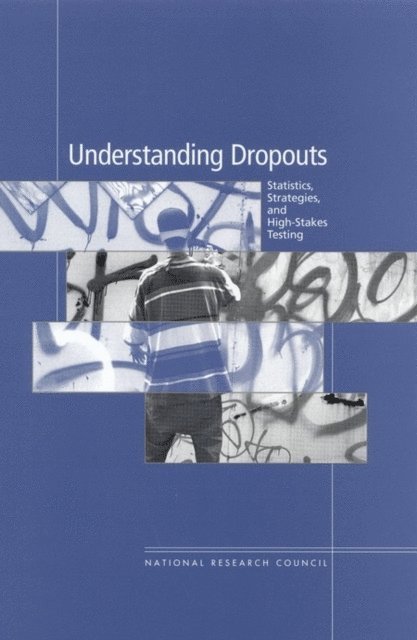
The role played by testing in the nation's public school system has been increasing steadily-and growing more complicated-for more than 20 years. The Committee on Educational Excellence and Testing Equity (CEETE) was formed to monitor the effects of education reform, particularly testing, on students at risk for academic failure because of poverty, lack of proficiency in English, disability, or membership in population subgroups that have been educationally disadvantaged. The committee recognizes the important potential benefits of standards-based reforms and of test results in revealing the impact of reform efforts on these students. The committee also recognizes the valuable role graduation tests can potentially play in making requirements concrete, in increasing the value of a diploma, and in motivating students and educators alike to work to higher standards. At the same time, educational testing is a complicated endeavor, that reality can fall far short of the model, and that testing cannot by itself provide the desired benefits. If testing is improperly used, it can have negative effects, such as encouraging school leaving, that can hit disadvantaged students hardest.The committee was concerned that the recent proliferation of high school exit examinations could have the unintended effect of increasing dropout rates among students whose rates are already far higher than the average, and has taken a close look at what is known about influences on dropout behavior and at the available data on dropouts and school completion.