Jay Prakash Verma – författare
Visar alla böcker från författaren Jay Prakash Verma. Handla med fri frakt och snabb leverans.
6 produkter
Microbial Engineering
A Sustainable Approach for Remediation of Emerging Soil Pollutants
Av Durgesh Kumar Jaiswal, Jay Prakash Verma m. fl.
Häftad, 2026
2189 kr
Kommande
Microbial Engineering: A Sustainable Approach for Remediation of Emerging Soil Pollutants ?offers a synthesis of the latest findings on new and emerging pollutants in a single volume. Focusing on emerging contaminants like heavy metals, nanoparticles, microplastic and organic contaminants, the book …
New and Future Developments in Microbial Biotechnology and Bioengineering
Phytomicrobiome for Sustainable Agriculture
Av Jay Prakash Verma, Catriona Macdonald m. fl.
Häftad, 2020
2189 kr
Lägg i varukorg
New and Future Developments in Microbial Biotechnology and Bioengineering: Phytomicrobiome for Sustainable Agriculture provides a comprehensive overview of the phytomicrobiome and a holistic approach for its various mechanisms, including plant growth, nutrient content, crop yield improvement, soil …
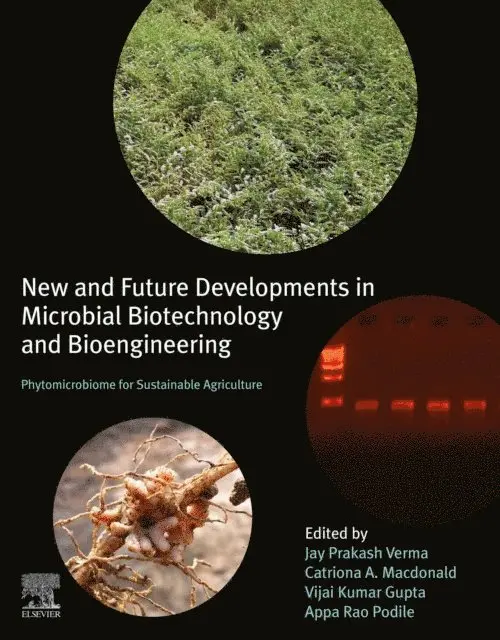
New and Future Developments in Microbial Biotechnology and Bioengineering
Phytomicrobiome for Sustainable Agriculture
Av Appa Rao Podile, Vijai Kumar Gupta m. fl.
E-bok, 2020
3117 kr
Lägg i varukorg
New and Future Developments in Microbial Biotechnology and Bioengineering: Phytomicrobiome for Sustainable Agriculture provides a comprehensive overview of the phytomicrobiome and a holistic approach for its various mechanisms, including plant growth, nutrient content, crop yield improvement, soil …
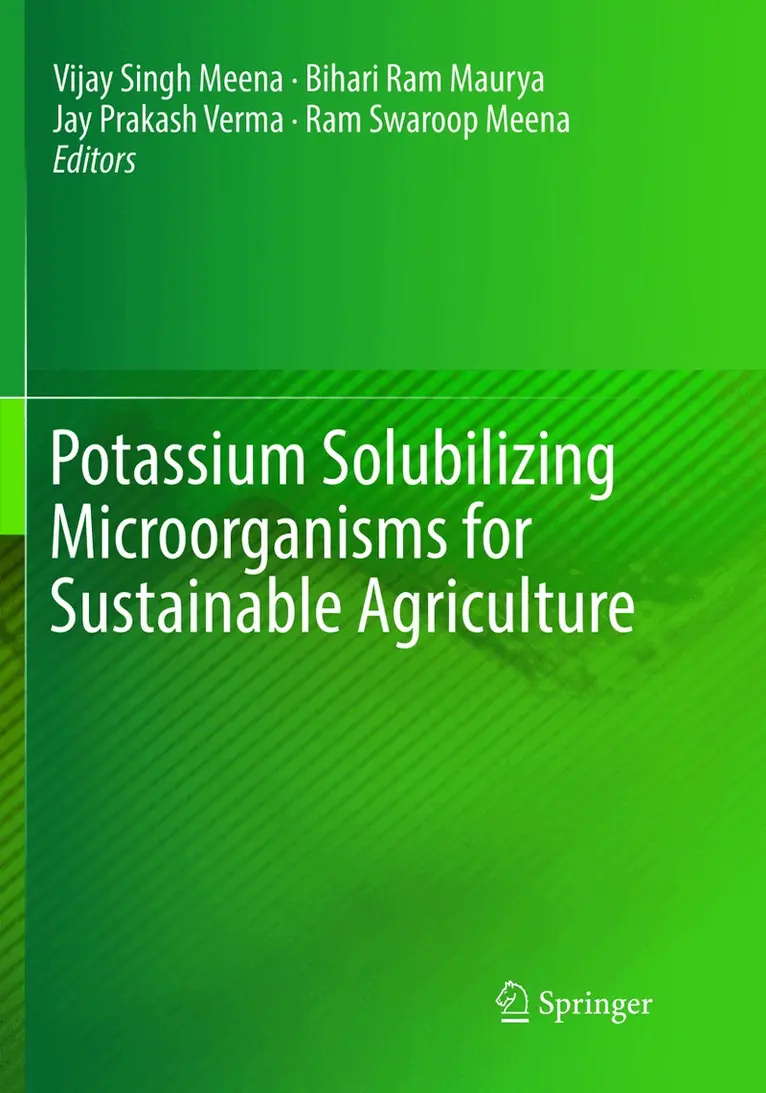
Potassium Solubilizing Microorganisms for Sustainable Agriculture
Av Vijay Singh Meena, Bihari Ram Maurya m. fl.
Inbunden, 2016
1636 kr
Lägg i varukorg
The potassium solubilizing microorganisms (KSMs) are a rhizospheric microorganism which solubilizes the insoluble potassium (K) to soluble forms of K for plant growth and yield. K-solubilization is carried out by a large number of saprophytic bacteria (Bacillus mucilaginosus, B. edaphicus, B. …
Potassium Solubilizing Microorganisms for Sustainable Agriculture
Av Ram Swaroop Meena, Jay Prakash Verma m. fl.
E-bok, 2016
2111 kr
Lägg i varukorg
The potassium solubilizing microorganisms (KSMs) are a rhizospheric microorganism which solubilizes the insoluble potassium (K) to soluble forms of K for plant growth and yield. K-solubilization is carried out by a large number of saprophytic bacteria (Bacillus mucilaginosus, B. edaphicus, B. …
Potassium Solubilizing Microorganisms for Sustainable Agriculture
Av Vijay Singh Meena, Bihari Ram Maurya m. fl.
Häftad, 2018
1636 kr
Lägg i varukorg
The potassium solubilizing microorganisms (KSMs) are a rhizospheric microorganism which solubilizes the insoluble potassium (K) to soluble forms of K for plant growth and yield. K-solubilization is carried out by a large number of saprophytic bacteria (Bacillus mucilaginosus, B. edaphicus, B. …