J.D. Marshall – författare
Visar alla böcker från författaren . Handla med fri frakt och snabb leverans.
9 produkter
9 produkter
Del 6 - Philosophy and Education
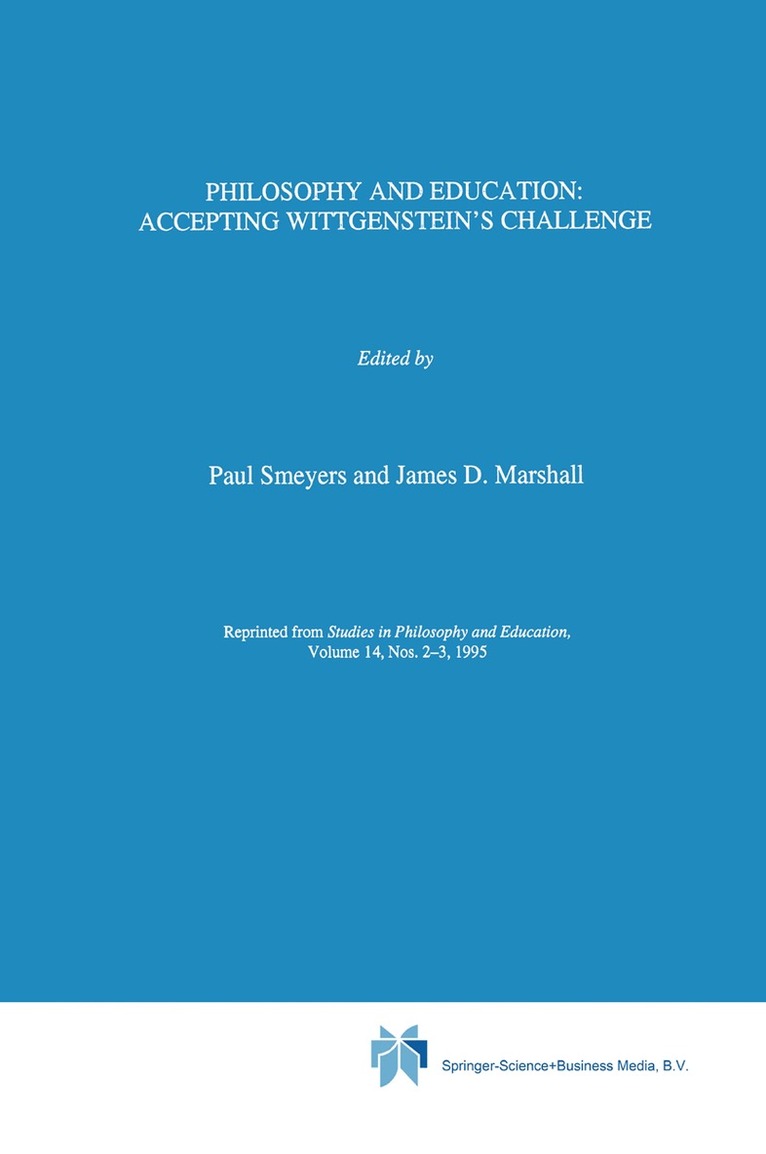
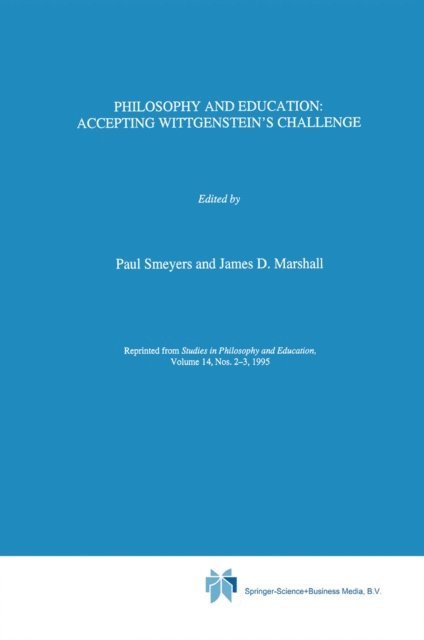
Philosophy and Education:
Accepting Wittgenstein's Challenge
Inbunden, Engelska, 1995
1 052 kr
Skickas inom 10-15 vardagar
Many books have been written about Wittgenstein's philosophy, but this collection of articles on Wittgenstein and education is the first study in book form in this area. There have been several articles in scholarly education journals, but the special cachet of this collection is that the contributors come from six countries. The collection has been edited by Paul Smeyers and Jim Marshall, philosophers of education who live in Belgium and New Zealand, respectively. Each of the chapters represents an original study of Wittgenstein, commissioned by the editors from colleagues they know to have written well on Wittgenstein and the implications of his ideas for education. Audience: Teachers, students and academics in the field of philosophy and education. Especially interesting to advanced students in these areas.
Del 7 - Philosophy and Education
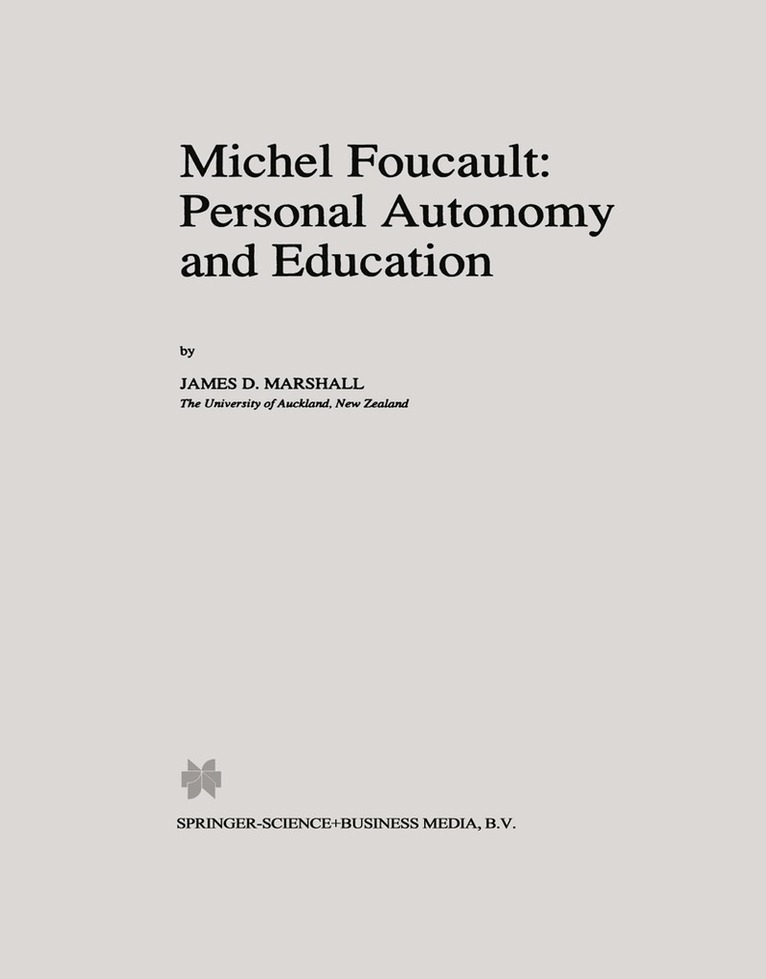
Michel Foucault: Personal Autonomy and Education
Inbunden, Engelska, 1996
1 052 kr
Skickas inom 10-15 vardagar
This book is designed to serve two purposes. First it provides an introduction to the ideas and works of Michel Foucault. It should be particularly appropriate for education students for whom, in general, Foucault is a shadowy presence. Second, it provides a Foucault based critique of a central plank of Western liberal education, the notion of the autonomous individual or personal autonomy. There are several introductions to Foucault but they tend to be written from a particular theoretical position, or with a particular interest in Foucault's ideas and works. For example Smart (1986) and Poster (1984) exemplify the former, and Dreyfus and Rabinow (1983) the latter. There is no substantial work in education on Foucault, apart from Ball (1990), which is an edited collection of papers by educationalists. The writer started reading Foucault from a position in education which was in the liberal framework, somewhere between Dewey, Freire and Habermas, but with an interest in punishment, authority and power. The book is the outcome of several years of trying to introduce students in education to his ideas and works in an educationally relevant manner. But an introduction, on its own, cannot show this relevance to education. Unless his ideas are put to work, unless they are used as opposed to mentioned in some sphere or area of education, then they may be of little relevance.
Inbunden, Engelska, 2004
1 052 kr
Skickas inom 10-15 vardagar
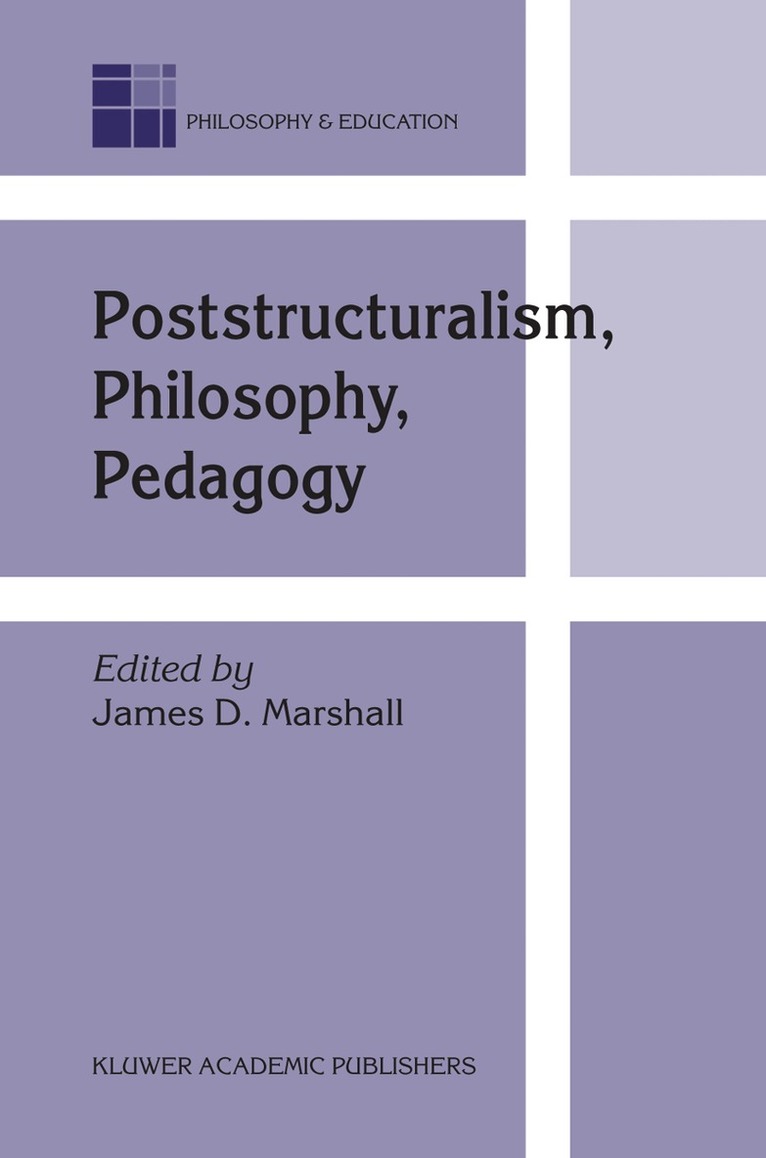
This book has been quite long in the making. In its original format, but with some different chapters, and with the then publisher, it foundered (as did other volumes in the planned series). At the in press stage, when we obviously thought it was going ahead, it was suddenly canned. Quite distraught I closed it away in a desk drawer for a year or so. But then Joy Carp of Kluwer Academic Publishers expressed an interest in it, and we were in business again. Most of the contributors to the original volume have stayed with it, only to be delayed by myself, for a variety of reasons (but see the dedication). I had been writing on Michel Foucault for a number of years but had become concerned about mis-appropriations of his ideas and works in educational literature. I was also concerned about the increasingly intemperate babble in that literature of the notion of postmodernism. Indeed at one major educational conference in North America I listened to a person expounding postmodernism in terms of ‘Destroy, Destroy, Destroy’. Like Michel Foucault I am not quite sure what postmodernism is, but following Mark Poster’s account of poststructuralism - as merely a collective term to catch a number of French thinkers – I thought that what we had to do in education was to look at what particular thinkers had said, and not become involved in vapid discussion at an abstract level on ‘-isms’. Thus the book was conceived.
E-bok
PDF, Engelska, 20061 367 kr
Läs direkt efter köp
This book has been quite long in the making. In its original format, but with some different chapters, and with the then publisher, it foundered (as did other volumes in the planned series). At the in press stage, when we obviously thought it was going ahead, it was suddenly canned. Quite distraught I closed it away in a desk drawer for a year or so. But then Joy Carp of Kluwer Academic Publishers expressed an interest in it, and we were in business again. Most of the contributors to the original volume have stayed with it, only to be delayed by myself, for a variety of reasons (but see the dedication). I had been writing on Michel Foucault for a number of years but had become concerned about mis-appropriations of his ideas and works in educational literature. I was also concerned about the increasingly intemperate babble in that literature of the notion of postmodernism. Indeed at one major educational conference in North America I listened to a person expounding postmodernism in terms of ‘Destroy, Destroy, Destroy’. Like Michel Foucault I am not quite sure what postmodernism is, but following Mark Poster’s account of poststructuralism - as merely a collective term to catch a number of French thinkers – I thought that what we had to do in education was to look at what particular thinkers had said, and not become involved in vapid discussion at an abstract level on ‘-isms’. Thus the book was conceived.
Del 6 - Philosophy and Education
Philosophy and Education:
Accepting Wittgenstein's Challenge
Häftad, Engelska, 2010
1 051 kr
Skickas inom 10-15 vardagar
Many books have been written about Wittgenstein's philosophy, but this collection of articles on Wittgenstein and education is the first study in book form in this area. There have been several articles in scholarly education journals, but the special cachet of this collection is that the contributors come from six countries. The collection has been edited by Paul Smeyers and Jim Marshall, philosophers of education who live in Belgium and New Zealand, respectively. Each of the chapters represents an original study of Wittgenstein, commissioned by the editors from colleagues they know to have written well on Wittgenstein and the implications of his ideas for education. Audience: Teachers, students and academics in the field of philosophy and education. Especially interesting to advanced students in these areas.
Del 7 - Philosophy and Education
Michel Foucault: Personal Autonomy and Education
Häftad, Engelska, 2010
1 082 kr
Skickas inom 10-15 vardagar
This book is designed to serve two purposes. First it provides an introduction to the ideas and works of Michel Foucault. It should be particularly appropriate for education students for whom, in general, Foucault is a shadowy presence. Second, it provides a Foucault based critique of a central plank of Western liberal education, the notion of the autonomous individual or personal autonomy. There are several introductions to Foucault but they tend to be written from a particular theoretical position, or with a particular interest in Foucault's ideas and works. For example Smart (1986) and Poster (1984) exemplify the former, and Dreyfus and Rabinow (1983) the latter. There is no substantial work in education on Foucault, apart from Ball (1990), which is an edited collection of papers by educationalists. The writer started reading Foucault from a position in education which was in the liberal framework, somewhere between Dewey, Freire and Habermas, but with an interest in punishment, authority and power. The book is the outcome of several years of trying to introduce students in education to his ideas and works in an educationally relevant manner. But an introduction, on its own, cannot show this relevance to education. Unless his ideas are put to work, unless they are used as opposed to mentioned in some sphere or area of education, then they may be of little relevance.
Häftad, Engelska, 2010
1 082 kr
Skickas inom 10-15 vardagar
This book provides an historical and a conceptual background to post-structuralism, and in part to post-modernism, for readers entering the discussions on post-structuralism. It does not attempt to be at the cutting edge of these debates nor to be advancing research in these areas. It does however look at the educational implications of the ideas discussed. The intention behind this collection was to provide a sound introduction to the key positions of a number of French poststructuralist thinkers who are being increasingly referred to, used as support, and even embraced by theorists in educational discourse. The editor and contributors to this volume are concerned that these thinkers have been misappropriated on occasions. That is why this volume concentrates on the historical and intellectual background of these philosophers. Each of the authors of the chapters in this collection deals with 'their' philosopher in the areas of: brief biographical details; key philosophical ideas; and the applications in, or implications of their work for education.
E-bok
PDF, Engelska, 20131 367 kr
Läs direkt efter köp
This book is designed to serve two purposes. First it provides an introduction to the ideas and works of Michel Foucault. It should be particularly appropriate for education students for whom, in general, Foucault is a shadowy presence. Second, it provides a Foucault based critique of a central plank of Western liberal education, the notion of the autonomous individual or personal autonomy. There are several introductions to Foucault but they tend to be written from a particular theoretical position, or with a particular interest in Foucault''s ideas and works. For example Smart (1986) and Poster (1984) exemplify the former, and Dreyfus and Rabinow (1983) the latter. There is no substantial work in education on Foucault, apart from Ball (1990), which is an edited collection of papers by educationalists. The writer started reading Foucault from a position in education which was in the liberal framework, somewhere between Dewey, Freire and Habermas, but with an interest in punishment, authority and power. The book is the outcome of several years of trying to introduce students in education to his ideas and works in an educationally relevant manner. But an introduction, on its own, cannot show this relevance to education. Unless his ideas are put to work, unless they are used as opposed to mentioned in some sphere or area of education, then they may be of little relevance.
E-bok
PDF, Engelska, 20131 340 kr
Läs direkt efter köp
Many books have been written about Wittgenstein''s philosophy, but this collection of articles on Wittgenstein and education is the first study in book form in this area. There have been several articles in scholarly education journals, but the special cachet of this collection is that the contributors come from six countries. The collection has been edited by Paul Smeyers and Jim Marshall, philosophers of education who live in Belgium and New Zealand, respectively. Each of the chapters represents an original study of Wittgenstein, commissioned by the editors from colleagues they know to have written well on Wittgenstein and the implications of his ideas for education. Audience: Teachers, students and academics in the field of philosophy and education. Especially interesting to advanced students in these areas.