Jean-Claude Schmitt – författare
Visar alla böcker från författaren Jean-Claude Schmitt. Handla med fri frakt och snabb leverans.
10 produkter
10 produkter
Häftad, Engelska, 1999
280 kr
Skickas inom 5-8 vardagar
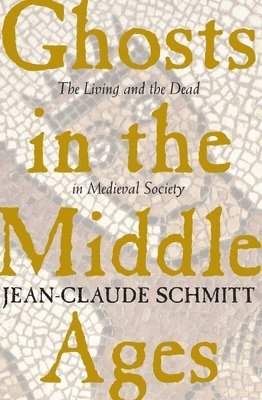
Through this study, Jean-Claude Schmitt examines medieval religious culture and the significance of the widespread belief in ghosts, revealing the ways in which the dead and the living related to each other during the Middle Ages. Schmitt also discusses Augustine's influence on medieval authors; the link between dreams and autobiographical narratives; and monastic visions and folklore. Including numerous colour reproductions of ghosts and ghostly trappings, this book presents a look at medieval culture.
Häftad, Engelska, 1999
513 kr
Skickas inom 10-15 vardagar
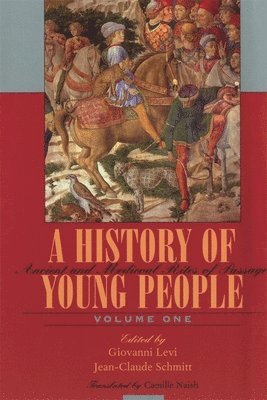
However swiftly it passes, youth is always with us, a perpetual passing phase, an apprenticeship to the myriad ways of the world, subject of panegyrics and diatribes, romances and cautionary tales from antiquity to our day. This two-volume history is the first to present a comprehensive account of what youth has been in the West and what it has meant through the ages. Brought together by Giovanni Levi and Jean-Claude Schmitt, a company of gifted historians and social scientists traces the changing character and status of young people from the gymnasia of ancient Greece to the lycées of modern France, from the sweatshops of the industrial revolution to the crucibles of Nazi youth.Monumental in its scope, minute in its attention to detail, A History of Young People takes us into the sensational rituals surrounding youth in Roman antiquity (such as the Lupercalia, with its nudity and whipping) and into the chivalric trials awaiting the privileged young of the Middle Ages. Elisabeth Crouzet-Pavan and Michel Pastoureau explore the elusive question of what defines youth, a concept that over time has reached from infancy to the age of forty. Elliott Horowitz and Renata Ago consider the young in the context of the family--within the different worlds of European Judaism and Catholicism through the Renaissance. Sabina Loriga takes us through three centuries of military experience to temper and complicate our assumptions about the youthful face of war. Michelle Perrot focuses on working-class youth, and Jean-Claude Caron on the young at school. The obedient and the rebellious are here, the cherished and the sacrificed, the children catapulted into adult responsibility, the adults who have yet to forsake the protections of childhood. What emerges in this history as never before is a vast, richly textured picture of youth as a changing constant of culture, society, economics, politics, and art, and as a uniquely complex experience of acculturation in every life.
Häftad, Engelska, 1999
513 kr
Skickas inom 10-15 vardagar
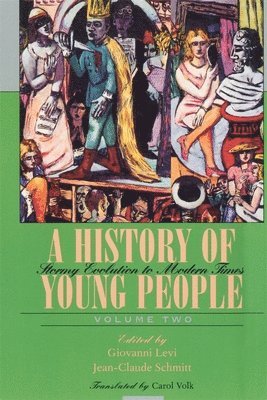
However swiftly it passes, youth is always with us, a perpetual passing phase, an apprenticeship to the myriad ways of the world, subject of panegyrics and diatribes, romances and cautionary tales from antiquity to our day. This two-volume history is the first to present a comprehensive account of what youth has been in the West and what it has meant through the ages. Brought together by Giovanni Levi and Jean-Claude Schmitt, a company of gifted historians and social scientists traces the changing character and status of young people from the gymnasia of ancient Greece to the lycées of modern France, from the sweatshops of the industrial revolution to the crucibles of Nazi youth.Monumental in its scope, minute in its attention to detail, A History of Young People takes us into the sensational rituals surrounding youth in Roman antiquity (such as the Lupercalia, with its nudity and whipping) and into the chivalric trials awaiting the privileged young of the Middle Ages. Elisabeth Crouzet-Pavan and Michel Pastoureau explore the elusive question of what defines youth, a concept that over time has reached from infancy to the age of forty. Elliott Horowitz and Renata Ago consider the young in the context of the family--within the different worlds of European Judaism and Catholicism through the Renaissance. Sabina Loriga takes us through three centuries of military experience to temper and complicate our assumptions about the youthful face of war. Michelle Perrot focuses on working-class youth, and Jean-Claude Caron on the young at school. The obedient and the rebellious are here, the cherished and the sacrificed, the children catapulted into adult responsibility, the adults who have yet to forsake the protections of childhood. What emerges in this history as never before is a vast, richly textured picture of youth as a changing constant of culture, society, economics, politics, and art, and as a uniquely complex experience of acculturation in every life.
E-bok
Engelska, 2013553 kr
Läs direkt efter köp
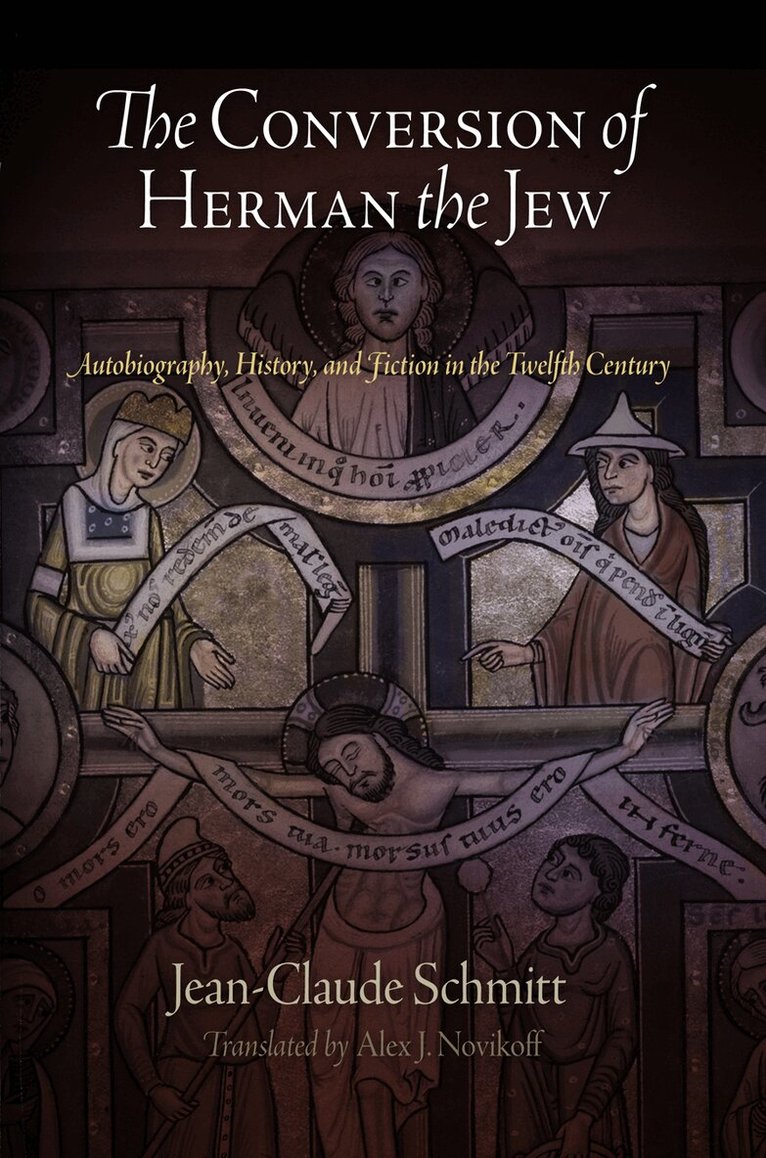
Sometime toward the middle of the twelfth century, it is supposed, an otherwise obscure figure, born a Jew in Cologne and later ordained as a priest in Cappenberg in Westphalia, wrote a Latin account of his conversion to Christianity. Known as the Opusculum, this book purportedly by "Herman, the former Jew" may well be the first autobiography to be written in the West after the Confessions of Saint Augustine. It may also be something else entirely.In The Conversion of Herman the Jew the eminent French historian Jean-Claude Schmitt examines this singular text and the ways in which it has divided its readers. Where some have seen it as an authentic conversion narrative, others have asked whether it is not a complete fabrication forged by Christian clerics. For Schmitt the question is poorly posed. The work is at once true and fictional, and the search for its lone author-whether converted Jew or not-fruitless. Herman may well have existed and contributed to the writing of his life, but the Opusculum is a collective work, perhaps framed to meet a specific institutional agenda.With agility and erudition, Schmitt examines the text to explore its meaning within the society and culture of its period and its participation in both a Christian and Jewish imaginary. What can it tell us about autobiography and subjectivity, about the function of dreams and the legitimacy of religious images, about individual and collective conversion, and about names and identities? In The Conversion of Herman the Jew Schmitt masterfully seizes upon the debates surrounding the Opusculum (the text of which is newly translated for this volume) to ponder more fundamentally the ways in which historians think and write.
Häftad, Engelska, 2012
380 kr
Skickas inom 10-15 vardagar
Sometime toward the middle of the twelfth century, it is supposed, an otherwise obscure figure, born a Jew in Cologne and later ordained as a priest in Cappenberg in Westphalia, wrote a Latin account of his conversion to Christianity. Known as the Opusculum, this book purportedly by "Herman, the former Jew" may well be the first autobiography to be written in the West after the Confessions of Saint Augustine. It may also be something else entirely.In The Conversion of Herman the Jew the eminent French historian Jean-Claude Schmitt examines this singular text and the ways in which it has divided its readers. Where some have seen it as an authentic conversion narrative, others have asked whether it is not a complete fabrication forged by Christian clerics. For Schmitt the question is poorly posed. The work is at once true and fictional, and the search for its lone author-whether converted Jew or not-fruitless. Herman may well have existed and contributed to the writing of his life, but the Opusculum is a collective work, perhaps framed to meet a specific institutional agenda.With agility and erudition, Schmitt examines the text to explore its meaning within the society and culture of its period and its participation in both a Christian and Jewish imaginary. What can it tell us about autobiography and subjectivity, about the function of dreams and the legitimacy of religious images, about individual and collective conversion, and about names and identities? In The Conversion of Herman the Jew Schmitt masterfully seizes upon the debates surrounding the Opusculum (the text of which is newly translated for this volume) to ponder more fundamentally the ways in which historians think and write.
E-bok
PDF, Tyska, 2006649 kr
Läs direkt efter köp
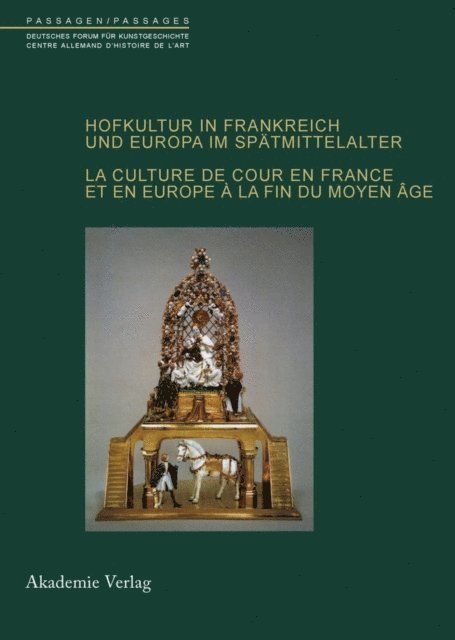
Thema des Bandes sind die höfischen Inszenierungen im Spätmittelalter und ihre innere Kohärenz. Die spezifischen Repräsentationsmuster einzelner Höfe werden insbesondere auf ihre Zielsetzung befragt. Neben der Analyse einzelner Phänomene der höfischen Kultur widmen sich die Beiträge vor allem dem Zusammenwirken von Architektur und Kunst, Zeremoniell, Literatur und Musik am Hofe. Über eine bloße Betrachtung der Bildkünste hinaus spannt sich damit der methodische Rahmen hin zu einer interdisziplinären Untersuchung, in der historische Anthropologie, Musik und Literaturwissenschaft sowie Baugeschichte berücksichtigt werden.
E-bok
PDF, Franska, 20171 704 kr
Läs direkt efter köp
75 kr
Läs direkt efter köp
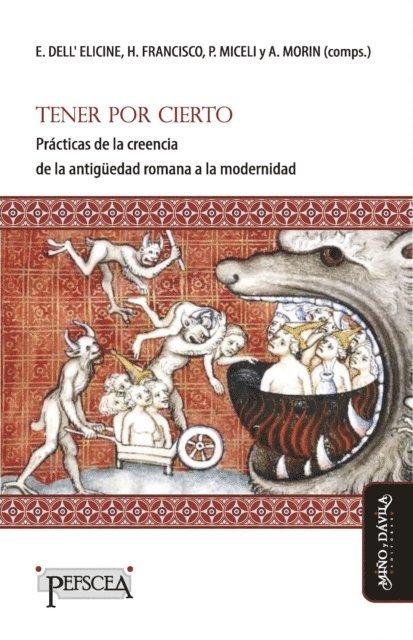
Desde hace algunas décadas, los historiadores de la creencia han insistido en que el concepto moderno de religión es de factura relativamente reciente (siglo XVIII). De allí, la necesidad de considerar la creencia como noción clave para entender los modos de la espiritualidad premoderna. Se trata de una conceptualización que enfatiza las distancias de naturaleza entre el concepto moderno de religión (entendido como adhesión individual a un conjunto de enunciados doctrinarios) y la creencia (concebida como un conjunto concreto de reglas prácticas ligadas a procesos específicos de poder y conocimiento). Pensar la creencia como un creer, es decir, como una acción, una praxis, ha permitido un abordaje más apropiado para comprender los comportamientos públicos y las modalidades rituales de los sujetos premodernos, que pueden ir más allá del plano que hoy llamamos religioso. Anclado en esta línea interpretativa, el propósito de este libro es el análisis de las modalidades, las técnicas y los dispositivos de la creencia desde la Antigüedad romana a la primera Modernidad. La perspectiva de abordaje teórico hace que este libro se haya pensado en función de un lector multiforme: además de atender a historiadores del mundo premoderno, convoca también a profesionales de otras disciplinas como la antropología, la sociología, el psicoanálisis o la epistemología, interpelados en su contemporaneidad por las cuestiones relativas a la creencia, sus modos de operación, sus marcos de producción y su papel performativo en la generación de hechos sociales.Escriben: John Scheid, Jean-Claude Schmitt, Jean Wirth, Rodrigo Laham Cohen, Héctor Francisco, Dolores Castro, Eleonora Dell''Elicine, Paola Miceli, Alejandro Morin, Ismael del Olmo y Constanza Cavallero
Inbunden, Franska, 1981
1 441 kr
Skickas inom 3-6 vardagar
754 kr
Tillfälligt slut