Jean-Louis Laville – författare
2 176 kr
Skickas inom 10-15 vardagar
637 kr
Skickas inom 10-15 vardagar
1 037 kr
Skickas inom 5-8 vardagar
408 kr
Skickas inom 5-8 vardagar
730 kr
Läs direkt efter köp
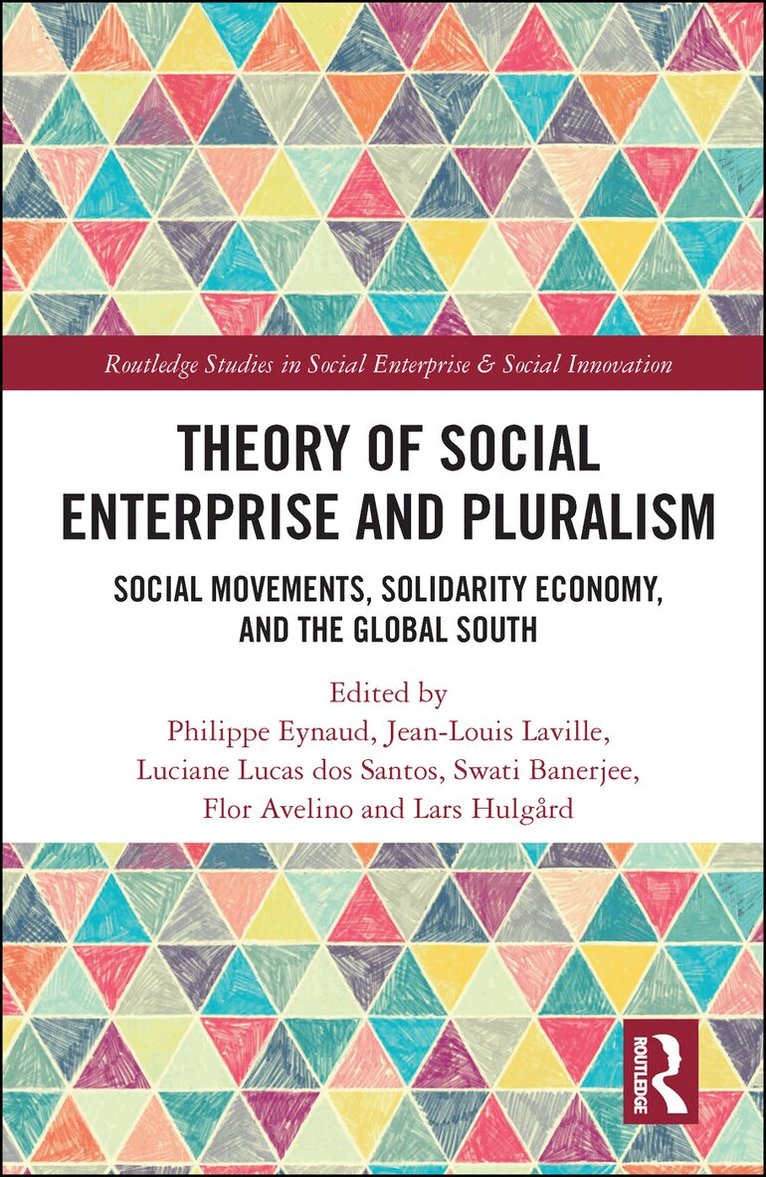
In the past decades, social enterprise has been an emerging field of research. Its main frameworks have been provided by Occidental approaches. Mainly based on an organizational vision, they give little or no room to questions such as gender, race, colonialism, class, power relations and intertwined forms of inequality. However, a wide range of worldwide hidden, popular initiatives can be considered as another form of social enterprises based on solidarity, re-embedding the economy as well as broadening the political scope. This has been shown in a previous book: Civil Society, the Third Sector, and Social Enterprise: Governance and Democracy.
Thus, to be more than a fashion or a fictitious panacea, the concept of social enterprise needs to be debated. Southern realities cannot be only understood through imported categories and outside modeled guidelines. This book engages a multicontinental and pluridisciplinary discussion in order to provide a pluralist theory of social enterprise. The book will be of interest to researchers, academics and students in the fields of social entrepreneurship, social innovation, development studies, management studies and social work.
730 kr
Läs direkt efter köp
In the past decades, social enterprise has been an emerging field of research. Its main frameworks have been provided by Occidental approaches. Mainly based on an organizational vision, they give little or no room to questions such as gender, race, colonialism, class, power relations and intertwined forms of inequality. However, a wide range of worldwide hidden, popular initiatives can be considered as another form of social enterprises based on solidarity, re-embedding the economy as well as broadening the political scope. This has been shown in a previous book: Civil Society, the Third Sector, and Social Enterprise: Governance and Democracy.
Thus, to be more than a fashion or a fictitious panacea, the concept of social enterprise needs to be debated. Southern realities cannot be only understood through imported categories and outside modeled guidelines. This book engages a multicontinental and pluridisciplinary discussion in order to provide a pluralist theory of social enterprise. The book will be of interest to researchers, academics and students in the fields of social entrepreneurship, social innovation, development studies, management studies and social work.
2 386 kr
Skickas inom 10-15 vardagar
1 238 kr
Skickas inom 10-15 vardagar
497 kr
Skickas inom 10-15 vardagar
847 kr
Skickas inom 10-15 vardagar
974 kr
Läs direkt efter köp
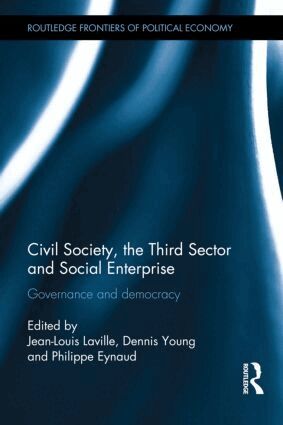
If the twentieth century was only focused on the complementarity and the opposition of market and state, the twenty-first century has now to deal with the prominence of the third sector, the emergence of social enterprises and other solidarity hybrid forms. The concept of civil society organisations (CSOs) spans this diversity and addresses this new complexity.
The first part of the book highlights the organizational dimensions of CSOs and analyses the growing role of management models and their limits. Too often, the study of CSO governance has been centered on the role of the board and has not sufficiently taken into account the different types of accountability environments. Thus, the conversation about CSO governance rises to the level of networks rather than simple organizations per se, and the role of these networks in setting the agenda in a democratic society.
In this perspective, the second part emphasizes the institutional dimensions of CSO governance by opening new avenues on democracy. First, the work of Ostrom about governing the commons provides us new insights to think community self-governance. Second, the work of Habermas and Fraser opens the question of deliberative governance and the role of public sphere to enlarge our vision of CSO governance. Third, the concepts of substantive rationality and economy proposed respectively by Ramos and Polanyi reframe the context in which the question can be addressed. Lastly, this book argues for a stronger intercultural approach useful for the renewal of paradigms in CSOs research.
This book has for objective to present a unique collective work in bringing together 33 authors coming from 11 countries to share perpectives on civil society governance and will be of interest to an international audience of researchers and policy-makers.
974 kr
Läs direkt efter köp
If the twentieth century was only focused on the complementarity and the opposition of market and state, the twenty-first century has now to deal with the prominence of the third sector, the emergence of social enterprises and other solidarity hybrid forms. The concept of civil society organisations (CSOs) spans this diversity and addresses this new complexity.
The first part of the book highlights the organizational dimensions of CSOs and analyses the growing role of management models and their limits. Too often, the study of CSO governance has been centered on the role of the board and has not sufficiently taken into account the different types of accountability environments. Thus, the conversation about CSO governance rises to the level of networks rather than simple organizations per se, and the role of these networks in setting the agenda in a democratic society.
In this perspective, the second part emphasizes the institutional dimensions of CSO governance by opening new avenues on democracy. First, the work of Ostrom about governing the commons provides us new insights to think community self-governance. Second, the work of Habermas and Fraser opens the question of deliberative governance and the role of public sphere to enlarge our vision of CSO governance. Third, the concepts of substantive rationality and economy proposed respectively by Ramos and Polanyi reframe the context in which the question can be addressed. Lastly, this book argues for a stronger intercultural approach useful for the renewal of paradigms in CSOs research.
This book has for objective to present a unique collective work in bringing together 33 authors coming from 11 countries to share perpectives on civil society governance and will be of interest to an international audience of researchers and policy-makers.
487 kr
Läs direkt efter köp
487 kr
Läs direkt efter köp
1 310 kr
Skickas inom 5-8 vardagar
319 kr
Skickas inom 5-8 vardagar
1 945 kr
Skickas inom 5-8 vardagar
430 kr
Läs direkt efter köp
The pathbreaking contributions examine the third sector in Europe within a framework which seeks to conceptually integrate two hitherto separate debates: that concerning the ''social economy'' of co-operatives and mutuals, and the debate on voluntary, civil society and non-profit organisations.
Theoretical concepts are developed and debated, and the relationship between the development of national societies, public welfare and the third sector are explored. The book goes on to discuss the crucial role of the state and public policies - including measures that have been introduced at the European Union level. The contributions reveal the need for policy perspectives and forms of governance that respect the added value of third sector organisations, without separating them. It is argued that, in future European welfare models, it is not the size of a third sector that matters, but rather the overall impact of its civic principles.
With its informative contributions about the third sector in various EU countries, the theoretical approaches offered and the ways in which policy issues are dealt with, this book will be of great interest to a wide-ranging audience including: social policy scholars, economists, political scientists and policymakers with an interest in the evolution of the third sector.