Jean-Paul Jeanrenaud - Böcker
Visar alla böcker från författaren Jean-Paul Jeanrenaud. Handla med fri frakt och snabb leverans.
5 produkter
5 produkter
598 kr
Skickas inom 7-10 vardagar
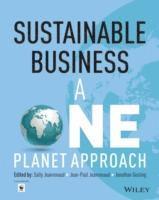
What is a ‘one planet’ approach to sustainable business? Why is it important? What are businesses doing to achieve sustainability? What do business leaders need to learn? Sustainable Business: A One Planet Approach is a textbook for contemporary business. Recognizing the realities of global sustainability challenges, this book covers the knowledge, frameworks and techniques that will underpin emerging solutions to those challenges. Published in association with WWF (The World Wide Fund for Nature) Sustainable Business is an ideal basis for students at both undergraduate and postgraduate level looking to master an understanding of the relationship between sustainability and business. Edited by three influential figures from sustainable business education, and co-authored by several leading academics, this book offers a wealth of insight and interpretation into new ways of doing business that have a positive impact on people, planet and prosperity.In addition to the many case studies and real-life examples included throughout the book, lecturer slides and recommended web links will be available.
2 712 kr
Skickas inom 10-15 vardagar
The world's forests are disappearing at an alarming rate, and with disastrous consequences. Demand for wood and paper products ranks high amongst the causes of deforestation and forest degradation, and is now the major cause of loss in those forests richest in wildlife. There is a great deal to be done to improve the timber industry before our forests are safely and sustainably managed.Bad Harvest presents an incisive account of the role that the timber trade has played in the loss and degradation of forests around the world. It examines the environmental consequences of the trade on boreal, temporal and tropical regions, and its impacts for local people working and living in the forests. It also looks at the changing nature of the trade, and assesses current national and international initiatives to address the impacts of deforestation. Finally, the authors show how things could be improved in the future, by presenting a new strategy for sustainable forest management.Based on 15 years of extensive research - particularly work carried out by the World Wide Fund for Nature - Bad Harvest is essential reading on the subject; not only for environmentalists, but also for those in the timber trade seeking to improve the management and reputation of their product.
440 kr
Skickas inom 10-15 vardagar
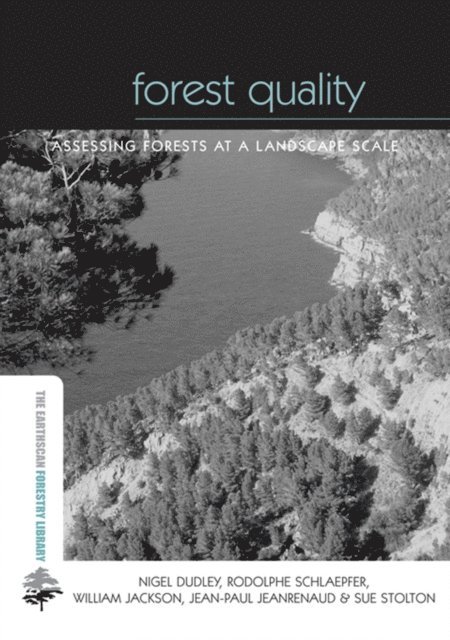
Deforestation is frequently a topic of discussion in the environmental arena, but it is not just the number of trees that matters; the quality of the forest is also important. Even where the forest area is stable or increasing, there are often rapid changes in its character. Natural forests are being replaced by plantations or by intensively managed forests. Around the world, forests are becoming younger and less diverse, in both species and structure; this has important impacts for biodiversity and also affects many human values. In this groundbreaking text, forest quality is discussed as a useful new concept in forest conservation and management. Three main assessment criteria are used: authenticity; environmental benefits; and social and economic benefits. The book describes a methodology and protocol for collecting and analysing data, and outlines in detail the approach required with each indicator. The authors advocate a landscape approach to assessment and demonstrate how assessment works through a series of case studies that show how this approach can be used in many ways to help forest conservation management. This hands-on manual is for professionals involved in forestry, conservation and resource management worldwide, and contains case study material from Europe, Asia, Africa and Latin America that demonstrates practical uses of the new 'landscape' approach to forest conservation.Published with IUCN and WWF
1 959 kr
Skickas inom 7-10 vardagar
Deforestation is frequently a topic of discussion in the environmental arena, but it is not just the number of trees that matters; the quality of the forest is also important. Even where the forest area is stable or increasing, there are often rapid changes in its character. Natural forests are being replaced by plantations or by intensively managed forests. Around the world, forests are becoming younger and less diverse, in both species and structure; this has important impacts for biodiversity and also affects many human values. In this groundbreaking text, forest quality is discussed as a useful new concept in forest conservation and management. Three main assessment criteria are used: authenticity; environmental benefits; and social and economic benefits. The book describes a methodology and protocol for collecting and analysing data, and outlines in detail the approach required with each indicator. The authors advocate a landscape approach to assessment and demonstrate how assessment works through a series of case studies that show how this approach can be used in many ways to help forest conservation management. This hands-on manual is for professionals involved in forestry, conservation and resource management worldwide, and contains case study material from Europe, Asia, Africa and Latin America that demonstrates practical uses of the new 'landscape' approach to forest conservation.Published with IUCN and WWF
575 kr
Skickas inom 10-15 vardagar
The world's forests are disappearing at an alarming rate, and with disastrous consequences. Demand for wood and paper products ranks high amongst the causes of deforestation and forest degradation, and is now the major cause of loss in those forests richest in wildlife. There is a great deal to be done to improve the timber industry before our forests are safely and sustainably managed.Bad Harvest presents an incisive account of the role that the timber trade has played in the loss and degradation of forests around the world. It examines the environmental consequences of the trade on boreal, temporal and tropical regions, and its impacts for local people working and living in the forests. It also looks at the changing nature of the trade, and assesses current national and international initiatives to address the impacts of deforestation. Finally, the authors show how things could be improved in the future, by presenting a new strategy for sustainable forest management.Based on 15 years of extensive research - particularly work carried out by the World Wide Fund for Nature - Bad Harvest is essential reading on the subject; not only for environmentalists, but also for those in the timber trade seeking to improve the management and reputation of their product.