Nigel Dudley - Böcker
Visar alla böcker från författaren Nigel Dudley. Handla med fri frakt och snabb leverans.
14 produkter
14 produkter
1 254 kr
Skickas inom 10-15 vardagar
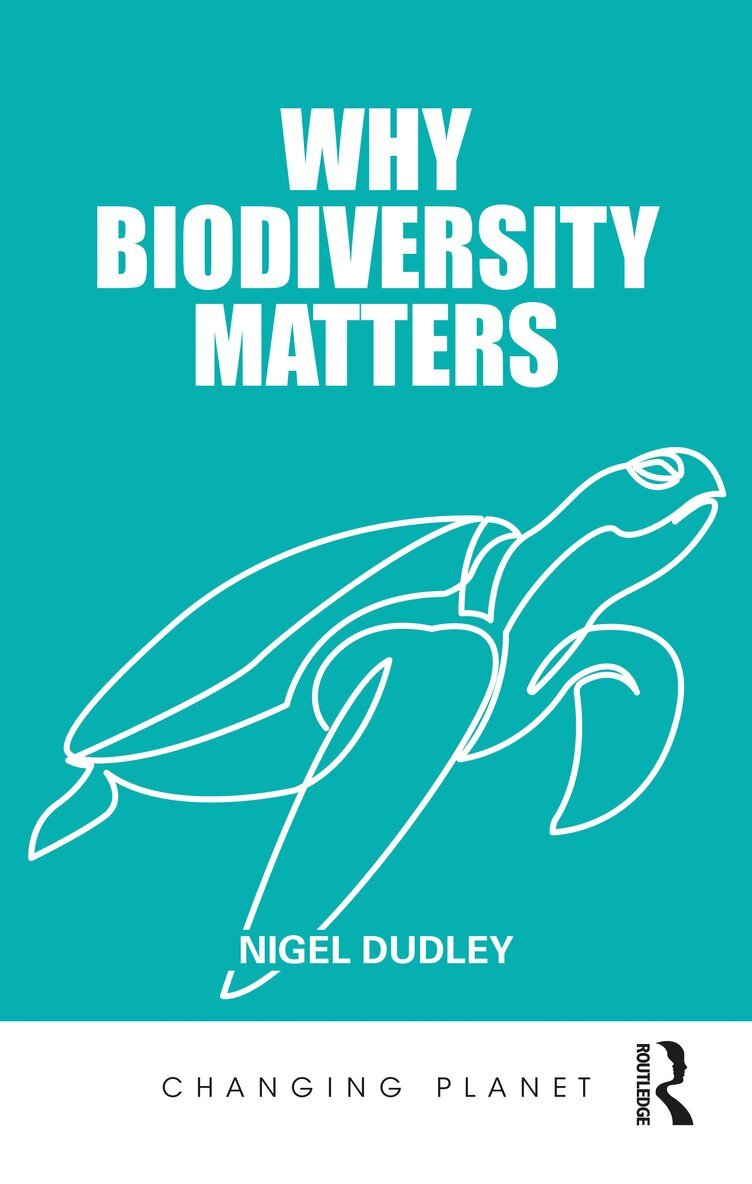
All life on Earth has the right to exist, but as we teeter on the verge of a sixth extinction this book discusses why biodiversity matters and why we should care if species go extinct.We are witnessing the largest and fastest rate of extinction in the history of the planet. While the concept of rights is a human one, all plants and animals strive to survive, and this book argues for their rights to continue doing so without being driven into premature extinction by human actions. Acknowledging and describing the practical reasons for conserving biodiversity, this book argues that these should not overshadow the compelling ethical reasons to care about the future of species other than our own. However, the issues are complex. What do we do when faced with an immediate ethical choice where biodiversity rights, animal rights, human rights, economic development and ecosystem survival all get mixed up together? There are seldom hard and fast answers, but thinking about and understanding a variety of points of view will help us make informed trade-offs. Drawing on his vast practical experience, the author presents insightful perspectives and real-world examples with the hope that this book will instigate a much-needed rethink about why and how we practise conservation.This book is essential reading for all those concerned with sustaining our planet, and all who inhabit it, in the face of climate breakdown, biodiversity loss and ecological collapse.
332 kr
Skickas inom 10-15 vardagar
All life on Earth has the right to exist, but as we teeter on the verge of a sixth extinction this book discusses why biodiversity matters and why we should care if species go extinct.We are witnessing the largest and fastest rate of extinction in the history of the planet. While the concept of rights is a human one, all plants and animals strive to survive, and this book argues for their rights to continue doing so without being driven into premature extinction by human actions. Acknowledging and describing the practical reasons for conserving biodiversity, this book argues that these should not overshadow the compelling ethical reasons to care about the future of species other than our own. However, the issues are complex. What do we do when faced with an immediate ethical choice where biodiversity rights, animal rights, human rights, economic development and ecosystem survival all get mixed up together? There are seldom hard and fast answers, but thinking about and understanding a variety of points of view will help us make informed trade-offs. Drawing on his vast practical experience, the author presents insightful perspectives and real-world examples with the hope that this book will instigate a much-needed rethink about why and how we practise conservation.This book is essential reading for all those concerned with sustaining our planet, and all who inhabit it, in the face of climate breakdown, biodiversity loss and ecological collapse.
576 kr
Skickas inom 10-15 vardagar
This book provides the first contemporary assessment of area-based conservation and its implications for nature and society.Now covering 15 per cent of the land surface and a growing area of ocean, the creation of protected areas is one of the fastest conscious changes in land management in history. But this has come at a cost, including a backlash from human rights organisations about the social impacts of protected areas. At the same time, a range of new types of area-based conservation has emerged, based on indigenous people’s territories, local community lands and a new designation of “other effective area-based conservation measures”. This book provides a concise overview of the status and possible futures of area-based conservation. With many people calling for half the earth’s land surface to remain in a natural condition, this book taps into the urgent debate about the feasibility of such an aim and the ways in which such land might be managed. It provides a timely contribution by people who have been at the centre of the debate for the last twenty years. Building on the authors’ large personal knowledge, the book draws on global case studies where the authors have firsthand experience, including Yosemite National Park (USA), Blue Mountains National Park (Australia), Bwindi National Park (Uganda), Chingaza National Park (Colombia), Ustyart Plateau (Kazakhstan), Snowdonia National Park (Wales) and many more.This book is essential reading for students, academics and practitioners interested in conservation and its impact on society.
2 088 kr
Skickas inom 10-15 vardagar
This book provides the first contemporary assessment of area-based conservation and its implications for nature and society.Now covering 15 per cent of the land surface and a growing area of ocean, the creation of protected areas is one of the fastest conscious changes in land management in history. But this has come at a cost, including a backlash from human rights organisations about the social impacts of protected areas. At the same time, a range of new types of area-based conservation has emerged, based on indigenous people’s territories, local community lands and a new designation of “other effective area-based conservation measures”. This book provides a concise overview of the status and possible futures of area-based conservation. With many people calling for half the earth’s land surface to remain in a natural condition, this book taps into the urgent debate about the feasibility of such an aim and the ways in which such land might be managed. It provides a timely contribution by people who have been at the centre of the debate for the last twenty years. Building on the authors’ large personal knowledge, the book draws on global case studies where the authors have firsthand experience, including Yosemite National Park (USA), Blue Mountains National Park (Australia), Bwindi National Park (Uganda), Chingaza National Park (Colombia), Ustyart Plateau (Kazakhstan), Snowdonia National Park (Wales) and many more.This book is essential reading for students, academics and practitioners interested in conservation and its impact on society.
2 692 kr
Skickas inom 10-15 vardagar
The world's forests are disappearing at an alarming rate, and with disastrous consequences. Demand for wood and paper products ranks high amongst the causes of deforestation and forest degradation, and is now the major cause of loss in those forests richest in wildlife. There is a great deal to be done to improve the timber industry before our forests are safely and sustainably managed.Bad Harvest presents an incisive account of the role that the timber trade has played in the loss and degradation of forests around the world. It examines the environmental consequences of the trade on boreal, temporal and tropical regions, and its impacts for local people working and living in the forests. It also looks at the changing nature of the trade, and assesses current national and international initiatives to address the impacts of deforestation. Finally, the authors show how things could be improved in the future, by presenting a new strategy for sustainable forest management.Based on 15 years of extensive research - particularly work carried out by the World Wide Fund for Nature - Bad Harvest is essential reading on the subject; not only for environmentalists, but also for those in the timber trade seeking to improve the management and reputation of their product.
441 kr
Skickas inom 10-15 vardagar
Deforestation is frequently a topic of discussion in the environmental arena, but it is not just the number of trees that matters; the quality of the forest is also important. Even where the forest area is stable or increasing, there are often rapid changes in its character. Natural forests are being replaced by plantations or by intensively managed forests. Around the world, forests are becoming younger and less diverse, in both species and structure; this has important impacts for biodiversity and also affects many human values. In this groundbreaking text, forest quality is discussed as a useful new concept in forest conservation and management. Three main assessment criteria are used: authenticity; environmental benefits; and social and economic benefits. The book describes a methodology and protocol for collecting and analysing data, and outlines in detail the approach required with each indicator. The authors advocate a landscape approach to assessment and demonstrate how assessment works through a series of case studies that show how this approach can be used in many ways to help forest conservation management. This hands-on manual is for professionals involved in forestry, conservation and resource management worldwide, and contains case study material from Europe, Asia, Africa and Latin America that demonstrates practical uses of the new 'landscape' approach to forest conservation.Published with IUCN and WWF
1 953 kr
Skickas inom 7-10 vardagar
Deforestation is frequently a topic of discussion in the environmental arena, but it is not just the number of trees that matters; the quality of the forest is also important. Even where the forest area is stable or increasing, there are often rapid changes in its character. Natural forests are being replaced by plantations or by intensively managed forests. Around the world, forests are becoming younger and less diverse, in both species and structure; this has important impacts for biodiversity and also affects many human values. In this groundbreaking text, forest quality is discussed as a useful new concept in forest conservation and management. Three main assessment criteria are used: authenticity; environmental benefits; and social and economic benefits. The book describes a methodology and protocol for collecting and analysing data, and outlines in detail the approach required with each indicator. The authors advocate a landscape approach to assessment and demonstrate how assessment works through a series of case studies that show how this approach can be used in many ways to help forest conservation management. This hands-on manual is for professionals involved in forestry, conservation and resource management worldwide, and contains case study material from Europe, Asia, Africa and Latin America that demonstrates practical uses of the new 'landscape' approach to forest conservation.Published with IUCN and WWF
2 088 kr
Skickas inom 10-15 vardagar
This book examines the concept of naturalness in ecosystems, discusses its values and considers choices about the level of naturalness in conservation efforts. The author argues that all ecosystems have been modified and the idea of places 'untouched by humans' is a myth. But there are large differences in the degree of modification and levels of naturalness which can be identified. Changes are not always irreversible; some apparent wilderness areas are sites of former civilizations. There is no longer any simple distinction possible between 'natural' and 'cultural' systems. In the future, society will, to some extent, choose the degree of naturalness in land and seascapes. The growth of protected areas is an early sign of this, as are changes in forest management, dam removal and control of invasive species. To make informed choices about these areas, the author shows that we must understand the characteristics and values of naturally regulating ecosystems – their practical benefits, social values and management needs. Authenticity in Nature uses a rigorous definition of authenticity to help in the understanding and measurement of naturalness. It discusses the choices facing us and some of the information we need to make decisions relating to land and water management. Practical issues of management and numerous terrestrial and aquatic examples from around the world are discussed. It is an optimistic and highly original book, aiming to make genuine advances in our understanding and management of natural systems.
617 kr
Skickas inom 10-15 vardagar
This book examines the concept of naturalness in ecosystems, discusses its values and considers choices about the level of naturalness in conservation efforts. The author argues that all ecosystems have been modified and the idea of places 'untouched by humans' is a myth. But there are large differences in the degree of modification and levels of naturalness which can be identified. Changes are not always irreversible; some apparent wilderness areas are sites of former civilizations. There is no longer any simple distinction possible between 'natural' and 'cultural' systems. In the future, society will, to some extent, choose the degree of naturalness in land and seascapes. The growth of protected areas is an early sign of this, as are changes in forest management, dam removal and control of invasive species. To make informed choices about these areas, the author shows that we must understand the characteristics and values of naturally regulating ecosystems – their practical benefits, social values and management needs. Authenticity in Nature uses a rigorous definition of authenticity to help in the understanding and measurement of naturalness. It discusses the choices facing us and some of the information we need to make decisions relating to land and water management. Practical issues of management and numerous terrestrial and aquatic examples from around the world are discussed. It is an optimistic and highly original book, aiming to make genuine advances in our understanding and management of natural systems.
2 088 kr
Skickas inom 10-15 vardagar
Most protected areas (e.g.national parks and nature reserves) have been created to protect wildlife and land- and seascape values. They currently cover over 13% of the world's land surface, around 12% of marine coastal areas and 4% of the marine shelf. Retaining and expanding these areas in the future will depend on showing their wider benefits for society.This book provides a concise and persuasive overview of the values of protected areas. Contributing authors from over fifty countries examine a wide range of values that are maintained in protected areas, including food, water and materials; health; tourism; cultural and spiritual values; and buffering capacity against climate change and natural disasters. The book also considers the role of protected areas in poverty reduction strategies, their relationship with traditional and indigenous people and in fostering conflict resolution through peace parks initiatives. The chapters draw on a series of authoritative reports published by WWF over recent years under the 'Arguments for Protection' banner, in association with various partners, and on additional research carried out especially for the volume. It analyses the opportunities and limitations of protected areas for supplying the various values along with practical advice for planners and managers about maximising benefits. It provides an important contribution to the debate about the role of protected areas in conservation and other aspects of natural resource management and human livelihoods.Published with WWF
725 kr
Skickas inom 10-15 vardagar
Most protected areas (e.g.national parks and nature reserves) have been created to protect wildlife and land- and seascape values. They currently cover over 13% of the world's land surface, around 12% of marine coastal areas and 4% of the marine shelf. Retaining and expanding these areas in the future will depend on showing their wider benefits for society.This book provides a concise and persuasive overview of the values of protected areas. Contributing authors from over fifty countries examine a wide range of values that are maintained in protected areas, including food, water and materials; health; tourism; cultural and spiritual values; and buffering capacity against climate change and natural disasters. The book also considers the role of protected areas in poverty reduction strategies, their relationship with traditional and indigenous people and in fostering conflict resolution through peace parks initiatives. The chapters draw on a series of authoritative reports published by WWF over recent years under the 'Arguments for Protection' banner, in association with various partners, and on additional research carried out especially for the volume. It analyses the opportunities and limitations of protected areas for supplying the various values along with practical advice for planners and managers about maximising benefits. It provides an important contribution to the debate about the role of protected areas in conservation and other aspects of natural resource management and human livelihoods.Published with WWF
217 kr
Skickas inom 5-8 vardagar
576 kr
Skickas inom 10-15 vardagar
The world's forests are disappearing at an alarming rate, and with disastrous consequences. Demand for wood and paper products ranks high amongst the causes of deforestation and forest degradation, and is now the major cause of loss in those forests richest in wildlife. There is a great deal to be done to improve the timber industry before our forests are safely and sustainably managed.Bad Harvest presents an incisive account of the role that the timber trade has played in the loss and degradation of forests around the world. It examines the environmental consequences of the trade on boreal, temporal and tropical regions, and its impacts for local people working and living in the forests. It also looks at the changing nature of the trade, and assesses current national and international initiatives to address the impacts of deforestation. Finally, the authors show how things could be improved in the future, by presenting a new strategy for sustainable forest management.Based on 15 years of extensive research - particularly work carried out by the World Wide Fund for Nature - Bad Harvest is essential reading on the subject; not only for environmentalists, but also for those in the timber trade seeking to improve the management and reputation of their product.
Partnerships for Protection
New Strategies for Planning and Management for Protected Areas
Inbunden, Engelska, 1999
2 088 kr
Skickas inom 10-15 vardagar
Taking into consideration the fact that many ecosystems are under-represented in protected areas of land and water and traditional management methods have often been ineffective, this volume describes how improvements can be made. Specifically, it explores ways of ensuring that all major ecosystems are safeguarded, and innovative approaches to conservation involving individuals, communities, companies and governments. The essence of the approach taken in the text is to build partnerships with those who have a stake in the care of land and water resources.