Jeanne Peijnenburg – författare
Visar alla böcker från författaren Jeanne Peijnenburg. Handla med fri frakt och snabb leverans.
6 produkter
6 produkter
Del 15 - Women in the History of Philosophy and Sciences
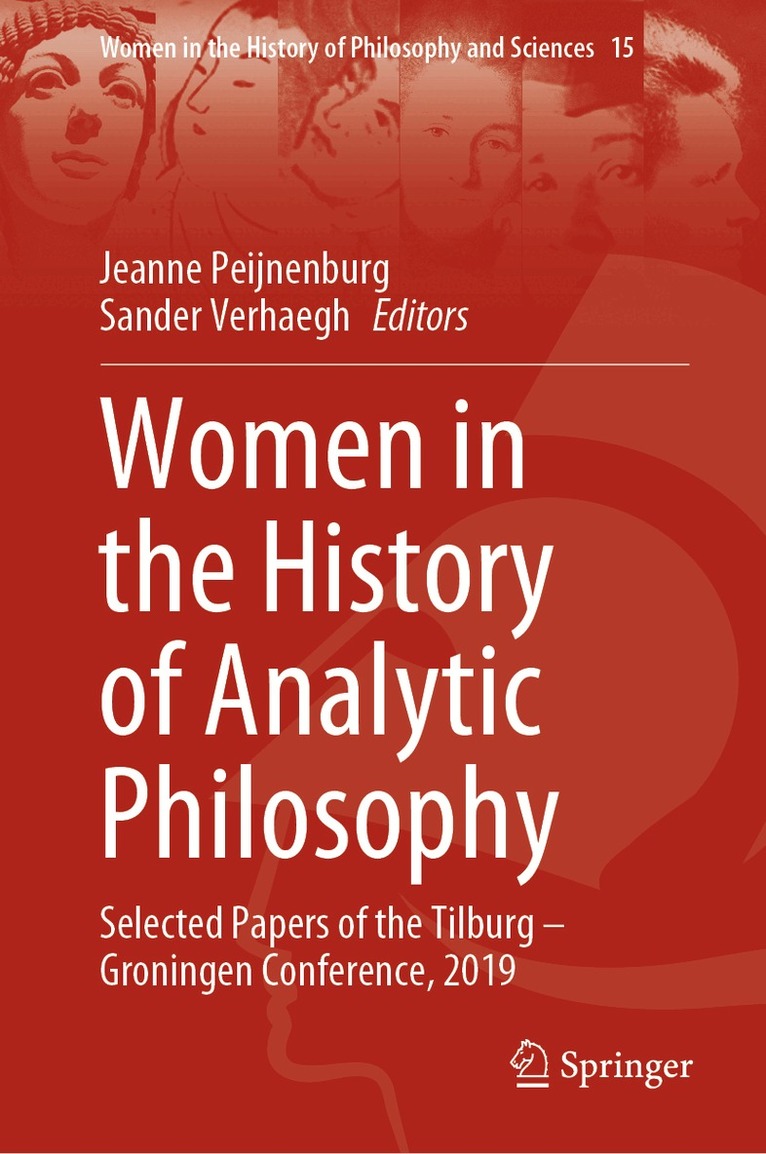
Women in the History of Analytic Philosophy
Selected Papers of the Tilburg – Groningen Conference, 2019
Inbunden, Engelska, 2023
1 509 kr
Skickas inom 10-15 vardagar
This book contains a selection of papers from the workshop Women in the History of Analytic Philosophy held in October 2019 in Tilburg, the Netherlands. It is the first volume devoted to the role of women in early analytic philosophy. It discusses the ideas of ten female philosophers and covers a period of over a hundred years, beginning with the contribution to the Significs Movement by Victoria, Lady Welby in the second half of the nineteenth century, and ending with Ruth Barcan Marcus’s celebrated version of quantified modal logic after the Second World War. The book makes clear that women contributed substantially to the development of analytic philosophy in all areas of philosophy, from logic, epistemology, and philosophy of science, to ethics, metaphysics, and philosophy of language. It illustrates that although women's voices were no different from men's as regards their scope and versatility, they had a much harder time being heard. The book is aimed at historians of philosophy and scholars in gender studies
E-bok
Engelska, 20231 825 kr
Läs direkt efter köp
This book contains a selection of papers from the workshop Women in the History of Analytic Philosophy held in October 2019 in Tilburg, the Netherlands. It is the first volume devoted to the role of women in early analytic philosophy. It discusses the ideas of ten female philosophers and covers a period of over a hundred years, beginning with the contribution to the Significs Movement by Victoria, Lady Welby in the second half of the nineteenth century, and ending with Ruth Barcan Marcus’s celebrated version of quantified modal logic after the Second World War. The book makes clear that women contributed substantially to the development of analytic philosophy in all areas of philosophy, from logic, epistemology, and philosophy of science, to ethics, metaphysics, and philosophy of language. It illustrates that although women''s voices were no different from men''s as regards their scope and versatility, they had a much harder time being heard. The book is aimed at historians of philosophy and scholars in gender studies
Engelska, 2023
648 kr
Skickas inom 5-8 vardagar
Del 15 - Women in the History of Philosophy and Sciences
Women in the History of Analytic Philosophy
Selected Papers of the Tilburg – Groningen Conference, 2019
Häftad, Engelska, 2024
1 509 kr
Skickas inom 10-15 vardagar
This book contains a selection of papers from the workshop Women in the History of Analytic Philosophy held in October 2019 in Tilburg, the Netherlands. It is the first volume devoted to the role of women in early analytic philosophy. It discusses the ideas of ten female philosophers and covers a period of over a hundred years, beginning with the contribution to the Significs Movement by Victoria, Lady Welby in the second half of the nineteenth century, and ending with Ruth Barcan Marcus’s celebrated version of quantified modal logic after the Second World War. The book makes clear that women contributed substantially to the development of analytic philosophy in all areas of philosophy, from logic, epistemology, and philosophy of science, to ethics, metaphysics, and philosophy of language. It illustrates that although women's voices were no different from men's as regards their scope and versatility, they had a much harder time being heard. The book is aimed at historians of philosophy and scholars in gender studies
Inbunden, Engelska, 2017
543 kr
Skickas inom 10-15 vardagar
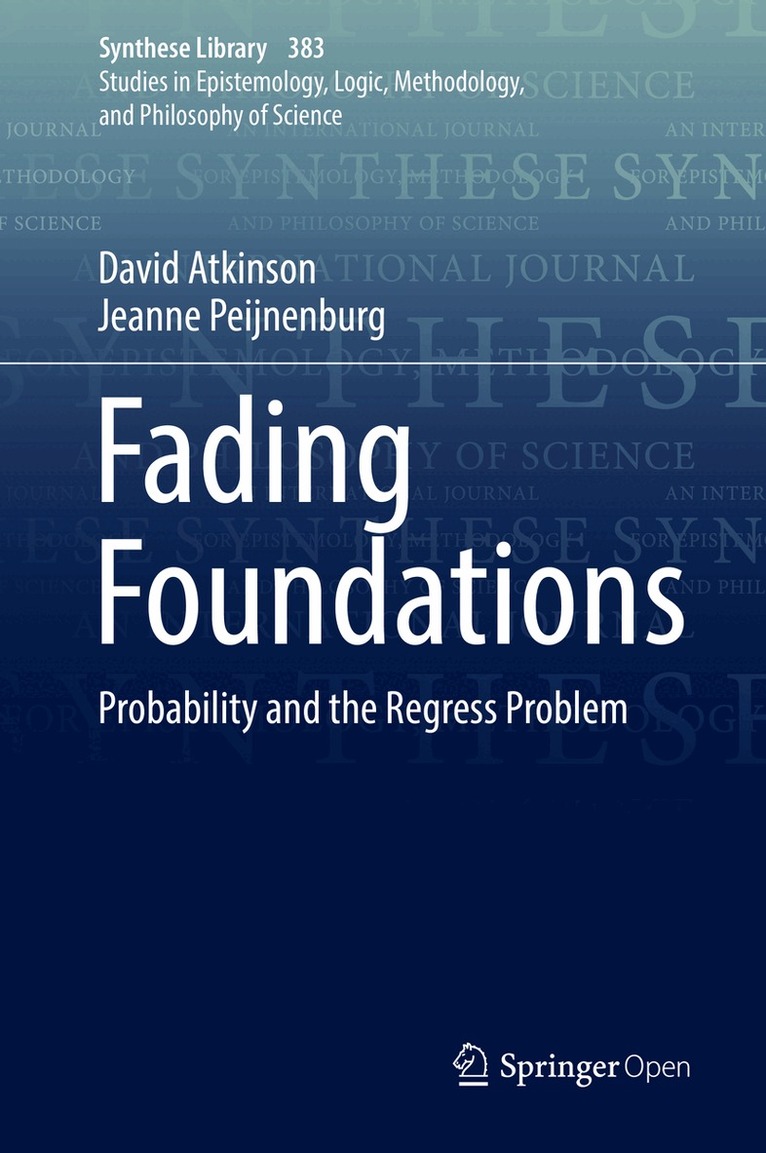
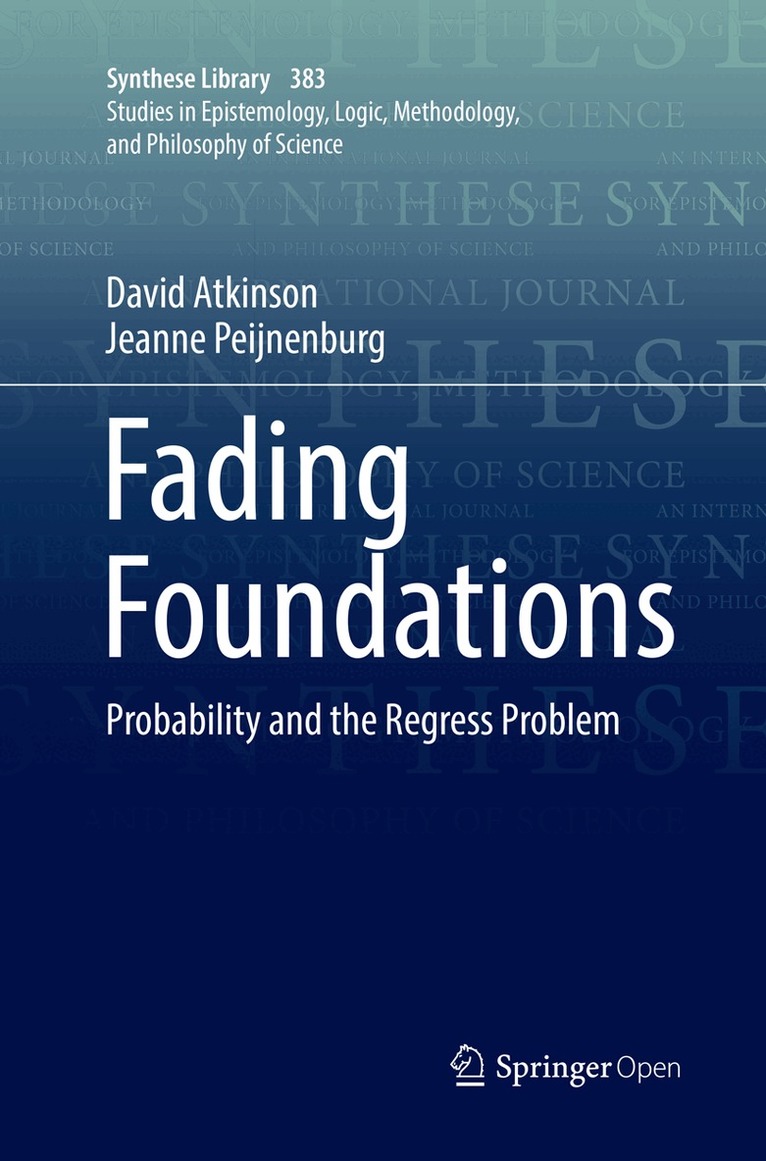
This book is open access under a CC BY 4.0 license.This book addresses the age-old problem of infinite regresses in epistemology. How can we ever come to know something if knowing requires having good reasons, and reasons can only be good if they are backed by good reasons in turn? The problem has puzzled philosophers ever since antiquity, giving rise to what is often called Agrippa's Trilemma. The current volume approaches the old problem in a provocative and thoroughly contemporary way. Taking seriously the idea that good reasons are typically probabilistic in character, it develops and defends a new solution that challenges venerable philosophical intuitions and explains why they were mistakenly held. Key to the new solution is the phenomenon of fading foundations, according to which distant reasons are less important than those that are nearby. The phenomenon takes the sting out of Agrippa's Trilemma; moreover, since the theory that describes it is general and abstract,it is readily applicable outside epistemology, notably to debates on infinite regresses in metaphysics. The book is a potential game-changer and a must for any advanced student or researcher in the field.
Häftad, Engelska, 2018
543 kr
Skickas inom 10-15 vardagar
This book is open access under a CC BY 4.0 license.This book addresses the age-old problem of infinite regresses in epistemology. How can we ever come to know something if knowing requires having good reasons, and reasons can only be good if they are backed by good reasons in turn? The problem has puzzled philosophers ever since antiquity, giving rise to what is often called Agrippa's Trilemma. The current volume approaches the old problem in a provocative and thoroughly contemporary way. Taking seriously the idea that good reasons are typically probabilistic in character, it develops and defends a new solution that challenges venerable philosophical intuitions and explains why they were mistakenly held. Key to the new solution is the phenomenon of fading foundations, according to which distant reasons are less important than those that are nearby. The phenomenon takes the sting out of Agrippa's Trilemma; moreover, since the theory that describes it is general and abstract,it is readily applicable outside epistemology, notably to debates on infinite regresses in metaphysics. The book is a potential game-changer and a must for any advanced student or researcher in the field.