Jeannie L. Johnson - Böcker
Visar alla böcker från författaren Jeannie L. Johnson. Handla med fri frakt och snabb leverans.
8 produkter
8 produkter
556 kr
Skickas inom 5-8 vardagar
Bringing together experts from across the globe to provide a comprehensive introduction to strategic studies, this is the only overview to critically engage with both enduring and contemporary issues that dominate strategy. Throughout the chapters, readers are encouraged to explore key debates and alternative perspectives. A debates feature considers key controversies and presents opposing arguments, helping students to build critical thinking skills and reflect upon a wide range of perspectives.The new edition has been thoroughly updated to incorporate the latest developments in the field of strategic studies. Four new chapters feature in-depth coverage of cyber power and conflict, strategic culture, the evolution of grand strategy in China, and the relationship between military technology and warfare.Digital formats and resourcesThe seventh edition is available for students and institutions to purchase in a variety of formats, and is supported by online resources- The e-book offers a mobile experience and convenient access along with functionality tools, navigation features and links that offer extra learning support: www.oxfordtextbooks.co.uk/ebooks - Online resources for students include: case studies that help to contextualise and deepen understanding of key issues; web links and further reading that provide students with opportunities to deepen their understanding of main topics and explore further areas of research interest; and multiple choice questions that test students' knowledge of the chapters and provide instant feedback.- Online resources for lecturers include: customisable PowerPoint slides to ensure clarity of explanation of key concepts and debates; and a test-bank of questions to reinforce key concepts and test students' understanding.
569 kr
Kommande
The complete introduction to strategy in the contemporary world, which critically explores the enduring, present and emerging issues dominating the field of strategy.This exploration of strategic studies gives students a complete introduction to strategic thinking, from historical and theoretical approaches to the contemporary issues and challenges facing strategists, and the world, today. A team of expert authors present readers with key debates and a range of perspectives, encouraging critical thinking.Key Features· Leading international scholars provide complete coverage of key enduring, contemporary and emerging issues in strategic studies· Tailored learning features encourage students to develop critical thinking skills and encourage readers to reflect upon and evaluate a wide range of perspectives· Also available as an e-book with functionality, navigation features, and links that offer extra learning supportNew to this edition points· Danielle F. S. Cohen, Director of the Public Policy Program at Lake Forest College, US, joins the editor team to bring new expertise and insight to the eighth edition.· New chapter 4 on the evolution of warfare from 1990 to today by David Kilcullen explores how long- and medium-term trends in the environment, emerging and disruptive technologies, and the return of industrialized warfare have given rise to new domains, means, and methods of warfare.· New chapter 12 on cyber security, espionage, and warfare by Kristan Stoddart explores the growing cybersecurity risks that accompany society's increasing dependence on information communications technologies.· New chapter 13 on strategy and outer space by Peter Hays explores intelligence, civil, commercial, and defence space activity, and opportunities and challenges for space strategy· Fully rewritten chapter on nuclear weapons, now authored by Jeffrey Michaels, explores the role of nuclear weapons in the first, second, and third nuclear ages.The 8th edition is available for students and institutions to purchase in a variety of formats: the e-book and Politics Trove offer a mobile experience and convenient access along with customisable PowerPoints, test bank and question banks for lecturers, and Multiple-choice questions for students.For more information about e-books, please visit www.oxfordtextbooks.co.uk/ebooks
3 361 kr
Skickas inom 10-15 vardagar
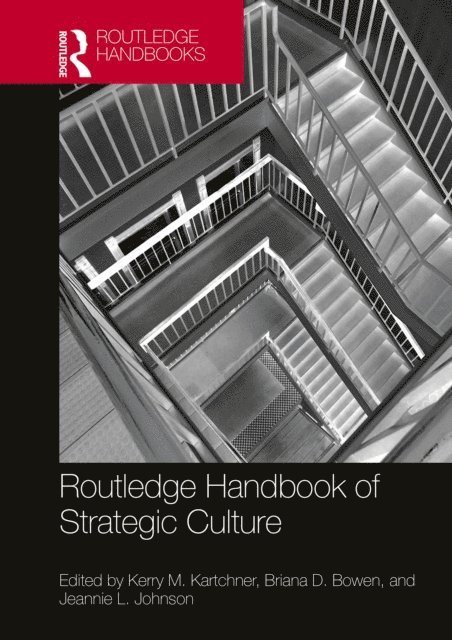
This handbook offers a collection of cutting-edge essays on all aspects of strategic culture by a mix of international scholars, consultants, military officers, and policymakers.The volume explicitly addresses the analytical conundrums faced by scholars who wish to employ or generate strategic cultural insights, with substantive commentary on defining and scoping strategic culture, analytic frameworks and approaches, levels of analysis, sources of strategic culture, and modalities of change in strategic culture. The chapters engage strategic culture at the civilizational, regional, supra-national, national, non-state actor, and organizational levels. The volume is divided into five thematic parts, which will appeal to both students who are new to the subject and scholars who wish to incorporate strategic culture into their toolbox of analytical techniques. Part I assesses the evolving theoretical strengths and weaknesses of the field. Part II lays out elements of the theoretical and methodological foundations of the field, including sources and components of strategic culture. Part III presents a number of national strategic cultural profiles, representing the state of contemporary strategic culture scholarship. Part IV addresses the utility of strategic culture for practitioners and scholars. Part V summarizes the key theoretical and practical insights offered by the volume’s contributors.This handbook will be of much interest to students of strategic studies, defense studies, security studies, and international relations in general, as well as to professional practitioners.
719 kr
Skickas inom 10-15 vardagar
This handbook offers a collection of cutting-edge essays on all aspects of strategic culture by a mix of international scholars, consultants, military officers, and policymakers.The volume explicitly addresses the analytical conundrums faced by scholars who wish to employ or generate strategic cultural insights, with substantive commentary on defining and scoping strategic culture, analytic frameworks and approaches, levels of analysis, sources of strategic culture, and modalities of change in strategic culture. The chapters engage strategic culture at the civilizational, regional, supra-national, national, non-state actor, and organizational levels. The volume is divided into five thematic parts, which will appeal to both students who are new to the subject and scholars who wish to incorporate strategic culture into their toolbox of analytical techniques. Part I assesses the evolving theoretical strengths and weaknesses of the field. Part II lays out elements of the theoretical and methodological foundations of the field, including sources and components of strategic culture. Part III presents a number of national strategic cultural profiles, representing the state of contemporary strategic culture scholarship. Part IV addresses the utility of strategic culture for practitioners and scholars. Part V summarizes the key theoretical and practical insights offered by the volume’s contributors.This handbook will be of much interest to students of strategic studies, defense studies, security studies, and international relations in general, as well as to professional practitioners.
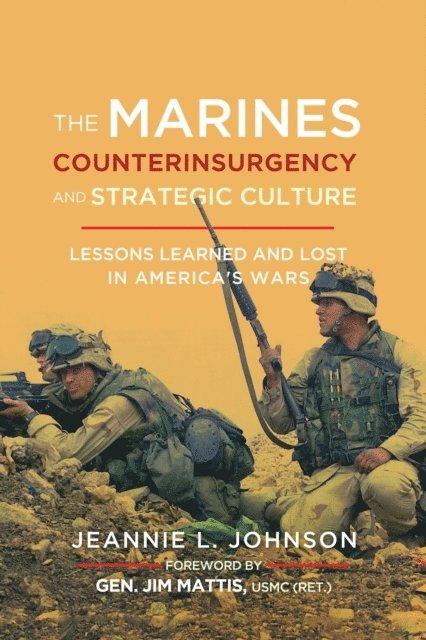
Marines, Counterinsurgency, and Strategic Culture
Lessons Learned and Lost in America's Wars
Inbunden, Engelska, 2018
1 507 kr
Skickas inom 5-8 vardagar
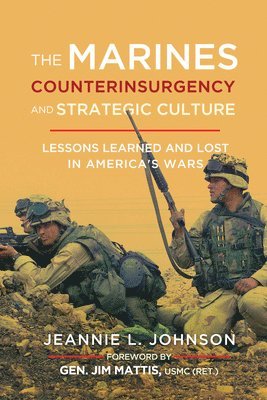
The United States Marine Corps has a unique culture that ensures comradery, exacting standards, and readiness to be the first to every fight. Yet even in a group that is known for innovation, culture can push leaders to fall back on ingrained preferences. Jeannie L. Johnson takes a sympathetic but critical look at the Marine Corps's long experience with counterinsurgency warfare. Which counterinsurgency lessons have been learned and retained for next time and which have been abandoned to history is a story of battlefield trial and error—but also a story of cultural collisions.The book begins with a fascinating and penetrating look inside the culture of the Marine Corps through research in primary sources, including Marine oral histories, and interviews with Marines. Johnson explores what makes this branch of the military distinct: their identity, norms, values, and perceptual lens. She then traces the history of the Marines' counterinsurgency experience from the expeditionary missions of the early twentieth century, through the Vietnam War, and finally to the Iraq War. Her findings break new ground in strategic culture by introducing a methodology that was pioneered in the intelligence community to forecast behavior. Johnson shows that even a service as self-aware and dedicated to innovation as the Marine Corps is constrained in the lessons-learned process by its own internal predispositions, by the wider US military culture, and by national preferences. Her findings challenge the conclusions of previous counterinsurgency scholarship that ignores culture. This highly readable book reminds us of Sun Tzu's wisdom that to be successful in war, it is important to know thyself as well as the enemy. This is a must-read for anyone interested in the Marines Corps, counterinsurgency warfare, military innovation, or strategic culture.
Marines, Counterinsurgency, and Strategic Culture
Lessons Learned and Lost in America's Wars
Häftad, Engelska, 2018
510 kr
Skickas inom 5-8 vardagar
The United States Marine Corps has a unique culture that ensures comradery, exacting standards, and readiness to be the first to every fight. Yet even in a group that is known for innovation, culture can push leaders to fall back on ingrained preferences. Jeannie L. Johnson takes a sympathetic but critical look at the Marine Corps's long experience with counterinsurgency warfare. Which counterinsurgency lessons have been learned and retained for next time and which have been abandoned to history is a story of battlefield trial and error—but also a story of cultural collisions.The book begins with a fascinating and penetrating look inside the culture of the Marine Corps through research in primary sources, including Marine oral histories, and interviews with Marines. Johnson explores what makes this branch of the military distinct: their identity, norms, values, and perceptual lens. She then traces the history of the Marines' counterinsurgency experience from the expeditionary missions of the early twentieth century, through the Vietnam War, and finally to the Iraq War. Her findings break new ground in strategic culture by introducing a methodology that was pioneered in the intelligence community to forecast behavior. Johnson shows that even a service as self-aware and dedicated to innovation as the Marine Corps is constrained in the lessons-learned process by its own internal predispositions, by the wider US military culture, and by national preferences. Her findings challenge the conclusions of previous counterinsurgency scholarship that ignores culture. This highly readable book reminds us of Sun Tzu's wisdom that to be successful in war, it is important to know thyself as well as the enemy. This is a must-read for anyone interested in the Marines Corps, counterinsurgency warfare, military innovation, or strategic culture.
Crossing Nuclear Thresholds
Leveraging Sociocultural Insights into Nuclear Decisionmaking
Häftad, Engelska, 2018
1 473 kr
Skickas inom 10-15 vardagar
This book applies the cutting-edge socio-cultural model Cultural Topography Analytic Framework (CTAF) pioneered in the authors’ earlier volume Strategic Culture and Weapons of Mass Destruction: Culturally Based Insights into Comparative National Security Policymaking (Palgrave Macmillan, 2009) with an eye towards isolating those vectors of nuclear decision-making on which the US might exert influence within a foreign state. The case studies included in this volume tackle a number of the nuclear challenges—termed “nuclear thresholds”—likely to be faced by the US and identify the most promising points of leverage available to American policymakers in ameliorating a wide range of over-the-horizon nuclear challenges. Because near and medium-term nuclear thresholds are likely to involve both allies and adversaries simultaneously, meaning that US response will require strategies tailored to both the perception of threat experienced by the actors in question, the value the actorsplace on their relationship with the US, and the domestic context driving decision-making. This volume offers a nuanced look at each actor’s identity, national norms, values, and perceptual lens in order to offer culturally-focused insights into behavior and intentions.
Crossing Nuclear Thresholds
Leveraging Sociocultural Insights into Nuclear Decisionmaking
Inbunden, Engelska, 2018
1 473 kr
Skickas inom 10-15 vardagar
This book applies the cutting-edge socio-cultural model Cultural Topography Analytic Framework (CTAF) pioneered in the authors’ earlier volume Strategic Culture and Weapons of Mass Destruction: Culturally Based Insights into Comparative National Security Policymaking (Palgrave Macmillan, 2009) with an eye towards isolating those vectors of nuclear decision-making on which the US might exert influence within a foreign state. The case studies included in this volume tackle a number of the nuclear challenges—termed “nuclear thresholds”—likely to be faced by the US and identify the most promising points of leverage available to American policymakers in ameliorating a wide range of over-the-horizon nuclear challenges. Because near and medium-term nuclear thresholds are likely to involve both allies and adversaries simultaneously, meaning that US response will require strategies tailored to both the perception of threat experienced by the actors in question, the value the actorsplace on their relationship with the US, and the domestic context driving decision-making. This volume offers a nuanced look at each actor’s identity, national norms, values, and perceptual lens in order to offer culturally-focused insights into behavior and intentions.