Jeff Kramer - Böcker
Visar alla böcker från författaren Jeff Kramer. Handla med fri frakt och snabb leverans.
6 produkter
6 produkter
759 kr
Skickas inom 7-10 vardagar
Concurrency provides a thoroughly updated approach to the basic concepts and techniques behind concurrent programming. Concurrent programming is complex and demands a much more formal approach than sequential programming. In order to develop a thorough understanding of the topic Magee and Kramer present concepts, techniques and problems through a variety of forms: informal descriptions, illustrative examples, abstract models and concrete Java examples. These combine to provide problem patterns and associated solution techniques which enable students to recognize the problems and arrive at solutions.
366 kr
Skickas inom 10-15 vardagar
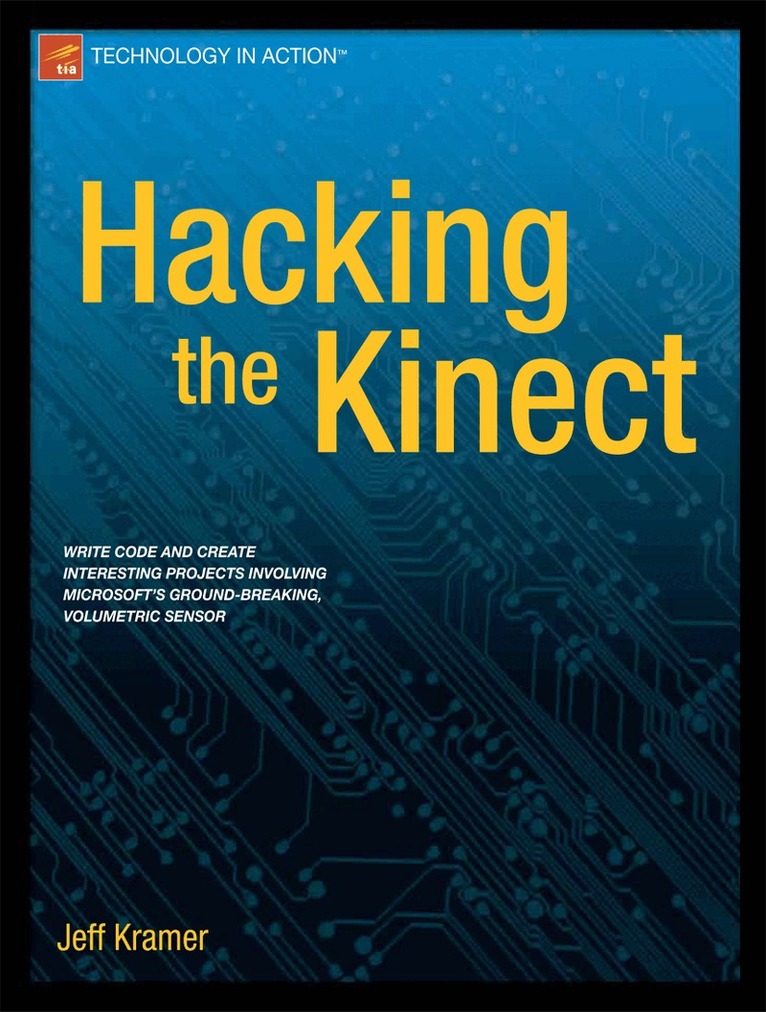
Hacking the Kinect is the technogeek’s guide to developing software and creating projects involving the groundbreaking volumetric sensor known as the Microsoft Kinect. Microsoft’s release of the Kinect in the fall of 2010 startled the technology world by providing a low-cost sensor that can detect and track body movement in three-dimensional space. The Kinect set new records for the fastest-selling gadget of all time. It has been adopted worldwide by hobbyists, robotics enthusiasts, artists, and even some entrepreneurs hoping to build business around the technology.Hacking the Kinect introduces you to programming for the Kinect. You’ll learn to set up a software environment, stream data from the Kinect, and write code to interpret that data. The progression of hands-on projects in the book leads you even deeper into an understanding of how the device functions and how you can apply it to create fun and educational projects. Who knows? You might even come up with a business idea.Provides an excellent source of fun and educational projects for a tech-savvy parent to pursue with a son or daughter Leads you progressively from making your very first connection to the Kinect through mastery of its full feature set Shows how to interpret the Kinect data stream in order to drive your own software and hardware applications, including robotics applications
536 kr
Skickas inom 7-10 vardagar
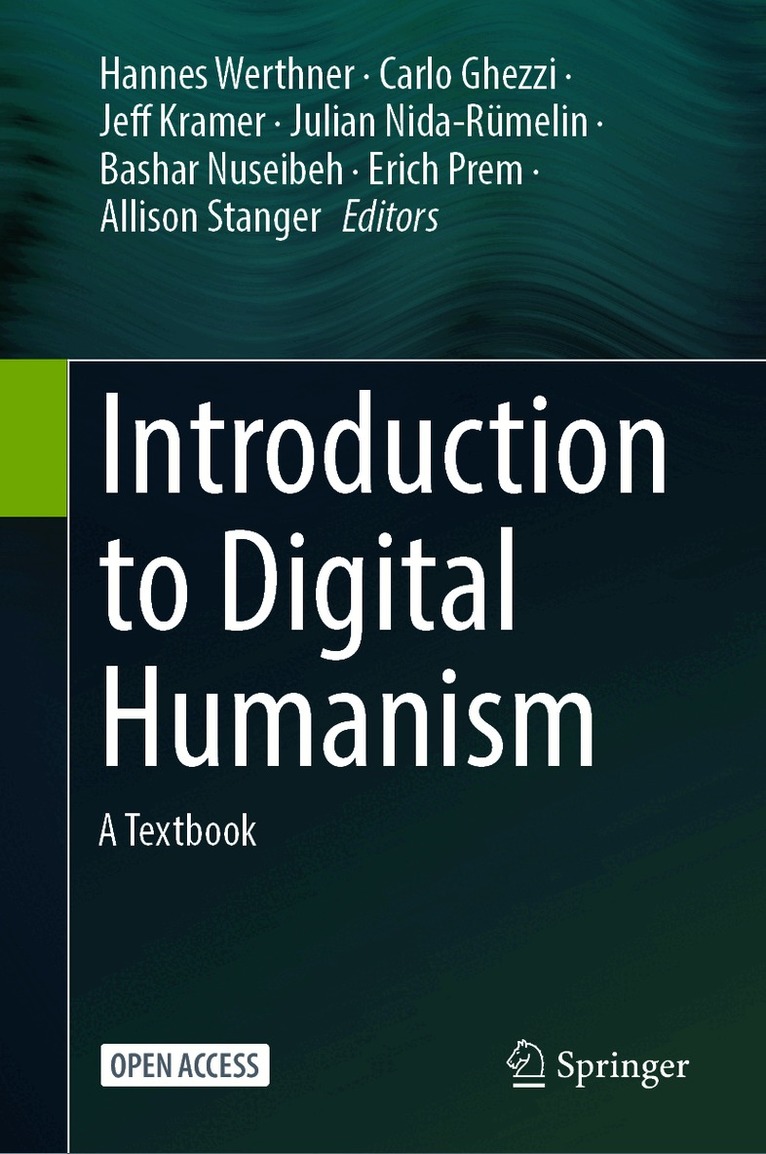
This open access textbook introduces and defines digital humanism from a diverse range of disciplines. Following the 2019 Vienna Manifesto, the book calls for a digital humanism that describes, analyzes, and, most importantly, influences the complex interplay of technology and humankind, for a better society and life, fully respecting universal human rights.The book is organized in three parts: Part I “Background” provides the multidisciplinary background needed to understand digital humanism in its philosophical, cultural, technological, historical, social, and economic dimensions. The goal is to present the necessary knowledge upon which an effective interdisciplinary discourse on digital humanism can be founded. Part II “Digital Humanism – a System’s View” focuses on an in-depth presentation and discussion of the main digital humanism concerns arising in current digital systems. The goal of this part is to make readers aware and sensitive to these issues, including e.g. thecontrol and autonomy of AI systems, privacy and security, and the role of governance. Part III “Critical and Societal Issues of Digital Systems” delves into critical societal issues raised by advances of digital technologies. While the public debate in the past has often focused on them separately, especially when they became visible through sensational events the aim here is to shed light on the entire landscape and show their interconnected relationships. This includes issues such as AI and ethics, fairness and bias, privacy and surveillance, platform power and democracy.This textbook is intended for students, teachers, and policy makers interested in digital humanism. It is designed for stand-alone and for complementary courses in computer science, or curricula in science, engineering, humanities and social sciences. Each chapter includes questions for students and an annotated reading list to dive deeper into the associated chapter material. The book aims to provide readers with as wide an exposure as possible to digital advances and their consequences for humanity. It includes constructive ideas and approaches that seek to ensure that our collective digital future is determined through human agency.
430 kr
Skickas inom 10-15 vardagar
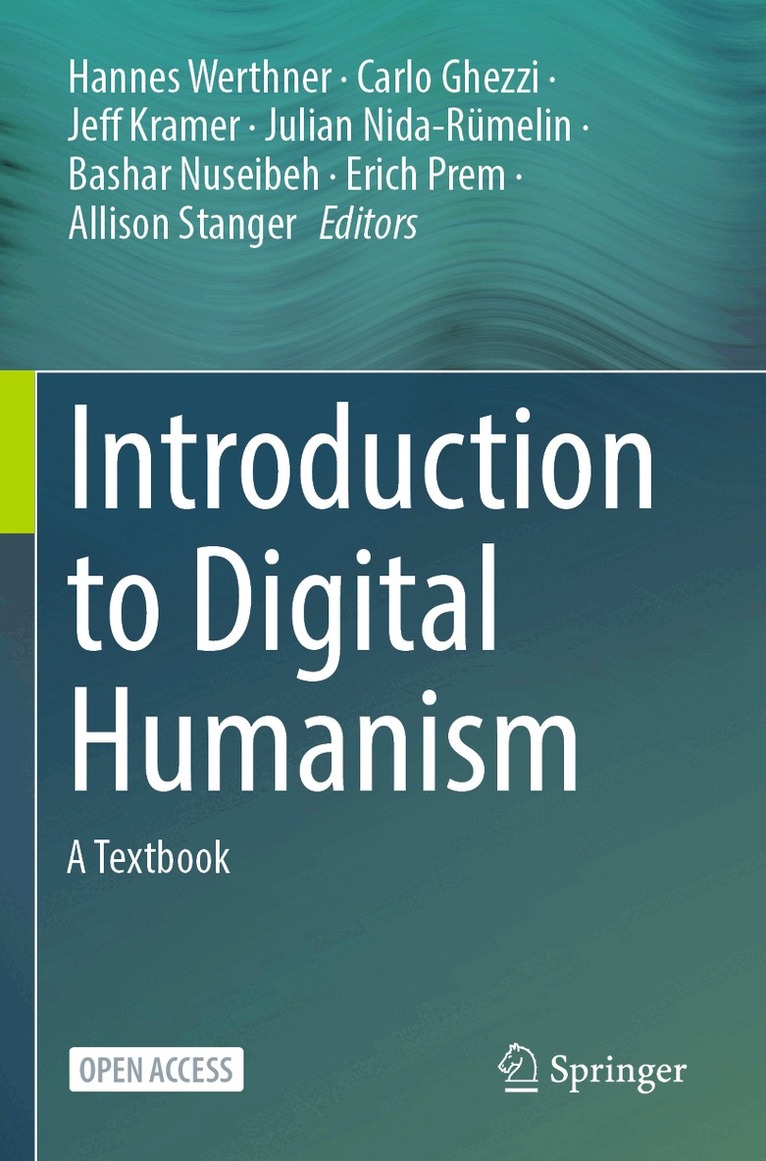
This open access textbook introduces and defines digital humanism from a diverse range of disciplines. Following the 2019 Vienna Manifesto, the book calls for a digital humanism that describes, analyzes, and, most importantly, influences the complex interplay of technology and humankind, for a better society and life, fully respecting universal human rights.The book is organized in three parts: Part I “Background” provides the multidisciplinary background needed to understand digital humanism in its philosophical, cultural, technological, historical, social, and economic dimensions. The goal is to present the necessary knowledge upon which an effective interdisciplinary discourse on digital humanism can be founded. Part II “Digital Humanism – a System’s View” focuses on an in-depth presentation and discussion of the main digital humanism concerns arising in current digital systems. The goal of this part is to make readers aware and sensitive to these issues, including e.g. thecontrol and autonomy of AI systems, privacy and security, and the role of governance. Part III “Critical and Societal Issues of Digital Systems” delves into critical societal issues raised by advances of digital technologies. While the public debate in the past has often focused on them separately, especially when they became visible through sensational events the aim here is to shed light on the entire landscape and show their interconnected relationships. This includes issues such as AI and ethics, fairness and bias, privacy and surveillance, platform power and democracy.This textbook is intended for students, teachers, and policy makers interested in digital humanism. It is designed for stand-alone and for complementary courses in computer science, or curricula in science, engineering, humanities and social sciences. Each chapter includes questions for students and an annotated reading list to dive deeper into the associated chapter material. The book aims to provide readers with as wide an exposure as possible to digital advances and their consequences for humanity. It includes constructive ideas and approaches that seek to ensure that our collective digital future is determined through human agency.
268 kr
Skickas inom 5-8 vardagar
387 kr
Skickas inom 5-8 vardagar