2 381 kr
Skickas inom 10-15 vardagar
2 381 kr
Skickas inom 10-15 vardagar
817 kr
Skickas inom 10-15 vardagar
359 kr
Skickas inom 5-8 vardagar
400 kr
Skickas inom 5-8 vardagar
440 kr
Skickas inom 5-8 vardagar
2 408 kr
Skickas inom 10-15 vardagar
705 kr
Skickas inom 10-15 vardagar
955 kr
Läs direkt efter köp
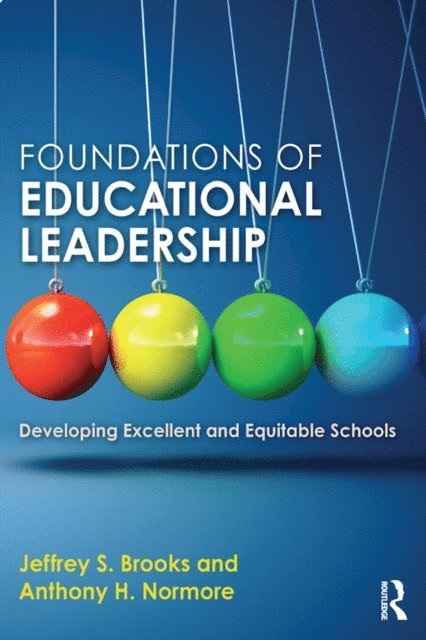
Foundations of Educational Leadership provides a fresh and research-based perspective on educational leadership, exploring 10 specific aspects of ‘glocalization’ in which educational leaders must be literate in order to establish and sustain relevant and useful educational experiences for students in their schools. In addition to covering traditional concepts such as culture, instructional leadership, professional ethics, and politics, well-known authors Brooks and Normore also introduce several conventionally neglected, cutting edge concepts like spirituality, holistic health, and information leadership. This important book emphasizes how a framework of learning, literacy, leadership, and reflection is critical to the preparation and practice of educational leaders. Foundations of Educational Leadership ensures aspiring and practicing leaders will be prepared to influence processes and outcomes for creating a more just and equitable environment for all students.
Key Features:
Each chapter focuses on what leaders need to learn, the concepts with which they need to be literate, how to lead in the area, and aspects on which they should reflect. Discussion sections at the end of each chapter include prompts, questions, and activities suited for engaging ideas, alone, or with classmates. An eResource features additional resources and video content.
1 331 kr
Skickas inom 10-15 vardagar
411 kr
Skickas inom 10-15 vardagar
1 226 kr
Skickas inom 10-15 vardagar
1 226 kr
Skickas inom 10-15 vardagar
1 294 kr
Skickas inom 10-15 vardagar
305 kr
Skickas inom 10-15 vardagar
1 294 kr
Skickas inom 10-15 vardagar
400 kr
Skickas inom 10-15 vardagar
1 226 kr
Skickas inom 10-15 vardagar
823 kr
Läs direkt efter köp
This important volume explores how racism operates in schools and society, while also unpacking larger patterns of racist ideology and white privilege as it manifests across various levels of schooling. A diverse set of contributors analyze particular contexts of white privilege, providing key research findings, connections to policy, and exemplars of schools and universities that are overcoming these challenges. Whiteucation provides a multi-level and holistic perspective on how inequitable power dynamics and prejudice exist in schools, ultimately encouraging reflection, dialogue, and inquiry in spaces where white privilege needs to be questioned, interrogated, and dismantled.
823 kr
Läs direkt efter köp
This important volume explores how racism operates in schools and society, while also unpacking larger patterns of racist ideology and white privilege as it manifests across various levels of schooling. A diverse set of contributors analyze particular contexts of white privilege, providing key research findings, connections to policy, and exemplars of schools and universities that are overcoming these challenges. Whiteucation provides a multi-level and holistic perspective on how inequitable power dynamics and prejudice exist in schools, ultimately encouraging reflection, dialogue, and inquiry in spaces where white privilege needs to be questioned, interrogated, and dismantled.
576 kr
Skickas inom 10-15 vardagar
684 kr
Skickas inom 5-8 vardagar
1 158 kr
Skickas inom 5-8 vardagar
485 kr
Läs direkt efter köp
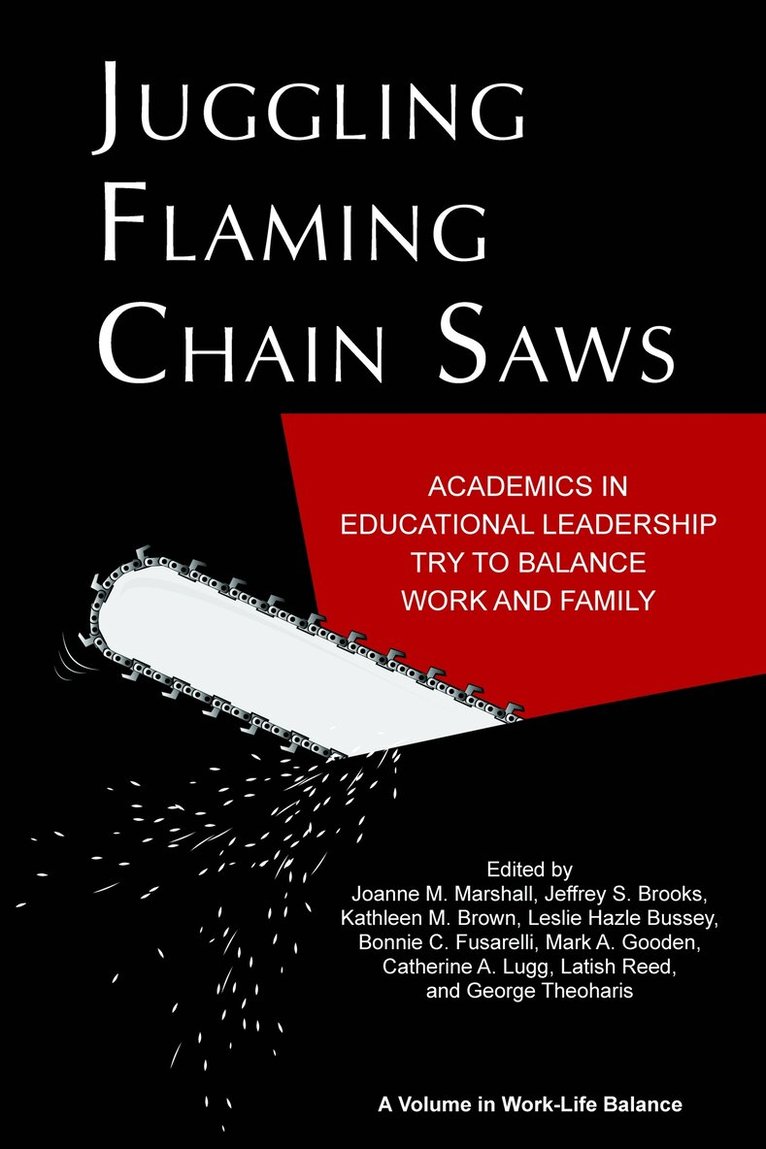
Challenges of work-life balance in the academy stem from policies and practices which remain from the time when higher education was populated mostly by married White male faculty. Those faculty were successful in their academic work because they depended upon the support of their wives to manage many of the not-work aspects of their lives. Imagine a tweedy middle-aged white man, coming home from the university to greet his wife and children and eat the dinner she’s prepared for him, and then disappearing into his study for the rest of the evening with his pipe to write and think great thoughts. If that professor ever existed, he is now emeritus.
Juggling Flaming Chainsaws is the first book in a new series on these challenges of managing academic work and not-work. It uses the methodology of autoethnography to introduce the work-life issues faced by scholars in educational leadership. While the experiences of scholars in this volume are echoed across other fields in higher education, educational leadership is unique because of its emphasis on preparing people for leadership roles within higher education and for preK-12 schools. Authors include people at different places on their career and life course trajectory, people who are partnered and single, gay and straight, with children and without, caring for elders, and managing illness. They hail from different geographic areas of the nation, different ethnic backgrounds, and different types of institutions. What all have in common is commitment to engaging with this topic, to reflecting deeply upon their own experience, and to sharing that experience with the rest of us.
616 kr
Skickas inom 5-8 vardagar
1 091 kr
Skickas inom 5-8 vardagar
436 kr
Läs direkt efter köp
Racism and ignorance churn on college campuses as surely as they do in society at large. Over the past fifteen years there have been many discussions regarding racism and higher education. Some of these focus on formal policies and dynamics such as Affirmative Action or The Dream Act, while many more discussions are happening in classrooms, dorm rooms and in campus communities. Of course, corollary to these conversations, some of which are generative and some of which are degenerative, is a deafening silence around how individuals and institutions can actually understand, engage and change issues related to racism in higher education. This lack of dialogue and action speaks volumes about individuals and organizations, and suggests a complicit acceptance, tolerance or even support for institutional and individual racism. There is much work to be done if we are to improve the situation around race and race relation in institutions of higher education.
There is still much work to be done in unpacking and addressing the educational realities of those who are economically, socially, and politically underserved and oppressed by implicit and overt racism. These realities manifest in ways such as lack of access to and within higher education, in equitable outcomes and in a disparity of the quality of education as a student matriculates through the system. While there are occasional diversity and inclusion efforts made in higher education, institutions still largely address them as quotas, and not as paradigmatic changes. This focus on “counting toward equity rather” than “creating a culture of equity” is basically a form of white privilege that allows administrators and policymakers to show incremental “progress” and avoid more substantive action toward real equity that changes the culture(s) of institutions with longstanding racial histories that marginalize some and privilege others.
Issues in higher education are still raced from white perspectives and suffer from a view that race and racism occur in a vacuum. Some literature suggests that racism begins very early in the student experience and continues all the way to college (Berlak & Moyenda). This mis-education, mislabeling and mistreatment based on race often develops as early as five to ten years old and “follows” them to postgraduate education and beyond.
565 kr
Skickas inom 5-8 vardagar
1 015 kr
Skickas inom 5-8 vardagar
399 kr
Läs direkt efter köp
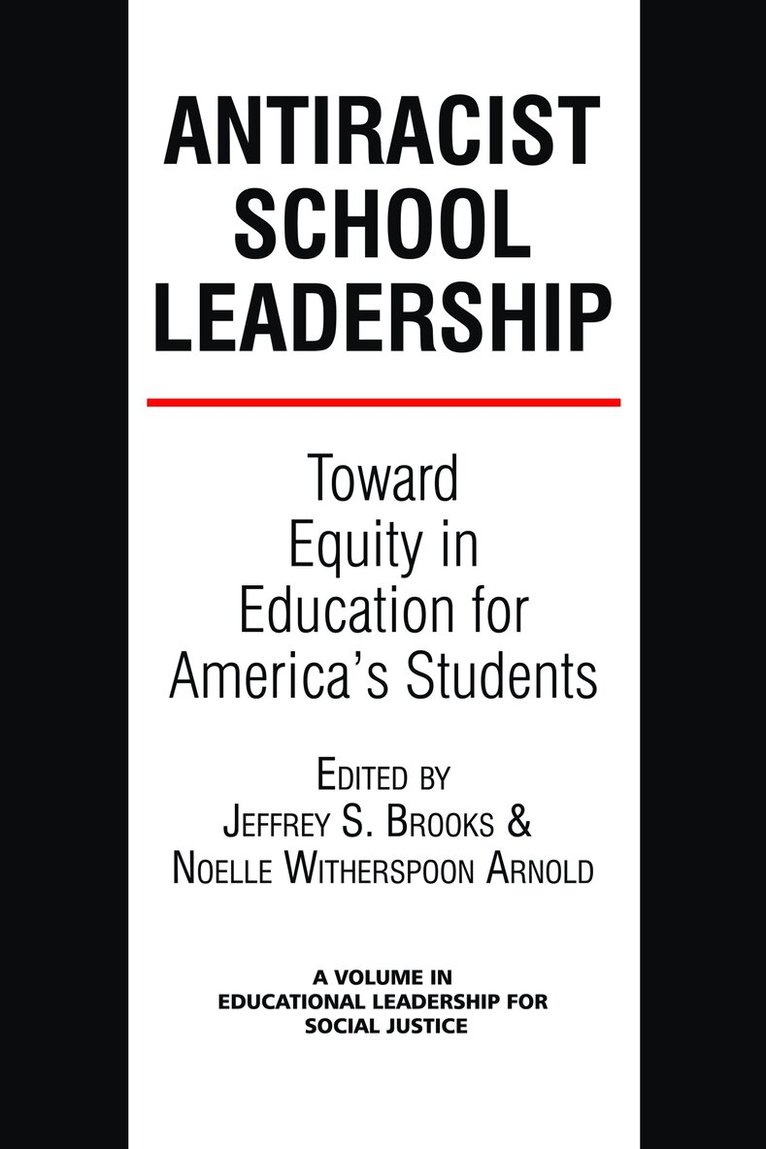
Since the passing of Brown versus Board of Education to the election of the first Black president of the United States, there has been much discussion on how far we have come as a nation on issues of race. Some continue to assert that Barack Obama’s election ushered in a new era—making the US a post-racial society. But this argument is either a political contrivance, borne of ignorance or a bold-faced lie. There is no recent data on school inequities, or inequity in society for that matter, that suggests we have arrived at Dr. King’s dream that his “four children will one day live in a nation where they will not be judged by the color of their skin but by the content of their character.” Children today are instead still judged by the color of their skin, and this inequitable practice is manifest in today’s schools for students of color in the form of: disproportionate student discipline referrals, achievement and opportunity gaps, pushout rates, overrepresentation in special education and underrepresentation in advanced coursework, among other indicators (Brooks, 2012). Though issues of race in the public education system may take an overt or covert form; racial injustice in public schools is still pervasive, complex and cumulative. For example, many students of color, year after year, do not have access to “good” teachers, experience low staff expectations, and are subject to “new and improved” forms of tracking (Brooks, Arnold & Brooks, in press).
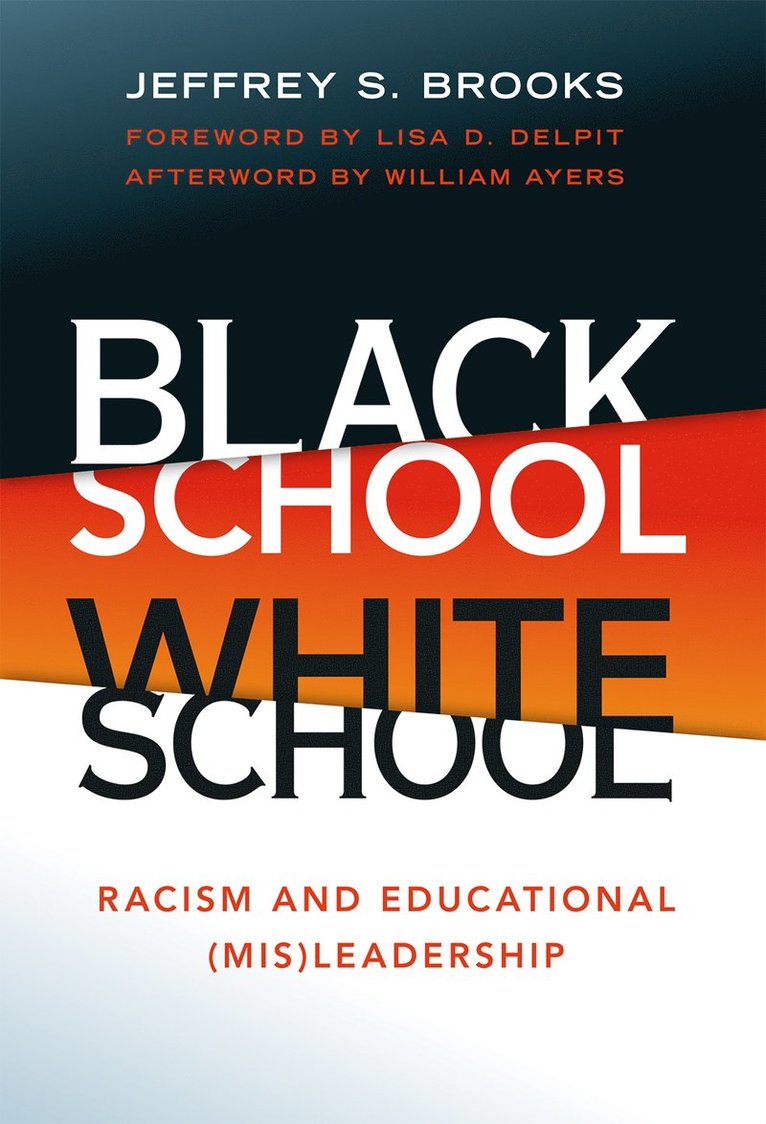
The authors in this book explore various ways that racism are manifest in the American school system. Through a plurality of perspectives, they deconstruct, challenge and reconstruct an educational leadership committed to equity and excellence for marginalized students and educators.
549 kr
Skickas inom 5-8 vardagar