Jelle J.P. Wouters - Böcker
Visar alla böcker från författaren Jelle J.P. Wouters. Handla med fri frakt och snabb leverans.
8 produkter
8 produkter
1 820 kr
Skickas inom 5-8 vardagar
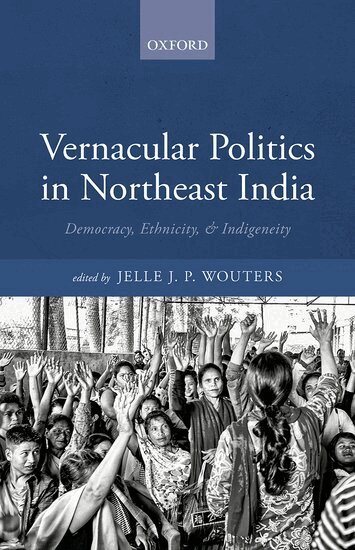
Perhaps nowhere in India is contemporary politics and visions of 'the political' as diverse, animated, uncontainable, and poorly understood as in Northeast India. Vernacular Politics in Northeast India offers penetrating accounts into what guides and animates Northeast India's spirited political sphere, including the categories and values through which its peoples conceive of their 'political' lives. Fourteen essays by anthropologists, political scientists, historians, and geographers think their way afresh into the region's political life and sense. Collectively they show how different communities, instead of adjusting themselves to modern democratic ideals, adjust democracy to themselves, how ethnicity has become a politically pregnant expression of local identities, and how forms and politics of indigeneity assume a life of its own as it is taken on, articulated, reworked, and fought over by peoples.
3 161 kr
Skickas inom 10-15 vardagar
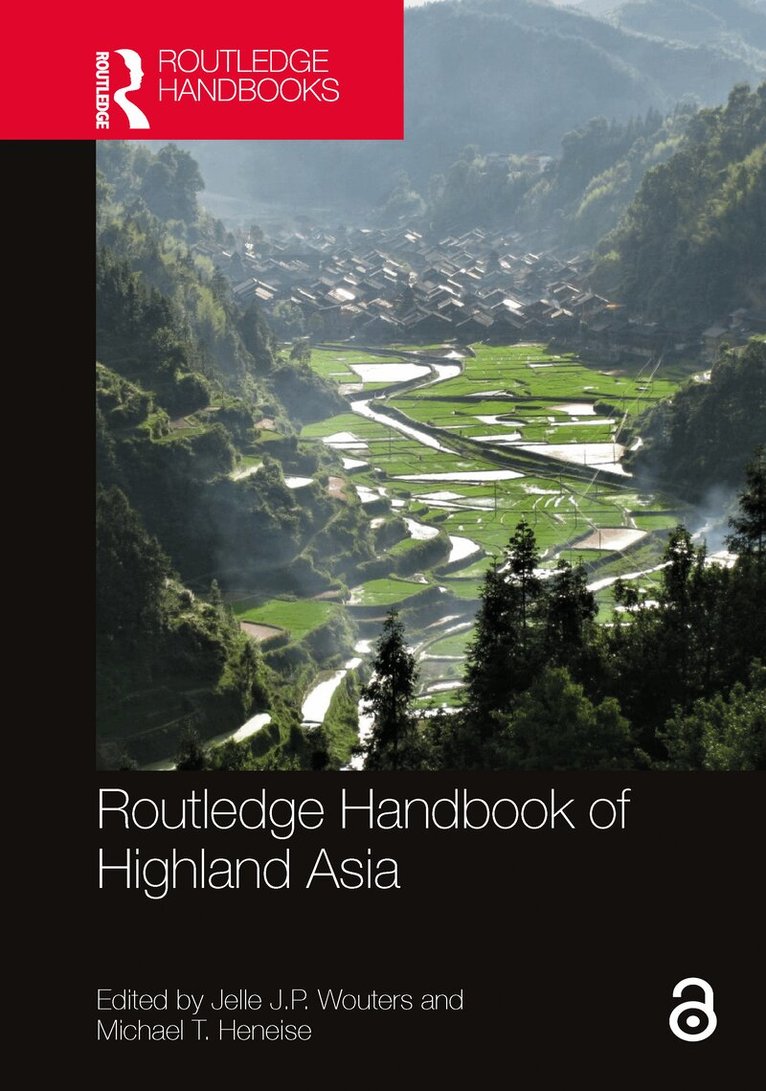
The Routledge Handbook of Highland Asia is the first comprehensive and critical overview of the ethnographic and anthropological work in Highland Asia over the past half a century. Opening up a grand new space for critical engagement, the handbook presents Highland Asia as a world-region that cuts across the traditional divides inherited from colonial and Cold War area divisions - the Indian Subcontinent/South Asia, Southeast Asia, China/East Asia, and Central Asia. Thirty-two chapters assess the history of research, identify ethnographic trends, and evaluate a range of analytical themes that developed in particular settings of Highland Asia. They cover varied landscapes and communities, from Kyrgyzstan to India, from Bhutan to Vietnam and bring local voices and narratives relating trade and tribute, ritual and resistance, pilgrimage and prophecy, modernity and marginalization, capital and cosmos to the fore. The handbook shows that for millennia, Highland Asians have connected far-flung regions through movements of peoples, goods and ideas, and at all times have been the enactors, repositories, and mediators of world-historical processes. Taken together, the contributors and chapters subvert dominant lowland narratives by privileging primarily highland vantages that reveal Highland Asia as an ecumune and prism that refracts and generates global history, social theory, and human imagination. In the currently unfolding Asian Century, this compels us to reorient and re-envision Highland Asia, in ethnography, in theory, and in the connections between this world-region, made of hills, highlands and mountains, and a planetary context. The handbook reveals both regional commonalities and diversities, generalities and specificities, and a broad orientation to key themes in the region. An indispensable reference work, this handbook fills a significant gap in the literature and will be of interest to academics, researchers and students interested in Highland Asia, Zomia Studies, Anthropology, Comparative Politics, Conceptual History and Sociology, Southeast Asian Studies, Central Asian Studies and South Asian Studies as well as Asian Studies in general.
644 kr
Skickas inom 10-15 vardagar
The Routledge Handbook of Highland Asia is the first comprehensive and critical overview of the ethnographic and anthropological work in Highland Asia over the past half a century. Opening up a grand new space for critical engagement, the handbook presents Highland Asia as a world-region that cuts across the traditional divides inherited from colonial and Cold War area divisions - the Indian Subcontinent/South Asia, Southeast Asia, China/East Asia, and Central Asia. Thirty-two chapters assess the history of research, identify ethnographic trends, and evaluate a range of analytical themes that developed in particular settings of Highland Asia. They cover varied landscapes and communities, from Kyrgyzstan to India, from Bhutan to Vietnam and bring local voices and narratives relating trade and tribute, ritual and resistance, pilgrimage and prophecy, modernity and marginalization, capital and cosmos to the fore. The handbook shows that for millennia, Highland Asians have connected far-flung regions through movements of peoples, goods and ideas, and at all times have been the enactors, repositories, and mediators of world-historical processes. Taken together, the contributors and chapters subvert dominant lowland narratives by privileging primarily highland vantages that reveal Highland Asia as an ecumune and prism that refracts and generates global history, social theory, and human imagination. In the currently unfolding Asian Century, this compels us to reorient and re-envision Highland Asia, in ethnography, in theory, and in the connections between this world-region, made of hills, highlands and mountains, and a planetary context. The handbook reveals both regional commonalities and diversities, generalities and specificities, and a broad orientation to key themes in the region. An indispensable reference work, this handbook fills a significant gap in the literature and will be of interest to academics, researchers and students interested in Highland Asia, Zomia Studies, Anthropology, Comparative Politics, Conceptual History and Sociology, Southeast Asian Studies, Central Asian Studies and South Asian Studies as well as Asian Studies in general.
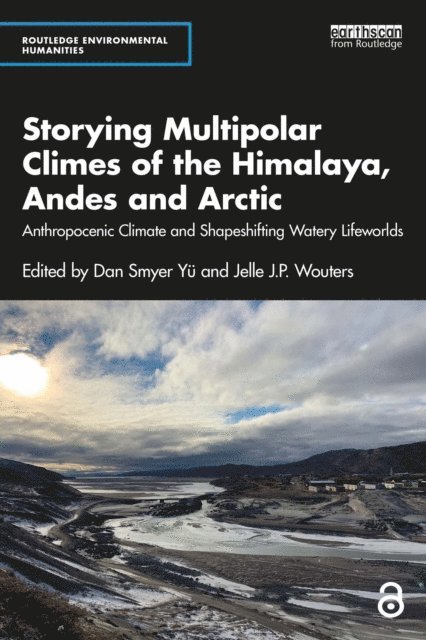
Storying Multipolar Climes of the Himalaya, Andes and Arctic
Anthropocenic Climate and Shapeshifting Watery Lifeworlds
Inbunden, Engelska, 2023
1 886 kr
Skickas inom 10-15 vardagar
This book initiates multipolar climate/clime studies of the world’s altitudinal and latitudinal highlands with terrestrial, experiential, and affective approaches. Framed in the environmental humanities, it is an interdisciplinary, comparative study of the mutually-embodied relations of climate, nature, culture, and place in the Himalaya, Andes, and Arctic.Innovation-driven, the book offers multipolar clime case studies through the contributors’ historical findings, ethnographic documentations, and diverse conceptualizations and applications of clime, an overlooked but returning notion of place embodied with climate history, pattern, and changes. The multipolar clime case studies in the book are geared toward deeper, lively explorations and demonstrations of the translatability, interchangeability, and complementarity between the notions of clime and climate. "Multipolar" or "multipolarity" in this book connotes not only the two polar regions and the tectonically shaped highlands of the earth but also diversely debated perspectives of climate studies in the broadest sense. Contributors across the twelve chapters come from diverse fields of social and natural sciences and humanities, and geographically specialize, respectively, in the Himalayan, Andean, and Arctic regions.The first comparative study of climate change in altitudinal and latitudinal highlands, this will be an important read for students, academics, and researchers in environmental humanities, anthropology, climate science, indigenous studies, and ecology.Chapters 8 and 9 of this book are freely available as a downloadable Open Access PDF at http://www.taylorfrancis.com/books/e/10.4324/9781003347026 under a Creative Commons Attribution-Non Commercial-No Derivatives (CC-BY-NC-ND) 4.0 license.
Storying Multipolar Climes of the Himalaya, Andes and Arctic
Anthropocenic Climate and Shapeshifting Watery Lifeworlds
Häftad, Engelska, 2023
535 kr
Skickas inom 10-15 vardagar
This book initiates multipolar climate/clime studies of the world’s altitudinal and latitudinal highlands with terrestrial, experiential, and affective approaches. Framed in the environmental humanities, it is an interdisciplinary, comparative study of the mutually-embodied relations of climate, nature, culture, and place in the Himalaya, Andes, and Arctic.Innovation-driven, the book offers multipolar clime case studies through the contributors’ historical findings, ethnographic documentations, and diverse conceptualizations and applications of clime, an overlooked but returning notion of place embodied with climate history, pattern, and changes. The multipolar clime case studies in the book are geared toward deeper, lively explorations and demonstrations of the translatability, interchangeability, and complementarity between the notions of clime and climate. "Multipolar" or "multipolarity" in this book connotes not only the two polar regions and the tectonically shaped highlands of the earth but also diversely debated perspectives of climate studies in the broadest sense. Contributors across the twelve chapters come from diverse fields of social and natural sciences and humanities, and geographically specialize, respectively, in the Himalayan, Andean, and Arctic regions.The first comparative study of climate change in altitudinal and latitudinal highlands, this will be an important read for students, academics, and researchers in environmental humanities, anthropology, climate science, indigenous studies, and ecology.Chapters 8 and 9 of this book are freely available as a downloadable Open Access PDF at http://www.taylorfrancis.com/books/e/10.4324/9781003347026 under a Creative Commons Attribution-Non Commercial-No Derivatives (CC-BY-NC-ND) 4.0 license.
2 088 kr
Skickas inom 10-15 vardagar
Woven together as a text of humanities-based environmental research outcomes, Himalayan Climes and Multispecies Encounters hosts a collection of historical and fieldwork-based case studies and conceptual discussions of climate change in the greater Himalayan region.The collective endeavour of the book is expressed in what the editors characterize as the clime studies of the Himalayan multispecies worlds. Synonymous with place embodied with weather patterns and environmental history, clime is understood as both a recipient of and a contributor to climate change over time. Supported by empirical and historical findings, the chapters showcase climate change as clime change that concurrently entails multispecies encounters, multifaceted cultural processes, and ecologically specific environmental changes in the more-than-human worlds of the Himalayas.As the case studies complement, enrich, and converse with natural scientific understandings of Himalayan climate change, this book offers students, academics, and the interested public fresh approaches to the interdisciplinary field of climate studies and policy debates on climate change and sustainable development.
630 kr
Skickas inom 10-15 vardagar
Woven together as a text of humanities-based environmental research outcomes, Himalayan Climes and Multispecies Encounters hosts a collection of historical and fieldwork-based case studies and conceptual discussions of climate change in the greater Himalayan region.The collective endeavour of the book is expressed in what the editors characterize as the clime studies of the Himalayan multispecies worlds. Synonymous with place embodied with weather patterns and environmental history, clime is understood as both a recipient of and a contributor to climate change over time. Supported by empirical and historical findings, the chapters showcase climate change as clime change that concurrently entails multispecies encounters, multifaceted cultural processes, and ecologically specific environmental changes in the more-than-human worlds of the Himalayas.As the case studies complement, enrich, and converse with natural scientific understandings of Himalayan climate change, this book offers students, academics, and the interested public fresh approaches to the interdisciplinary field of climate studies and policy debates on climate change and sustainable development.
120 kr
Skickas inom 7-10 vardagar
On a second wave of anti-colonial revolutions.State and Capital reign over the Age of Sorrow. We face inequality, pandemics, ethnocide, climate crisis, and mass extinction. Our desire for security and power governs us as State. Our desire for possessions governs us as Capital. Our desires imprison and rule us beings as Unbeing. Yet, from Nagaland to New Zealand, Bhutan to Bolivia, a second wave of anti-colonial revolutions has begun. Arising from assemblies of humans and other-than-humans, these revolutions replace possessive individualism with non-exploitative interdependence. Naga elders, Bhutanese herders and other indigenous communities, feminists, poets, seers, yaks, cranes, vultures, and fungi haunt this pamphlet. The original Subaltern Studies narrated how Indian peasant communities destroyed the British empire. Subaltern Studies 2.0 prophesies the multi-being demos and liberates Being from Unbeing. Re-kin, Re-nomad, Re-animate, Re-wild! The Animist Revolution has come.