Jennifer Brick Murtazashvili - Böcker
Visar alla böcker från författaren Jennifer Brick Murtazashvili. Handla med fri frakt och snabb leverans.
6 produkter
6 produkter
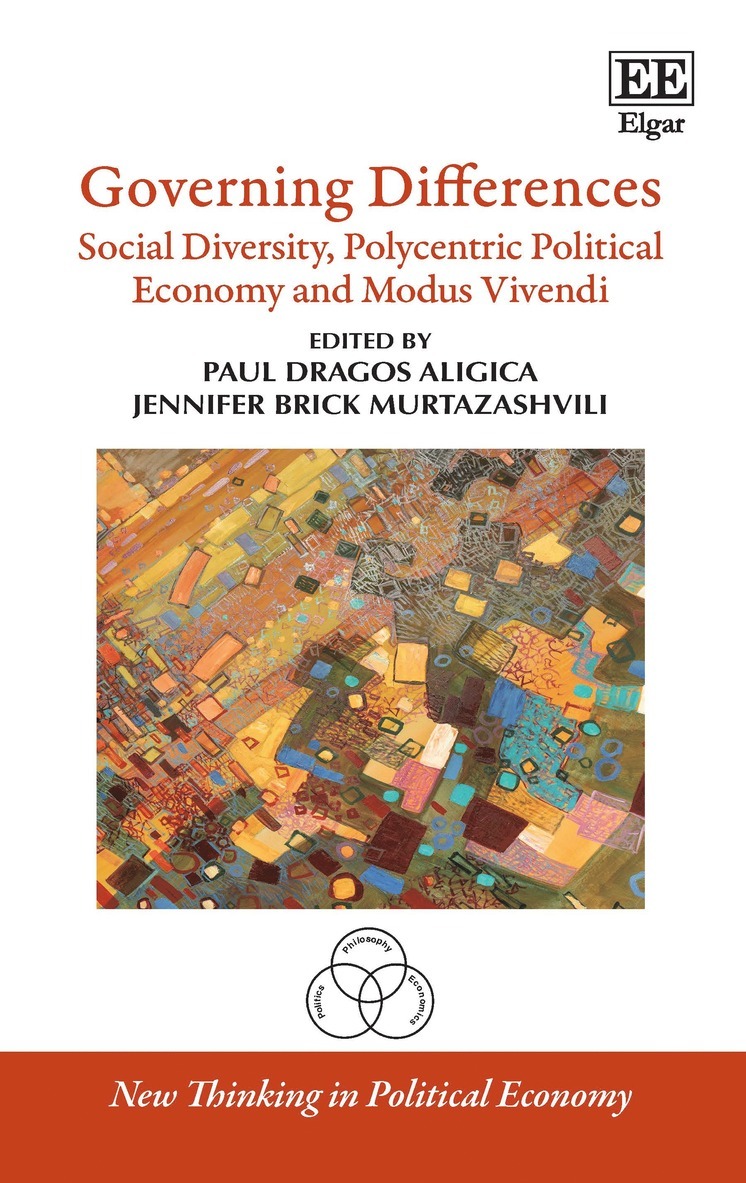
Governing Differences
Social Diversity, Polycentric Political Economy and Modus Vivendi
Inbunden, Engelska, 2025
1 670 kr
Skickas inom 7-10 vardagar
This book discusses the crisis in modern governance rooted in the social fragmentation of modern society, the expanding diversity of values, beliefs and lifestyles generated by globalization and the technological revolution. Chapters advocate for a convergence of the institutional theory of polycentricity and the political philosophy of modus vivendi – live and let live – as a basic conceptual framework to uphold a peaceful and tolerant society, while presenting detailed analysis of a wide range of case studies.This book is a critical resource for students and scholars of political science and public policy in addition to those studying political philosophy, sociology, moral theory or institutional systems. Policymakers and practitioners involved in governance will also find this invaluable due to its timely focus on the tensions generated by pluralism and how they can be alleviated.
1 442 kr
Skickas inom 7-10 vardagar
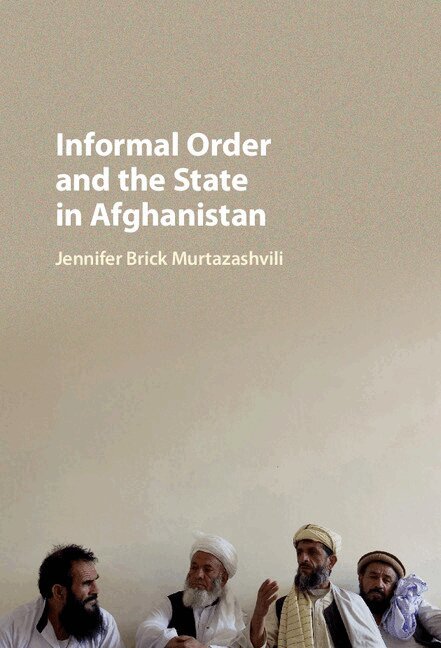
Despite vast efforts to build the state, profound political order in rural Afghanistan is maintained by self-governing, customary organizations. Informal Order and the State in Afghanistan explores the rules governing these organizations to explain why they can provide public goods. Instead of withering during decades of conflict, customary authority adapted to become more responsive and deliberative. Drawing on hundreds of interviews and observations from dozens of villages across Afghanistan, and statistical analysis of nationally representative surveys, Jennifer Brick Murtazashvili demonstrates that such authority enhances citizen support for democracy, enabling the rule of law by providing citizens with a bulwark of defence against predatory state officials. Contrary to conventional wisdom, it shows that 'traditional' order does not impede the development of the state because even the most independent-minded communities see a need for a central government - but question its effectiveness when it attempts to rule them directly and without substantive consultation.
507 kr
Skickas inom 7-10 vardagar
Despite vast efforts to build the state, profound political order in rural Afghanistan is maintained by self-governing, customary organizations. Informal Order and the State in Afghanistan explores the rules governing these organizations to explain why they can provide public goods. Instead of withering during decades of conflict, customary authority adapted to become more responsive and deliberative. Drawing on hundreds of interviews and observations from dozens of villages across Afghanistan, and statistical analysis of nationally representative surveys, Jennifer Brick Murtazashvili demonstrates that such authority enhances citizen support for democracy, enabling the rule of law by providing citizens with a bulwark of defence against predatory state officials. Contrary to conventional wisdom, it shows that 'traditional' order does not impede the development of the state because even the most independent-minded communities see a need for a central government - but question its effectiveness when it attempts to rule them directly and without substantive consultation.
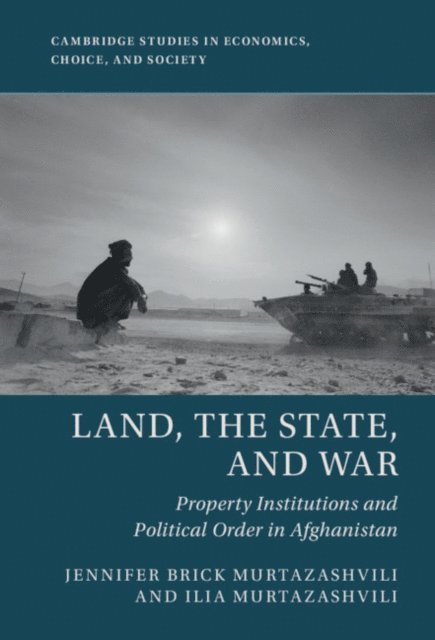
Land, the State, and War
Property Institutions and Political Order in Afghanistan
Inbunden, Engelska, 2021
1 145 kr
Skickas inom 7-10 vardagar
Although today's richest countries tend to have long histories of secure private property rights, legal-titling projects do little to improve the economic and political well-being of those in the developing world. This book employs a historical narrative based on secondary literature, fieldwork across thirty villages, and a nationally representative survey to explore how private property institutions develop, how they are maintained, and their relationship to the state and state-building within the context of Afghanistan. In this predominantly rural society, citizens cannot rely on the state to enforce their claims to ownership. Instead, they rely on community-based land registration, which has a long and stable history and is often more effective at protecting private property rights than state registration. In addition to contributing significantly to the literature on Afghanistan, this book makes a valuable contribution to the literature on property rights and state governance from the new institutional economics perspective.
The Origins and Consequences of Property Rights
Austrian, Public Choice, and Institutional Economics Perspectives
Häftad, Engelska, 2020
241 kr
Skickas inom 7-10 vardagar
Property rights are the rules governing ownership in society. This Element offers an analytical framework to understand the origins and consequences of property rights. It conceptualizes of the political economy of property rights as a concern with the follow questions: What explains the origins of economic and legal property rights? What are the consequences of different property rights institutions for wealth creation, conservation, and political order? Why do property institutions change? Why do legal reforms relating to property rights such as land redistribution and legal titling improve livelihoods in some contexts but not others? In analyzing property rights, the authors emphasize the complementarity of insights from a diversity of disciplinary perspectives, including Austrian economics, public choice, and institutional economics, including the Bloomington School of institutional analysis and political economy.
1 426 kr
Skickas inom 7-10 vardagar
Since Garrett Hardin published ‘The Tragedy of the Commons’ in 1968, critics have argued that population growth and capitalism contribute to overuse of natural resources and degradation of the global environment. They propose coercive, state-centric solutions. This book offers an alternative view. Employing insights from new institutional economics, the authors argue that property rights, competitive markets, polycentric political institutions, and social institutions such as trust, patience and individualism enable society to conserve natural resources and mitigate harms to the global environment.The authors support their argument by considering several types of commons: forests, fisheries, minerals, and the global environment. The central lesson of these empirical studies is that following a simple set of rules – definition and enforcement of property rights in response to local conditions, creating and maintaining democracy at the local level, and establishing markets to allocate resources – improves ecological and environmental sustainability.This book will appeal to scholars of natural resources, economics, political science and public policy as well as policymakers who are interested in environmental governance and the ways markets contribute to sustainability.