Meina Cai – författare
Visar alla böcker från författaren Meina Cai. Handla med fri frakt och snabb leverans.
5 produkter
The Origins and Consequences of Property Rights
Austrian, Public Choice, and Institutional Economics Perspectives
Av Colin Harris, Meina Cai m. fl.
Häftad, 2020
317 kr
Lägg i varukorg
Property rights are the rules governing ownership in society. This Element offers an analytical framework to understand the origins and consequences of property rights. It conceptualizes of the political economy of property rights as a concern with the follow questions: What explains the origins of …
Origins and Consequences of Property Rights
Austrian, Public Choice, and Institutional Economics Perspectives
Av Jennifer Brick Murtazashvili, Ilia Murtazashvili m. fl.
E-bok, 2020
303 kr
Lägg i varukorg
Property rights are the rules governing ownership in society. This Element offers an analytical framework to understand the origins and consequences of property rights. It conceptualizes of the political economy of property rights as a concern with the follow questions: What explains the origins of …
Origins and Consequences of Property Rights
Austrian, Public Choice, and Institutional Economics Perspectives
Av Jennifer Brick Murtazashvili, Ilia Murtazashvili m. fl.
E-bok, 2020
303 kr
Lägg i varukorg
Property rights are the rules governing ownership in society. This Element offers an analytical framework to understand the origins and consequences of property rights. It conceptualizes of the political economy of property rights as a concern with the follow questions: What explains the origins of …
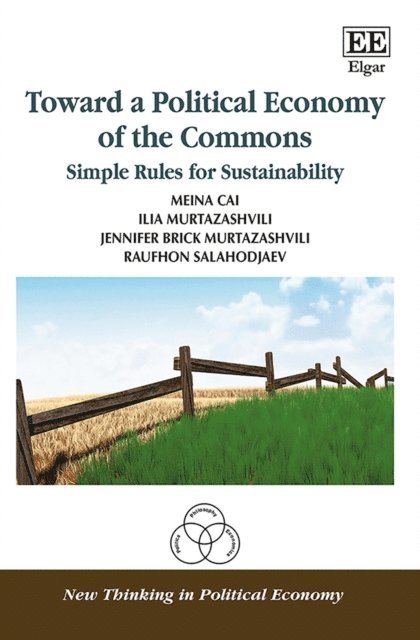
Toward a Political Economy of the Commons
Simple Rules for Sustainability
Av Meina Cai, Ilia Murtazashvili m. fl.
Inbunden, 2022
1518 kr
Lägg i varukorg
Since Garrett Hardin published ‘The Tragedy of the Commons’ in 1968, critics have argued that population growth and capitalism contribute to overuse of natural resources and degradation of the global environment. They propose coercive, state-centric solutions. This book offers an alternative view. …
Toward a Political Economy of the Commons
Simple Rules for Sustainability
Av Raufhon Salahodjaev, Jennifer Brick Murtazashvili m. fl.
E-bok, 2022
459 kr
Lägg i varukorg
Since Garrett Hardin published ‘The Tragedy of the Commons’ in 1968, critics have argued that population growth and capitalism contribute to overuse of natural resources and degradation of the global environment. They propose coercive, state-centric solutions. This book offers an alternative view. …