Jennifer Ratner-Rosenhagen - Böcker
Visar alla böcker från författaren Jennifer Ratner-Rosenhagen. Handla med fri frakt och snabb leverans.
7 produkter
7 produkter
1 600 kr
Skickas inom 5-8 vardagar
The essays in this book demonstrate the breadth and vitality of American intellectual history. Their core theme is the diversity of both American intellectual life and of the frameworks that we must use to make sense of that diversity. The Worlds of American Intellectual History has at its heart studies of American thinkers. Yet it follows these thinkers and their ideas as they have crossed national, institutional, and intellectual boundaries. The volume explores ways in which American ideas have circulated in different cultures. It also examines the multiple sites--from social movements, museums, and courtrooms to popular and scholarly books and periodicals--in which people have articulated and deployed ideas within and beyond the borders of the United States. At these cultural frontiers, the authors demonstrate, multiple interactions have occurred - some friendly and mutually enriching, others laden with tension, misunderstandings, and conflict. The same holds for other kinds of borders, such as those within and between scholarly disciplines, or between American history and the histories of other cultures.The richness of contemporary American intellectual history springs from the variety of worlds with which it must engage. Intellectual historians have always relished being able to move back and forth between close readings of particular texts and efforts to make sense of broader cultural dispositions. That range is on display in this volume, which includes essays by scholars as fully at home in the disciplines of philosophy, literature, economics, sociology, political science, education, science, religion, and law as they are in history. It includes essays by prominent historians of European thought, attuned to the transatlantic conversations in which Europeans and Americans have been engaged since the seventeenth century, and American historians whose work has carried them not only to different regions in North America but across the North Atlantic to Europe, across the South Atlantic to Africa, and across the Pacific to South Asia.
511 kr
Skickas inom 5-8 vardagar
The essays in this book demonstrate the breadth and vitality of American intellectual history. Their core theme is the diversity of both American intellectual life and of the frameworks that we must use to make sense of that diversity. The Worlds of American Intellectual History has at its heart studies of American thinkers. Yet it follows these thinkers and their ideas as they have crossed national, institutional, and intellectual boundaries. The volume explores ways in which American ideas have circulated in different cultures. It also examines the multiple sites--from social movements, museums, and courtrooms to popular and scholarly books and periodicals--in which people have articulated and deployed ideas within and beyond the borders of the United States. At these cultural frontiers, the authors demonstrate, multiple interactions have occurred - some friendly and mutually enriching, others laden with tension, misunderstandings, and conflict. The same holds for other kinds of borders, such as those within and between scholarly disciplines, or between American history and the histories of other cultures.The richness of contemporary American intellectual history springs from the variety of worlds with which it must engage. Intellectual historians have always relished being able to move back and forth between close readings of particular texts and efforts to make sense of broader cultural dispositions. That range is on display in this volume, which includes essays by scholars as fully at home in the disciplines of philosophy, literature, economics, sociology, political science, education, science, religion, and law as they are in history. It includes essays by prominent historians of European thought, attuned to the transatlantic conversations in which Europeans and Americans have been engaged since the seventeenth century, and American historians whose work has carried them not only to different regions in North America but across the North Atlantic to Europe, across the South Atlantic to Africa, and across the Pacific to South Asia.
108 kr
Skickas inom 5-8 vardagar
Long before the United States was a nation, it was a set of ideas, projected onto the New World by European explorers with centuries of belief and thought in tow. From this foundation of expectation and experience, America and American thought grew in turn, enriched by the bounties of the Enlightenment, the philosophies of liberty and individuality, the tenets of religion, and the doctrines of republicanism and democracy. Crucial to this development were the thinkers who nurtured it, from Thomas Jefferson to Ralph Waldo Emerson, W.E.B. Du Bois to Jane Addams, and Betty Friedan to Richard Rorty. This addition to Oxford's Very Short Introductions series traces how Americans have addressed the issues and events of their time and place, whether it is the Civil War, the Great Depression, or the culture wars of today. Spanning a variety of disciplines, from religion, philosophy, and political thought, to cultural criticism, social theory, and the arts, Jennifer Ratner-Rosenhagen shows how ideas have been major forces in American history, driving movements such as transcendentalism, Social Darwinism, conservatism, and postmodernism. In engaging and accessible prose, this introduction to American thought considers how notions about freedom and belonging, the market and morality - and even truth - have commanded generations of Americans and been the cause of fierce debate.
173 kr
Skickas inom 5-8 vardagar
Long before the United States was a nation, it was a set of ideas, projected onto the New World by European explorers with centuries of belief and thought in tow. From this foundation of expectation and experience, America and American thought grew in turn, enriched by the bounties of the Enlightenment, the philosophies of liberty and individuality, the tenets of religion, and the doctrines of republicanism and democracy. Crucial to this development were the thinkers who nurtured it, from Thomas Jefferson to Ralph Waldo Emerson, W.E.B. DuBois to Jane Addams, and Betty Friedan to Richard Rorty. The Ideas That Made America: A Brief History traces how Americans have addressed the issues and events of their time and place, whether the Civil War, the Great Depression, or the culture wars of today. Spanning a variety of disciplines, from religion, philosophy, and political thought, to cultural criticism, social theory, and the arts, Jennifer Ratner-Rosenhagen shows how ideas have been major forces in American history, driving movements such as transcendentalism, Social Darwinism, conservatism, and postmodernism. In engaging and accessible prose, this introduction to American thought considers how notions about freedom and belonging, the market and morality -- and even truth -- have commanded generations of Americans and been the cause of fierce debate.
188 kr
Skickas inom 7-10 vardagar
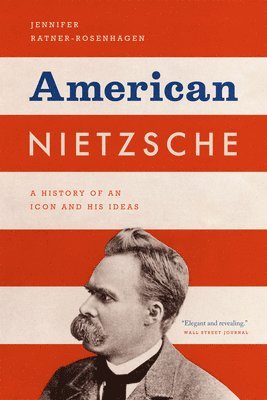
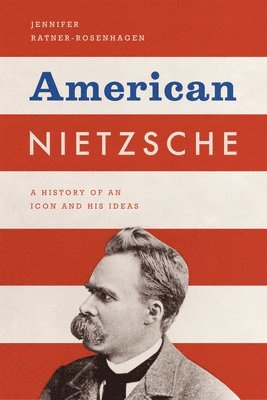
If you were looking for a philosopher likely to appeal to Americans, Friedrich Nietzsche would be far from your first choice. After all, in his blazing career, Nietzsche took aim at nearly all the foundations of modern American life: Christian morality, the Enlightenment faith in reason, and the idea of human equality. Despite that, for more than a century Nietzsche has been a hugely popular - and influential - figure in American thought and culture. In "American Nietzsche", Jennifer Ratner-Rosenhagen delves deeply into Nietzsche's philosophy, and America's reception of it, to tell the story of his curious appeal. Beginning her account with Ralph Waldo Emerson, whom the seventeen-year-old Nietzsche read fervently, she shows how Nietzsche's ideas first burst on American shores at the turn of the twentieth century, and how they continued alternately to invigorate and to shock Americans for the century to come.She also delineates the broader intellectual and cultural contexts within which a wide array of commentators - academic and armchair philosophers, theologians and atheists, romantic poets and hard-nosed empiricists, and political ideologues and apostates from the Left and the Right - drew insight and inspiration from Nietzsche's claims for the death of God, his challenge to universal truth, and his insistence on the interpretive nature of all human thought and beliefs. At the same time, she explores how his image as an iconoclastic immoralist was put to work in American popular culture, making Nietzsche an unlikely posthumous celebrity capable of inspiring teenagers and scholars alike. A penetrating examination of a powerful but little-explored undercurrent of twentieth-century American thought and culture, "American Nietzsche" dramatically recasts our understanding of American intellectual life - and puts Nietzsche squarely at its heart.
243 kr
Skickas inom 7-10 vardagar
If you were looking for a philosopher likely to appeal to Americans, Friedrich Nietzsche would be far from your first choice. After all, in his blazing career, Nietzsche took aim at nearly all the foundations of modern American life: Christian morality, the Enlightenment faith in reason, and the idea of human equality. Despite that, for more than a century Nietzsche has been a hugely popular - and surprisingly influential - figure in American high and popular culture alike. In "American Nietzsche", Jennifer Ratner-Rosenhagen delves deeply into Nietzsche's thought, and America's reception of it, to tell the story of his curious appeal. Beginning her account as far back as Emerson, whom the seventeen-year-old Nietzsche read obsessively, she shows how Nietzsche's ideas first burst on American shores at the turn of the twentieth century, and how they continued to alternately invigorate and shock Americans throughout the century to come.She also traces out the broader intellectual and cultural contexts in which a wide array of commentators - academic and armchair philosophers, theologians and atheists, romantic poets and hard-nosed empiricists, and political ideologues and apostates from the Left and the Right - drew insight and inspiration from Nietzsche's claims for the death of God, his challenge to universal truth, and his insistence on the interpretive nature of all human thought and belief. At the same time, she explores how his image as an iconoclastic immoralist was put to work in American popular culture, making Nietzsche an unlikely posthumous celebrity capable of inspiring teenagers and scholars alike. A heady examination of a powerful, but little-explored undercurrent of twentieth-century American culture, "American Nietzsche" dramatically recasts our understanding of American intellectual life - and puts Nietzsche squarely at its heart.
432 kr
Skickas inom 10-15 vardagar
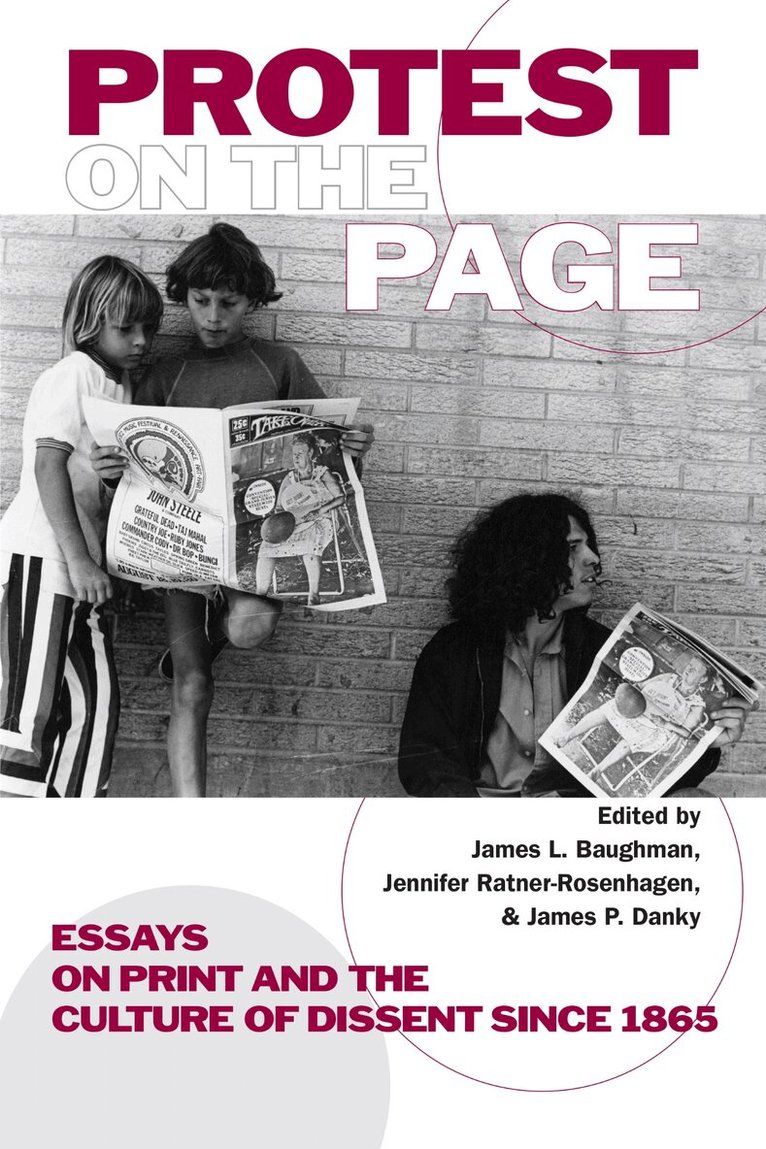
Understanding print as a tool for dissent is essential to understanding how Americans have negotiated difference in a pluralist society. Protest on the Page explores the intertwined histories of print and protest in the United States from Reconstruction to the present. As these ten essays demonstrate, protestors of all political and religious persuasions, as well as aesthetic and ethical temperaments, have used the printed page to wage battles over free speech; to test racial, class, sexual, and even culinary boundaries; and to alter the moral landscape in American life. These included vegetarians and anarchists at the advent of the twentieth century, midcentury evangelicals and tween comic book readers, and GIs and feminists in the 1970s–80s.