Jenny J. Lee – författare
Visar alla böcker från författaren Jenny J. Lee. Handla med fri frakt och snabb leverans.
8 produkter
8 produkter
Inbunden, Engelska, 2025
2 117 kr
Skickas inom 10-15 vardagar
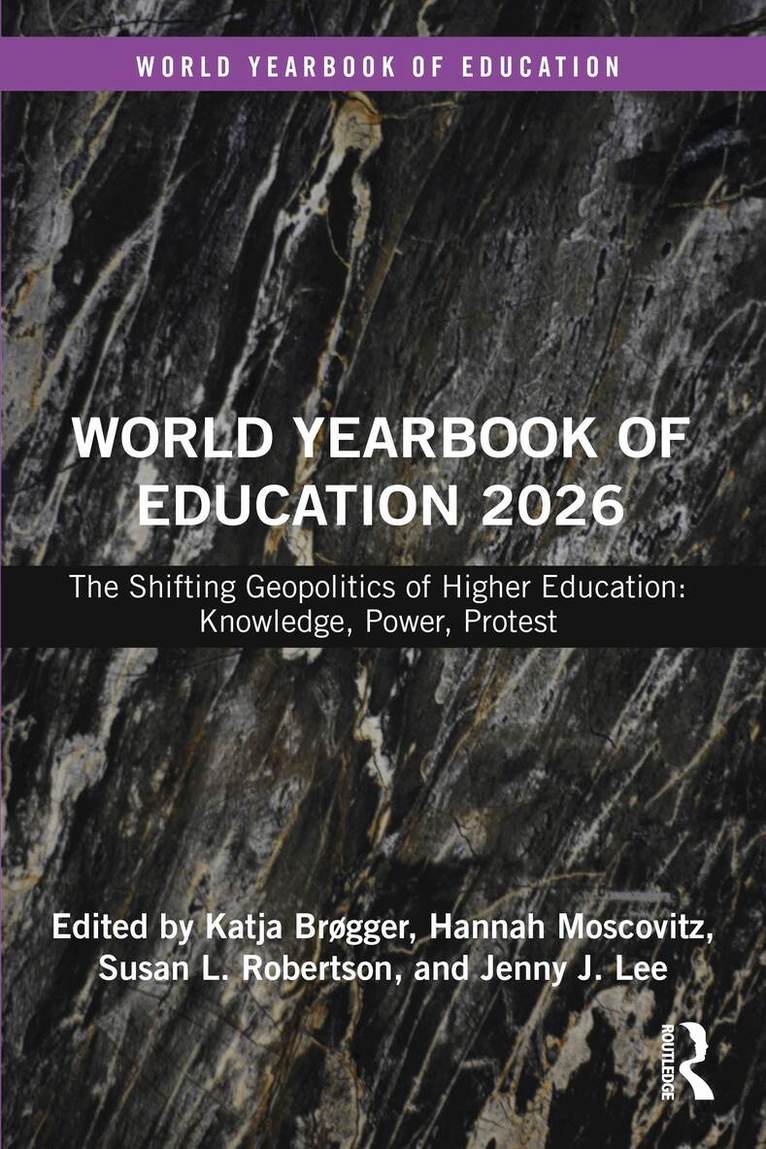
World Yearbook of Education 2026 discusses the shifting geopolitics of Higher Education, directly engaging with an urgent call to theorize the academy as a site of power, politics, protest, and possibility.The volume brings together leading and new generations of thinkers from across the globe who draw on theoretical resources from sociology, politics, international relations, geography, gender studies, cultural studies, and post- and decolonial studies. Taken together, the chapters show how these epistemic resources can help us understand the current state of affairs in higher education and beyond. They reflect key dimensions of shifting geopolitics and their impact on higher education: multipolar superpower rivalry, autocratic populism, decolonial justice, and digital transformations. By anchoring the study of higher education in prevailing geopolitical tensions, the volume seeks to uncover the critical role of the university in contemporary global politics.By exploring higher education as a central institution caught within competing visions of world order, one rooted in international cooperation, another asserting the nation-state, and yet another challenging the very notion of the university as territorially fixed, the book offers a perspective on the university, which is in line with pivotal global developments. It is a must-read book for anyone interested in the new geopolitics of higher education and the future of the university globally.
E-bok
PDF, Engelska, 2025662 kr
Läs direkt efter köp
World Yearbook of Education 2026 discusses the shifting geopolitics of Higher Education, directly engaging with an urgent call to theorize the academy as a site of power, politics, protest, and possibility.The volume brings together leading and new generations of thinkers from across the globe who draw on theoretical resources from sociology, politics, international relations, geography, gender studies, cultural studies, and post- and decolonial studies. Taken together, the chapters show how these epistemic resources can help us understand the current state of affairs in higher education and beyond. They reflect key dimensions of shifting geopolitics and their impact on higher education: multipolar superpower rivalry, autocratic populism, decolonial justice, and digital transformations. By anchoring the study of higher education in prevailing geopolitical tensions, the volume seeks to uncover the critical role of the university in contemporary global politics.By exploring higher education as a central institution caught within competing visions of world order, one rooted in international cooperation, another asserting the nation-state, and yet another challenging the very notion of the university as territorially fixed, the book offers a perspective on the university, which is in line with pivotal global developments. It is a must-read book for anyone interested in the new geopolitics of higher education and the future of the university globally.
E-bok
Engelska, 2025662 kr
Läs direkt efter köp
World Yearbook of Education 2026 discusses the shifting geopolitics of Higher Education, directly engaging with an urgent call to theorize the academy as a site of power, politics, protest, and possibility.The volume brings together leading and new generations of thinkers from across the globe who draw on theoretical resources from sociology, politics, international relations, geography, gender studies, cultural studies, and post- and decolonial studies. Taken together, the chapters show how these epistemic resources can help us understand the current state of affairs in higher education and beyond. They reflect key dimensions of shifting geopolitics and their impact on higher education: multipolar superpower rivalry, autocratic populism, decolonial justice, and digital transformations. By anchoring the study of higher education in prevailing geopolitical tensions, the volume seeks to uncover the critical role of the university in contemporary global politics.By exploring higher education as a central institution caught within competing visions of world order, one rooted in international cooperation, another asserting the nation-state, and yet another challenging the very notion of the university as territorially fixed, the book offers a perspective on the university, which is in line with pivotal global developments. It is a must-read book for anyone interested in the new geopolitics of higher education and the future of the university globally.
Häftad, Engelska, 2021
363 kr
Skickas inom 5-8 vardagar
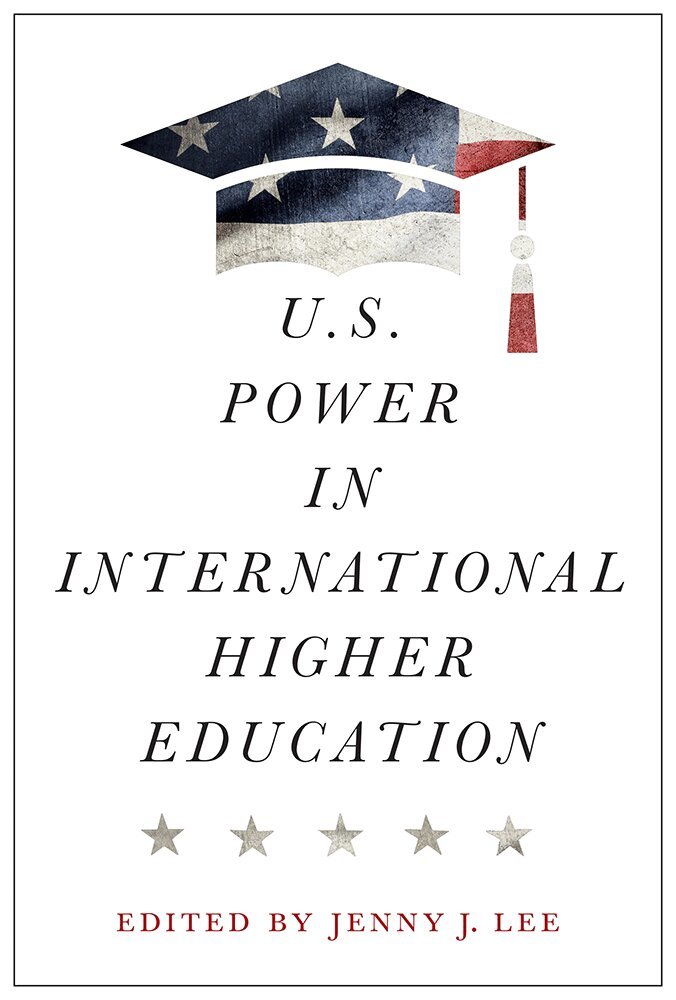
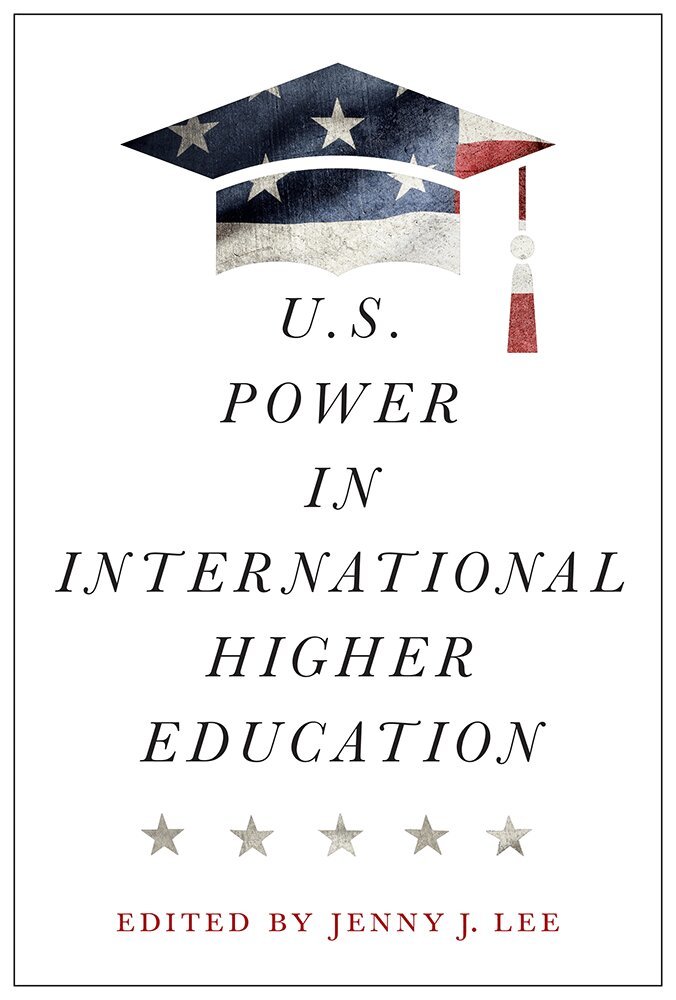
2021 ASHE/CIHE Award for Significant Research on International Higher EducationU.S. Power in International Higher Education explores how internationalization in higher education is not just an educational endeavor, but also a geopolitical one. By centering and making explicit the role of power, the book demonstrates the United States’s advantage in international education as well as the changing geopolitical realities that will shape the field in the future. The chapter authors are leading critical scholars of international higher education, with diverse scholarly ties and professional experiences within the country and abroad. Taken together, the chapters provide broad trends as well as in-depth accounts about how power is evident across a range of key international activities. This book is intended for higher education scholars and practitioners with the aim of raising greater awareness on the unequal power dynamics in internationalization activities and for the purposes of promoting more just practices in higher education globally.
Inbunden, Engelska, 2021
1 592 kr
Skickas inom 5-8 vardagar
2021 ASHE/CIHE Award for Significant Research on International Higher EducationU.S. Power in International Higher Education explores how internationalization in higher education is not just an educational endeavor, but also a geopolitical one. By centering and making explicit the role of power, the book demonstrates the United States’s advantage in international education as well as the changing geopolitical realities that will shape the field in the future. The chapter authors are leading critical scholars of international higher education, with diverse scholarly ties and professional experiences within the country and abroad. Taken together, the chapters provide broad trends as well as in-depth accounts about how power is evident across a range of key international activities. This book is intended for higher education scholars and practitioners with the aim of raising greater awareness on the unequal power dynamics in internationalization activities and for the purposes of promoting more just practices in higher education globally.
Inbunden, Engelska, 2021
1 480 kr
Skickas inom 10-15 vardagar
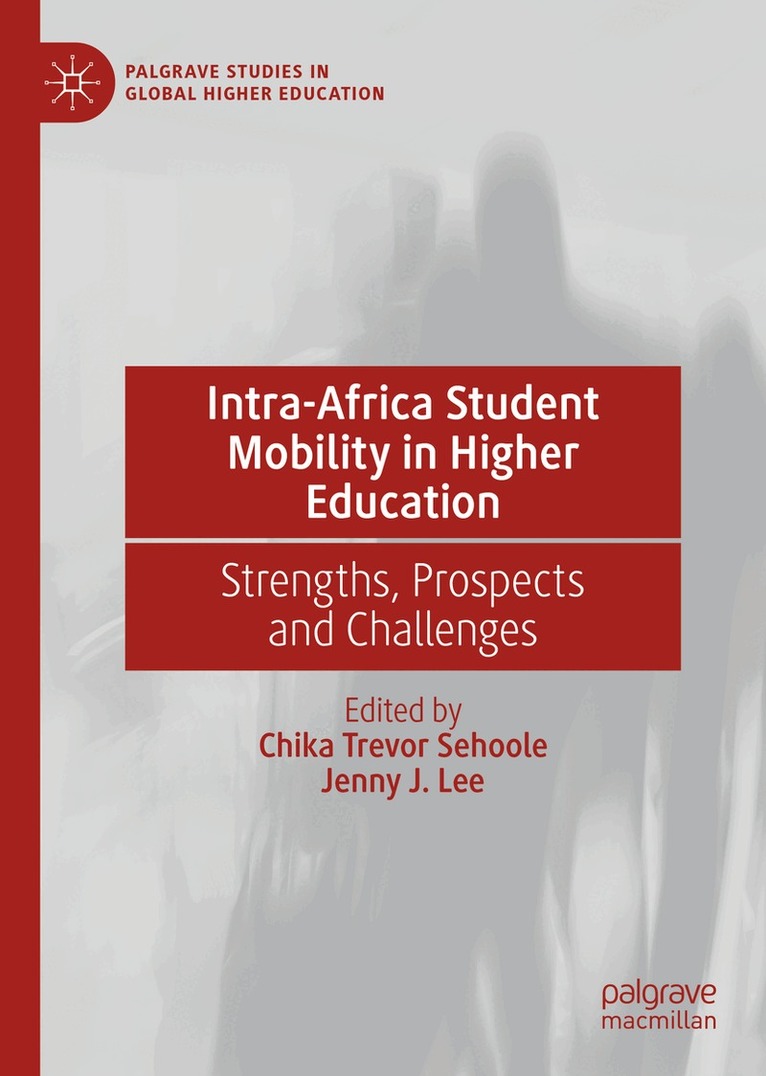
This book examines student mobility within Africa. International student mobility is among the central activities of higher education internationalization. As the number of international students increase, so do the destinations, in both number and geographic diversity. Historically, international student mobility has followed South-North and North-North patterns. However, recent literature show the growth in North-South and South-South patterns of student mobility. There has also been a rise in regional mobility. In what is referred to in the book as intra-Africa mobility, the books explores and analyzes the patterns of intra-Africa mobility based on seven African countries: South Africa, Kenya,Uganda, Nigeria, Ghana, Senegal and Egypt. The editors and contributors addressthree central research questions: Why did the students choose the country they are studying in? Why did they choose the institution they are studying in? What are their academic and social experiences in these countries and their respective institutions? This book is the first comprehensive exploration of intra-Africa student mobility in a field that traditionally centers on the Global North.
E-bok
Engelska, 20221 825 kr
Läs direkt efter köp
This book examines student mobility within Africa. International student mobility is among the central activities of higher education internationalization. As the number of international students increase, so do the destinations, in both number and geographic diversity. Historically, international student mobility has followed South-North and North-North patterns. However, recent literature show the growth in North-South and South-South patterns of student mobility. There has also been a rise in regional mobility. In what is referred to in the book as intra-Africa mobility, the books explores and analyzes the patterns of intra-Africa mobility based on seven African countries: South Africa, Kenya,Uganda, Nigeria, Ghana, Senegal and Egypt. The editors and contributors addressthree central research questions: Why did the students choose the country they are studying in? Why did they choose the institution they are studying in? What are their academic and social experiences in these countries and their respective institutions? This book is the first comprehensive exploration of intra-Africa student mobility in a field that traditionally centers on the Global North.
Häftad, Engelska, 2022
1 480 kr
Skickas inom 10-15 vardagar
This book examines student mobility within Africa. International student mobility is among the central activities of higher education internationalization. As the number of international students increase, so do the destinations, in both number and geographic diversity. Historically, international student mobility has followed South-North and North-North patterns. However, recent literature show the growth in North-South and South-South patterns of student mobility. There has also been a rise in regional mobility. In what is referred to in the book as intra-Africa mobility, the books explores and analyzes the patterns of intra-Africa mobility based on seven African countries: South Africa, Kenya,Uganda, Nigeria, Ghana, Senegal and Egypt. The editors and contributors addressthree central research questions: Why did the students choose the country they are studying in? Why did they choose the institution they are studying in? What are their academic and social experiences in these countries and their respective institutions? This book is the first comprehensive exploration of intra-Africa student mobility in a field that traditionally centers on the Global North.