Jeremy Allouche – författare
Visar alla böcker från författaren Jeremy Allouche. Handla med fri frakt och snabb leverans.
5 produkter
5 produkter
495 kr
Skickas inom 10-15 vardagar
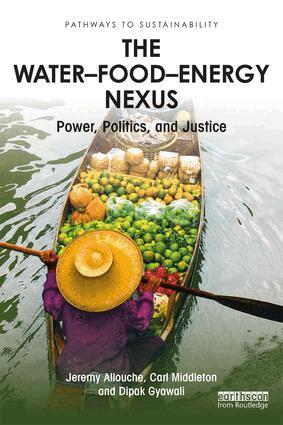
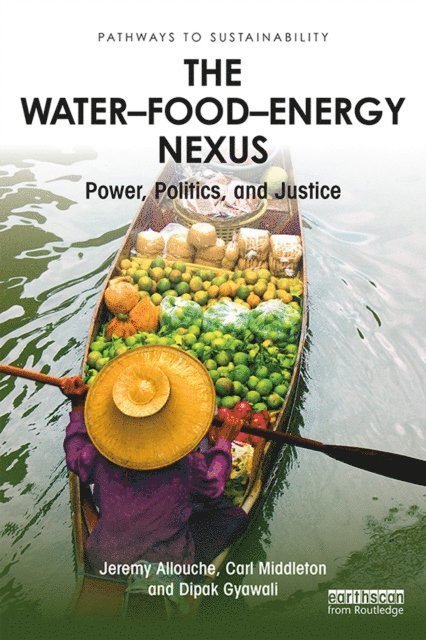
The world of development thinkers and practitioners is abuzz with a new lexicon: the idea of "the nexus" between water, food, and energy which is intuitively compelling. It promises better integration of multiple sectoral elements, a better transition to greener economies, and sustainable development. However, there appears to be little agreement on its precise meaning, whether it only complements existing environmental governance approaches or how it can be enhanced in national contexts. One current approach to the nexus treats it as a risk and security matter while another treats it within economic rationality addressing externalities across sector. A third perspective acknowledges it as a fundamentally political process requiring negotiation amongst different actors with distinct perceptions, interests, and practices. This perspective highlights the fact that technical solutions for improving coherence within the nexus may have unintended and negative impacts in other policy areas, such as poverty alleviation and education. The Water–Food–Energy Nexus: Power, Politics and Justice lays out the managerial-technical definitions of the nexus and challenges these conceptions by bringing to the forefront the politics of the nexus, around two key dimensions – a dynamic understanding of water–food–energy systems, and a normative positioning around nexus debates, in particular around social justice. The authors argue that a shift in nexus governance is required towards approaches where limits to control are acknowledged, and more reflexive/plural strategies adopted. This book will be of interest to academic researchers, policy makers, and practitioners in the fields of international development studies, environmental politics, and science and technology studies, as well as international relations.
983 kr
Skickas inom 7-10 vardagar
Examines the politics of transnational water resource management through case studies of the Aral Sea basin and the Danube, Euphrates, and Mekong river basins.As the governance of transboundary rivers becomes a subject of growing importance due to the increasing pressure on freshwater resources, this timely collection examines water scarcity and efforts to better manage rivers and river basins. Most specialists agree that states face many institutional inadequacies when dealing with shared resources and that new governance mechanisms are needed to improve water management. Using case studies of the Aral Sea basin and the Danube, Euphrates, and Mekong river basins, the contributors develop a new approach to water governance: the concept of multi-governance, an effort to collectively solve public problems by involving a series of relevant actors from the local to the global level, such as institutions, states, civil society, and business.
351 kr
Skickas inom 7-10 vardagar
Examines the politics of transnational water resource management through case studies of the Aral Sea basin and the Danube, Euphrates, and Mekong river basins.As the governance of transboundary rivers becomes a subject of growing importance due to the increasing pressure on freshwater resources, this timely collection examines water scarcity and efforts to better manage rivers and river basins. Most specialists agree that states face many institutional inadequacies when dealing with shared resources and that new governance mechanisms are needed to improve water management. Using case studies of the Aral Sea basin and the Danube, Euphrates, and Mekong river basins, the contributors develop a new approach to water governance: the concept of multi-governance, an effort to collectively solve public problems by involving a series of relevant actors from the local to the global level, such as institutions, states, civil society, and business.
2 108 kr
Skickas inom 10-15 vardagar
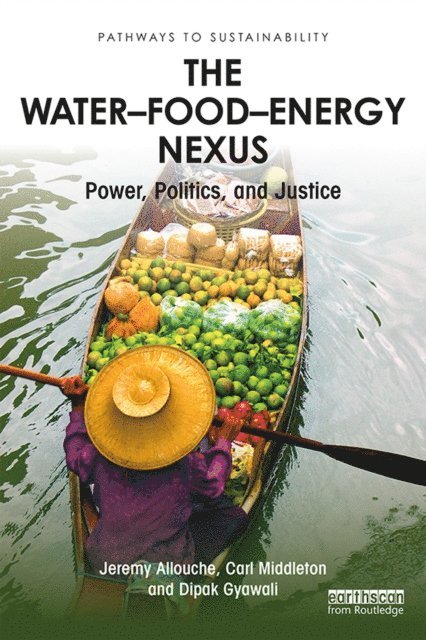
The world of development thinkers and practitioners is abuzz with a new lexicon: the idea of "the nexus" between water, food, and energy which is intuitively compelling. It promises better integration of multiple sectoral elements, a better transition to greener economies, and sustainable development. However, there appears to be little agreement on its precise meaning, whether it only complements existing environmental governance approaches or how it can be enhanced in national contexts. One current approach to the nexus treats it as a risk and security matter while another treats it within economic rationality addressing externalities across sector. A third perspective acknowledges it as a fundamentally political process requiring negotiation amongst different actors with distinct perceptions, interests, and practices. This perspective highlights the fact that technical solutions for improving coherence within the nexus may have unintended and negative impacts in other policy areas, such as poverty alleviation and education. The Water–Food–Energy Nexus: Power, Politics and Justice lays out the managerial-technical definitions of the nexus and challenges these conceptions by bringing to the forefront the politics of the nexus, around two key dimensions – a dynamic understanding of water–food–energy systems, and a normative positioning around nexus debates, in particular around social justice. The authors argue that a shift in nexus governance is required towards approaches where limits to control are acknowledged, and more reflexive/plural strategies adopted. This book will be of interest to academic researchers, policy makers, and practitioners in the fields of international development studies, environmental politics, and science and technology studies, as well as international relations.
1 744 kr
Skickas
In most network industries, new dynamics are leading to an unprecedented opening up to competition and private sector participation. With the development of a single European market, the in-stages liberalisation process of public utilities has spread to almost all sectors. However, the water supply and sanitation (WSS) sector is considered somehow different and it has been excluded until recently from the restructuring processes achieved in other sectors. Water and Liberalisation: European Water Scenarios presents a better understanding of the specific demands of the WSS sector. Covering the operators' strategies, the regulatory dynamics as well as their interactions on the evolution of the sector, it addresses the likelihood, the nature, and the forms the WSS sector may take in Europe in the foreseeable future. Adopting a neutral political stance, the book analyses the implications of alternative scenarios in economic, ecological, social, legal, and institutional terms. Key sections include: In depth introduction to the current situation in the WSS sector; The European water supply and sanitation markets; The institutional framework of the water supply and sanitation sector in the EU: a comparative analysis; Analysis of the EU explicit and implicit policies and approaches in the sector; Analysis of the strategies of the water operators in Europe scenarios on the evolution of the water sector in Europe; Economic, environmental, & social implications of the scenarios; Major implications per scenario.