Jeremy P. T. Ward - Böcker
Visar alla böcker från författaren Jeremy P. T. Ward. Handla med fri frakt och snabb leverans.
6 produkter
6 produkter
341 kr
Tillfälligt slut
The Respiratory System at a Glance has been thoroughly updated in line with current practice guidelines and new techniques to provide a highly illustrated and comprehensive guide to normal lung structure and function, as well as associated pathophysiology. Each topic has been fully revised and is accompanied by clear diagrams to encapsulate essential knowledge.Reflecting changes to the content, teaching and assessment methods used in medical education, this new edition now includes more information on acid base and its clinical ramifications, further detail on defence mechanisms and immunology, and also features online access to clinical cases and flashcards. The Respiratory System at a Glance:• Integrates basic and clinical science – ideal for integrated and systems-based courses• Includes both the pathophysiology and clinical aspects of the respiratory system• Is fully revised and updated to reflect current practice guidelines and new therapies• Provides online clinical cases, brand new flashcards, and MCQs • Includes a companion website at www.ataglanceseries.com/respiratory featuring interactive multiple choice questions and digital flashcards
418 kr
Skickas inom 7-10 vardagar
Everything you need to know about the cardiovascular system... at a Glance!The Cardiovascular System at a Glance is the essential reference guide to understanding all things circulatory. Concise, accessible, and highly illustrated, this latest edition presents an integrated overview of the subject, from the basics through to application. Featuring brand new content on stroke, examination and imaging, heart block and ECGs, and myopathies and channelopathies, The Cardiovascular System at a Glance goes one step further and offers new and updated clinical case studies and multiple-choice questions on a supplementary website. Integrates basic science and clinical topicsOffers bite-size chapters that make topics easy to digestIncludes coverage of anatomy and histology, blood and haemostasis, cellular physiology, form and function, regulation and integration of cardiovascular function, history, examination and investigations, pathology and therapeuticsFilled with highly visual, colour illustrations that enhance the text and help reinforce learningThe fifth edition of The Cardiovascular System at a Glance is an ideal resource for medical students, junior doctors, students of other health professions, and specialist cardiology nurses.
418 kr
Skickas inom 7-10 vardagar
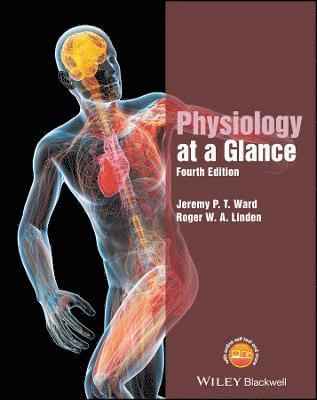
Extensively revised and updated, this fourth edition of Physiology at a Glance continues to provide a thorough introduction to human physiology, covering a wealth of topics in a comprehensive yet succinct manner.This concise guide breaks this often complex subject down into its core components, dealing with structures of the body from the cellular level to composite systems. New to this edition are three chapters on cell signalling, thermoregulation, and altitude and aerospace physiology, as well as a glossary of terms to aid medical, dental, health science and biomedical students at all levels of their training.Featuring clear, full-colour illustrations, memorable data tables, and easy-to-read text, Physiology at a Glance is ideal as both a revision guide and as a resource to assist basic understanding of key concepts.
397 kr
Skickas inom 7-10 vardagar
The Respiratory System at a Glance The market-leading at a Glance series is popular among healthcare students and newly qualified practitioners for its concise, simple approach and excellent illustrations. Each bite-sized chapter is covered in a double-page spread with clear, easy-to-follow diagrams, supported by succinct explanatory text. Covering a wide range of topics, books in the at a Glance series are ideal as introductory texts for teaching, learning and revision, and are useful throughout university and beyond. Everything you need to know about The Respiratory System… at a Glance! Highly-illustrated overview of the structure and function of the lungs and airways, with sections on history, examination, pathophysiology, treatment and management Respiratory System at a Glance is a comprehensive guide to normal lung structure and function and associated pathophysiology, featuring key information on all major respiratory disorders. As per the familiar, easy-to-use ‘at a Glance’ format, each topic is presented as a double-page spread, with key facts accompanied by clear diagrams that encapsulate essential knowledge. This ‘one-stop’ resource has been revised and updated for this 5thedition to include recent advances in our understanding and/or treatment of asthma, COPD, pulmonary vasculitis, sarcoidosis, cystic fibrosis, respiratory infections (including COVID-19), and the most recent national clinical management guidelines. The accompanying website includes self-assessment case studies, flashcards and MCQs to support learning or for review. Respiratory System at a Glance also provides information on: Structure and function of the respiratory system, the thoracic cage and respiratory muscles, gas laws, diffusion, and elastic forcesAcid-base balance and disorders, control of breathing through chemical and neural mechanisms, and pulmonary circulation and ventilation-perfusion matchingExercise, altitude, and diving, complications of development and congenital disease, lung defense mechanisms, and immunology of the lungsPublic health and smoking, respiratory failure, and the pathophysiology and management of asthma, chronic obstructive pulmonary disease and other respiratory disordersWith accompanying self-assessment clinical cases and multiple-choice questions, The Respiratory System at a Glance is the ideal companion for anyone about to start a respiratory module or rotation, and will appeal to medical students and junior doctors, as well as nurses, dentists, physiotherapists, technicians, and biomedical scientists. For more information on the complete range of Wiley nursing and health publishing, please visit: www.wiley.com To receive automatic updates on Wiley books and journals, join our email list. Sign up today at www.wiley.com/email All content reviewed by students for students Wiley Medical Education books are designed exactly for their intended audience. All of our books are developed in collaboration with students. This means that our books are always published with you, the student, in mind. If you would like to be one of our student reviewers, go to www.reviewmedicalbooks.com to find out more. This new edition is also available as an e-book. For more details, please see www.wiley.com
3 273 kr
Skickas inom 10-15 vardagar
Part IV (Receptors and Signaling Cascades in Pulmonary Arterial Hypertension) consists of five chapters devoted to the role of bone morphogenetic protein receptors, Notch receptors, serotonin receptors, Rho kinase and vascular endothelial growth factor receptors in the development of pulmonary arterial hypertension.
2 392 kr
Skickas inom 10-15 vardagar
Membrane Receptors, Channels and Transporters in Pulmonary Circulation is a proceeding of the 2008 Grover Conference (Lost Valley Ranch and Conference Center, Sedalia, Colorado; September 3-7, 2008), which provided a forum for experts in the fields of those receptors, channels and transporters that have been identified as playing key roles in the physiology and pathophysiology of the pulmonary circulation. The book rigorously addresses: i) recent advances in our knowledge of receptors, channels and transporters and their role in regulation of pulmonary vascular function; ii) how modulation of expression and function of receptors, channels and transporters and their interrelationships contribute to the pathogenesis of pulmonary vascular disease; and iii) the therapeutic opportunities that may be revealed by enhancing our understanding of this area. The overall goal was to explore the mechanisms by which specific receptors, channels and transporters contribute to pulmonary vascular function in both health and disease, and how this knowledge may lead to novel interventions in lung dysplasia, pulmonary edema, lung injury, and pulmonary and systemic hypertension to reduce and prevent death from lung disease. Membrane Receptors, Channels and Transporters in Pulmonary Circulation is divided into six parts. Part 1 (Ion Channels in the Pulmonary Vasculature: Basics and New Findings) is designated for basic knowledge and recent findings in the research field of ion channels in pulmonary circulation. There are five chapters in Part I discussing the function, expression, distribution and regulation of various ion channels present in pulmonary vascular smooth muscle cells and how these channels are integrated to regulate intracellular Ca2+ and cell functions. Part II (TRP Channels in the Pulmonary Vasculature: Basics and New Findings) is composed of five chapters that are exclusively designed to discuss the role of a recently identified family of cation channels, transientreceptor potential (TRP) channels, in the regulation of pulmonary vascular tone and arterial structure. Part III (Pathogenic Role of Ion Channels in Pulmonary Vascular Disease) includes four chapters that discuss how abnormal function and expression of various ion channels contribute to changes in cell functions and the development of pulmonary hypertension. Part IV (Receptors and Signaling Cascades in Pulmonary Arterial Hypertension) consists of five chapters devoted to the role of bone morphogenetic protein receptors, Notch receptors, serotonin receptors, Rho kinase and vascular endothelial growth factor receptors in the development of pulmonary arterial hypertension. Part V (Receptors and Transporters: Role in Cell Function and Hypoxic Pulmonary Vasoconstriction) includes four chapters designed to illustrate the potential mechanisms involved in oxygen sensing and hypoxia-induced pulmonary vasoconstriction and hypertension. Part VI (Targeting Ion Channels and Membrane Receptors in Developing Novel Therapeutic Approaches for Pulmonary Vascular Disease) consists five chapters which discuss the translational research involving on membrane receptors, channels and transporters, including their potential as novel drug targets. We hope that Membrane Receptors, Channels and Transporters in Pulmonary Circulation will allow readers to foster new concepts and new collaborations and cooperations among investigators so as to further understand the role of receptors, channels and transporters in lung pathophysiology. The ultimate goal is to identify new mechanisms of disease, as well as new therapeutic targets for pulmonary vascular diseases. An additional outcome should be enhanced understanding of the role of these entities in systemic vascular pathophysiology, since the conference will include researchers and clinicians with interests in both pulmonary and systemic circulations.