Jerome B. Posner – författare
Visar alla böcker från författaren Jerome B. Posner. Handla med fri frakt och snabb leverans.
4 produkter
4 produkter
Inbunden, Engelska, 2019
1 629 kr
Skickas inom 3-6 vardagar
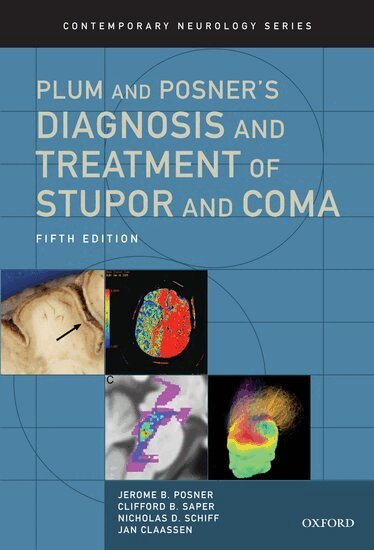
Plum and Posner's Diagnosis and Treatment of Stupor and Coma, 5th edition, is a major update of the classic work on diagnosing the cause of coma, with the addition of completely new sections on treatment of comatose patients, by Dr. Jan Claassen, the Director of the Neuro-ICU at Columbia New York Presbyterian Hospital. The first chapter of the book provides an up-to-date review on the brain mechanisms that maintain a conscious state in humans, and how lesions that damage these mechanisms cause loss of consciousness or coma. The second chapter reviews the neurological examination of the comatose patient, which provides the basis for determining whether the patient is suffering from a structural brain injury causing the coma, or from a metabolic disorder of consciousness. The third and fourth chapters review the pathophysiology of structural lesions causing coma, and the specific disease states that result in coma. Chapter five is a comprehensive treatment of the many causes of metabolic coma. Chapter 6 review psychiatric causes of unresponsiveness and how to identify and treat them. Chapters 7 and 8 review the overall emergency treatment of comatose patients, followed by the treatment of specific causes of coma. Chapter 9 examines the long term outcomes of coma, including the minimally conscious state and the persistent vegetative state, and how they can be distinguished, and their implications for eventual useful recovery. Chapter 10 reviews the topic of brain death and the standards for examination of a patient that are required to make the determination of brain death. The final chapter 11 is by J.J. Fins, a medical ethicist who was invited by the other authors to write an essay on the ethics of diagnosis and treatment of patients who, by definition, have no way to approve of or communicate about their wishes. While providing detailed background for neurological and neurosurgical specialists, the practical nature of the material in this book has found its greatest use among Internists, Emergency Medicine, and Intensive Care specialists, who deal with comatose patients frequently, but who may not have had extensive neurological training.
Inbunden, Engelska, 2008
2 955 kr
Skickas inom 7-10 vardagar
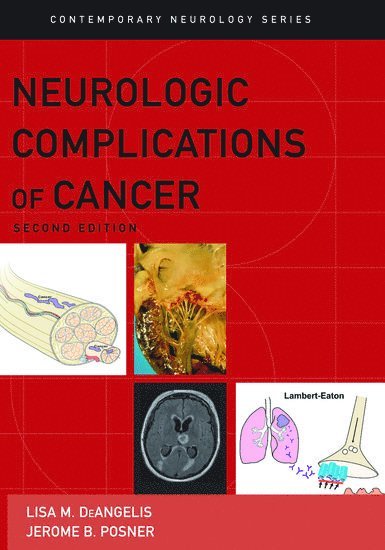
Neurologic Complications of Cancer reviews the impact of cancer on the nervous system. It examines the diagnosis and management of neurological complications of specific types of cancer, as well as the side effects of oncological treatments. Updated with approximately 30% new material it includes new diagnostic techniques and treatments.
E-bok
PDF, Engelska, 20081 734 kr
Läs direkt efter köp
Patients with cancer can suffer from a bewildering variety of neurologic signs and symptoms. The neurologic symptoms are often more disabling than the primary cancer. Symptoms including confusion, seizures, pain and paralysis may be a result of either metastases to the nervous system or one of several nonmetastatic complications of cancer. The physician who promptly recognizes neurologic symptoms occurring in a patient with cancer and makes an early diagnosis may prevent the symptoms from becoming permanently disabling or sometimes lethal. This monograph, an update of the first edition published in 1995, is divided into 3 sections. The first classifies the wide variety of disorders that can cause neurologic symptoms the patient with cancer, discusses the pathophysiology of nervous system metastases, the pathophysiology and treatment of brain edema and the approach to supportive care of common neurologic symptoms such as seizures, pain, and side effects of commonly used supportive care agents. The second section is devoted to nervous system metastases, addressing in turn, brain, spinal cord, meningeal and cranial and peripheral nerve metastases, describing clinical symptoms, approach to diagnosis and current treatment. The third section addresses several nonmetastatic complications of cancer and includes sections on vascular disease, infections, metabolic and nutritional disorders, side chemotherapy, radiation and other diagnostic and therapeutic procedures. The final chapter addresses paraneoplastic syndromes. The book is intended for practicing oncologists, neurologists, neurosurgeons and radiation oncologists as well as internists who treated patients with cancer. Our attempt was to write a book that would assist oncologists in understanding neurologic problems and neurologists in understanding oncologic problems. The book is also intended for physicians training to specialize in any of the above areas. It includes a practical approach to the diagnosis and management of patients with neurologic disease who are with known to have cancer or in whom cancer is suspected.
Del 79 - Contemporary Neurology Series
Paraneoplastic Syndromes
Inbunden, Engelska, 2011
3 309 kr
Skickas inom 7-10 vardagar
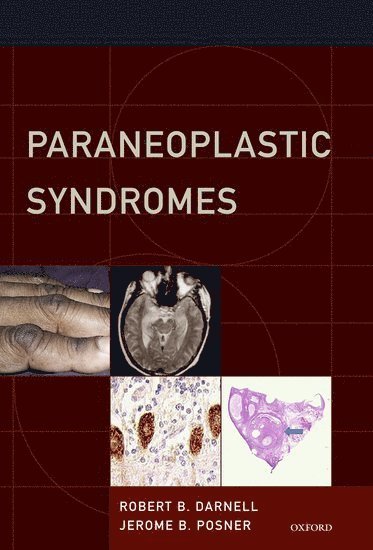
Paraneoplastic syndromes, defined in this book as "disorders caused by cancer, but not a direct result of cancer invasion of the affected organ or tissue", once believed to be rare and esoteric neurologic disorders have assumed increasing importance as an explanation of neurologic and other symptoms in patients suffered from occult or controllable cancers. This book attempts a comprehensive review of paraneoplastic syndromes from considering both clinical and pathophysiologic aspects. The book is divided into 4 sections: The first is an overview, classifying the disorders, describing a clinical approach to the diagnosis and treatment of paraneoplastic syndromes in general and identifying their pathogenesis. The second section discusses the clinical findings and treatment of individual paraneoplastic syndromes with chapters dedicated to each of the neurologic syndromes and a chapter discussing nonneurologic syndromes such as endocrine, cutaneous, and rheumatologic paraneoplastic disorders. The third section discusses autoantibodies that characterize individual paraneoplastic syndromes. The final section discusses the paraneoplastic syndromes associated with individual cancers.