Jessica Stites Mor - Böcker
Visar alla böcker från författaren Jessica Stites Mor. Handla med fri frakt och snabb leverans.
6 produkter
6 produkter
883 kr
Skickas inom 10-15 vardagar
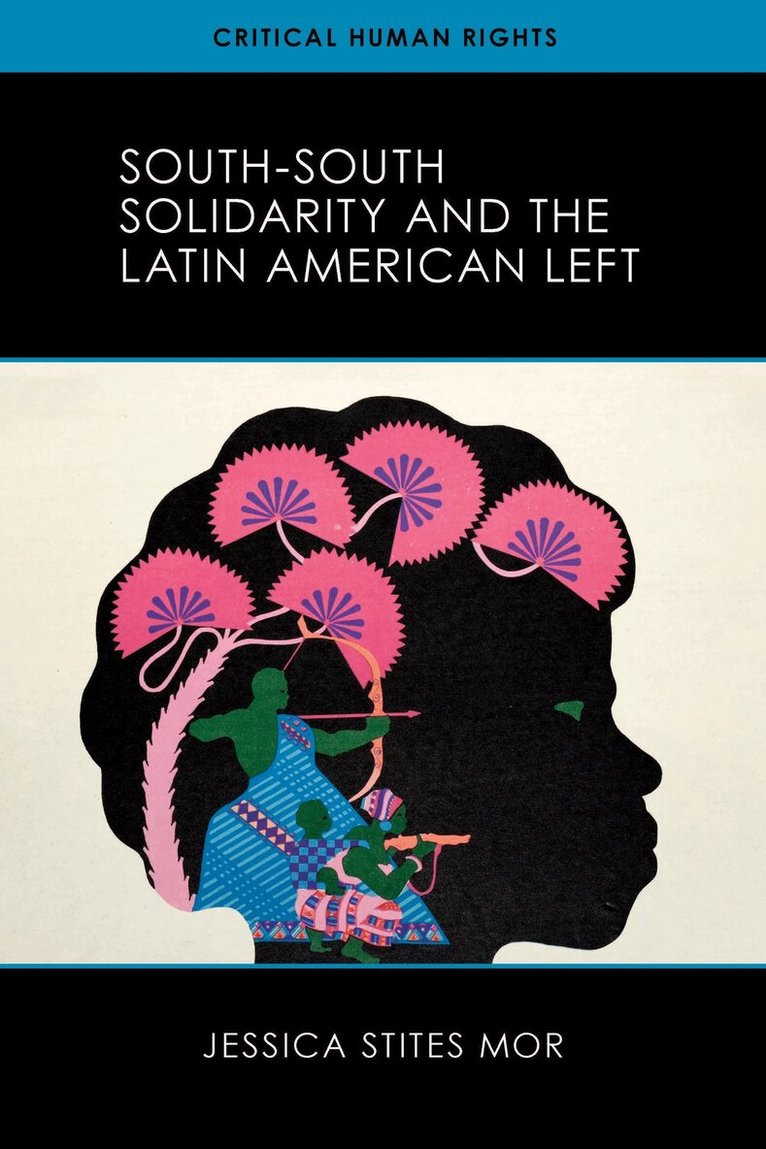
Transnational solidarity movements often play an important role in reshaping structures of global power. However, there remains a significant gap in the historical literature on collaboration between parties located in the Global South. Facing increasing repression, the Latin American left in the 1960s and 1970s found connection in transnational exchange, organizing with distant activists in Africa, the Middle East, and the Caribbean. By exploring the particularities of South-South solidarity, this volume begins new conversations about what makes these movements unique, how they shaped political identities, and their lasting influence.Jessica Stites Mor looks at four in-depth case studies: the use of legal reform to accomplish the goals of solidarity embedded in Mexico's revolutionary constitution, visual and print media circulated by Cuba and its influence on the agenda of the Afro-Asian block at the United Nations, organizing on behalf of Palestinian nationalism in reshaping Argentina's socialist left, and the role of Latin American Catholic activists in challenging the South African apartheid state. These examples serve as a much-needed road map to navigate our current political climate and show us how solidarity movements might approach future struggles.
322 kr
Skickas inom 10-15 vardagar
Transnational solidarity movements often play an important role in reshaping structures of global power. However, there remains a significant gap in the historical literature on collaboration between parties located in the Global South. Facing increasing repression, the Latin American left in the 1960s and 1970s found connection in transnational exchange, organizing with distant activists in Africa, the Middle East, and the Caribbean. By exploring the particularities of South-South solidarity, this volume begins new conversations about what makes these movements unique, how they shaped political identities, and their lasting influence. Jessica Stites Mor looks at four in-depth case studies: the use of legal reform to accomplish the goals of solidarity embedded in Mexico's revolutionary constitution, visual and print media circulated by Cuba and its influence on the agenda of the Afro-Asian block at the United Nations, organizing on behalf of Palestinian nationalism in reshaping Argentina's socialist left, and the role of Latin American Catholic activists in challenging the South African apartheid state. These examples serve as a much-needed road map to navigate our current political climate and show us how solidarity movements might approach future struggles.

718 kr
Skickas inom 7-10 vardagar
In May of 1976, documentary filmmaker and proclaimed socialist Raymundo Gleyzer mysteriously disappeared in Buenos Aires. Like many political activists, Gleyzer was the target of a brutalizing military junta that had recently assumed power. Amazingly, within a few decades, leftist filmmakers would be celebrated as intellectual vanguards in this same city.In Transition Cinema, Jessica Stites Mor documents the critical role filmmakers, the film industry, and state regulators played in ArgentinaÆs volatile transition to democracy. She shows how, during different regimes, the state moved to either inhibit or facilitate film production and its content, distribution, and exhibition. She also reveals the strategies the film industry employed to comply with, or circumvent these regulations. Stites Mor divides the transition period into three distinct generations, each defined by a major political event and the reactions to these events in film. The first generation began with the failed civil uprising in C\u00f3rdoba in 1969, and ended with the 1976 military takeover. During military rule, repressive censorship spurred underground exhibitions, and allied filmmakers with the Peronist left and radical activists. The second generation arose after the return of civilian rule in 1983. Buenos Aires became the center for state-level cultural programs that included filmmakers in debates over human rights and collective memory campaigns. In 1989, a third generation of filmmaking emerged, with new genres such as cine piquetero (picketer cinema) that portrayed a variety of social movements and brought them into the public eye. By the new millennium, Argentine filmmakers had gained the attention and financial support of international humanitarian and film industry organizations. In this captivating study, Stites Mor examines how populist movements, political actors, filmmakers, government, and industry institutions all became deeply enmeshed in the project of ArgentinaÆs transition cinema. She demonstrates how film emerged as the chronicler of political struggles in a dialogue with the past, present, and future, whose message transcended both cultural and national borders.
992 kr
Skickas inom 10-15 vardagar
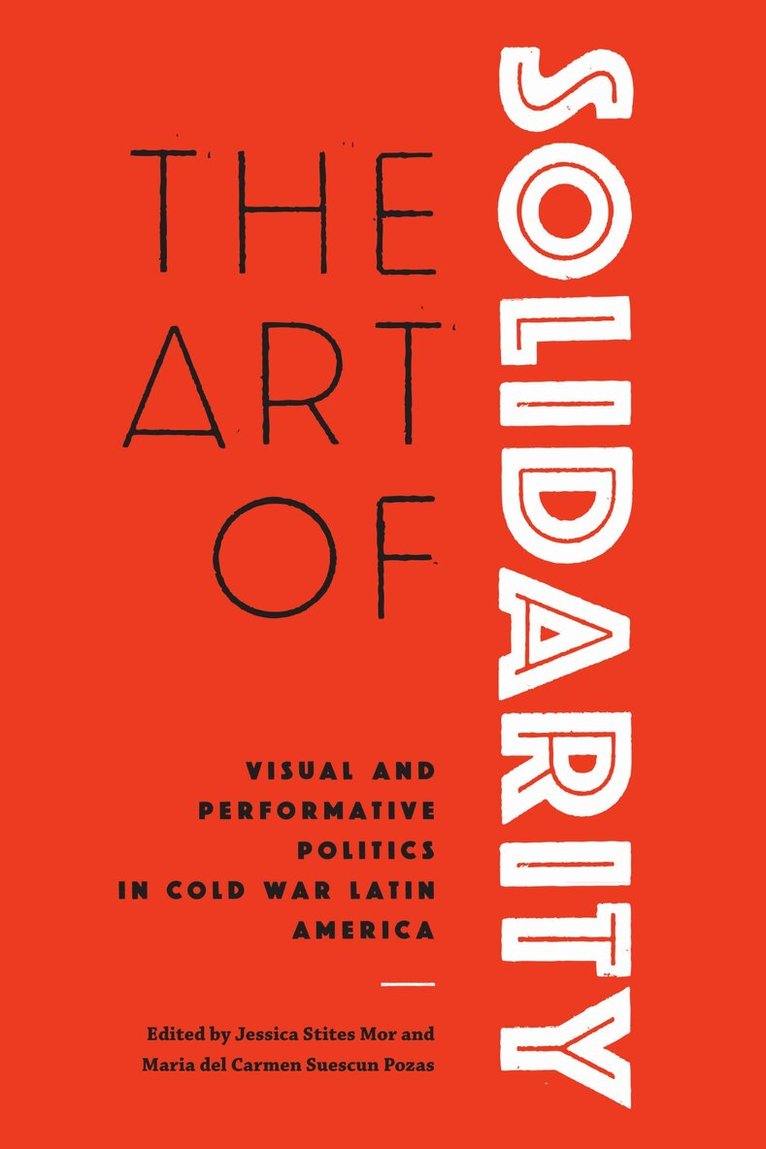
The Cold War claimed many lives and inflicted tremendous psychological pain throughout the Americas. The extreme polarization that resulted from pitting capitalism against communism held most of the creative and productive energy of the twentieth century captive. Many artists responded to Cold War struggles by engaging in activist art practice, using creative expression to mobilize social change. The Art of Solidarity examines how these creative practices in the arts and culture contributed to transnational solidarity campaigns that connected people across the Americas from the early twentieth century through the Cold War and its immediate aftermath.This collection of original essays is divided into four chronological sections: cultural and artistic production in the pre–Cold War era that set the stage for transnational solidarity organizing; early artistic responses to the rise of Cold War polarization and state repression; the centrality of cultural and artistic production in social movements of solidarity; and solidarity activism beyond movements. Essay topics range widely across regions and social groups, from the work of lesbian activists in Mexico City in the late 1970s and 1980s, to the exchanges and transmissions of folk-music practices from Cuba to the United States, to the uses of Chilean arpilleras to oppose and protest the military dictatorship. While previous studies have focused on politically engaged artists or examined how artist communities have created solidarity movements, this book is one of the first to merge both perspectives.
317 kr
Skickas inom 7-10 vardagar
The Cold War claimed many lives and inflicted tremendous psychological pain throughout the Americas. The extreme polarization that resulted from pitting capitalism against communism held most of the creative and productive energy of the twentieth century captive. Many artists responded to Cold War struggles by engaging in activist art practice, using creative expression to mobilize social change. The Art of Solidarity examines how these creative practices in the arts and culture contributed to transnational solidarity campaigns that connected people across the Americas from the early twentieth century through the Cold War and its immediate aftermath.This collection of original essays is divided into four chronological sections: cultural and artistic production in the pre–Cold War era that set the stage for transnational solidarity organizing; early artistic responses to the rise of Cold War polarization and state repression; the centrality of cultural and artistic production in social movements of solidarity; and solidarity activism beyond movements. Essay topics range widely across regions and social groups, from the work of lesbian activists in Mexico City in the late 1970s and 1980s, to the exchanges and transmissions of folk-music practices from Cuba to the United States, to the uses of Chilean arpilleras to oppose and protest the military dictatorship. While previous studies have focused on politically engaged artists or examined how artist communities have created solidarity movements, this book is one of the first to merge both perspectives.
520 kr
Kommande