Jia Gao – författare
2 366 kr
Skickas inom 10-15 vardagar
687 kr
Skickas inom 10-15 vardagar
631 kr
Skickas inom 10-15 vardagar
2 590 kr
Läs direkt efter köp
2 590 kr
Läs direkt efter köp
2 222 kr
Skickas inom 10-15 vardagar
730 kr
Läs direkt efter köp
Many researchers and China observers would agree that understanding how China pursues global communication is critical for assessing its growing soft power. While soft power as a concept has, in many ways, become almost inextricably linked with the PRC''s (People''s Republic of China) international diplomacy of the twenty-first century, the specific role of global media within soft power diplomacy and the corresponding influence of Western mediated public diplomacy within China is a lacuna that has remained largely unexplored. Moreover, the different Chinese and Western perspectives on the influence of global media and public diplomacy on Sino-Western relations, and the changing role of global media on this crucial aspect of international politics, have not yet been critically examined.
This volume presents a broad social science audience with recent innovative scholarship and research findings on global media and public diplomacy concerning Sino-Western relations. It focuses on the implicit nexus between global media and public diplomacy, and their actual utilisation in and impact on the shifting relationships between China and the West. Special attention is given to the changing nature of globalised media in both China and Western nations, and how globalised media is influencing, shaping and changing international politics. The contributions delve deeply into both theory and practice, and focus especially upon the analysis of several key aspects of the issue from both Chinese and Western perspectives.
This combination of approaches distinguishes the volume from most other published works on the topic, and greatly enriches our knowledge base in this important contemporary field.
730 kr
Läs direkt efter köp
Many researchers and China observers would agree that understanding how China pursues global communication is critical for assessing its growing soft power. While soft power as a concept has, in many ways, become almost inextricably linked with the PRC''s (People''s Republic of China) international diplomacy of the twenty-first century, the specific role of global media within soft power diplomacy and the corresponding influence of Western mediated public diplomacy within China is a lacuna that has remained largely unexplored. Moreover, the different Chinese and Western perspectives on the influence of global media and public diplomacy on Sino-Western relations, and the changing role of global media on this crucial aspect of international politics, have not yet been critically examined.
This volume presents a broad social science audience with recent innovative scholarship and research findings on global media and public diplomacy concerning Sino-Western relations. It focuses on the implicit nexus between global media and public diplomacy, and their actual utilisation in and impact on the shifting relationships between China and the West. Special attention is given to the changing nature of globalised media in both China and Western nations, and how globalised media is influencing, shaping and changing international politics. The contributions delve deeply into both theory and practice, and focus especially upon the analysis of several key aspects of the issue from both Chinese and Western perspectives.
This combination of approaches distinguishes the volume from most other published works on the topic, and greatly enriches our knowledge base in this important contemporary field.
795 kr
Läs direkt efter köp
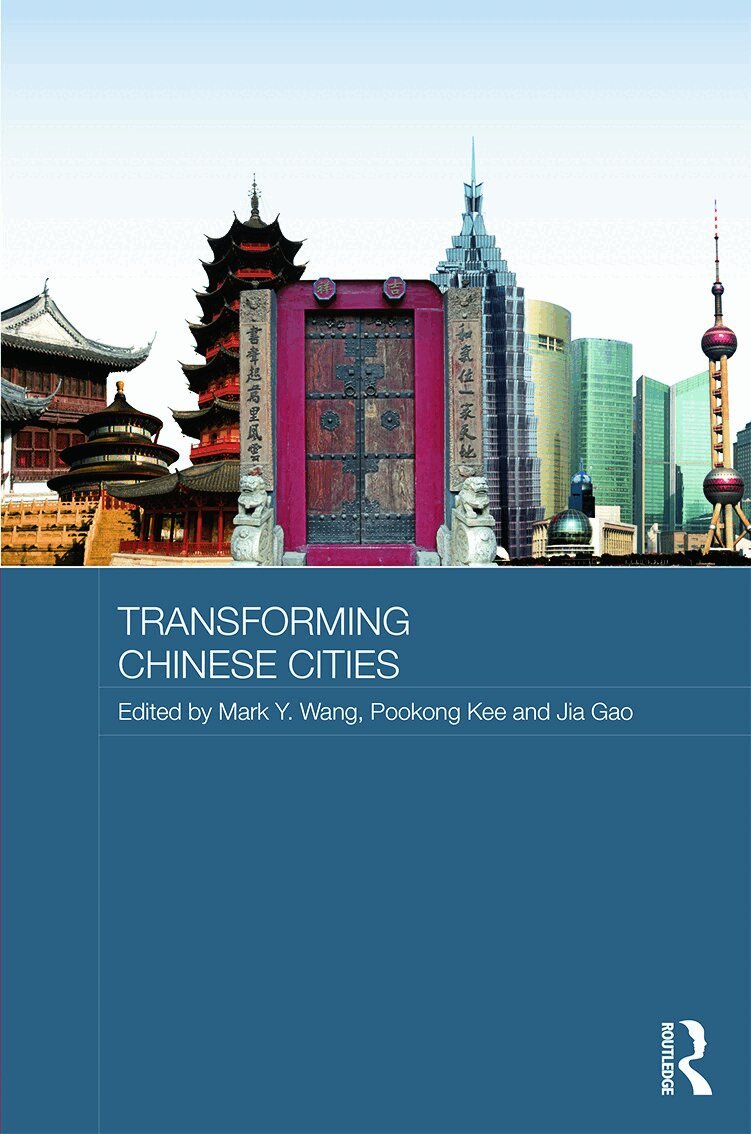
The urbanisation of China over the last three decades has been a hugely significant development, both for China’s reform process and for the world more generally. This book presents recent research findings on China’s continuing urban transformation. Subjects covered include the decline of the rural-urban divide, the spatial restructuring of Chinese urban centres and urban infrastructure, migrant workers, new housing and new communities, and "green" responses to urban environmental problems. The book is particularly valuable in that it includes much new work by scholars based inside China.
795 kr
Läs direkt efter köp
The urbanisation of China over the last three decades has been a hugely significant development, both for China’s reform process and for the world more generally. This book presents recent research findings on China’s continuing urban transformation. Subjects covered include the decline of the rural-urban divide, the spatial restructuring of Chinese urban centres and urban infrastructure, migrant workers, new housing and new communities, and "green" responses to urban environmental problems. The book is particularly valuable in that it includes much new work by scholars based inside China.
2 246 kr
Skickas inom 10-15 vardagar
1 504 kr
Läs direkt efter köp
1 763 kr
Skickas inom 5-8 vardagar
430 kr
Läs direkt efter köp
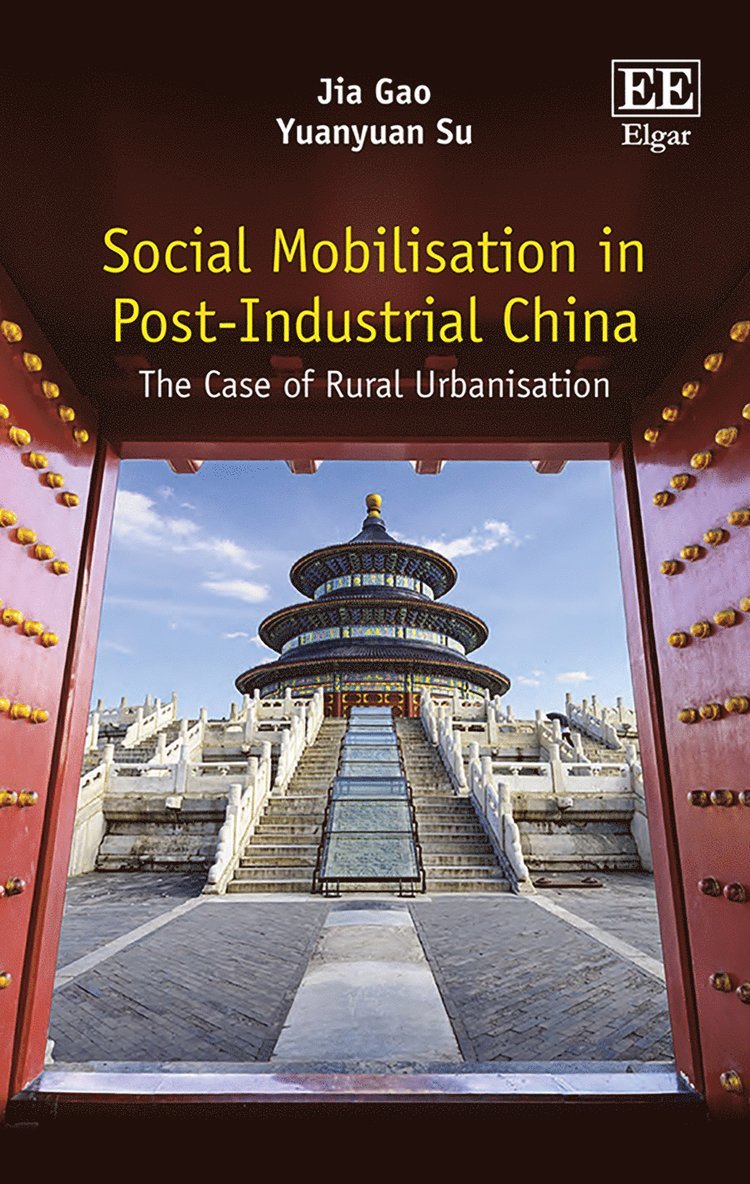
The first book on the topic written in English in recent decades, Social Mobilisation in Post-Industrial China provides readers with a thorough analysis covering all vertical administrative levels, as well as considering new participants. Bringing together interdisciplinary analyses of the current uses of social mobilisation in China, this book draws on empirically rich original research. It presents a clear picture of how boyi (''strategic game-playing'') is acted out at different levels of society and within different sectors, and the social dynamics at work.
This book is a unique resource, and will be invaluable for researchers and students of Asian and Chinese studies, Political Science, Public Policy and Management studies. Policy analysts, activists, strategists and educators will also find this book a useful tool for learning more about how social mobilisation mechanisms are utilised in China today.
1 284 kr
Skickas inom 5-8 vardagar
327 kr
Skickas
1 221 kr
Skickas inom 10-15 vardagar
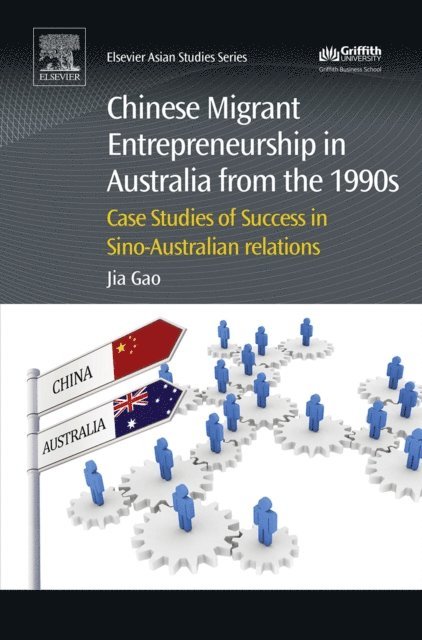
For more than two decades Australia has not only prospered without a recession but has achieved a higher growth rate than any Western country. This achievement has been credited to Australia's historic shift to Asia; the transformation of the relationship between these two countries is one of the most important changes in the Asia-Pacific region. However, the role of new Chinese migrants in transforming Sino-Australian relations through their entrepreneurial activities has not been deeply explored. Chinese Migrant Entrepreneurship in Australia from the 1990s adds new theoretical considerations and empirical evidence to a growing interest in entrepreneurship, and presents an account of a group of new Chinese migrant entrepreneurs who have succeeded in their business ventures significantly contributing to both Australia and China. The first chapter introduces the history between Australia and China, followed by chapters focusing on post-migration realities, economic opportunities, Chinese outbound tourism and the use of community media. The final chapter concludes with a summary.
Focuses on the people whose entrepreneurial activities have spread across industries and facilitated trade and cultural contacts Analyses the experiences of the new migrants from China Offers evidence that challenges outdated but still widely held assumptions about ethnic Chinese entrepreneurs Presents longitudinal research on the new Chinese migrant community in Australia since the late 1980's Demonstrates a dynamic process that challenges the overemphasis on the impact of globalisation on Chinese entrepreneurs1 286 kr
Skickas inom 10-15 vardagar
1 672 kr
Läs direkt efter köp
1 286 kr
Skickas inom 10-15 vardagar
459 kr
Tillfälligt slut
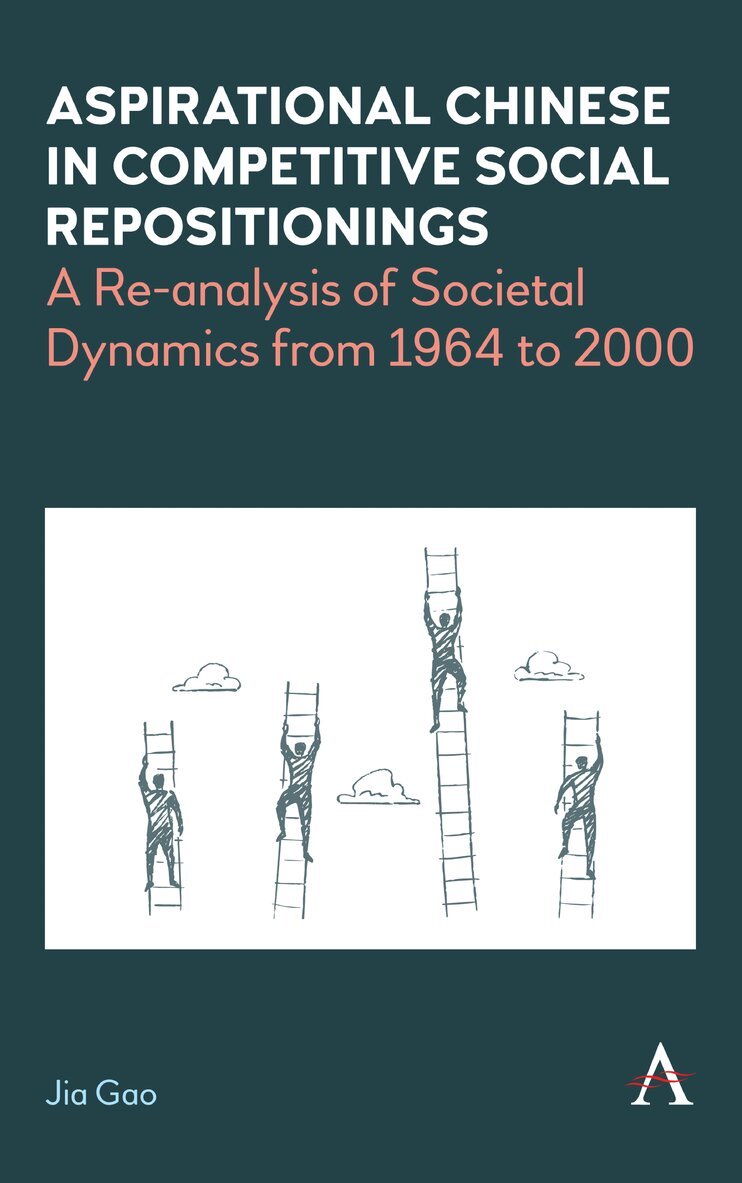
In the past four or so decades, a significant amount of research efforts has been made to examine the rapid and constant social changes in China. However, most of the literature has focused on either macro- or micro-level issues, and what has not been adequately analysed is how the majority of ordinary people has reacted to and influenced the changes. This inadequacy has affected our understanding of Chinese society, its dynamics and the changing trends. Drawing upon a new perspective of competitive social repositioning, and the evidence recorded in numerous recent publications and interview data, this book seeks to re-examine the ever-changing, but under-researched, societal dynamics driving social transformations in China from 1964, when the communist heir narrative was rebranded and utilised, to 2000, when Jiang Zemin formulated the Three-Represents theory to modify the ideological political thinking of China’s ruling elites. This analysis focuses on how a high proportion of aspirational citizens have kept repositioning themselves in China’s changing distributions of social resources and social structure, how their attitudes and behaviours have been shaped over time, what characteristics of their choices are at different stages, and how their preferences have resulted in the zig-zag patterns of China’s recent social change.
453 kr
Tillfälligt slut
In the past four or so decades, a significant amount of research efforts has been made to examine the rapid and constant social changes in China. However, most of the literature has focused on either macro- or micro-level issues, and what has not been adequately analysed is how the majority of ordinary people has reacted to and influenced the changes. This inadequacy has affected our understanding of Chinese society, its dynamics and the changing trends. Drawing upon a new perspective of competitive social repositioning, and the evidence recorded in numerous recent publications and interview data, this book seeks to re-examine the ever-changing, but under-researched, societal dynamics driving social transformations in China from 1964, when the communist heir narrative was rebranded and utilised, to 2000, when Jiang Zemin formulated the Three-Represents theory to modify the ideological political thinking of China’s ruling elites. This analysis focuses on how a high proportion of aspirational citizens have kept repositioning themselves in China’s changing distributions of social resources and social structure, how their attitudes and behaviours have been shaped over time, what characteristics of their choices are at different stages, and how their preferences have resulted in the zig-zag patterns of China’s recent social change.