Jiajun Xu - Böcker
Visar alla böcker från författaren Jiajun Xu. Handla med fri frakt och snabb leverans.
6 produkter
6 produkter
New Structural Financial Economics
A Framework for Rethinking the Role of Finance in Serving the Real Economy
Inbunden, Engelska, 2024
753 kr
Skickas inom 7-10 vardagar
This Element proposes an alternative framework for rethinking the role of finance in serving the real economy from the perspective of New Structural Financial Economics. It challenges the conventional wisdom that developing countries should take the financial structure of developed countries as the benchmark and financial structure does not matter in spurring long-run economic development. As a sub-discipline of New Structural Economics, New Structural Financial Economics has three tenets. First, examining the appropriate financial structure should take an economy's factor endowment structure as the starting point of analysis, which identifies its latent comparative advantage. Second, the appropriate financial structure is determined by the financing needs of the prevailing production structure. Third, a government should provide development financing to address market failures, and make tailored financial regulations in line with the characteristics of specific financial arrangements. This title is also available as Open Access on Cambridge Core.
New Structural Financial Economics
A Framework for Rethinking the Role of Finance in Serving the Real Economy
Häftad, Engelska, 2024
241 kr
Skickas inom 7-10 vardagar
This Element proposes an alternative framework for rethinking the role of finance in serving the real economy from the perspective of New Structural Financial Economics. It challenges the conventional wisdom that developing countries should take the financial structure of developed countries as the benchmark and financial structure does not matter in spurring long-run economic development. As a sub-discipline of New Structural Economics, New Structural Financial Economics has three tenets. First, examining the appropriate financial structure should take an economy's factor endowment structure as the starting point of analysis, which identifies its latent comparative advantage. Second, the appropriate financial structure is determined by the financing needs of the prevailing production structure. Third, a government should provide development financing to address market failures, and make tailored financial regulations in line with the characteristics of specific financial arrangements. This title is also available as Open Access on Cambridge Core.
1 943 kr
Skickas inom 10-15 vardagar
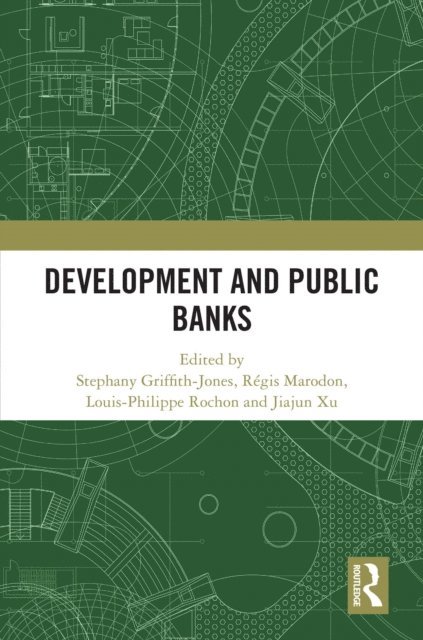
Development finance institutions (DFIs), also known as public development banks (PDBs) are public financial institutions initiated and steered by governments with explicit official missions to promote public policy objectives, and public development banks (PDBs) are the main category. DFIs are experiencing a renaissance worldwide, but there is limited academic research examining their roles, operations, and effectiveness.This book attempts to fill this gap by bringing together world-renowned scholars who discuss in detail the economics and the social consequences of both development banks and public banks. Combining together, the chapters in this volume discuss topics from sustainability, development impact of financial instruments, a new development financial architecture, and the interaction with existing international rules like the Basel Accord. This book will be of particular interest to students, scholars, and researchers of development finance, global governance, and international political economy.The chapters in this book were originally published in the Review of Political Economy.
594 kr
Skickas inom 10-15 vardagar
Development finance institutions (DFIs), also known as public development banks (PDBs) are public financial institutions initiated and steered by governments with explicit official missions to promote public policy objectives, and public development banks (PDBs) are the main category. DFIs are experiencing a renaissance worldwide, but there is limited academic research examining their roles, operations, and effectiveness.This book attempts to fill this gap by bringing together world-renowned scholars who discuss in detail the economics and the social consequences of both development banks and public banks. Combining together, the chapters in this volume discuss topics from sustainability, development impact of financial instruments, a new development financial architecture, and the interaction with existing international rules like the Basel Accord. This book will be of particular interest to students, scholars, and researchers of development finance, global governance, and international political economy.The chapters in this book were originally published in the Review of Political Economy.
Beyond US Hegemony in International Development
The Contest for Influence at the World Bank
Inbunden, Engelska, 2016
929 kr
Skickas inom 7-10 vardagar
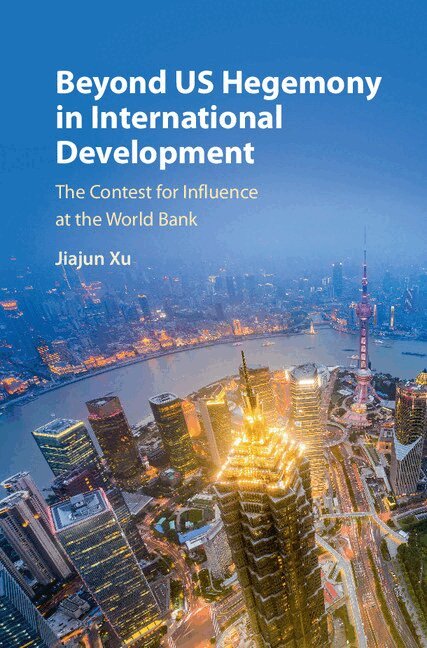
China's initiative to establish the Asian Infrastructure Investment Bank (AIIB), attracting membership from G7 countries against the vocal opposition of the United States, has been recognised as a significant moment in an ongoing hegemonic transition. This book examines how power transitions have played out in the World Bank over the last five decades, offering the first authentic account of the international diplomacy behind donor financing of the World Bank's International Development Association (IDA). Jiajun Xu decodes how the United States amplified its influence at the World Bank despite its flagging financial contributions to IDA. She further demonstrates that the widening influence-to-contribution disparity provoked other donors into taking 'exit/voice' measures, contesting the hegemon's legitimacy. A rising China initially decided to become an IDA donor, seeking influence from within. However, the entrenched hegemonic position of the United States in World Bank governance drove China to initiate the AIIB and New Development Bank, putting competitive pressures on the US-centred multilateral institutions to adapt.
Beyond US Hegemony in International Development
The Contest for Influence at the World Bank
Häftad, Engelska, 2019
441 kr
Skickas inom 7-10 vardagar
China's initiative to establish the Asian Infrastructure Investment Bank (AIIB), attracting membership from G7 countries against the vocal opposition of the United States, has been recognised as a significant moment in an ongoing hegemonic transition. This book examines how power transitions have played out in the World Bank over the last five decades, offering the first authentic account of the international diplomacy behind donor financing of the World Bank's International Development Association (IDA). Jiajun Xu decodes how the United States amplified its influence at the World Bank despite its flagging financial contributions to IDA. She further demonstrates that the widening influence-to-contribution disparity provoked other donors into taking 'exit/voice' measures, contesting the hegemon's legitimacy. A rising China initially decided to become an IDA donor, seeking influence from within. However, the entrenched hegemonic position of the United States in World Bank governance drove China to initiate the AIIB and New Development Bank, putting competitive pressures on the US-centred multilateral institutions to adapt.