Stephany Griffith-Jones – författare
538 kr
Läs direkt efter köp
519 kr
Läs direkt efter köp
1 192 kr
Läs direkt efter köp
1 150 kr
Läs direkt efter köp
1 348 kr
Skickas inom 3-6 vardagar
1 537 kr
Skickas inom 5-8 vardagar
1 660 kr
Skickas inom 5-8 vardagar
1 210 kr
Skickas inom 3-6 vardagar
1 119 kr
Skickas inom 10-15 vardagar
1 674 kr
Skickas inom 10-15 vardagar
1 119 kr
Skickas inom 10-15 vardagar
426 kr
Skickas inom 10-15 vardagar
2 248 kr
Skickas inom 10-15 vardagar
716 kr
Skickas inom 10-15 vardagar
1 515 kr
Läs direkt efter köp
727 kr
Läs direkt efter köp
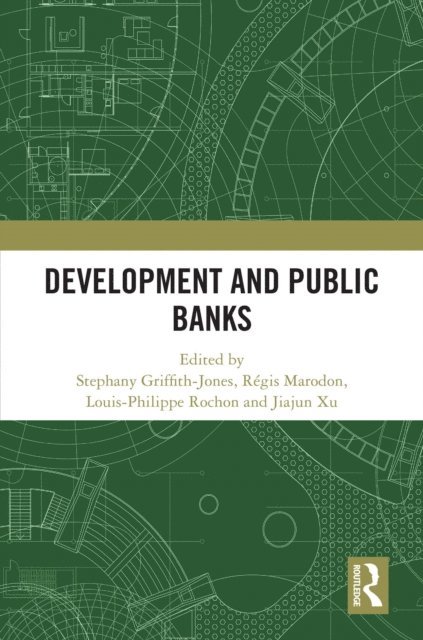
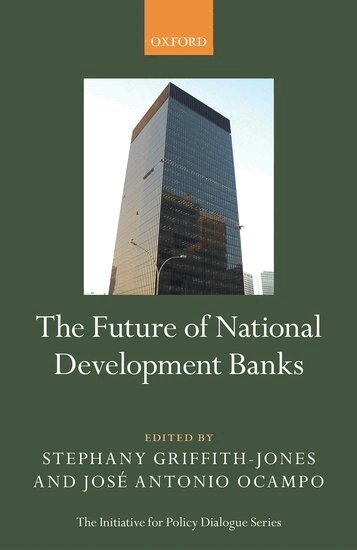
Development finance institutions (DFIs), also known as public development banks (PDBs) are public financial institutions initiated and steered by governments with explicit official missions to promote public policy objectives, and public development banks (PDBs) are the main category. DFIs are experiencing a renaissance worldwide, but there is limited academic research examining their roles, operations, and effectiveness.
This book attempts to fill this gap by bringing together world-renowned scholars who discuss in detail the economics and the social consequences of both development banks and public banks. Combining together, the chapters in this volume discuss topics from sustainability, development impact of financial instruments, a new development financial architecture, and the interaction with existing international rules like the Basel Accord. This book will be of particular interest to students, scholars, and researchers of development finance, global governance, and international political economy.
The chapters in this book were originally published in the Review of Political Economy.
727 kr
Läs direkt efter köp
Development finance institutions (DFIs), also known as public development banks (PDBs) are public financial institutions initiated and steered by governments with explicit official missions to promote public policy objectives, and public development banks (PDBs) are the main category. DFIs are experiencing a renaissance worldwide, but there is limited academic research examining their roles, operations, and effectiveness.
This book attempts to fill this gap by bringing together world-renowned scholars who discuss in detail the economics and the social consequences of both development banks and public banks. Combining together, the chapters in this volume discuss topics from sustainability, development impact of financial instruments, a new development financial architecture, and the interaction with existing international rules like the Basel Accord. This book will be of particular interest to students, scholars, and researchers of development finance, global governance, and international political economy.
The chapters in this book were originally published in the Review of Political Economy.
2 031 kr
Skickas inom 10-15 vardagar
614 kr
Skickas inom 10-15 vardagar
824 kr
Läs direkt efter köp
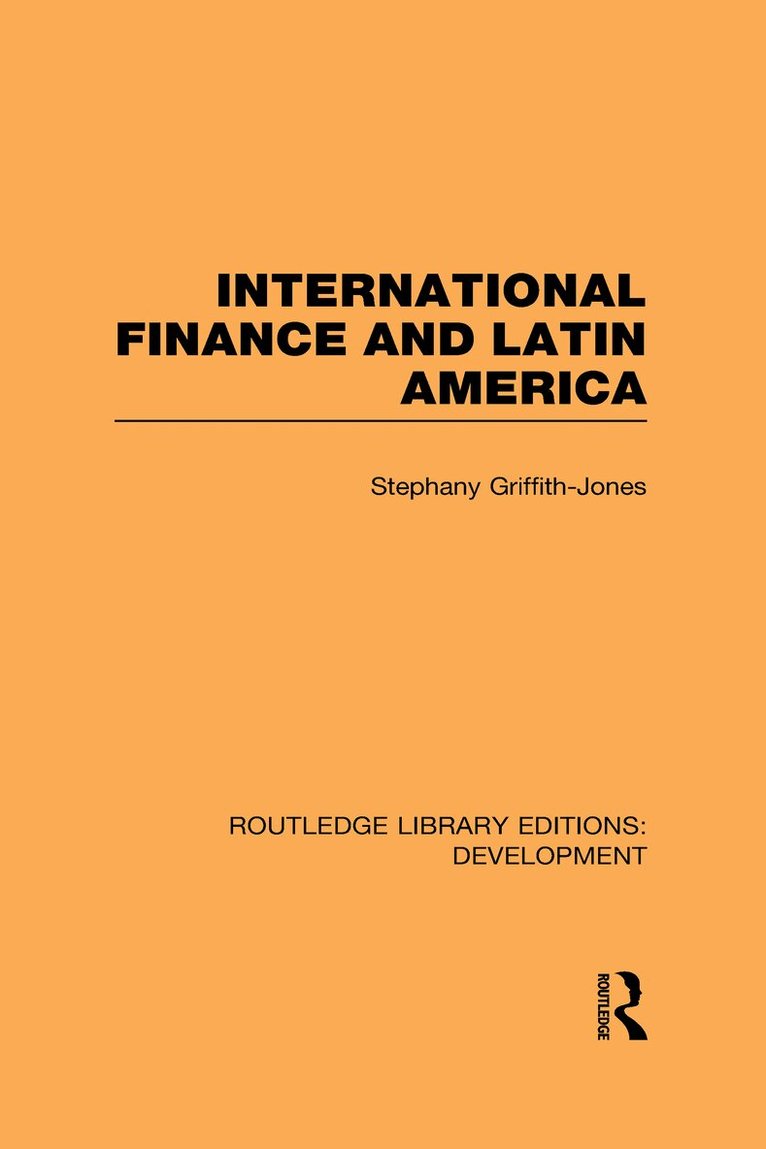
This reissue, initially published in 1984, examines the evolution of international financial flows to Latin America since 1945, along with their implications for National Development . The book describes how, in each of the first three decades since the war, a new agency emerged (foreign investors in the 1950s, official aid agencies in the 1960s and multinational banks in the 1970s) which was willing to play a dynamic role in generating new financial flows to the region. The lack of such an agent in the 1980s, combined with a reluctance on the part of former investors to maintain their level of assistance culminated in an economic debt crisis in Latin America which this work seeks to address, asking the crucial question: what measures should be taken – both nationally and internationally – to deal with this critical issue , in a way that will both encourage Latin American Development and avoid a major international financial crisis?
824 kr
Läs direkt efter köp
This reissue, initially published in 1984, examines the evolution of international financial flows to Latin America since 1945, along with their implications for National Development . The book describes how, in each of the first three decades since the war, a new agency emerged (foreign investors in the 1950s, official aid agencies in the 1960s and multinational banks in the 1970s) which was willing to play a dynamic role in generating new financial flows to the region. The lack of such an agent in the 1980s, combined with a reluctance on the part of former investors to maintain their level of assistance culminated in an economic debt crisis in Latin America which this work seeks to address, asking the crucial question: what measures should be taken – both nationally and internationally – to deal with this critical issue , in a way that will both encourage Latin American Development and avoid a major international financial crisis?
1 525 kr
Skickas inom 10-15 vardagar
502 kr
Läs direkt efter köp
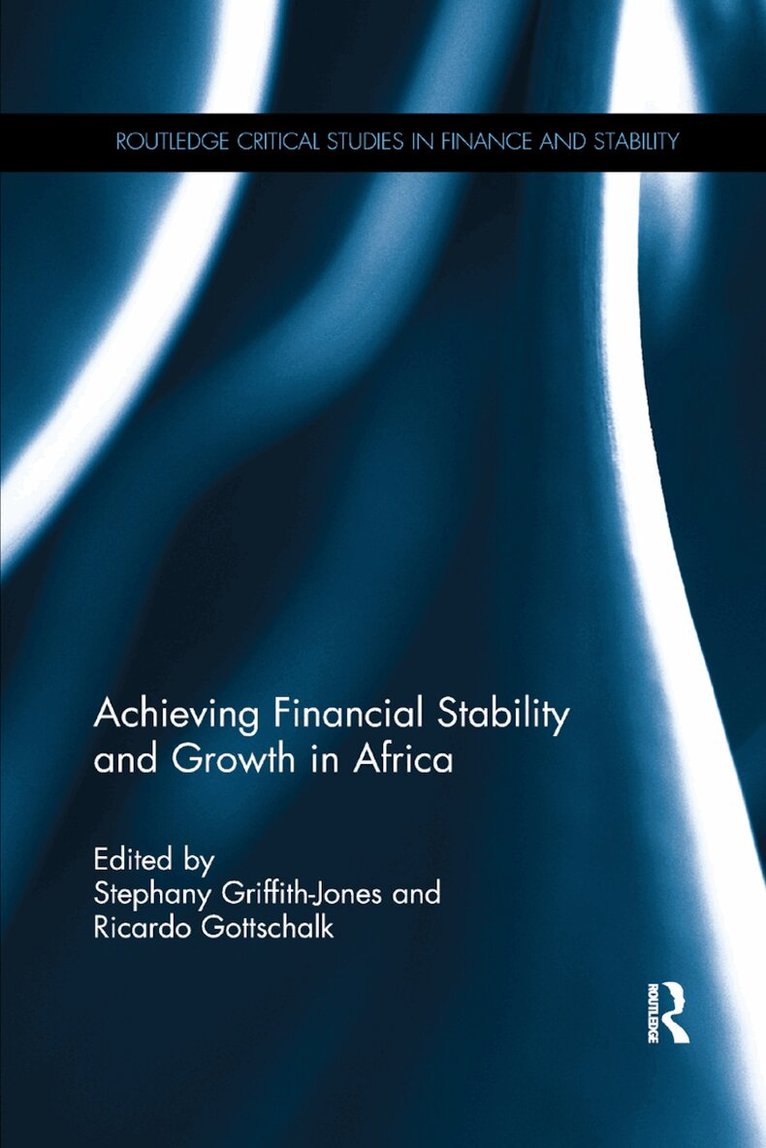
This book explores how the financial system should be regulated and structured to achieve the twin goals of inclusive growth and financial stability, with a focus on African low-income countries (LICs). The subject and content of this book is original in that it attempts to draw on the lessons and radical rethinking on the financial sector in developed and middle income countries, arising in the wake of the international financial crisis. It includes four in- depth country case studies, of Kenya, Ghana, Nigeria and Ethiopia, but also analyses the empirical evidence for Sub-Saharan Africa as a whole, evaluating the relevance (or not) of such major changes for the very different financial sectors and economies in low income countries.
Achieving Financial Stability and Growth in Africa has major academic and policy implications, especially for low income countries, but also more generally, on broader issues. These include the desirable size of the financial sector, as well as more specific issues, such as the high cost of borrowing of small and medium enterprises in LICs, and possible measures to reduce it. Highly topical subjects like the appropriate regulation of the financial sector and management of capital flows are discussed in depth. Though drawing on comprehensive reviews of the literature, this volume has the virtue of the large comparative academic and policy experience of researchers, as well as in-depth case studies, that take account of institutional and economic features of low- income countries.
Written by senior academics and policy-makers, this book is a must read for those researching or participating in the financial sectors of low-income countries, as well as in developed economies. It is also suitable for those who study political economy and public finance.
502 kr
Läs direkt efter köp
This book explores how the financial system should be regulated and structured to achieve the twin goals of inclusive growth and financial stability, with a focus on African low-income countries (LICs). The subject and content of this book is original in that it attempts to draw on the lessons and radical rethinking on the financial sector in developed and middle income countries, arising in the wake of the international financial crisis. It includes four in- depth country case studies, of Kenya, Ghana, Nigeria and Ethiopia, but also analyses the empirical evidence for Sub-Saharan Africa as a whole, evaluating the relevance (or not) of such major changes for the very different financial sectors and economies in low income countries.
Achieving Financial Stability and Growth in Africa has major academic and policy implications, especially for low income countries, but also more generally, on broader issues. These include the desirable size of the financial sector, as well as more specific issues, such as the high cost of borrowing of small and medium enterprises in LICs, and possible measures to reduce it. Highly topical subjects like the appropriate regulation of the financial sector and management of capital flows are discussed in depth. Though drawing on comprehensive reviews of the literature, this volume has the virtue of the large comparative academic and policy experience of researchers, as well as in-depth case studies, that take account of institutional and economic features of low- income countries.
Written by senior academics and policy-makers, this book is a must read for those researching or participating in the financial sectors of low-income countries, as well as in developed economies. It is also suitable for those who study political economy and public finance.
1 459 kr
Läs direkt efter köp
1 119 kr
Skickas inom 10-15 vardagar
2 036 kr
Läs direkt efter köp
1 459 kr
Läs direkt efter köp
1 119 kr
Skickas inom 10-15 vardagar
565 kr
Skickas inom 10-15 vardagar