1 208 kr
Läs direkt efter köp
1 208 kr
Läs direkt efter köp
1 208 kr
Läs direkt efter köp
1 869 kr
Skickas inom 5-8 vardagar
648 kr
Skickas inom 10-15 vardagar
2 354 kr
Skickas inom 10-15 vardagar
2 572 kr
Skickas inom 10-15 vardagar
757 kr
Skickas inom 10-15 vardagar
2 354 kr
Skickas inom 10-15 vardagar
689 kr
Skickas inom 10-15 vardagar
771 kr
Skickas inom 10-15 vardagar
815 kr
Läs direkt efter köp
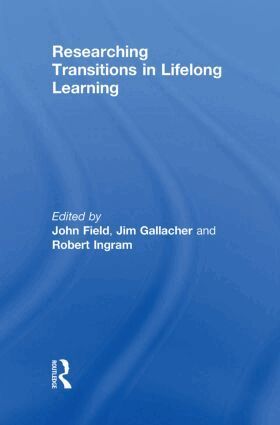
In today’s society, people and organisations increasingly undergo processes of transition. Experiences of change affect all areas of life: our jobs, relationships, status, communities, engagement in civil society, lifestyles, even understandings of our own identity. Each person must expect and make ready for transitions, engaging in learning as a fundamental strategy for handling change. This is where lifelong learning steps in. From career guidance to third age programmes, from ‘learning to learn’ in kindergarten to MBA, from Mozart for babies to gender re-assignment counselling, people face a crowded world of learning activities designed to help them through transitions.
Researching Transitions in Lifelong Learning presents new research from Britain, Australia and North America. The authors include leading scholars with established international reputations - such as Kathryn Ecclestone, Sue Webb, Gert Biesta, W. Norton Grubb, Nicky Solomon and David Boud - as well as emerging researchers with fresh and sometimes challenging perspectives. While emphasising the complexity and variety of people’s experiences of learning transitions, as well as acknowledging the ways in which they are embedded in the specific contexts of everyday life, the authors share a common interest in understanding the lived experiences of change from the learner’s perspective. This volume therefore provides an opportunity to take stock of recent research into transitions, seen in the context of lifelong learning, and outlines important messages for future policy and practice. It will also appeal to researchers worldwide in education and industrial sociology, as well as students on courses in post-compulsory education.
815 kr
Läs direkt efter köp
In today’s society, people and organisations increasingly undergo processes of transition. Experiences of change affect all areas of life: our jobs, relationships, status, communities, engagement in civil society, lifestyles, even understandings of our own identity. Each person must expect and make ready for transitions, engaging in learning as a fundamental strategy for handling change. This is where lifelong learning steps in. From career guidance to third age programmes, from ‘learning to learn’ in kindergarten to MBA, from Mozart for babies to gender re-assignment counselling, people face a crowded world of learning activities designed to help them through transitions.
Researching Transitions in Lifelong Learning presents new research from Britain, Australia and North America. The authors include leading scholars with established international reputations - such as Kathryn Ecclestone, Sue Webb, Gert Biesta, W. Norton Grubb, Nicky Solomon and David Boud - as well as emerging researchers with fresh and sometimes challenging perspectives. While emphasising the complexity and variety of people’s experiences of learning transitions, as well as acknowledging the ways in which they are embedded in the specific contexts of everyday life, the authors share a common interest in understanding the lived experiences of change from the learner’s perspective. This volume therefore provides an opportunity to take stock of recent research into transitions, seen in the context of lifelong learning, and outlines important messages for future policy and practice. It will also appeal to researchers worldwide in education and industrial sociology, as well as students on courses in post-compulsory education.
896 kr
Läs direkt efter köp
896 kr
Läs direkt efter köp
2 354 kr
Skickas inom 10-15 vardagar
768 kr
Läs direkt efter köp
The college sector is facing a growing number of new challenges caused by technological change, globalisation and the growth of mass higher education. New Frontiers for College Education considers the impact these changes have had and explores the developing role of college education in countries throughout the world. Whilst analysing the issues associated with providing high quality vocational education and training, the book also reflects on the role of colleges in widening access to both further and higher education.
Drawing together contributions from leading international academics, policymakers and practitioners, the book explores common themes across these diverse societies, as well as some of the key challenges experienced within individual countries. It considers the distinctive contributions that colleges can make in responding to these challenges through apprenticeships and other types of vocational education and training. Contributors discuss the growing emphasis on creating more integrated systems of tertiary education, recognising that colleges and universities are now expected to work more closely together and that these diverse demands can be difficult to reconcile.
Providing an authoritative and timely analysis of the changing role of colleges in contemporary society, this book will be of great interest to academics, researchers and postgraduate students in the areas of further and higher education, vocational education and training, lifelong learning, and skills development. It should also be essential reading for policymakers, as well as practitioners working in colleges and other institutions of higher and further education.
766 kr
Läs direkt efter köp
The college sector is facing a growing number of new challenges caused by technological change, globalisation and the growth of mass higher education. New Frontiers for College Education considers the impact these changes have had and explores the developing role of college education in countries throughout the world. Whilst analysing the issues associated with providing high quality vocational education and training, the book also reflects on the role of colleges in widening access to both further and higher education.
Drawing together contributions from leading international academics, policymakers and practitioners, the book explores common themes across these diverse societies, as well as some of the key challenges experienced within individual countries. It considers the distinctive contributions that colleges can make in responding to these challenges through apprenticeships and other types of vocational education and training. Contributors discuss the growing emphasis on creating more integrated systems of tertiary education, recognising that colleges and universities are now expected to work more closely together and that these diverse demands can be difficult to reconcile.
Providing an authoritative and timely analysis of the changing role of colleges in contemporary society, this book will be of great interest to academics, researchers and postgraduate students in the areas of further and higher education, vocational education and training, lifelong learning, and skills development. It should also be essential reading for policymakers, as well as practitioners working in colleges and other institutions of higher and further education.