Jim Highsmith – författare
138 kr
Skickas
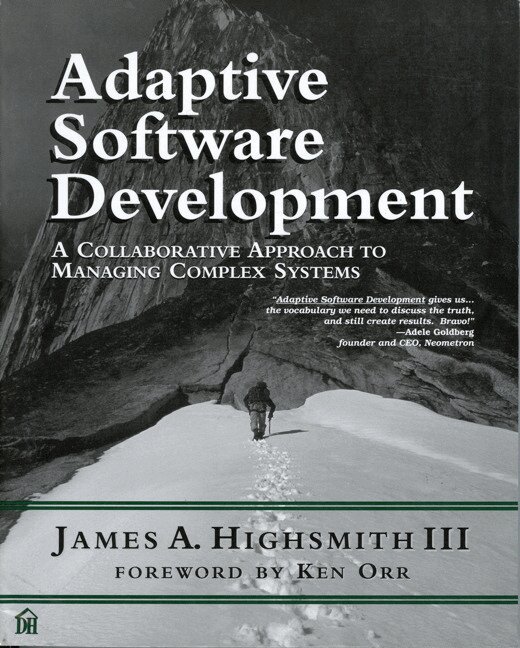
This is the digital version of the printed book (Copyright © 2000).
Winner of the 2001 Software Development Jolt Product Excellence Award
This innovative text offers a practical, realistic approach to managing high-speed, high-change software development projects. Consultant James A. Highsmith shows readers how to increase collaboration and adapt to uncertainty.
Many organizations start high-speed, high-change projects without knowing how to do them–and even worse, without knowing they don’t know. Successful completion of these projects is often at the expense of the project team.
Adaptive Software Development emphasizes an adaptive, collaborative approach to software development. The concepts allow developers to “scale-up” rapid application development and extreme programming approaches for use on larger, more complex projects.
The four goals of the book are to
support an adaptive culture or mindset, in which change and uncertainty are assumed to be the natural state–not a false expectation of order introduce frameworks to guide the iterative process of managing change institute collaboration, the interaction of people on three levels: interpersonal, cultural, and structural add rigor and discipline to the RAD approach, making it scalable to the uncertainty and complexity of real-life undertakings
271 kr
Läs direkt efter köp
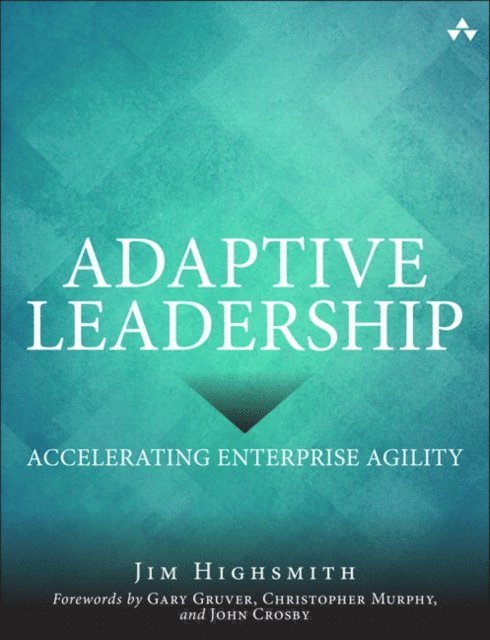
The agile software movement has now been around for a full decade. As coauthor of the original Agile Manifesto, Jim Highsmith has been at its heart since the beginning. He’s spent the past decade helping hundreds of organizations transition to agile/lean. When it comes to agile, he’s seen it all–in a variety of industries, worldwide.
Now, in Adaptive Leadership, he has compiled, updated, and extended his best writings about agile and lean methods for a management audience. Highsmith doesn’t just reveal what’s working and what isn’t; he offers a powerful new vision for extending agility across the enterprise.
Drawing on what’s been learned in application development, this guide shows how to use adaptive leadership techniques to transform the way you deliver complete solutions, whatever form they take. You’ll learn how enterprise agility can enable the ambitious organizational missions that matter most; how leaders can deliver a continuous stream of value; how to think disruptively about opportunities, and how to respond quickly by creating more adaptive, innovative organizations.
Coverage includes
Discovering and executing new business opportunities far more quickly Delivering complete business solutions earlier, and iterating them more often Organizing for innovation, and systematically managing opportunity flow Clarifying the degree of strategic, portfolio, and operational agility you need, and focusing on your highest-value transformations Creating cultures that actually can adapt and learn Reinvigorating the roots of agile value and values Understanding IT’s changing value proposition, and retraining your people accordingly Integrating economics, products, and social responsibility Choosing metrics that guide agility, not counterproductive traditional metrics Understanding the financial implications of technical debt Optimizing business value by doing less–and guiding the process with ”NOT to do“ lists Speculating intelligently when you can’t plan away uncertainty Customizing management to each project’s needs (because not all projects should be equally agile)
160 kr
Läs direkt efter köp
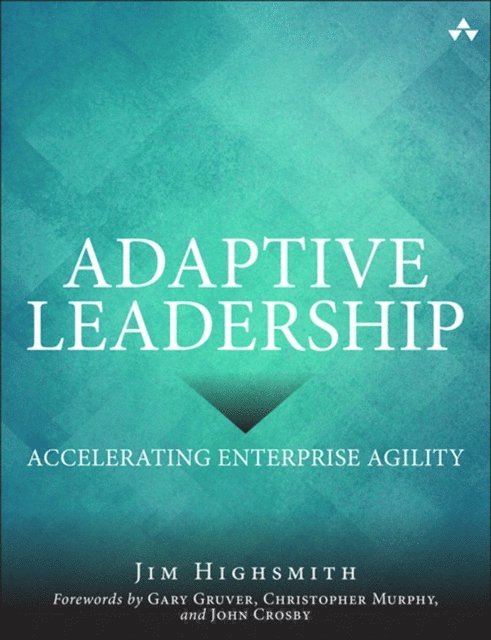
The agile software movement has now been around for a full decade. As coauthor of the original Agile Manifesto, Jim Highsmith has been at its heart since the beginning. He’s spent the past decade helping hundreds of organizations transition to agile/lean. When it comes to agile, he’s seen it all–in a variety of industries, worldwide.
Now, in Adaptive Leadership, he has compiled, updated, and extended his best writings about agile and lean methods for a management audience. Highsmith doesn’t just reveal what’s working and what isn’t; he offers a powerful new vision for extending agility across the enterprise.
Drawing on what’s been learned in application development, this guide shows how to use adaptive leadership techniques to transform the way you deliver complete solutions, whatever form they take. You’ll learn how enterprise agility can enable the ambitious organizational missions that matter most; how leaders can deliver a continuous stream of value; how to think disruptively about opportunities, and how to respond quickly by creating more adaptive, innovative organizations.
Coverage includes
Discovering and executing new business opportunities far more quickly Delivering complete business solutions earlier, and iterating them more often Organizing for innovation, and systematically managing opportunity flow Clarifying the degree of strategic, portfolio, and operational agility you need, and focusing on your highest-value transformations Creating cultures that actually can adapt and learn Reinvigorating the roots of agile value and values Understanding IT’s changing value proposition, and retraining your people accordingly Integrating economics, products, and social responsibility Choosing metrics that guide agility, not counterproductive traditional metrics Understanding the financial implications of technical debt Optimizing business value by doing less–and guiding the process with ”NOT to do“ lists Speculating intelligently when you can’t plan away uncertainty Customizing management to each project’s needs (because not all projects should be equally agile)
237 kr
Skickas inom 7-10 vardagar
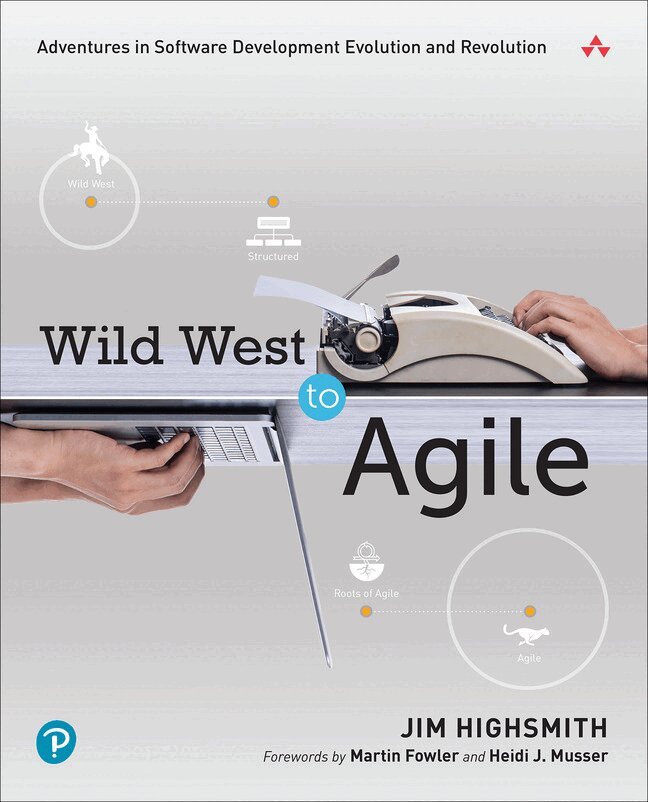
Wild West to Agile: The evolution and revolution of software development, drawn from personal experience, from the Apollo moon mission to digital transformations.
In 2023, "technology is your business--no matter what your business." But how did we get here and how could a historical perspective prepare us for the future?
Jim Highsmith tackles the evolution and revolution of software development, embellishes them with personal experiences, from the Apollo moon mission to modern digital transformations, and introduces the adventurous pioneers--from structured era developer Ken Orr to Agile methodologist Kent Beck--who strived to make the world a better place, by building better software.
Jim's six-decade career has encompassed the Wild West (1966-1979), to Structured Methods and Monumental Methodologies (1980s), to the Roots of Agile (1990s), to the present Agile Era (2001-present). In each era, he explores the evolution of software development methods, methodologies, and mindsets.
Whether you are from the 1970-1980's generation looking for an "I was there too" moment, a newer generation interested in the evolution of software development, the Agile generation interested in how Agile methodologies were born and evolved, or have a general interest in information technology, Wild West to Agile has something for you.
"Jim Highsmith is the Forrest Gump of software development. What made the 1994 movie so entertaining was how frequently Forrest found himself in the right spot as history was being made. Unlike Forrest, though, Jim's actions influenced that history." --Mike Cohn, cofounder of the Agile Alliance, and the Scrum Alliance; author of Succeeding with Agile
"If you want to understand the shape of software development today, this is the book for you. If you want to understand how to navigate a turbulent career with grace & style, this is also the book for you. If you enjoy memoirs, ditto. Enjoy his story." --Kent Beck, Chief Scientist, Mechanical Orchard; author, Extreme Programming Explained
"This entire journey--beginning with the Wild West era of software development through the Agile Era to today's Digital Transformation era--is entirely empowered by people. Thank you, Jim, for sharing these beautiful stories and honoring the people that were a part of this amazing journey."--Heidi J. Musser, Vice President and CIO, USAA, retired
"I've always felt that understanding history is important, because it's hard to understand where we are unless you understand the path that we took to get here. Jim's memoir is an entertaining and astute odyssey through this history."--Martin Fowler, Chief Scientist, Thoughtworks
727 kr
Skickas inom 3-6 vardagar
Best practices for managing projects in agile environments—now updated with new techniques for larger projects
Today, the pace of project management moves faster. Project management needs to become more flexible and far more responsive to customers. Using Agile Project Management (APM), project managers can achieve all these goals without compromising value, quality, or business discipline. In Agile Project Management, Second Edition, renowned agile pioneer Jim Highsmith thoroughly updates his classic guide to APM, extending and refining it to support even the largest projects and organizations.
Writing for project leaders, managers, and executives at all levels, Highsmith integrates the best project management, product management, and software development practices into an overall framework designed to support unprecedented speed and mobility. The many topics added in this new edition include incorporating agile values, scaling agile projects, release planning, portfolio governance, and enhancing organizational agility. Project and business leaders will especially appreciate Highsmith’s new coverage of promoting agility through performance measurements based on value, quality, and constraints.
This edition’s coverage includes:
Understanding the agile revolution’s impact on product development Recognizing when agile methods will work in project management, and when they won’t Setting realistic business objectives for Agile Project Management Promoting agile values and principles across the organization Utilizing a proven Agile Enterprise Framework that encompasses governance, project and iteration management, and technical practices Optimizing all five stages of the agile project: Envision, Speculate, Explore, Adapt, and Close Organizational and product-related processes for scaling agile to the largest projects and teams Agile project governance solutions for executives and management The “Agile Triangle”: measuring performance in ways that encourage agility instead of discouraging it The changing role of the agile project leader