Jing Hao - Böcker
Visar alla böcker från författaren Jing Hao. Handla med fri frakt och snabb leverans.
7 produkter
7 produkter
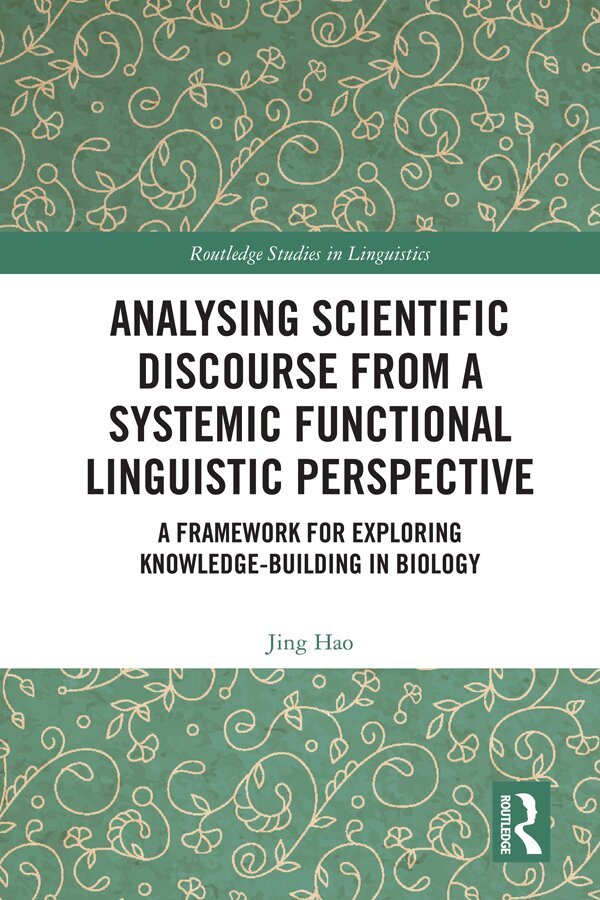
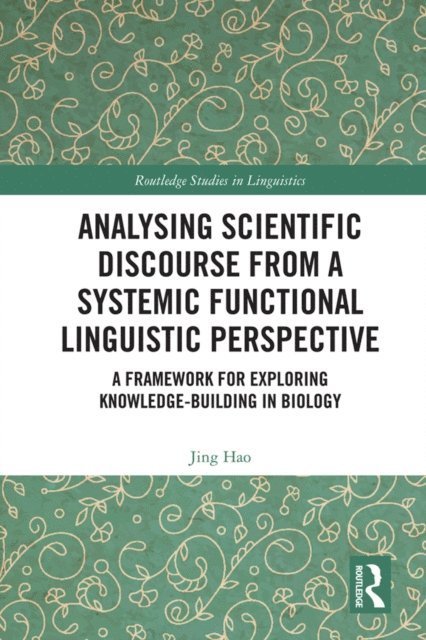
Analysing Scientific Discourse from A Systemic Functional Linguistic Perspective
A Framework for Exploring Knowledge Building in Biology
Inbunden, Engelska, 2020
2 151 kr
Skickas inom 10-15 vardagar
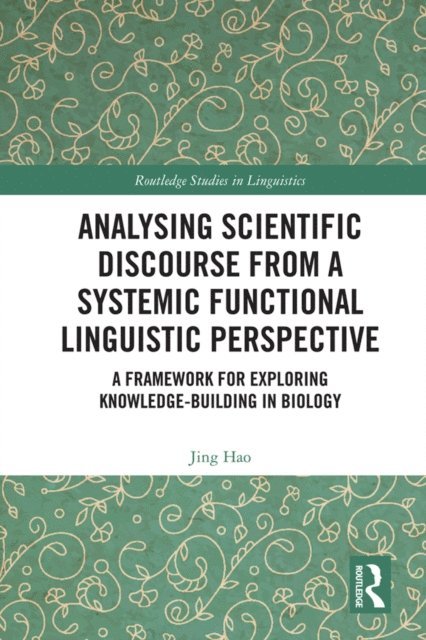
This book describes the discourse of biology from a systemic functional linguistic perspective. It offers a detailed description of resources based on text analysis. The description reveals co-textual patterns of language features, their expressions through grammatical resources, as well as their functions in the disciplinary context. The book also applies the description to analyse student texts in undergraduate biology, revealing characteristics of language and knowledge development. Although the discussion in this book focuses on the discourse of biology, both the language description and the descriptive principle can be used to inform the examination of knowledge in academic discourse in general, making this key reading for students and researchers in systemic functional linguistics, discourse analysis, English for academic purposes, applied linguistics, and science education.
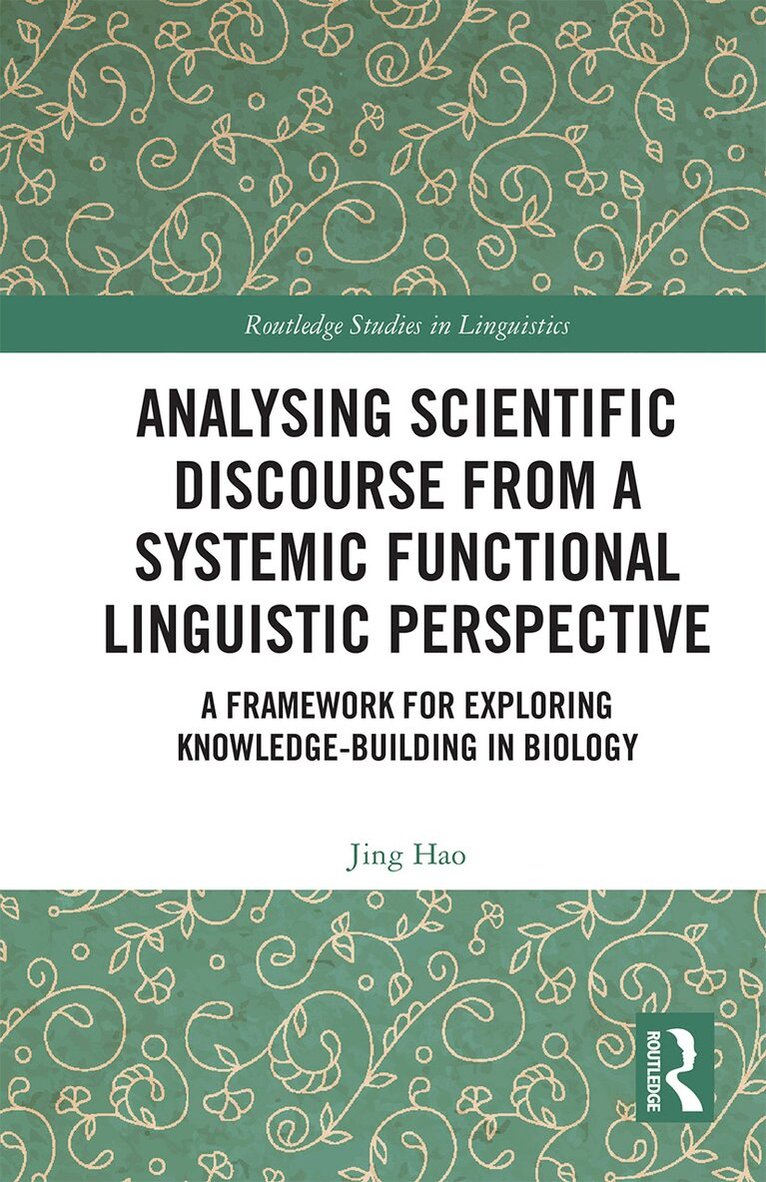
Analysing Scientific Discourse from A Systemic Functional Linguistic Perspective
A Framework for Exploring Knowledge Building in Biology
Häftad, Engelska, 2021
649 kr
Skickas inom 10-15 vardagar
This book describes the discourse of biology from a systemic functional linguistic perspective. It offers a detailed description of resources based on text analysis. The description reveals co-textual patterns of language features, their expressions through grammatical resources, as well as their functions in the disciplinary context. The book also applies the description to analyse student texts in undergraduate biology, revealing characteristics of language and knowledge development. Although the discussion in this book focuses on the discourse of biology, both the language description and the descriptive principle can be used to inform the examination of knowledge in academic discourse in general, making this key reading for students and researchers in systemic functional linguistics, discourse analysis, English for academic purposes, applied linguistics, and science education.
1 431 kr
Skickas inom 7-10 vardagar
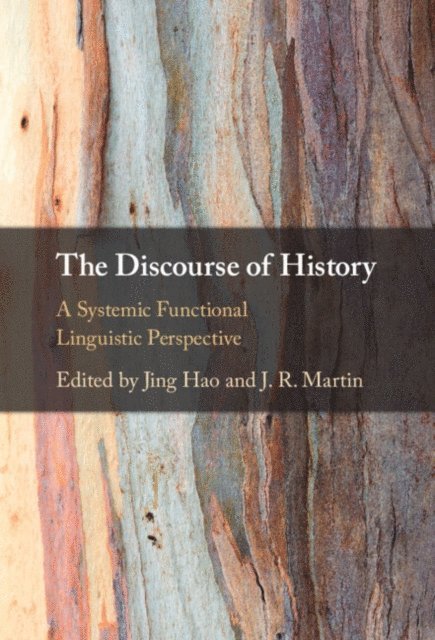
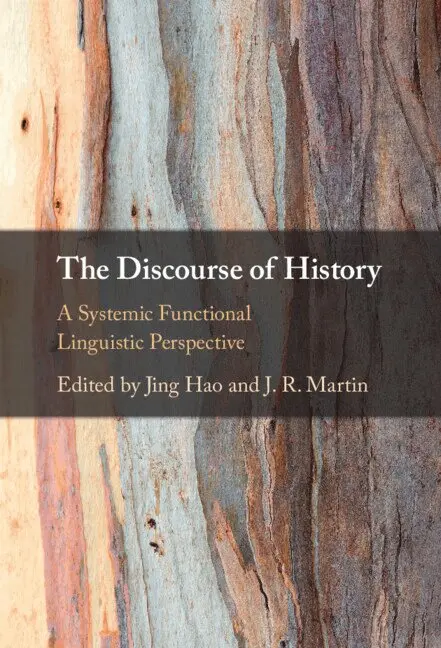
Taking a Systemic Functional Linguistic perspective, this book explores how language builds our knowledge about the past and gives value to historical events, thereby shaping contemporary culture. It brings together cutting-edge research from an international team of scholars to provide a detailed study of texts from three different world languages (English, Spanish, and Mandarin Chinese) - revealing how the discourse of history is constructed in these languages. Each chapter provides examples and step-by-step analyses of how knowledge and value are constructed in history texts, drawing on Systemic Functional Linguistics to develop theory and description in relation to text analysis. It also makes connections with disciplinary literacy and history education, showing how linguistic findings can benefit the teaching and learning of historical literacy. Providing theoretical and analytical foundations for studies of the discourse of history, it is essential reading for anyone interested in literacy, discourse analysis, and language description.
455 kr
Kommande
This book offers a deep dive into sex education pedagogy in the Australian context, taking a close look at the language used to teach the key topics of consent and respect. It examines questions students ask, how teachers accommodate different beliefs in their classrooms, and how students learn about more values-based topics including consent, respectful relationships, and gender and sexuality diversity. It also considers what teaching and assessment looks like over the course of a school term and what makes a ‘successful’ student. In short it answers the question – how is sex education actually taught?The Language of Sex Education provides the first book-length treatment of the language of sex education, offering a detailed account of pedagogy from the perspective of Systemic Functional Linguistics. The study is situated in the Australian context, though has broader relevance to places such as New Zealand, North America, and the United Kingdom whose sex education is historically and culturally comparable to that of Australia.The book provides descriptions of the key topics of consent and respect, illustrating how teachers impart technical knowledge and how they support students to adopt and challenge the nuanced values needed when engaging with sex education. It does this through new descriptions of key linguistic resources of technicality and iconization that synthesize the central knowledge and values of the field. Through these descriptions and analyses, this book not only provides a detailed account of sex education pedagogy, but also offers new insights into the role of language in building fields and building communities.
1 571 kr
Kommande
This book examines strategic language use in professional engineering written reports, illustrating how writers create a persuasive stance within an objective style. It describes engineering writing through a close analysis of interpersonal language, using Systemic Functional Linguistics (SFL), complemented with quantitative corpus linguistics methods and interpreted through concepts drawn from Legitimation Code Theory (LCT). This description demonstrates how engineering writers have a strong preference for a certain type of evaluative language, with a dominant stance focused on the worthiness of things and processes. It is also demonstrates that engineering writers make strategic choices in their use of interpersonal language towards a certain aim, particularly in documents written to gain approval of a project by a regulatory body. This research is focused on engineering writing in the Australian context, but given the globalised nature of the engineering profession, also has relevance internationally. The creation of an objective stance in writing is also relevant to other disciplines.
Practical Guide to System Networks
Modelling Paradigmatic Relations for Language Description in Systemic Functional Linguistics
Häftad, Engelska, 2026
370 kr
Skickas
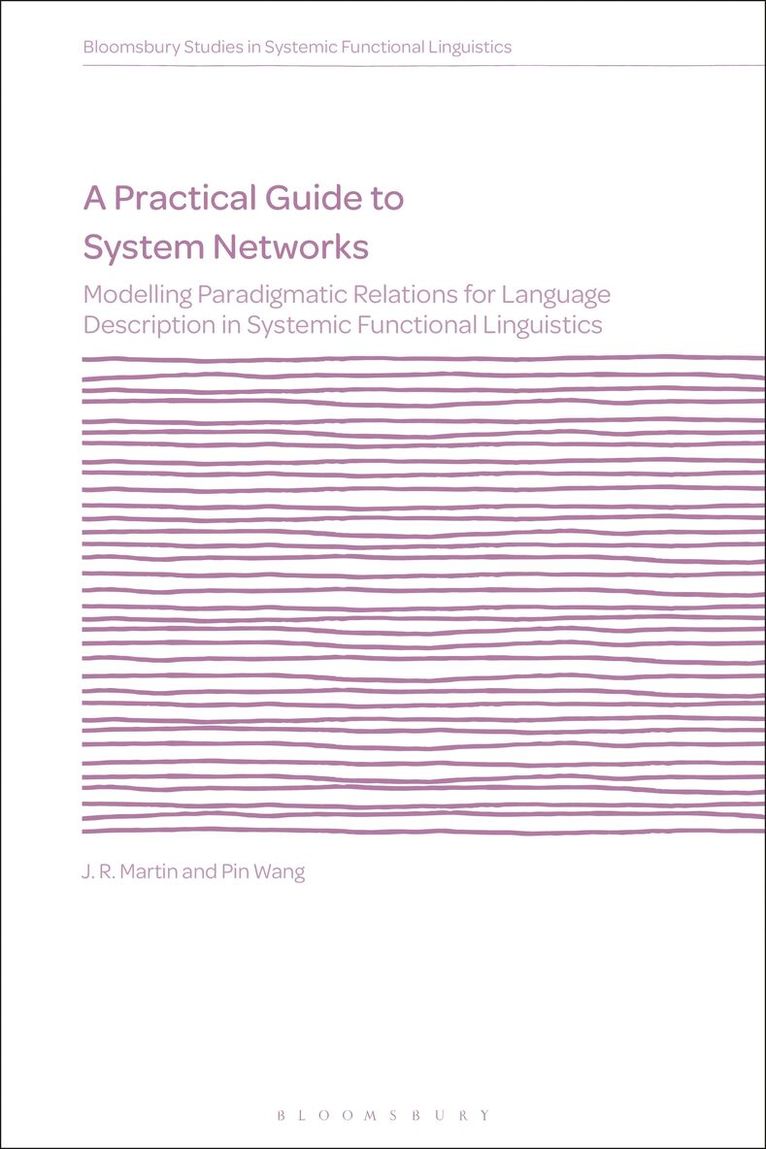
In Systemic Functional Linguistics (SFL), paradigmatic relations are formalised in system networks. This book provides a practical, step-by-step guide to designing system networks for language description, one of the key aspects of SFL theory and analysis. Including examples from English, Chinese, Korean and Spanish, and exercises with answer keys for each of the main chapters, this book offers a broad coverage and guides learners through the process of designing system networks for the purpose of grammatical description in an accessible way.Beginning with simple systems, the authors show how grammars involve a complex of relations, with some systems dependent on others and some working in parallel with simultaneous options. They introduce the reasoning involved in designing system networks, explaining how choices in grammatical systems are motivated in terms of their realisation in structure and how this relationship between the paradigmatic axis and the syntagmatic axis is formalised in SFL descriptions. In addition, the book helps readers to understand the theoretical architecture of SFL – including the dimensions of rank, metafunction and stratification.With an introduction by Michael Alexander Kirkwood (M. A. K.) Halliday, who reviews the history of the development of his approach to system and structure and the use of system networks to formalise paradigmatic relations, this book is essential reading for all scholars of functional grammar and SFL. It will also appeal to researchers interested in theoretical linguistics from the perspective of the history of linguistics and different schools of linguistics.
Practical Guide to System Networks
Modelling Paradigmatic Relations for Language Description in Systemic Functional Linguistics
Inbunden, Engelska, 2026
1 159 kr
Skickas inom 7-10 vardagar
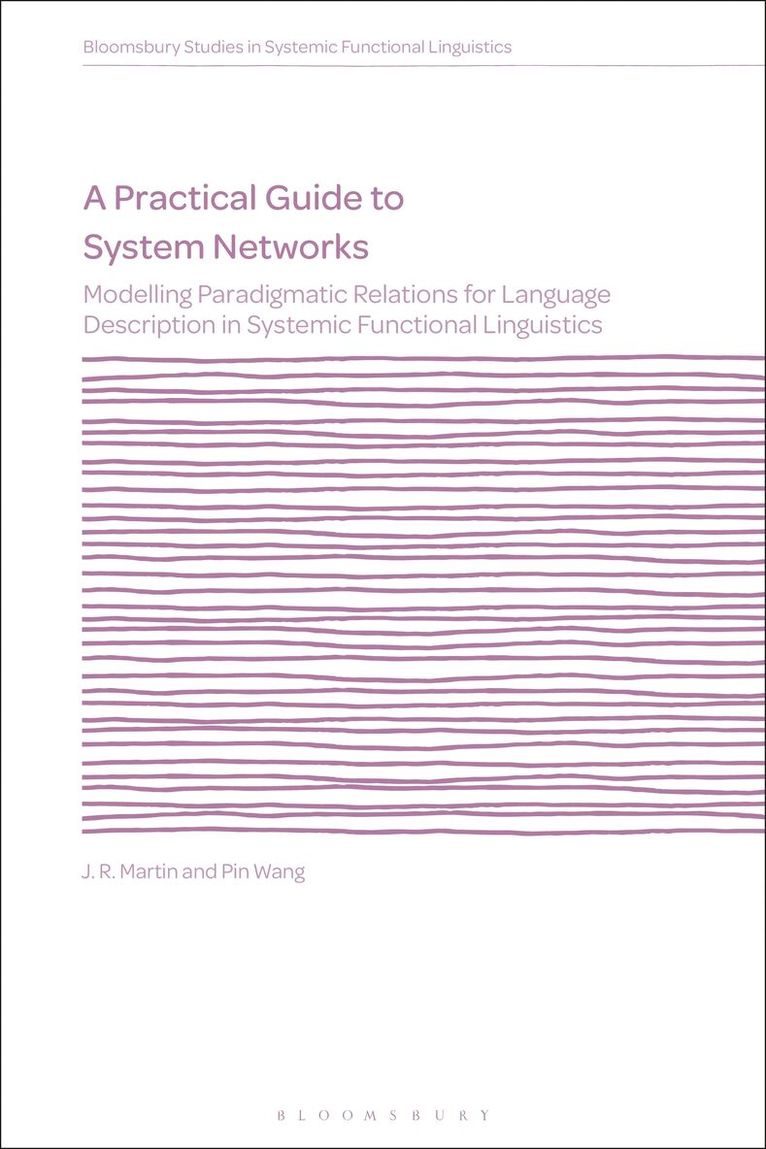
In Systemic Functional Linguistics (SFL), paradigmatic relations are formalised in system networks. This book provides a practical, step-by-step guide to designing system networks for language description, one of the key aspects of SFL theory and analysis. Including examples from English, Chinese, Korean and Spanish, and exercises with answer keys for each of the main chapters, this book offers a broad coverage and guides learners through the process of designing system networks for the purpose of grammatical description in an accessible way.Beginning with simple systems, the authors show how grammars involve a complex of relations, with some systems dependent on others and some working in parallel with simultaneous options. They introduce the reasoning involved in designing system networks, explaining how choices in grammatical systems are motivated in terms of their realisation in structure and how this relationship between the paradigmatic axis and the syntagmatic axis is formalised in SFL descriptions. In addition, the book helps readers to understand the theoretical architecture of SFL – including the dimensions of rank, metafunction and stratification.With an introduction by Michael Alexander Kirkwood (M. A. K.) Halliday, who reviews the history of the development of his approach to system and structure and the use of system networks to formalise paradigmatic relations, this book is essential reading for all scholars of functional grammar and SFL. It will also appeal to researchers interested in theoretical linguistics from the perspective of the history of linguistics and different schools of linguistics.