Jinho Choi – författare
Visar alla böcker från författaren Jinho Choi. Handla med fri frakt och snabb leverans.
13 produkter
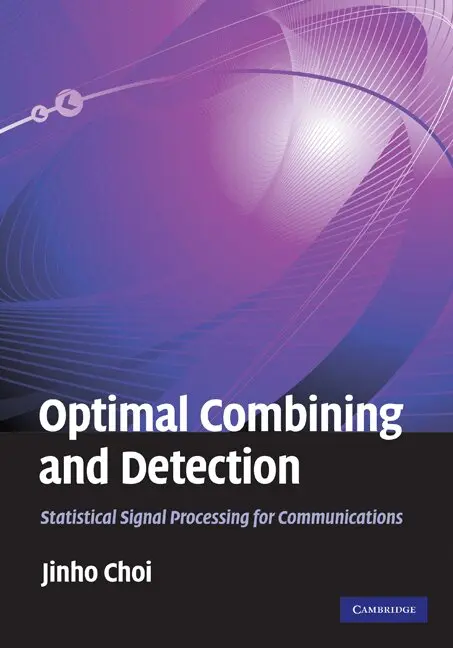
Optimal Combining and Detection
Statistical Signal Processing for Communications
Av Jinho Choi
Inbunden, 2010
1644 kr
Lägg i varukorg
With signal combining and detection methods now representing a key application of signal processing in communication systems, this book provides a range of key techniques for receiver design when multiple received signals are available. Various optimal and suboptimal signal combining and detection …
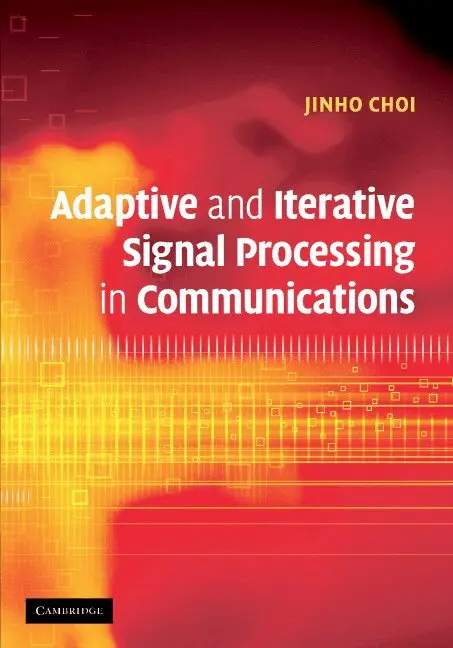
Adaptive and Iterative Signal Processing in Communications
Av Jinho Choi
Inbunden, 2006
1775 kr
Lägg i varukorg
Adaptive signal processing (ASP) and iterative signal processing (ISP) are important techniques in improving receiver performance in communication systems. Using examples from practical transceiver designs, this 2006 book describes the fundamental theory and practical aspects of both methods, …
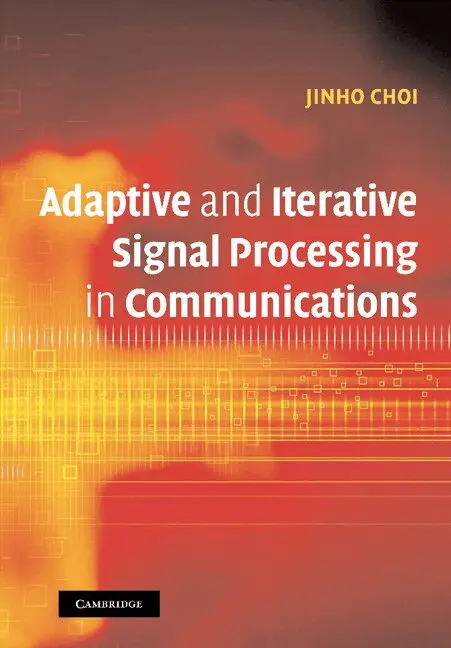
Adaptive and Iterative Signal Processing in Communications
Av Jinho Choi
Häftad, 2012
846 kr
Lägg i varukorg
Adaptive signal processing (ASP) and iterative signal processing (ISP) are important techniques in improving receiver performance in communication systems. Using examples from practical transceiver designs, this 2006 book describes the fundamental theory and practical aspects of both methods, …
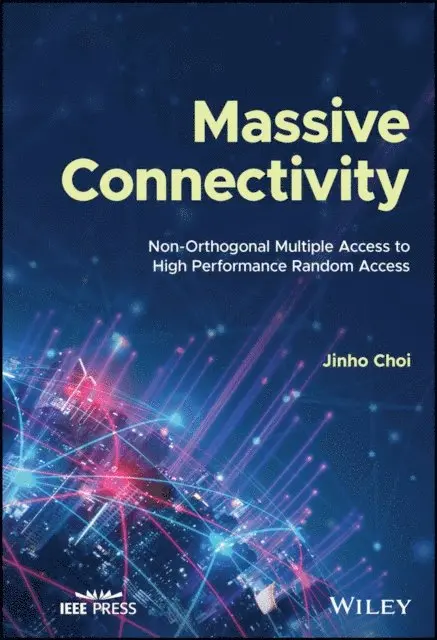
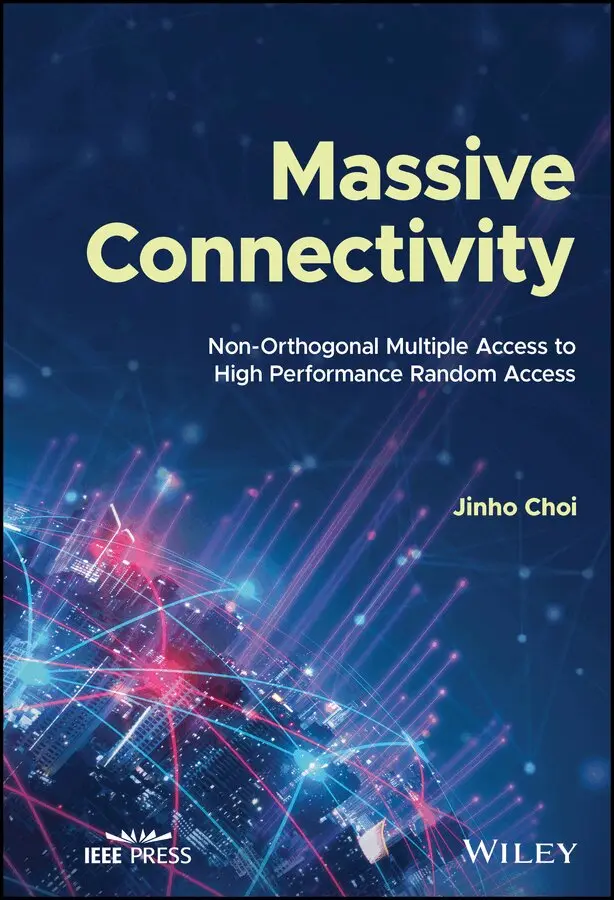
Massive Connectivity
Non-Orthogonal Multiple Access to High Performance Random Access
Av Jinho Choi
Inbunden, 2022
1450 kr
Lägg i varukorg
Massive Connectivity Learn to support more devices and sensors in Internet of Things applications through NOMA and machine-type communication Non-orthogonal multiple access (NOMA) has held much interest due to its ability to provide a higher spectral efficiency—such as more bits per unit bandwidth …
Massive Connectivity
Non-Orthogonal Multiple Access to High Performance Random Access
Av Jinho Choi
E-bok, 2022
1678 kr
Lägg i varukorg
Massive Connectivity Learn to support more devices and sensors in Internet of Things applications through NOMA and machine-type communication Non-orthogonal multiple access (NOMA) has held much interest due to its ability to provide a higher spectral efficiency—such as more bits per unit bandwidth …
Massive Connectivity
Non-Orthogonal Multiple Access to High Performance Random Access
Av Jinho Choi
E-bok, 2022
1678 kr
Lägg i varukorg
Massive Connectivity Learn to support more devices and sensors in Internet of Things applications through NOMA and machine-type communication Non-orthogonal multiple access (NOMA) has held much interest due to its ability to provide a higher spectral efficiency—such as more bits per unit bandwidth …
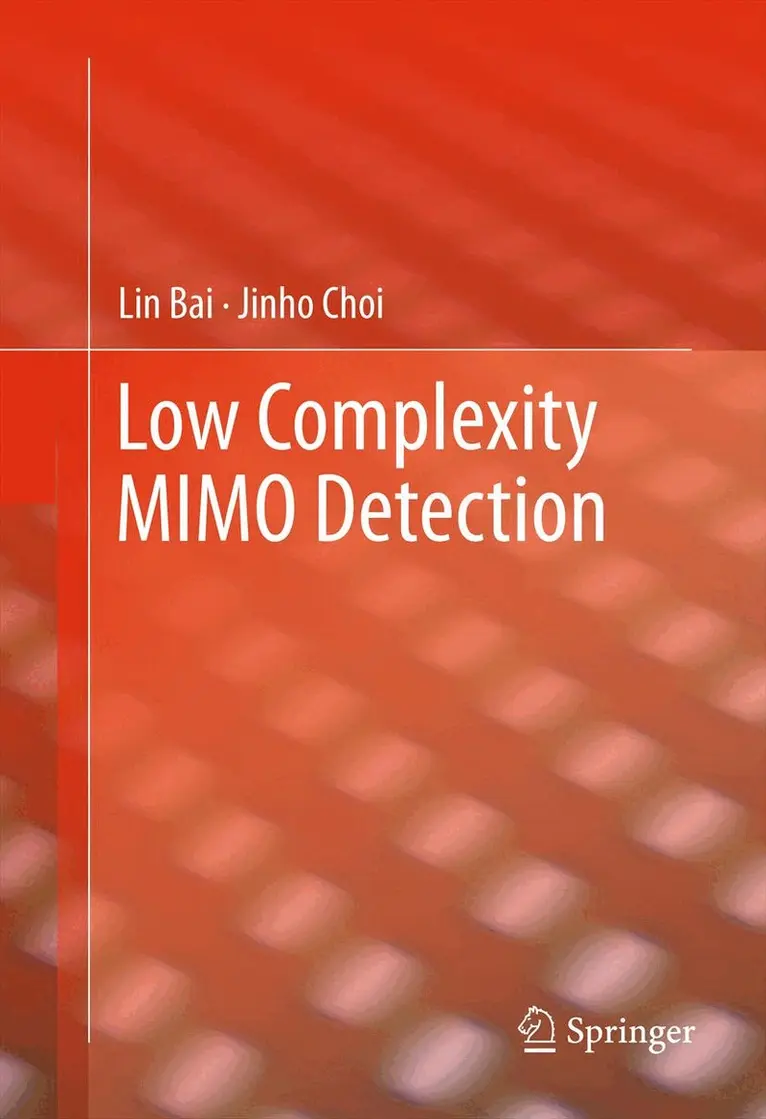
Low Complexity MIMO Detection
Av Lin Bai, Jinho Choi
Inbunden, 2012
1096 kr
Lägg i varukorg
Low Complexity MIMO Detection introduces the principle of MIMO systems and signal detection via MIMO channels. This book systematically introduces the symbol detection in MIMO systems. Includes the fundamental knowledge of MIMO detection and recent research outcomes for low complexity MIMO …
Low Complexity MIMO Detection
Av Jinho Choi, Lin Bai
E-bok, 2012
1427 kr
Lägg i varukorg
Low Complexity MIMO Detection introduces the principle of MIMO systems and signal detection via MIMO channels. This book systematically introduces the symbol detection in MIMO systems. Includes the fundamental knowledge of MIMO detection and recent research outcomes for low complexity MIMO …
Low Complexity MIMO Detection
Av Lin Bai, Jinho Choi
Häftad, 2014
1089 kr
Lägg i varukorg
Low Complexity MIMO Detection introduces the principle of MIMO systems and signal detection via MIMO channels. This book systematically introduces the symbol detection in MIMO systems. Includes the fundamental knowledge of MIMO detection and recent research outcomes for low complexity MIMO …
Low Complexity MIMO Receivers
Av Lin Bai, Jinho Choi m. fl.
Inbunden, 2014
1641 kr
Lägg i varukorg
Multiple-input multiple-output (MIMO) systems can increase the spectral efficiency in wireless communications. However, the interference becomes the major drawback that leads to high computational complexity at both transmitter and receiver. In particular, the complexity of MIMO receivers can be …
Low Complexity MIMO Receivers
Av Quan Yu, Jinho Choi m. fl.
E-bok, 2014
2065 kr
Lägg i varukorg
Multiple-input multiple-output (MIMO) systems can increase the spectral efficiency in wireless communications. However, the interference becomes the major drawback that leads to high computational complexity at both transmitter and receiver. In particular, the complexity of MIMO receivers can be …
Low Complexity MIMO Receivers
Av Lin Bai, Jinho Choi m. fl.
Häftad, 2016
1641 kr
Lägg i varukorg
Multiple-input multiple-output (MIMO) systems can increase the spectral efficiency in wireless communications. However, the interference becomes the major drawback that leads to high computational complexity at both transmitter and receiver. In particular, the complexity of MIMO receivers can be …
Massive Connectivity – Non–Orthogonal Multiple Access to High Performance Random Access
Av Jinho Choi
2022
1710 kr
Tillfälligt slut