J.L. Figueiredo - Böcker
Visar alla böcker från författaren J.L. Figueiredo. Handla med fri frakt och snabb leverans.
6 produkter
6 produkter
3 149 kr
Skickas inom 10-15 vardagar
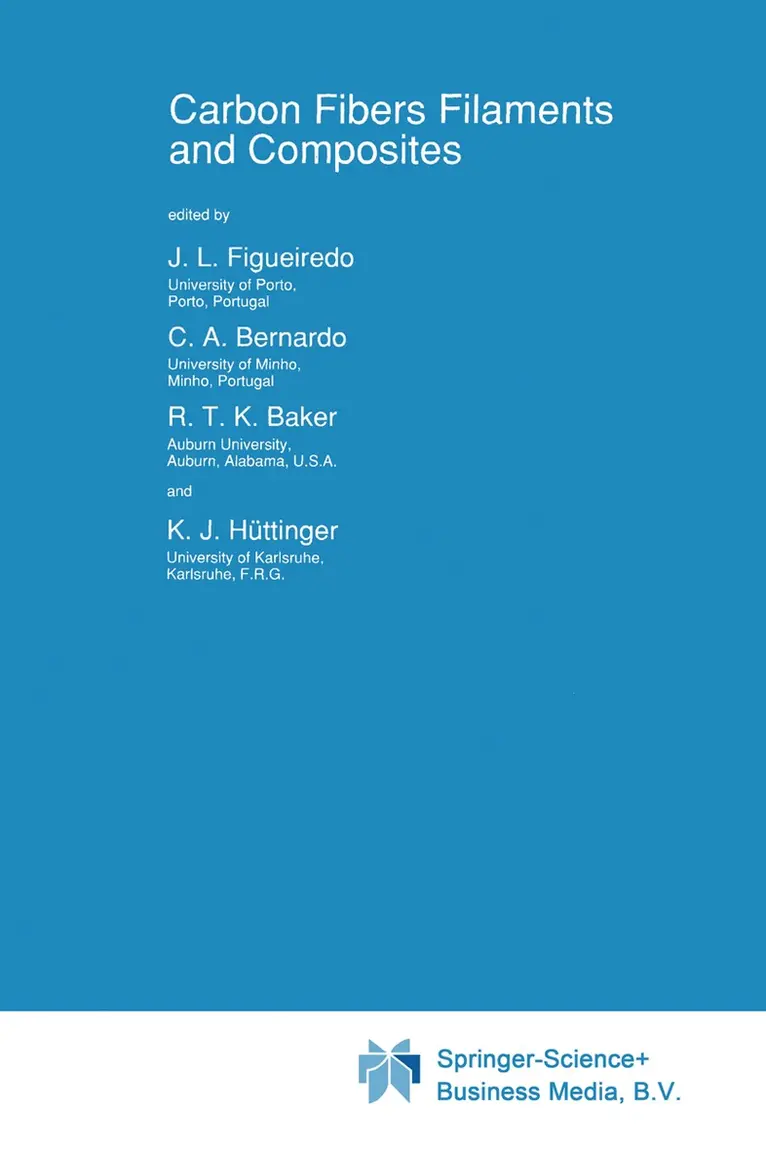
Conventional synthetic materials, like metals, ceramics or glass, are usually isotropic substances, and their suitability for structural applications is achieved by morphological design and combination in the macroscopic scale. However, in modem engineering this is often not acceptable. As an alternative, the use of non-homogeneous, anisotropic materials, with significant stiffness and strength only in the directions these mechanical properties are really needed, can lead to enormous material (and weight) savings. This is the case of multiphase systems called composite materials. In these composites, different material parts are added and arranged geometrically, under clearly designed and controlled conditions. Usually, a structure of fibers provides strength and stiffness and a matrix helds them together, whilst providing the geometric form. Carbon fibers are among the high-performance fibers employed in these advanced structural composites, which are profoundly changing many of today's high technology industries. New research and development challenges in this area include upgrading the manufacturing process of fibers and composites, in order to improve characteristics and reduce costs, and modifying the interfacial properties between fibers and matrix, to guarantee better mechanical properties. The interdisciplinary nature of this "new frontier" is obvious, involving chemistry, materials science, chemical and mechanical engineering. Other topics, which more often are treated separately, are also important for the understanding of the processes of fiber production. Carbon filaments is one such topic, as the study of their mechanisms of nucleation and growth is clearly quite relevant to the production of vapour-grown carbon fibers.
Progress in Catalyst Deactivation
Proceedings of the NATO Advanced Study Institute on Catalyst Deactivation, Algarve, Portugal, May 18–29, 1981
Inbunden, Engelska, 1982
1 578 kr
Skickas inom 10-15 vardagar
Most catalysts used in the chemical and petrochemical indus tries are strongly affected by one or another form of deactivation, leading to poor performances and reduced life. The increasing num ber of scientific communications devoted to the subject in recent years, and culminating with an International Symposium held in Antwerp in October 1980, is a measure of the interest it arouses in both the industrial and academic communities. A stage has been reached whereby it was thought that a NATO Advanced Study Institute on "Catalyst Deactivation" might be fruit ful in establishing the state of the art and in stimulating a more systematic research on the phenomenon. Such a meeting was held ~n Lagos, Portugal, from 18 to 29 May 1981. The purpose of the Institute was to present and discuss in a didatic and systematic way the various processes that lead to cata lyst deactivation, namely coking, poisoning and solid state trans formations, and at the same time to promote the exchange of ideas and experiences among the participants, drawn from industry and uni versity. The lectures presented at the Institute are collected in this volume with the exception of Dr. L.L.Hegedus "Catalyst Poisoning", which has been previously published (Catalysis Reviews, Science md Engineering, 23, 377-476, 1981).
3 149 kr
Skickas inom 10-15 vardagar
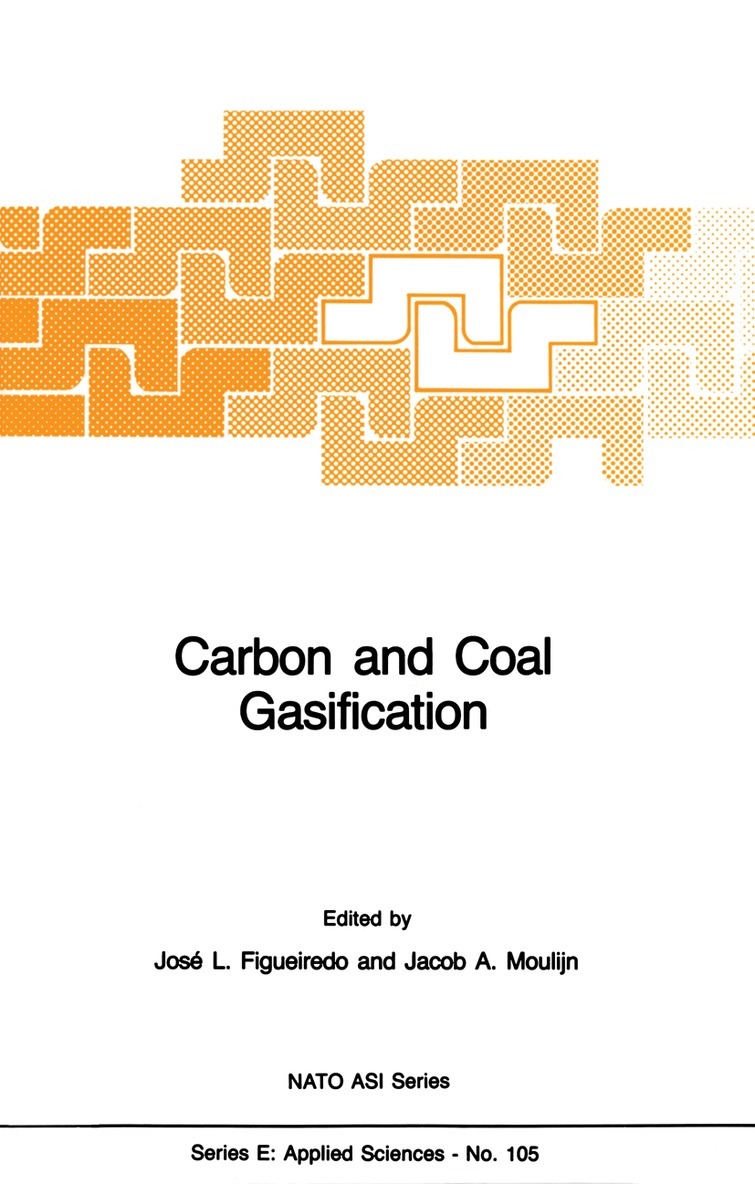
Carbon gasification reactions form the basis of many important industrial processes, such as the combustion of coal and the produc tion of synthesis gas, fuel gases and activated carbons. They are also involved in metallurgical processes and in the regeneration of coked catalysts. Thus, understanding the fundamentals of carbon gasification is of vital importance for further technological development. Moreover, the subject is of interdisciplinary nature, involving chemistry, ma terials science and chemical engineering. Therefore, it was thought that an Advanced Study Institute would be fruitful in establishing the state of the art, in bringing together experts from the various sectors involved and in identifying areas of required research and industrial development. Such a meeting was held at Alvor, Portugal, from the 20th to the 31st May 1985, and the lectures presented the reof are collected in this volume. The present volume is organized in seven chapters. The Intro duction presents the carbon gasification reactions an~ their rele vance for particular processes and industrial uses. In the second chapter, the structures of carbon and coal are reviewed, together with methods of structural, chemical and textural characterization.
Progress in Catalyst Deactivation
Proceedings of the NATO Advanced Study Institute on Catalyst Deactivation, Algarve, Portugal, May 18–29, 1981
Häftad, Engelska, 2011
1 578 kr
Skickas inom 10-15 vardagar
Most catalysts used in the chemical and petrochemical indus tries are strongly affected by one or another form of deactivation, leading to poor performances and reduced life. The increasing num ber of scientific communications devoted to the subject in recent years, and culminating with an International Symposium held in Antwerp in October 1980, is a measure of the interest it arouses in both the industrial and academic communities. A stage has been reached whereby it was thought that a NATO Advanced Study Institute on "Catalyst Deactivation" might be fruit ful in establishing the state of the art and in stimulating a more systematic research on the phenomenon. Such a meeting was held ~n Lagos, Portugal, from 18 to 29 May 1981. The purpose of the Institute was to present and discuss in a didatic and systematic way the various processes that lead to cata lyst deactivation, namely coking, poisoning and solid state trans formations, and at the same time to promote the exchange of ideas and experiences among the participants, drawn from industry and uni versity. The lectures presented at the Institute are collected in this volume with the exception of Dr. L.L.Hegedus "Catalyst Poisoning", which has been previously published (Catalysis Reviews, Science md Engineering, 23, 377-476, 1981).
3 149 kr
Skickas inom 10-15 vardagar
Carbon gasification reactions form the basis of many important industrial processes, such as the combustion of coal and the produc tion of synthesis gas, fuel gases and activated carbons. They are also involved in metallurgical processes and in the regeneration of coked catalysts. Thus, understanding the fundamentals of carbon gasification is of vital importance for further technological development. Moreover, the subject is of interdisciplinary nature, involving chemistry, ma terials science and chemical engineering. Therefore, it was thought that an Advanced Study Institute would be fruitful in establishing the state of the art, in bringing together experts from the various sectors involved and in identifying areas of required research and industrial development. Such a meeting was held at Alvor, Portugal, from the 20th to the 31st May 1985, and the lectures presented the reof are collected in this volume. The present volume is organized in seven chapters. The Intro duction presents the carbon gasification reactions an~ their rele vance for particular processes and industrial uses. In the second chapter, the structures of carbon and coal are reviewed, together with methods of structural, chemical and textural characterization.
3 149 kr
Skickas inom 10-15 vardagar
Conventional synthetic materials, like metals, ceramics or glass, are usually isotropic substances, and their suitability for structural applications is achieved by morphological design and combination in the macroscopic scale. However, in modem engineering this is often not acceptable. As an alternative, the use of non-homogeneous, anisotropic materials, with significant stiffness and strength only in the directions these mechanical properties are really needed, can lead to enormous material (and weight) savings. This is the case of multiphase systems called composite materials. In these composites, different material parts are added and arranged geometrically, under clearly designed and controlled conditions. Usually, a structure of fibers provides strength and stiffness and a matrix helds them together, whilst providing the geometric form. Carbon fibers are among the high-performance fibers employed in these advanced structural composites, which are profoundly changing many of today's high technology industries. New research and development challenges in this area include upgrading the manufacturing process of fibers and composites, in order to improve characteristics and reduce costs, and modifying the interfacial properties between fibers and matrix, to guarantee better mechanical properties. The interdisciplinary nature of this "new frontier" is obvious, involving chemistry, materials science, chemical and mechanical engineering. Other topics, which more often are treated separately, are also important for the understanding of the processes of fiber production. Carbon filaments is one such topic, as the study of their mechanisms of nucleation and growth is clearly quite relevant to the production of vapour-grown carbon fibers.